
The Strategic Integration of Artificial Intelligence in Modern Marketing Operations to Overcome Systemic Inefficiency and Scalability Challenges

The landscape of global marketing is currently defined by a widening rift between the rapid pace of digital consumption and the legacy systems tasked with managing it. While modern campaigns operate across a dizzying array of platforms and formats, the internal infrastructures supporting these efforts are frequently characterized by fragmentation and manual labor. This operational drag has moved beyond a mere inconvenience; it has become a critical barrier to growth, preventing organizations from converting technological investments into measurable business outcomes. As audience expectations for personalized, real-time engagement reach an all-time high, the marketing sector is increasingly turning toward artificial intelligence (AI) to synchronize workflows, automate execution, and restore strategic focus to the creative professional.
The Evolution of Marketing Operations: A Chronology of Complexity
To understand the current reliance on AI, it is necessary to examine the trajectory of marketing operations over the last two decades. In the early 2010s, the "MarTech" explosion began, seeing the number of available marketing tools grow from roughly 150 in 2011 to nearly 10,000 by 2022. This era was defined by the pursuit of specialized "best-of-breed" tools for social media, email, SEO, and analytics.
However, by the mid-2010s, the downside of this proliferation became evident. Teams found themselves managing "silos"—disconnected platforms that did not communicate with one another. By 2018, the industry shifted its focus toward integration and the rise of the Customer Data Platform (CDP). Despite these efforts, the sheer volume of content required for the omnichannel era—spanning video, short-form social content, and localized blogs—outpaced the human capacity for coordination.
The 2020-2023 period marked a tipping point. The global pandemic accelerated digital transformation, forcing even traditional industries to adopt complex digital workflows overnight. This rapid shift, while necessary, resulted in "organic" rather than "purposeful" operational design. Processes were built to solve immediate fires rather than to scale, leading to the current state of operational friction that AI is now positioned to resolve.
Analyzing the Data: The Cost of Disorganization
The challenge of modern marketing is supported by significant empirical evidence. A landmark study conducted by the Harvard Business Review (HBR) recently revealed that more than 70 percent of large-scale enterprises struggle to translate their data and technology investments into tangible operational results. The primary culprits identified were disorganized processes and a systemic lack of coordination between cross-functional teams.
In the marketing context, this "execution gap" results in measurable losses. According to industry benchmarks, marketing teams often spend up to 60 percent of their time on "work about work"—tasks such as manual status updates, hunting for assets, and navigating convoluted approval chains—rather than strategic execution. This inefficiency directly impacts time-to-market, where a delay of even a few days in a high-velocity digital market can result in a significant drop in campaign relevance and conversion rates.
Furthermore, the lack of real-time insights means that marketing spend is often optimized retroactively. Organizations relying on static reporting structures frequently discover performance issues weeks after a campaign has concluded, missing the window for proactive adjustment.
Phase One: Identifying and Diagnosing Operational Bottlenecks
The first step in any AI-driven transformation is the rigorous identification of where operations slow down. Without a foundational understanding of friction points, the introduction of AI risks automating existing inefficiencies rather than eliminating them.
In many organizations, content requests are handled through informal channels—emails, chat messages, or verbal requests—without standardized intake models. This leads to unclear ownership and an endless cycle of revisions. Additionally, campaign execution often relies on manual coordination across spreadsheets and disconnected project management tools. These small delays are cumulative; a four-hour delay in an approval here and a two-hour delay in an asset hand-off there can easily push a campaign launch back by a full week.
Data silos represent another critical bottleneck. When performance metrics for paid media, SEO, and email reside in separate systems, the marketing team lacks a unified view of the customer journey. Decision-making becomes reactive, based on fragmented pieces of the puzzle rather than a holistic understanding of what drives value.
The Role of Generative AI in Content Supply Chains
Content is widely recognized as the most constrained area within marketing operations. The demand for localized, channel-specific content has grown exponentially, yet marketing budgets and headcounts have not scaled at the same rate. This is where Generative AI provides a transformative solution by acting as a "force multiplier" for creative teams.
Rather than replacing the creative process, AI is being used to handle the heavy lifting of drafting, outlining, and summarizing. This allows teams to move from a "blank page" start to a "refinement" phase much faster. More importantly, AI excels at content repurposing—the ability to take a single long-form whitepaper and automatically generate social snippets, email copy, and blog summaries tailored to different platforms.
Localization is another area seeing significant AI impact. Global SaaS companies and consumer brands are utilizing AI-assisted translation and contextual adaptation to launch products across multiple regions simultaneously. By using AI to maintain brand voice while adjusting for regional nuances, companies can reduce production timelines from weeks to days, ensuring global consistency without overextending regional marketing teams.
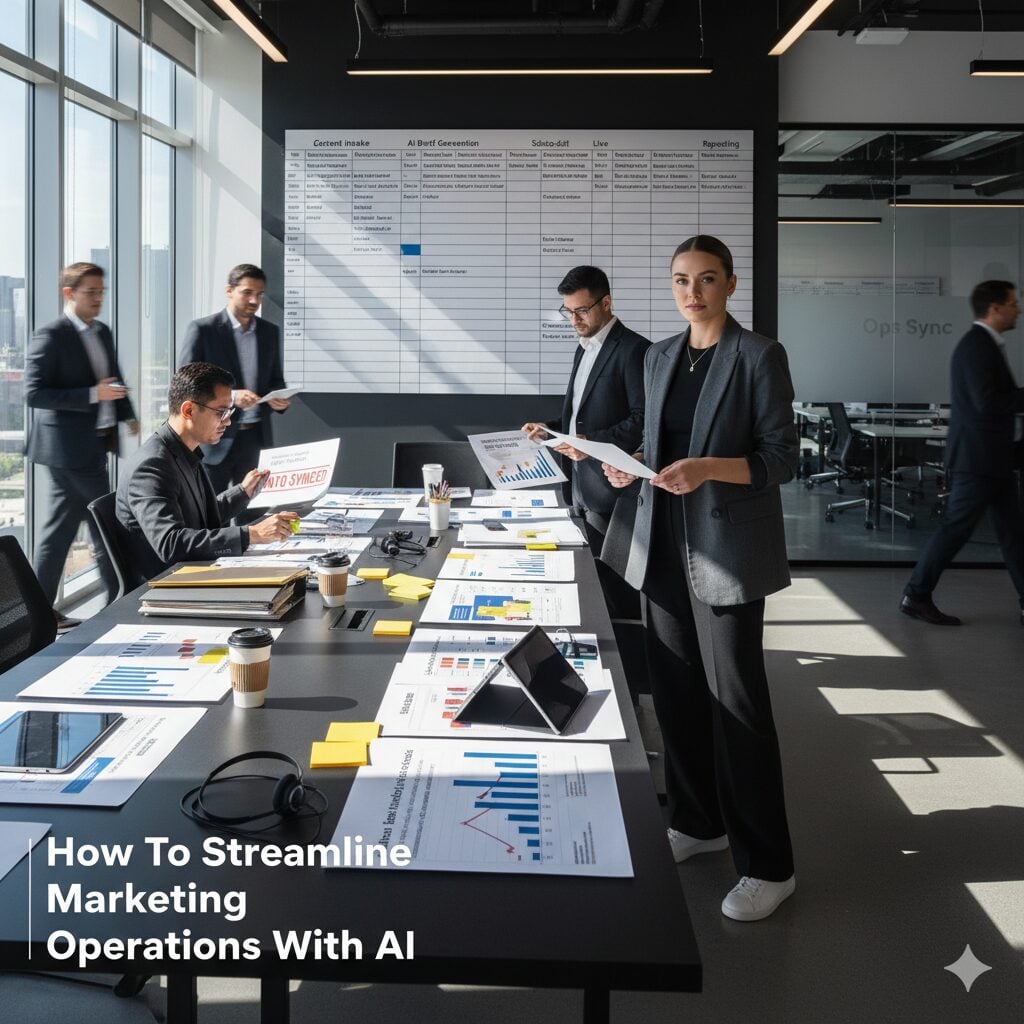
Automating Campaign Execution and Real-Time Optimization
Traditional campaign management is often a manual, labor-intensive process involving constant monitoring and reactive tweaks. AI shifts this paradigm by introducing intelligent automation across the campaign lifecycle.
AI-driven scheduling tools now analyze years of historical engagement data to determine the precise moment a campaign should go live on a specific channel. During the execution phase, AI monitors performance in real time, providing immediate signals on reach and conversion trends. This enables "in-flight" optimization—automatically shifting budget from underperforming creative assets to those showing higher engagement without requiring manual intervention from a media buyer.
This level of agility is particularly vital in competitive markets where consumer sentiment can shift in hours. Automated workflows ensure that tasks such as A/B testing, creative rotation, and performance alerts run continuously, allowing human marketers to focus on high-level strategy and creative direction.
Enhancing Digital Performance through Predictive Insights
Visibility and searchability remain the bedrock of digital marketing, but the complexity of SEO has moved beyond manual management. AI-powered tools now assist marketing operations by evaluating search intent, competitive content gaps, and emerging trends in real time.
Beyond simple keyword research, AI provides continuous feedback on on-page optimization, highlighting structural gaps or engagement signals that need improvement. Predictive analytics further enhances this by forecasting how audiences are likely to react to specific content based on historical patterns. This allows marketing teams to be proactive, adjusting their digital strategy before performance begins to decline.
By unifying data from search, social, and web analytics into a single AI-driven dashboard, teams can finally see how different touchpoints influence each other. This holistic view reduces fragmented decision-making and ensures that digital performance is a result of informed, constant refinement.
Data Unification and the Future of Personalization
Effective personalization is impossible without clean, unified data. When customer information is scattered across disparate systems, personalization efforts often feel disjointed or, worse, inaccurate. AI-enabled data unification solves this by pulling interactions from websites, social platforms, and email campaigns into a single, dynamic customer profile.
With this unified data, AI allows for real-time segmentation. Instead of relying on static audience lists that quickly become outdated, segments are updated instantly based on user behavior and intent. This enables the delivery of highly relevant messaging at the exact moment a customer is most likely to engage.
For example, e-commerce entities are increasingly using AI to trigger personalized recommendations and abandoned-cart notifications within minutes of a user’s session. This level of responsiveness, which would be impossible to manage manually at scale, has been shown to significantly increase conversion rates and customer lifetime value.
Industry Perspectives and the Road Ahead
Industry analysts suggest that the shift toward AI-powered marketing operations is not just a trend but a fundamental restructuring of the profession. Marketing leaders are increasingly being viewed as "orchestrators" of technology rather than just managers of people.
Responses from Chief Marketing Officers (CMOs) at global firms indicate a consensus: the goal of AI is not to reduce headcount, but to eliminate the "drudgery" of marketing operations. By automating the mechanical aspects of the job—data entry, asset tagging, and scheduling—teams are empowered to focus on brand storytelling and emotional connection, areas where human intuition remains irreplaceable.
However, the transition is not without its hurdles. Experts emphasize that the success of AI adoption depends on governance. Without clear rules on brand safety, data privacy, and ethical AI usage, organizations risk reputational damage. Consequently, the most successful firms are those integrating AI with a "human-in-the-loop" philosophy, where AI handles the scale and speed while humans provide the strategic guardrails and final creative approval.
Conclusion: Setting the Foundation for Long-Term Adaptability
The integration of artificial intelligence into marketing operations marks the end of the era of fragmented and slow-moving marketing systems. By addressing the core challenges of operational friction—from content bottlenecks to data silos—AI provides the speed and precision necessary to thrive in an increasingly complex digital environment.
As the Harvard Business Review and other industry observers have noted, the companies that succeed will be those that view AI not as a series of isolated tools, but as a cohesive layer that connects every stage of the marketing lifecycle. This shift toward an adaptive, data-driven operational model ensures that marketing teams can deliver consistent, accountable, and measurable value. In the coming years, AI-powered operations will move from being a competitive advantage to a baseline requirement for any organization seeking to maintain relevance and scale in the global market.