





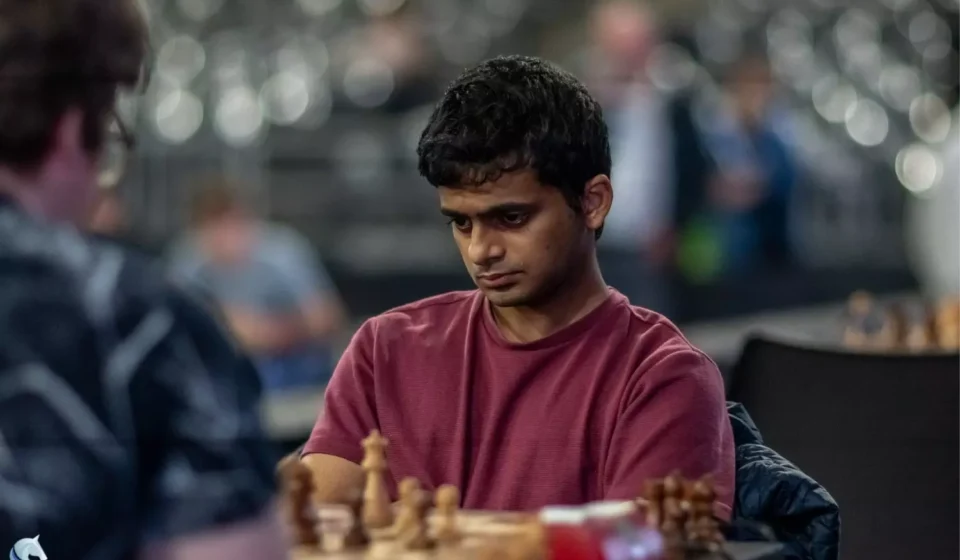
Indian Grandmaster Nihal Sarin Dismisses Controversy Following Obscene Gesture in Titled Tuesday Online Chess Tournament

In a demonstration of professional composure that has become a hallmark of his career, Indian Grandmaster Nihal Sarin has officially addressed the controversy surrounding an obscene gesture directed toward his camera by opponent Grandmaster Emin Ohanyan during a high-stakes online chess match. The incident, which occurred during a Titled Tuesday event hosted on the Take Take Take platform, sparked significant debate within the global chess community regarding sportsmanship and the pressures of elite blitz competition. Sarin, known for his calm demeanor and rapid-fire tactical precision, took to social media to de-escalate the situation, stating that he was not offended by the gesture and attributing the outburst to the "heat of the moment."
The confrontation took place during a critical phase of the tournament, where Sarin and Ohanyan were engaged in a complex endgame. Following a sequence where Sarin successfully outmaneuvered his opponent to secure a victory, Ohanyan was seen on his personal stream displaying his middle finger to the camera. While the gesture was widely interpreted by viewers as being directed at Sarin, the organizers and Sarin himself have since moved to provide context that suggests a more generalized expression of frustration.
Chronology of the Incident and Immediate Aftermath
The timeline of events began on February 24, 2026, during the weekly Titled Tuesday tournament. This event, which attracts the world’s top Grandmasters, is played at a blitz time control, typically three minutes with a two-second increment per move. The high-speed nature of the format often leads to heightened emotional states among competitors.
As the match between Nihal Sarin and Emin Ohanyan reached its conclusion, Sarin utilized his trademark defensive resilience to turn a seemingly equal position into a winning one. Upon realizing the game was lost, Ohanyan reacted physically. The moment was captured on a live stream and quickly clipped by viewers. The "Take Take Take" app, which was hosting and promoting the event, initially shared the video of the reaction on their social media channels, likely intending to highlight the intensity of the competition.
However, the post immediately drew a wave of criticism from the chess community. Fans of Sarin, as well as advocates for professional conduct in the sport, argued that promoting such a gesture was detrimental to the game’s image. Many accused Ohanyan of a lack of respect for one of the most respected young players in the world. By late February 24, the organizers removed the video from their platforms and issued a formal clarification.
On February 26, 2026, after 48 hours of mounting social media discourse, Nihal Sarin broke his silence. His statement was concise and aimed at diffusing the tension: "Regarding the recent incident, I want to clarify that I was not offended. Things happen in the heat of the moment—no big deal." This response has been widely praised by commentators as a "classy" resolution to an incident that could have resulted in formal disciplinary proceedings.
Official Response from Tournament Organizers
The Take Take Take app, serving as the tournament’s host, found itself in a difficult position between promoting the raw emotion of esports-style chess and maintaining the decorum expected of a Grandmaster-level event. Their clarification note attempted to provide a psychological context for Ohanyan’s actions, suggesting the gesture was a manifestation of self-frustration rather than a targeted insult.
"We don’t interpret the hand gestures to be towards Nihal, but towards the computer/game itself," the organizers stated in their official communication. They further elaborated that while they do not condone or seek to normalize such behavior, "a little rage after losing a game is not out of the ordinary" in the context of professional gaming.
This stance reflects a growing trend in online chess where the lines between traditional sportsmanship and the "gamer" culture of streaming are increasingly blurred. By framing the incident as "rage against the game," the organizers sought to protect the reputation of the tournament while acknowledging the high-pressure environment that these players navigate.
Profile of the Competitors: Sarin and Ohanyan
To understand the weight of the incident, one must look at the profiles of the two athletes involved. Nihal Sarin, at 21 years old, has long been considered one of India’s brightest chess talents. A former World Under-10 Champion and a key member of the Indian national team, Sarin is currently ranked among the top blitz players globally. His reputation is built not only on his Elo rating but on his unflappable nature. In thousands of online games, Sarin has rarely, if ever, been involved in controversy, making him a popular figure among fans and peers alike.
Emin Ohanyan, an Armenian Grandmaster, represents the next generation of talent from a country with a rich chess heritage. Like many young GMs, Ohanyan is a frequent participant in online tournaments and utilizes streaming platforms to engage with fans. The Armenian school of chess is known for its intense competitive spirit and tactical ingenuity. While Ohanyan’s reaction was viewed by many as unprofessional, peers have noted that the "blitz fever" can often lead to uncharacteristic outbursts from players who are otherwise respectful in over-the-board (OTB) settings.
Data and Context: The Pressure of Online Blitz Chess
The incident highlights a broader phenomenon within the chess world: the rise of the "Titled Tuesday" format and the psychological toll of online speed chess. Unlike traditional classical chess, where a game can last five hours and players have time to process their emotions, blitz chess is a sensory overload.
Statistical data from major chess platforms indicates that during a typical Titled Tuesday, a player might participate in 11 rounds over the course of three hours. The margin for error is razor-thin. A single mouse slip or a missed tactical shot in the final seconds of a game can result in a loss of tournament standing and potential prize money.
In the specific case of Sarin vs. Ohanyan, the endgame was played with both players having less than ten seconds on their clocks. In such scenarios, the heart rate of a professional player can spike to over 150 beats per minute, comparable to moderate physical exercise. This physiological state, combined with the isolation of playing from a home environment, can lead to "disinhibition," where players react more impulsively than they would in a public tournament hall with an arbiter present.
Implications for Professional Conduct and Sportsmanship
The resolution of this incident sets a notable precedent for the "streaming era" of chess. While FIDE (the International Chess Federation) has strict codes of conduct for OTB play—where a middle finger directed at an opponent would almost certainly result in an immediate forfeit and a multi-month ban—online regulations are still evolving.
1. The Role of Platforms as Arbiters
As platforms like Take Take Take, Chess.com, and Lichess continue to host high-stakes events, they are increasingly taking on the role of governing bodies. The decision by the organizers to defend the gesture as "frustration with the game" suggests a more lenient approach toward emotional outbursts, provided they are not explicitly directed at an opponent in a way that violates platform terms of service.
2. The Indian Chess Resurgence and Global Image
Nihal Sarin’s reaction is also indicative of the professional culture being fostered within the Indian chess community. With India currently experiencing a "chess boom," led by figures like Sarin, R. Praggnanandhaa, and Gukesh D., there is a concerted effort among these players to maintain a high standard of public conduct. Sarin’s decision to "forgive and forget" serves to maintain his focus on his performance rather than becoming embroiled in a social media feud.
3. The "Esportification" of Chess
The incident underscores the tension between chess as a "gentleman’s game" and chess as a modern esport. In the world of competitive video gaming (e.g., League of Legends or Counter-Strike), "trash talking" and emotional outbursts are often part of the entertainment value. As chess seeks to attract younger audiences through streaming, organizers face the challenge of deciding which behaviors are "authentic passion" and which are "unprofessional conduct."
Analysis of Broader Impacts
The long-term impact of this incident will likely be a tightening of streaming guidelines for titled players. While Sarin’s grace prevented the situation from escalating into a formal dispute, other players may not be as forgiving.
Industry analysts suggest that sponsors may begin to demand more stringent behavior clauses in contracts for players who represent their platforms on stream. If a gesture is caught on a platform’s official broadcast, it reflects not just on the player, but on the brand hosting the event. The fact that Take Take Take initially shared the video and then deleted it indicates a lack of clear internal policy regarding controversial content, a gap that will likely be closed in the near future.
Furthermore, the incident may prompt a discussion on the necessity of "delay" in streaming. Many professional players now use a 30-second or 60-second delay to prevent "stream sniping" (opponents watching the stream to gain an advantage). Implementing a delay also gives players a "buffer" to cut the feed or compose themselves before their reactions reach the public, potentially avoiding such controversies altogether.
Conclusion
The "middle finger controversy" involving Nihal Sarin and Emin Ohanyan serves as a microcosm of the current state of professional chess: high-speed, high-stakes, and highly visible. By dismissing the incident as "no big deal," Nihal Sarin has reinforced his reputation as one of the sport’s most mature and focused competitors. His ability to look past the "heat of the moment" allows the focus to remain where it belongs—on the board.
As the chess world continues to navigate the transition into a digital-first spectator sport, the balance between raw human emotion and professional decorum remains delicate. For now, the "Sarin approach" of de-escalation appears to be the preferred method for handling the occasional frictions of the online arena, ensuring that the integrity of the game remains intact despite the occasional outburst from the "heat of the moment."