Google Unveils AI-Powered Battery Summaries for Pixel Phones, Signaling a New Era of Intelligent Device Management

MOUNTAIN VIEW, CA – Google has introduced a new artificial intelligence-powered battery summary feature for its Pixel line of smartphones, including the recently launched Pixel 11 Pro XL. This integration, driven by the company’s advanced Gemini Intelligence, aims to provide users with more intuitive and actionable insights into their device’s power consumption. While the initial rollout offers a foundational analysis of battery drain, industry observers and early adopters are keen to assess its long-term potential in addressing one of the most persistent challenges in smartphone ownership: battery life.
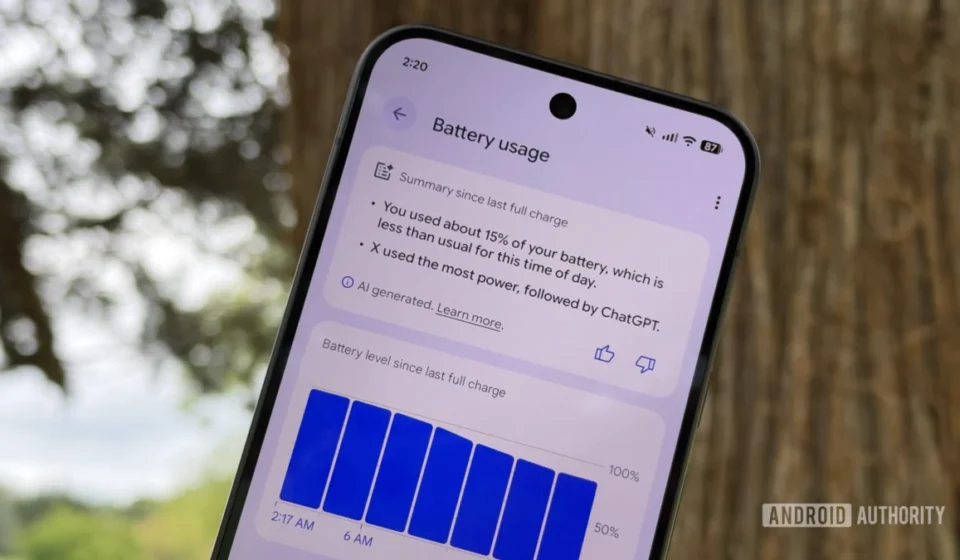
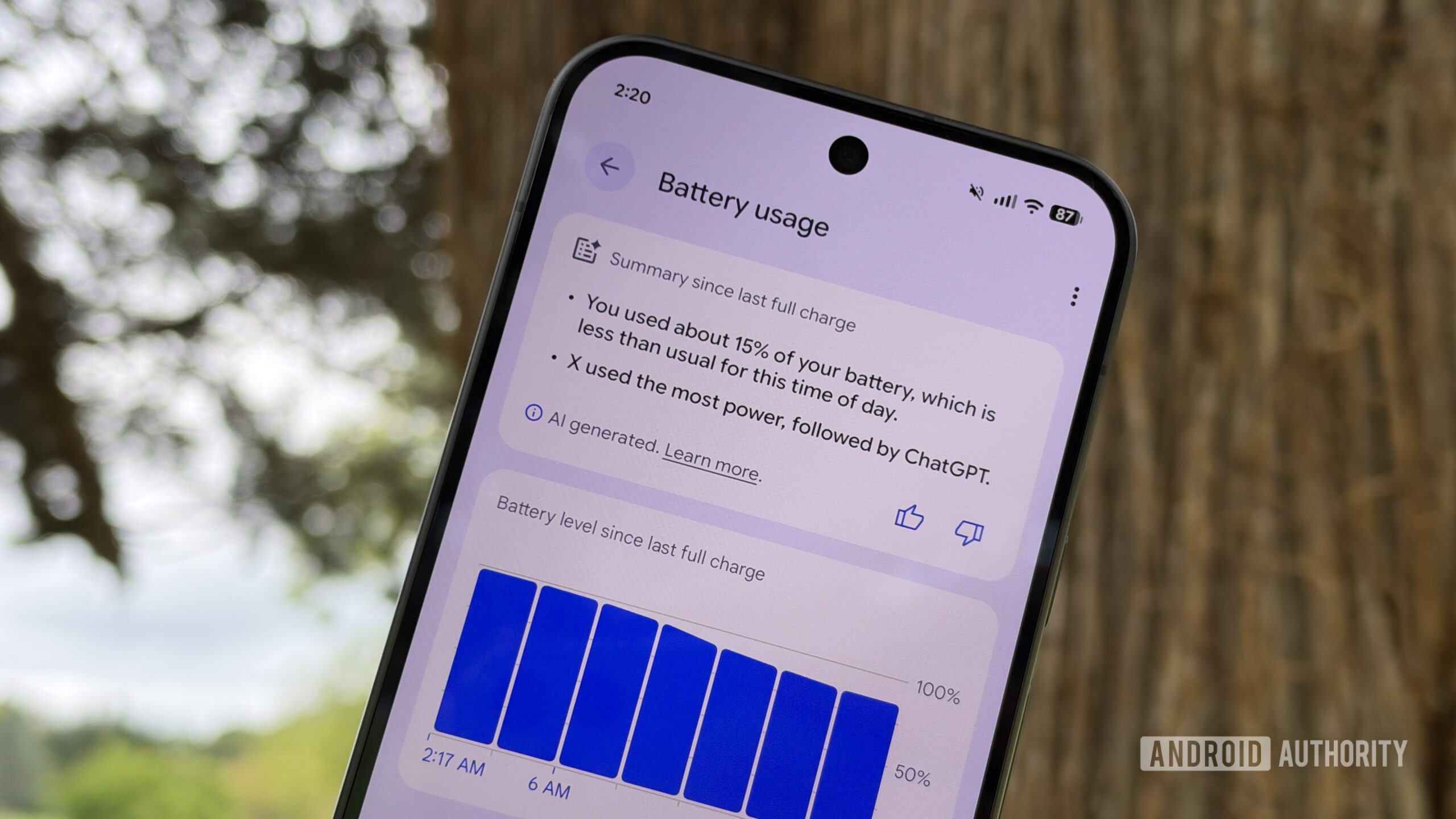
The new functionality, accessible via the "Battery usage" section within the "Settings" and "Battery and charging" menus, swiftly processes a device’s power consumption data. Utilizing Gemini’s analytical capabilities, it presents a summary in plain English, highlighting applications and usage patterns responsible for significant battery depletion. This marks a departure from traditional battery statistics, which often rely on complex percentage breakdowns that can be less informative for the average user.
The Enduring Challenge of Smartphone Battery Life
For years, smartphone battery life has remained a critical concern for consumers, consistently ranking high on user surveys regarding desired improvements. Despite advancements in battery technology and processor efficiency, the relentless push for larger, higher-resolution displays, faster refresh rates, increasingly powerful processors, ubiquitous 5G connectivity, and sophisticated camera systems continues to strain power reserves. Users demand devices that can last a full day, or even beyond, under varied usage conditions, a benchmark many flagships still struggle to consistently meet.
Historically, Android has implemented several features to optimize battery usage. Early efforts included basic app usage statistics, allowing users to identify rogue applications. More sophisticated mechanisms like Doze mode (introduced in Android 6.0 Marshmallow) and App Standby intelligently restricted background activity for infrequently used apps. Adaptive Battery (debuting with Android 9 Pie) leveraged machine learning to predict which apps would be used in the coming hours and prioritized battery resources accordingly. These initiatives, while helpful, often provided a reactive approach, primarily identifying issues after they had occurred, rather than offering proactive guidance or deeper contextual analysis.
Google’s own Pixel line has had a mixed history with battery performance. While generally lauded for their camera capabilities and software experience, earlier Pixel generations sometimes faced criticism for inconsistent battery longevity, with some models experiencing issues related to modem efficiency and background power draw. Subsequent iterations have seen improvements, but the pursuit of optimal battery performance remains a continuous development priority for Google, as evidenced by this new AI-driven approach.
Gemini Intelligence: Google’s Broader AI Strategy
The introduction of AI battery summaries is not an isolated feature but rather a strategic component of Google’s overarching vision for integrating Gemini Intelligence across its ecosystem. Google has been aggressively investing in AI research and development, culminating in the Gemini family of models designed to be multimodal, efficient, and capable of understanding and operating across different types of information, including text, code, audio, image, and video.
This strategy is underpinned by Google’s custom-designed Tensor processors, found in Pixel phones. These chips are engineered to handle complex AI and machine learning tasks directly on the device, enabling faster, more private, and more efficient processing of data without constant reliance on cloud servers. The Pixel 11 Pro XL, powered by the latest Tensor G6 chip, is a prime example of this on-device AI paradigm, showcasing Google’s commitment to making its smartphones truly intelligent companions.
By embedding Gemini Intelligence into core system functionalities like battery management, Google aims to move beyond simple data reporting to offer genuinely personalized and predictive user experiences. The goal is to make the device itself an intelligent assistant, capable of understanding user habits, anticipating needs, and proactively optimizing performance. This aligns with Google’s broader efforts to infuse AI into features like Google Health, Daily Brief, and other assistive technologies that aim to provide actionable insights into various aspects of daily life.
Current Functionality: A Foundational Step
Upon its initial release, the AI battery summary feature provides insights that, while valuable, are largely confirmatory for many tech-savvy users. When accessing the battery usage menu, the Gemini AI quickly analyzes recent activity and presents a concise summary. For instance, the system might inform a user that "TikTok and X (formerly Twitter) have been draining your battery more than other apps," or that "Your usage today is higher than normal for this time."
This "plain English" explanation is a significant usability improvement over the traditional list of apps with associated percentage drain figures. For users who may not understand the implications of a particular percentage or how it relates to their overall day, a clear, human-readable summary can be far more impactful. It provides immediate context, allowing users to grasp quickly which applications are the primary culprits for power consumption.
The feature also offers a quick assessment of current usage patterns. Knowing whether one’s phone usage is "normal" or "aggressive" for a given time of day can be a subtle yet powerful prompt. For individuals with long days ahead or limited access to charging, this real-time feedback can encourage conscious adjustments to usage habits, such as reducing social media scrolling or opting for less resource-intensive tasks. While it doesn’t fundamentally alter the fact that certain apps are power hogs, it provides a timely reminder that can influence immediate behavior.
However, the initial implementation has been met with a degree of pragmatism. Many users are already aware that social media platforms, video streaming apps, and graphics-intensive games are significant battery consumers. The AI summary, in its current form, often reiterates these well-known facts. This has led some to initially view it as an incremental update, rather than a revolutionary change, prompting discussions about its untapped potential.

The Untapped Potential: Towards Predictive and Proactive Battery Management
The true promise of AI battery summaries lies not in their current state but in their potential for future evolution. Critics and early testers, while acknowledging the utility of plain-language summaries, suggest that Google needs to take this feature several steps further to make it truly indispensable. The desire is for the system to transition from being merely descriptive to being genuinely predictive and prescriptive.
One key area for enhancement is a more comprehensive overview of device health. Beyond just identifying power-hungry applications, an advanced AI summary could delve into background system functions that often consume power unnoticed. This could include insights into how much battery is being used by the operating system itself, background sync services, sensor activity (GPS, accelerometer, gyroscope), or even hidden processes that might be misbehaving. Android already provides alerts for dormant apps consuming excessive power, but a more integrated, AI-driven breakdown could offer a holistic view.
Furthermore, integrating environmental factors into the analysis could unlock more actionable insights. For instance, the summary could report on cellular connectivity strength throughout the day. If a user spends significant time in an area with poor signal, the phone’s modem works harder to maintain a connection, leading to increased battery drain. While this might be unavoidable for some, knowing this specific cause could help users understand unexpected power drops. Given that past Pixel generations sometimes faced scrutiny over modem performance, this level of transparency could be particularly valuable. Similarly, an analysis of Wi-Fi usage versus cellular data, or prolonged use of location services (e.g., Google Maps during a long drive), could provide context for specific battery drain events.
The most transformative potential lies in predictive capabilities. Imagine an AI summary that, based on your typical usage patterns, current battery level, and anticipated schedule (gleaned from calendar or location data), could offer real-time, actionable recommendations. For example, it could predict: "Based on your current usage, you’ll run out of battery by 6 PM. To last until midnight, reduce your TikTok scrolling by 30 minutes or consider activating Battery Saver." Such specific, data-backed advice, similar to the personalized health insights offered by Google Health, would empower users to actively manage their battery life in a truly informed manner.
Industry Reactions and User Adoption
The introduction of AI battery summaries is likely to elicit varied reactions across the tech industry. Analysts will likely commend Google for its continued innovation in integrating AI into core smartphone functions, reinforcing the Pixel’s identity as the "AI phone." However, some may also point out that the initial implementation, while a step in the right direction, needs further development to move beyond mere descriptive reporting. The industry will be closely watching to see how Google iterates on this feature in subsequent Android updates and Pixel releases.
User adoption will hinge on the perceived utility and evolution of the feature. While initial reactions may be mixed, widespread embrace is probable if Google successfully develops the predictive and proactive elements. Battery anxiety is a common phenomenon, and any tool that genuinely helps users mitigate it will be welcomed. The "plain English" approach is a strong foundation for broader appeal, as it democratizes complex technical information.

Competitively, Google’s move positions it distinctly. While other manufacturers like Samsung and Apple offer robust battery management tools, Google’s emphasis on on-device Gemini AI for deeper, contextual analysis could provide a unique selling proposition. Apple, with its tightly integrated hardware and software, has long focused on optimizing battery life, and Samsung has its own suite of power management features, often tied to its One UI customizations. Google’s AI-first approach suggests a future where the phone actively "thinks" about its power consumption and advises the user, rather than simply reporting data.
Implications for the Pixel Ecosystem and Future Android Development
This new AI battery summary feature solidifies the Pixel’s role as the vanguard for Google’s AI ambitions in mobile. By showcasing Gemini’s capabilities in a practical, user-centric application, Google reinforces the narrative that Pixel phones offer a smarter, more intuitive Android experience. This iterative approach to AI features – starting with a solid foundation and building upon it – is characteristic of Google’s development philosophy.
Looking ahead, the successful evolution of AI battery summaries could set a precedent for future Android development. Features that begin as Pixel exclusives often eventually trickle down to the broader Android ecosystem, albeit sometimes in a more generalized form. This could mean that within a few Android versions, intelligent, predictive battery management becomes a standard expectation across all Android devices, pushing the entire industry forward.
However, challenges remain. Google must carefully balance the power of AI recommendations with user control, ensuring that users feel empowered rather than dictated to. There’s also the potential for "AI fatigue" if features are perceived as excessive or not genuinely useful, a pitfall Google has encountered with some past AI initiatives. The key will be to ensure that the AI provides truly actionable data that genuinely enhances the user experience, rather than simply adding another layer of information.
In conclusion, Google’s introduction of AI-powered battery summaries on Pixel phones represents a promising initial step towards a more intelligent and proactive approach to device management. While its current functionality offers a decent start by providing plain-language insights into battery drain, its true value will emerge as Google expands its capabilities to include comprehensive device health overviews, environmental context, and, most importantly, predictive, actionable recommendations. This move underscores Google’s commitment to leveraging Gemini Intelligence to transform the smartphone experience, moving closer to a future where devices don’t just perform tasks but intelligently assist users in managing their digital lives.