
Hot Inflation Data Ignites Rate Hike Fears and Propels AI-Driven Cybersecurity Investment Trends

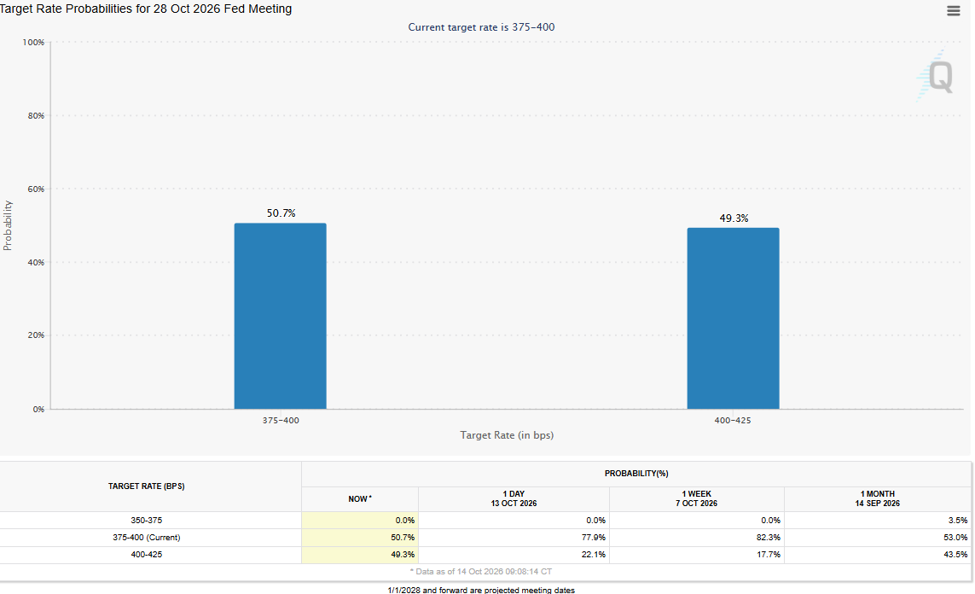
The U.S. economy faces a renewed wave of price pressures as the latest Consumer Price Index (CPI) report reveals that inflation remains stubbornly high, fundamentally altering the outlook for Federal Reserve monetary policy. According to data released by the Bureau of Labor Statistics (BLS) on Wednesday morning, headline CPI rose 0.6% in September, pushing the annual inflation rate to 3.7%. This figure surpassed the 3.4% recorded in August and exceeded the consensus forecast of 3.6% among economists. The report has effectively reignited the debate over the necessity of further interest rate hikes, with market participants now pricing in a nearly 50% probability of an increase at the upcoming October meeting.
The acceleration in the headline figure was driven largely by energy costs, which saw a significant spike during the month. Gasoline prices alone surged 9.1% in September, a trend exacerbated by ongoing geopolitical tensions in the Middle East and supply constraints from major oil-producing nations. Over the past year, the cost of gasoline has climbed by a staggering 34%. However, the underlying data suggests that inflationary pressures are no longer confined to the energy sector. Core CPI, which excludes the volatile categories of food and energy to provide a clearer view of long-term trends, rose 0.3% for the month and 2.6% on an annual basis. Both readings were higher than the 0.2% and 2.5% projections, respectively.
Broadening Inflationary Pressures and the Federal Reserve Response
The September CPI report indicates a broadening of price increases across various sectors of the economy. Shelter costs, which constitute a significant portion of the CPI basket, continued to move higher, alongside rising prices for vehicles and apparel. Particularly noteworthy is the impact of the ongoing artificial intelligence (AI) infrastructure build-out. As corporations rush to secure hardware and semiconductors to support AI initiatives, the cost of computers and related peripherals has increased by nearly 10% over the last twelve months.
This persistent inflation creates a challenging environment for the Federal Reserve. Last month, the Federal Open Market Committee (FOMC) raised the federal funds rate for the first time in over three years, establishing a target range of 3.75% to 4.00%. While initial communications from Fed officials suggested a period of stabilization—potentially pausing in October before a final hike in December—the latest data has disrupted that timeline.
The CME Group’s FedWatch Tool, which monitors interest rate swap markets to gauge investor sentiment, reflected a dramatic shift following the CPI release. Prior to the report, traders estimated only a 22% chance of a rate hike in October. By Wednesday afternoon, those odds had surged to 49%, representing a virtual "coin flip" for the central bank’s next move. Looking further ahead, the probability of at least one more rate hike before the end of the year has reached 94%. Furthermore, the likelihood of two additional hikes, which would bring the target range to 4.25%-4.50%, has jumped from 19% to 44%.
Market Reaction and the Surge in Treasury Yields
Wall Street reacted unfavorably to the prospect of "higher for longer" interest rates. All three major U.S. stock indexes trended lower on Wednesday, with the tech-heavy Nasdaq Composite bearing the brunt of the selling pressure, dropping more than 1%. Growth-oriented stocks, particularly in the technology sector, are historically sensitive to rising rates as higher borrowing costs and a higher discount rate diminish the present value of future earnings.

In the fixed-income market, the 10-year Treasury yield—a global benchmark for borrowing costs—ascended to 5.27%. This move reflects the market’s adjustment to a more hawkish Federal Reserve. Simultaneously, the strengthening dollar and rising yields weighed heavily on commodities, leading to a sell-off in gold and other industrial metals.
The disconnect between price increases and consumer purchasing power remains a central concern for economic stability. While inflation continues to run hot, wage growth has failed to keep pace, increasing by only 3% over the past year. This real-wage contraction suggests that consumer spending, the primary engine of the U.S. economy, may face significant headwinds in the coming quarters.
The AI Arms Race: A New Frontier for Cybersecurity
Amidst the macroeconomic volatility, institutional and retail investors are increasingly focusing on sectors with "inelastic" demand—industries that remain essential regardless of interest rate fluctuations or economic slowdowns. Chief among these is cybersecurity, which is currently undergoing a radical transformation driven by the same AI technology that is inflating hardware costs.
Veteran market analysts note that AI has fundamentally altered the landscape of digital warfare. Historically, launching a sophisticated cyberattack required a high level of manual expertise, significant financial resources, and months of planning. AI is effectively democratizing these capabilities for malicious actors. Recent findings from the AI research firm Anthropic demonstrated that AI agents can now automate between 80% and 90% of the tactical work required for a breach, including identifying software vulnerabilities and harvesting credentials.
The speed of these attacks has reached unprecedented levels. Data indicates that AI-driven automated scanners can now identify and exploit a vulnerability in a public-facing server in as little as 27 seconds. This velocity far outstrips the manual response capabilities of most corporate security teams, creating a critical need for autonomous defense systems.
Fighting AI with AI: The Industry’s Defensive Pivot
The only viable defense against AI-powered threats is the deployment of even more sophisticated AI-driven security protocols. This "arms race" was highlighted in April when Anthropic’s "Claude Mythos" model identified thousands of previously unknown "zero-day" vulnerabilities—security flaws that are unknown to the software developers—across major operating systems and browsers. One such flaw had remained undetected in the highly secure OpenBSD operating system for 27 years.
Rather than releasing this information publicly, Anthropic collaborated with industry leaders such as CrowdStrike and Palo Alto Networks Inc. (PANW) to develop patches. This collaborative approach underscores a shift in the cybersecurity business model: companies are no longer just selling software; they are selling continuous, AI-led threat intelligence.
The financial implications of this shift are immense. Market research firm Gartner projects that worldwide spending on information security will reach approximately $250 billion in 2024. By 2030, that figure is expected to climb to $373 billion. For investors, this represents a structural growth trend that is largely decoupled from the broader economic cycle. As long as businesses rely on digital infrastructure and AI continues to evolve, the demand for protection is essentially guaranteed.
The Concept of "Inevitables" in Modern Investing
The current environment has revived interest in the "Inevitables" investment philosophy, a term famously coined by Warren Buffett in his 1996 letter to Berkshire Hathaway shareholders. Buffett used the term to describe companies like Coca-Cola and Gillette—businesses with such dominant market positions and competitive advantages that their long-term growth is virtually certain.
In the modern era, analysts argue that the "Inevitable" label applies to the cybersecurity sector as a whole. Unlike consumer discretionary goods, cybersecurity is a non-negotiable expense for modern enterprises. A single breach can cost a company millions in legal fees, lost revenue, and reputational damage, making security spending a top priority for Chief Information Officers even in a high-interest-rate environment.
Evidence of this trend can be seen in the performance of industry-specific investment vehicles. The Amplify Cybersecurity ETF (HACK), which tracks a broad basket of security firms including Cisco Systems Inc. (CSCO), Cloudflare Inc. (NET), Fortinet Inc. (FTNT), Zscaler Inc. (ZS), and F5 Inc. (FFIV), has surged approximately 70% over the last six months. This performance significantly outpaces the 11% return of the S&P 500 over the same period.
Strategic Outlook for Investors
The rapid appreciation of cybersecurity stocks has led some to question whether the sector is becoming overvalued. However, proponents of the "Inevitable" thesis suggest that for long-term investors, the entry point is less critical than the duration of the holding. They argue that because the demand for AI-driven security is set to expand for a decade or more, short-term price fluctuations—such as the pullbacks seen in June and August—represent "noise" rather than a change in the fundamental story.
For active traders, these fluctuations provide opportunities to capitalize on volatility. Market data shows that big institutional "smart money" often uses macroeconomic sell-offs, like the one triggered by today’s CPI report, to build positions in high-conviction sectors.
As the Federal Reserve prepares for its October meeting, the market remains on high alert. The combination of "sticky" inflation and a technological revolution in the security space has created a bifurcated market. While the broader indexes struggle under the weight of rising yields, the underlying infrastructure of the digital economy—specifically the AI-driven defensive layer—continues to attract significant capital. Whether through broad-based ETFs like HACK or individual leaders like Palo Alto Networks and CrowdStrike, the consensus among market observers is that the intersection of AI and cybersecurity has become one of the most critical areas for capital allocation in the current decade.