Roku’s 65-Inch Pro Series OLED TV Drops to Unprecedented $799.99, Setting New Benchmark for Affordable Premium Displays

The burgeoning market for premium home entertainment solutions has witnessed a significant development as Roku’s 65-inch Pro Series OLED TV has seen its price slashed to an unprecedented $799.99 on Amazon. This substantial reduction of $400 from its original launch price of $1,199.99 represents a 33% discount, marking a critical moment for consumers seeking high-end display technology at a more accessible price point. This latest offering matches the lowest price observed during Amazon’s Prime Big Deal Days in October, solidifying its position as one of the most compelling deals in the current smart TV landscape. The Pro Series OLED television, an exclusive offering through Amazon, underscores Roku’s strategic intent to disrupt the high-fidelity television market.
Roku’s Strategic Entry into Hardware Manufacturing
Roku, long recognized as a pioneer in the streaming media player space and a dominant force in smart TV operating systems, embarked on a significant strategic shift in early 2023. At the Consumer Electronics Show (CES) in January 2023, the company unveiled its ambitious plan to directly manufacture and sell Roku-branded televisions, moving beyond its traditional role of licensing its operating system to third-party TV manufacturers. This marked a pivotal moment, signaling Roku’s intent to exert greater control over the hardware experience and directly compete with established television brands such such as Samsung, LG, and Sony. The introduction of the Roku Pro Series represented the pinnacle of this new hardware initiative, designed to showcase the full capabilities of the Roku OS within premium display technology.
Prior to this move, Roku’s business model primarily revolved around its software platform, offering a user-friendly interface and extensive content ecosystem that powered millions of smart TVs from partners like TCL, Hisense, and Onn. The decision to launch its own line of TVs, especially a high-end OLED model, was seen by industry analysts as a calculated move to capture a larger share of the value chain, enhance brand loyalty, and create a more integrated user experience from hardware to software. The Pro Series, specifically, was engineered to combine Roku’s intuitive smart TV interface with cutting-edge display technologies, aiming to deliver a superior viewing experience that would appeal to discerning consumers without the traditionally prohibitive price tag associated with premium displays.
The Allure and Advantages of OLED Technology
The core appeal of the Roku Pro Series OLED TV lies in its use of an Organic Light-Emitting Diode (OLED) panel. OLED technology stands apart from conventional Liquid Crystal Display (LCD) and LED-backlit LCD panels due to its unique ability to illuminate individual pixels. Unlike LCDs, which rely on a separate backlight that illuminates entire zones or the entire screen, each pixel in an OLED display can generate its own light and, crucially, can be turned off completely. This fundamental difference yields several profound advantages for picture quality:
- Perfect Blacks: When an OLED pixel is off, it emits no light whatsoever, resulting in absolute, true black. This contrasts sharply with even the best LED-backlit LCDs, which can suffer from "light bleed" or "blooming" around bright objects on a dark background, preventing them from achieving perfect black levels. The ability to render perfect blacks dramatically enhances contrast, making colors appear more vibrant and scenes more dynamic and lifelike.
- Infinite Contrast Ratio: The combination of perfect blacks and bright whites allows OLED displays to achieve an "infinite" contrast ratio, meaning the difference between the darkest and brightest parts of an image is virtually limitless. This depth and dimensionality are critical for an immersive viewing experience, particularly for cinematic content.
- Wide Viewing Angles: Because each pixel emits its own light, OLED screens maintain consistent color accuracy, brightness, and contrast across extremely wide viewing angles. This is a significant advantage for families or groups watching together, as viewers seated off-center will experience virtually the same picture quality as those directly in front of the screen, unlike many LCD panels that exhibit color shift or dimming when viewed from an angle.
- Fast Response Times: OLED pixels can switch on and off almost instantaneously, resulting in incredibly fast response times. This virtually eliminates motion blur and ghosting, making OLED TVs ideal for fast-paced action movies and, crucially, for competitive gaming, where every millisecond counts.
These inherent characteristics position OLED as the gold standard for picture quality in the consumer television market. Historically, this superior performance has come at a premium, often placing OLED TVs out of reach for many budget-conscious consumers. Roku’s aggressive pricing strategy with the Pro Series OLED directly challenges this long-standing market dynamic.
Key Features and Specifications of the Roku Pro Series OLED TV
Beyond the foundational OLED panel, the 65-inch Roku Pro Series OLED TV is equipped with a comprehensive suite of features designed to cater to modern entertainment demands, encompassing both cinematic viewing and high-performance gaming.
- 4K Ultra HD Resolution: The television boasts a native 4K (3840 x 2160) resolution, providing four times the pixel count of Full HD (1080p). This ensures incredibly sharp, detailed images, particularly noticeable on a large 65-inch screen, bringing out the finest textures and nuances in high-resolution content.
- High Dynamic Range (HDR) Support: To further enhance picture fidelity, the Roku Pro Series OLED supports a trifecta of leading HDR formats: Dolby Vision, HDR10+, and HLG (Hybrid Log-Gamma).
- Dolby Vision: A proprietary HDR format that utilizes dynamic metadata, meaning scene-by-scene or even frame-by-frame information is used to optimize brightness, contrast, and color. This allows for a more accurate and impactful HDR experience, particularly with compatible content from streaming services like Netflix, Disney+, and Apple TV+.
- HDR10+: An open-source HDR format that also employs dynamic metadata, offering similar benefits to Dolby Vision in optimizing picture quality on a dynamic basis. It is supported by platforms like Amazon Prime Video and specific Blu-ray titles.
- HLG: Primarily designed for broadcast television, HLG allows for HDR content to be transmitted over traditional broadcast signals, ensuring future-proofing for live HDR events.
The inclusion of all three major HDR standards ensures maximum compatibility with a vast library of HDR content, guaranteeing viewers will experience movies and shows as intended by creators.
- Dolby Atmos Audio: For an immersive audio experience to match the stunning visuals, the TV integrates Dolby Atmos. While the built-in speakers of any flat-panel TV have physical limitations, the inclusion of Dolby Atmos processing means the TV can decode and output object-based audio, creating a more three-dimensional soundstage when connected to a compatible soundbar or home theater system. This technology places sounds precisely in the listening space, making explosions feel more visceral and dialogue more immediate.
- Advanced Gaming Capabilities: Recognizing the growing segment of gamers who demand high-performance displays, Roku has equipped the Pro Series OLED with several critical gaming features:
- 120Hz Refresh Rate: A 120Hz native refresh rate means the screen can display up to 120 frames per second, crucial for smooth motion rendering in high-frame-rate games. This significantly reduces input lag and motion blur compared to standard 60Hz panels.
- Variable Refresh Rate (VRR): VRR technology synchronizes the TV’s refresh rate with the frame rate output by a connected gaming console (e.g., PlayStation 5, Xbox Series X) or PC. This eliminates screen tearing and stuttering, resulting in a fluid and visually seamless gaming experience, especially when frame rates fluctuate.
- AMD FreeSync Premium Support: This specific VRR technology, developed by AMD, further enhances tear-free and low-latency gaming, particularly beneficial for PC gamers utilizing AMD graphics cards. Its inclusion underscores Roku’s commitment to serious gamers.
- Automatic Game Mode: The TV features an automatic game mode that intelligently detects when a gaming console is connected and activated. It automatically switches to a low-latency mode, bypassing certain picture processing steps to minimize input lag, ensuring responsive gameplay without manual adjustments.
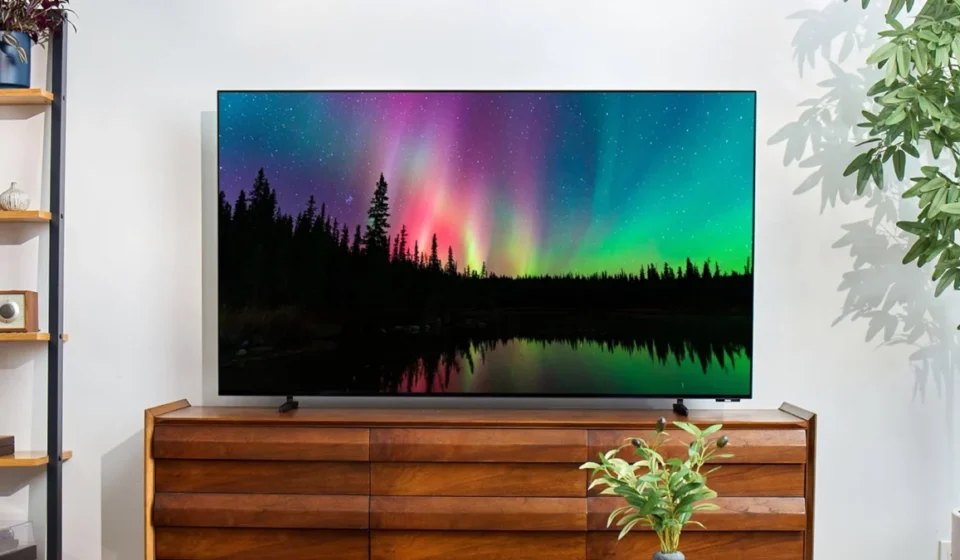
- Sleek Design and Premium Build: The physical design of the Roku Pro Series OLED reflects its premium aspirations. It features a strikingly thin metal bezel, maximizing the screen-to-body ratio for a more immersive viewing experience. The top half of the display is notably razor-thin, a characteristic often associated with high-end OLED panels. Thoughtful design extends to port placement, with connections strategically packed into the lower part of the TV to maintain the slim profile of the upper section.
- Roku Voice Remote Pro: The included Roku Voice Remote Pro enhances the user experience with several advanced functionalities. It offers hands-free voice control, allowing users to issue commands without pressing a button. Backlit buttons improve usability in dimly lit rooms, a common scenario for home theater viewing. Furthermore, its rechargeable battery, powered via USB-C, offers convenience and reduces environmental waste compared to disposable batteries.
- Roku Smart TV Interface: At the heart of the TV’s usability is Roku’s renowned smart TV interface. Known for its simplicity, speed, and extensive content library, the Roku OS provides intuitive navigation to thousands of streaming channels, live TV options, and personalized recommendations. Its straightforward tile-based layout makes it easy for users of all technical proficiencies to find and enjoy their preferred entertainment.
Pricing Strategy and Market Positioning
The current price drop to $799.99 for a 65-inch OLED TV positions the Roku Pro Series as a significant outlier in the premium display market. Typically, 65-inch OLED models from established brands like LG (e.g., C-series), Sony (e.g., A80L), and Samsung (e.g., S90C) command prices well north of $1,500, often exceeding $2,000, even during major sales events. While some entry-level OLEDs from these brands might occasionally dip below $1,200, hitting the sub-$800 mark for a 65-inch model is virtually unprecedented.
This aggressive pricing strategy by Roku suggests a multi-faceted objective:
- Market Disruption: Roku aims to democratize OLED technology, making it accessible to a broader consumer base that previously found such displays unaffordable. By significantly undercutting competitors, Roku can attract customers who aspire to premium picture quality but are constrained by budget.
- Ecosystem Expansion: A more affordable entry point into high-quality hardware can drive greater adoption of the Roku ecosystem. More Roku TV users translate to increased engagement with the Roku platform, which generates revenue through advertising, content distribution fees, and subscriptions.
- Brand Building: Establishing Roku as a credible and competitive hardware manufacturer, not just a software provider, is crucial for its long-term growth strategy. Offering premium features at disruptive prices can quickly build brand recognition and trust in the hardware segment.
- Strategic Partnership with Amazon: The exclusive availability on Amazon is a critical component of this strategy. Amazon provides unparalleled reach, logistics, and a robust sales platform, especially during key shopping periods like Prime events and the upcoming holiday season. This partnership allows Roku to leverage Amazon’s massive customer base and sophisticated e-commerce infrastructure, while Amazon benefits from offering an exclusive, high-value product that can drive traffic and sales.
The Role of Exclusive Partnerships and Timing
The exclusive sales arrangement with Amazon is not merely a distribution choice; it’s a strategic alliance. For Roku, it simplifies logistics and marketing, allowing them to focus on product development while benefiting from Amazon’s vast retail footprint and promotional capabilities. For Amazon, the Roku Pro Series OLED becomes a unique selling proposition, drawing customers to its platform specifically for this deal. The "sold and shipped by Amazon" detail provides consumers with confidence in terms of delivery, customer service, and returns, which is crucial for high-value electronics purchases.
The timing of this price drop is also highly significant. Occurring in late October, immediately after Prime Big Deal Days and well in advance of the traditional Black Friday and Cyber Monday sales events, it positions the Roku OLED as an early front-runner for holiday shopping. This pre-emptive strike can capture early bird shoppers and set a competitive benchmark for other TV manufacturers as they prepare their own holiday promotions.
Analyst Perspectives on Market Impact
Industry analysts have been closely watching Roku’s entry into the hardware market, and this aggressive pricing for its OLED offering is likely to garner significant attention. "Roku’s move is a bold statement," remarks Sarah Chen, a senior analyst at Tech Insights Group. "They are not just playing in the premium space; they are actively working to redefine its accessibility. This $799 price point for a 65-inch OLED is a direct challenge to the established players and could force a recalibration of pricing strategies across the board, especially for mid-tier OLED models."
Another analyst, Mark Peterson from Global Tech Market Research, adds, "This isn’t just about selling TVs; it’s about cementing Roku’s ecosystem. By making premium hardware more attainable, Roku enhances the value proposition of its software platform. It’s a strategic play to increase active accounts and ultimately boost their advertising and content revenue streams. The holiday season timing is impeccable, designed to make a splash when consumer spending on electronics is at its peak."
Consumer Benefits and the Holiday Season Context
For consumers, the benefits of this price drop are substantial. Individuals who have long coveted the superior picture quality of an OLED display but were deterred by the high cost now have an unprecedented opportunity. The Roku Pro Series OLED, at $799.99, offers a compelling package of a large 65-inch screen, 4K resolution, comprehensive HDR support, immersive audio, and advanced gaming features, all underpinned by Roku’s user-friendly smart TV interface. This makes it an ideal upgrade for home theater enthusiasts, serious gamers, or anyone looking to significantly enhance their daily viewing experience.
As the holiday shopping season rapidly approaches, deals of this magnitude become critical decision factors. The Roku 65-inch Pro Series OLED TV represents not just a discount but a significant value proposition that could reshape consumer expectations for premium televisions. Its combination of cutting-edge technology, user-friendly software, and a highly competitive price point makes it a standout option for those looking to invest in a high-quality display during this pivotal retail period.
Conclusion: The Future of Affordable Premium Displays
The strategic pricing of the Roku 65-inch Pro Series OLED TV at $799.99 signals a potential paradigm shift in the premium television market. Roku, traditionally a software and streaming device company, is leveraging its market position and direct-to-consumer model via Amazon to challenge the dominance of established hardware manufacturers. By making sophisticated OLED technology more affordable, Roku is not only expanding its own market share but also potentially accelerating the broader adoption of high-end display technologies. This development underscores a growing trend where technological advancements, combined with aggressive market strategies, converge to make previously exclusive features accessible to a wider audience, ultimately benefiting consumers with more choice and greater value in their home entertainment investments. The long-term implications for the competitive landscape of smart TV manufacturing will be closely observed as this aggressive strategy unfolds, particularly as consumers head into the peak holiday shopping season.