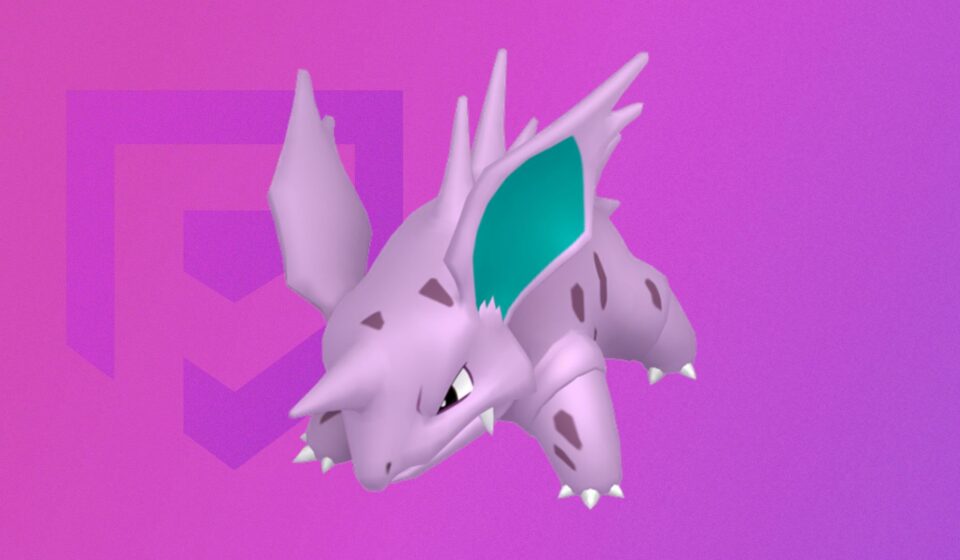

The world of Pokémon is populated by a vast array of creatures, each with its unique characteristics and evolutionary paths. Among these, the Nidoran family stands out with its distinct branching evolutionary lines. Today, we focus on Nidorino, a crucial mid-stage evolution that serves as a gateway to the formidable Nidoking. Its journey from the unassuming Nidoran♂ to the powerful king of the Nido line is a testament to strategic growth and the enduring appeal of classic Pokémon designs. For collectors and battlers alike, understanding Nidorino’s role within its evolutionary chain and its place in the broader Pokémon landscape is essential.
Nidorino’s Evolutionary Trajectory and Origins
Nidorino’s lineage is strictly defined: it evolves exclusively from Nidoran♂, the male counterpart to Nidoran♀. This evolution occurs at a relatively early stage, specifically at level 16. Once Nidorino reaches this developmental milestone, it gains enhanced stats and a more robust offensive and defensive profile compared to its pre-evolved form. The path does not end here; Nidorino’s ultimate destiny is to evolve into Nidoking, a powerful dual-type Poison/Ground Pokémon renowned for its exceptional offensive capabilities and wide movepool. This final evolution is triggered not by leveling up, but by the application of a Moon Stone, a rare evolutionary item found throughout the Pokémon world. This unique evolutionary requirement for Nidoking adds another layer of strategy for trainers aiming to acquire this legendary Pokémon.
The Nidoran family, including Nidorino, made its debut in the very first generation of Pokémon games: Pokémon Red, Blue, and Yellow. This generation laid the groundwork for the vast Pokémon universe, and these early-designed creatures have remained fan favorites for decades. Their introduction established the concept of gender differences within species, a feature that would become a hallmark of the franchise. Nidorino’s consistent presence across subsequent generations, with varying availability, highlights its importance as a foundational Pokémon.
Where to Find Nidorino: A Generational Overview
Tracking down Nidorino has been a varied endeavor across the different Pokémon game installments, reflecting the evolving game design and world-building of the franchise. Initially, in the Kanto region games, Nidorino could be found in specific, often challenging, locations.
-
Generation 1 (Red, Blue, Yellow): In Pokémon Red and Blue, Nidorino was primarily encountered in the Safari Zone, a special area requiring an entrance fee and offering limited time to explore. Pokémon Yellow expanded its accessibility slightly, allowing trainers to find Nidorino on Routes 9 and 23, in addition to the Safari Zone. These early encounters often involved patience and keen observation, as wild Pokémon in these areas could be elusive.
-
Generation 3 (Ruby, Sapphire, Emerald, FireRed, LeafGreen): The remakes and enhancements of Generation 1, found in FireRed and LeafGreen, brought Nidorino back to the familiar Safari Zone. However, in the Hoenn region games of Ruby, Sapphire, and Emerald, Nidorino was not directly catchable in the wild. Instead, obtaining one required trading with another player who had access to it, often from a game where it was more readily available. FireRed offered a trade option on Route 11 for LeafGreen players, further emphasizing the reliance on trading for certain Pokémon in these titles.
-
Generation 4 (Diamond, Pearl, Platinum, HeartGold, SoulSilver): The Sinnoh region games saw Nidorino’s return to direct capture. In Diamond, Pearl, and Platinum, trainers could locate Nidorino on Route 221 and at the Valor Lakefront. The remakes of Generation 2, HeartGold and SoulSilver, provided a more abundant Nidorino presence, with encounters on Routes 13, 14, and 15, as well as the beloved Safari Zone.
-
Generation 6 (X, Y, Omega Ruby, Alpha Sapphire): In the Kalos region of X and Y, Nidorino was accessible on Route 11. However, similar to the Hoenn games, Omega Ruby and Alpha Sapphire, the remakes of Generation 3, relegated Nidorino to trade-only availability, reinforcing the established pattern for some Pokémon in remakes.
-
Generation 7 (Sun, Moon, Ultra Sun, Ultra Moon): The Alola region games offered a different approach to obtaining many Pokémon, often through the Pokémon Bank application. Nidorino, along with its evolutionary line, could be transferred via Pokémon Bank, effectively making it available to Alolan trainers without direct wild encounters.
-
Generation 8 (Sword, Shield, Isle of Armor, Brilliant Diamond, Shining Pearl): The Galar region and its expansions presented a mixed bag for Nidorino. In Sword and Shield, it was primarily obtainable through trading. However, the Isle of Armor DLC significantly increased its accessibility, with encounters found in Ballimere Lake, Frigid Sea, and Giant’s Bed. The remakes of Generation 4, Brilliant Diamond and Shining Pearl, brought Nidorino back to the Grand Underground and specific routes within the Sinnoh region, including Route 221 and the Valor Lakefront, alongside several new cave locations within the Grand Underground. Notably, in Pokémon Legends: Arceus, Nidorino is listed as unobtainable, reflecting the game’s unique focus on historical Sinnoh and its distinct wild Pokémon distribution.
This varied availability across generations underscores the importance of trading and careful exploration for trainers seeking to complete their Pokédex or strategize with Nidorino.
Nidorino’s Base Stats and Battle Prowess
Nidorino’s base stats provide a foundation for its combat effectiveness. While not reaching the colossal numbers of legendary Pokémon or fully evolved powerhouses, Nidorino offers a balanced stat distribution that makes it a viable mid-game contender and a crucial stepping stone to Nidoking. Its stats generally lean towards respectable Defense and Special Defense, coupled with a decent Attack stat.
- HP: Moderate, allowing it to withstand a few hits.
- Attack: Decent, enabling it to deal meaningful damage with physical moves.
- Defense: Solid, providing resilience against physical assaults.
- Special Attack: Average, making it less effective with special-based offensive moves.
- Special Defense: Good, offering protection against special-based attacks.
- Speed: Generally moderate, allowing it to outspeed some slower Pokémon but often being outpaced by faster threats.
These stats, when combined with appropriate training and move selection, allow Nidorino to fulfill its role as a sturdy offensive presence. Its evolution into Nidoking significantly amplifies these stats, particularly Attack and Special Attack, transforming it into a truly formidable force.
Type Matchups and Strategic Considerations
Understanding Nidorino’s type matchups is paramount for any trainer looking to utilize it effectively in battle. As a pure Poison-type Pokémon, Nidorino possesses a clear set of strengths and weaknesses that dictate its tactical deployment.
Weaknesses:
Nidorino is particularly vulnerable to Ground and Psychic type attacks. Pokémon wielding these types, such as Excadrill (Ground) or Alakazam (Psychic), can pose a significant threat, potentially knocking out Nidorino quickly if not handled with care. Trainers must exercise caution and switch out if facing these types of opponents.
Resistances:
Conversely, Nidorino boasts several resistances, making it a valuable asset against specific Pokémon types. It takes reduced damage from Bug, Fairy, Fighting, Grass, and other Poison type attacks. This makes Nidorino an excellent counter-pick against many common Pokémon, particularly those reliant on these types for their offensive strategy. For instance, a Grass-type Pokémon like Venusaur or a Bug-type like Butterfree would struggle against Nidorino’s inherent resistances.
Normal Damage:
Nidorino takes neutral damage from a wide array of other types, including Dark, Dragon, Electric, Fire, Flying, Ghost, Ice, Normal, Rock, Steel, and Water. This broad category of neutral matchups means Nidorino can often be used offensively against these types without immediately being at a severe disadvantage, provided the opponent doesn’t have a type advantage over Nidorino’s resistances.
Immunities:
Nidorino has no type immunities, meaning it will always take at least neutral damage from any attacking type. This highlights the importance of managing its health and strategically switching it out when facing super-effective attacks.
Movepool and Learning Capabilities
Nidorino’s movepool, especially in the latest generations, showcases its potential for diverse offensive and supportive roles. While its signature Poison typing grants access to potent poison-based attacks, its ability to learn a variety of moves through breeding and TMs/TRs allows for significant customization.
In recent Pokémon titles like Brilliant Diamond/Shining Pearl and Sword/Shield, Nidorino can learn a range of impactful moves. These include:
-
Offensive Moves: Moves like "Poison Tail" (Poison-type), "Confusion" (Psychic-type), and "Head Smash" (Rock-type) offer direct damage. "Beat Up" and "Sucker Punch" (Dark-type) provide offensive pressure with priority or unique mechanics. "Take Down" and "Thrash" (Normal-type) are powerful physical attacks that can be useful, though they come with drawbacks like recoil or self-inflicted confusion.
-
Status and Support Moves: "Amnesia" (Psychic-type) boosts Nidorino’s Special Defense, making it more resilient to special attackers. "Disable" (Normal-type) can prevent an opponent from using their last used move, offering tactical control. "Supersonic" (Normal-type) inflicts confusion, a status ailment that can disrupt an opponent’s attack rhythm. "Counter" (Fighting-type) allows Nidorino to retaliate with double the damage it took from a physical attack, a potent defensive-offensive maneuver. "Venom Drench" (Poison-type) lowers the target’s Speed and Attack stats if they are poisoned, a useful move in longer battles.
The availability of these moves through breeding with specific Pokémon further expands Nidorino’s strategic potential. For instance, learning "Supersonic" through breeding with Pokémon like Lickitung or Mudkip, or "Take Down" from Bulbasaur or Eevee, allows trainers to tailor Nidorino’s skillset to their specific battle needs. This ability to learn a diverse range of moves from different type categories makes Nidorino a versatile Pokémon, capable of surprising opponents and adapting to various battle scenarios.
The Enduring Appeal of Nidorino
Nidorino’s journey through the Pokémon games is a narrative of consistent presence and evolving utility. From its humble beginnings in the Safari Zone of Kanto to its more accessible forms in later generations, it has remained a recognizable and important Pokémon. Its role as the precursor to the mighty Nidoking solidifies its place in the pantheon of classic Pokémon. For many trainers, Nidorino represents not just a step in evolution, but a tangible part of their Pokémon journey, a creature that grew alongside them through countless battles and adventures. Its distinctive design, with its sharp spikes and determined expression, continues to resonate with fans, making Nidorino a beloved figure in the expansive Pokémon universe. The strategic depth offered by its type matchups, stat distribution, and diverse movepool ensures that Nidorino, and by extension Nidoking, will continue to be a relevant and exciting part of Pokémon battles for years to come.