Monster Hunter Outlanders: A Deep Dive into the Ambitious Mobile Adaptation of a Legendary Franchise

The roar of iconic beasts and the thrill of the hunt are poised to echo across mobile devices worldwide as Monster Hunter Outlanders gears up for its eventual release. Building upon the enduring legacy of Capcom’s critically acclaimed Monster Hunter series, which has captivated players for over two decades with its intricate combat, deep progression, and breathtaking fantasy worlds, Outlanders aims to bring the full-fledged mainline experience to a new generation of gamers on the go. This ambitious undertaking by TiMi Studios, a subsidiary of Tencent Games, seeks to transcend the limitations of previous mobile iterations, offering an authentic hunting adventure that mirrors the depth and excitement of its console and PC counterparts. Producer Dong Huang has explicitly stated the goal: "it’s time for mobile players to fully enjoy what makes Monster Hunter one of the most beloved franchises in gaming" by delivering "an authentic hunting experience." This commitment signals a significant shift, promising a richer and more complex gameplay loop than the augmented reality-focused Monster Hunter Now.
The Road to Release: A Developing Timeline
While an official release date for Monster Hunter Outlanders remains unconfirmed, a clear developmental trajectory has been established through recent beta tests and official communications. The first closed beta, a crucial testing phase, took place from November 27 to December 4, 2025. This early access period, limited to participants in Japan, Canada, and the USA, provided invaluable feedback to the development team. Following this initial test, TiMi Studios released a comprehensive Developer Update, detailing their ongoing efforts to refine the game based on player input. The studio emphasized their dedication to "deliver the full release as soon as possible," with current development priorities focused on enhancing the core hunting experience, optimizing performance, and addressing various areas identified during the beta.
The reveal of Monster Hunter Outlanders occurred towards the end of 2024, and even at that early stage, the game showcased a remarkable level of polish. Since then, significant additions of new content and features have been integrated, indicating a steady and focused development cycle. Based on the progress observed and the proactive nature of the beta testing, industry analysts and keen observers are tentatively projecting a late 2026 or, at the latest, a 2027 release window for the global launch. The sustained effort in polishing and expanding the game post-beta suggests a commitment to delivering a high-quality product, rather than rushing to market.
Second Closed Beta: Expanding the Hunt
The development team has announced the commencement of a second closed beta test (CBT2) for Monster Hunter Outlanders, marking another significant milestone in the game’s pre-release phase. The recruitment period for this upcoming beta is set to run from April 1 to April 22, offering interested players on both Android and iOS platforms the opportunity to enlist. Applications can be submitted through the official Monster Hunter Outlanders website.
This second beta test is slated to introduce a host of enhancements and new content, building upon the foundations laid by the first. Players can anticipate the inclusion of brand-new Monster Hunter Outlanders characters, offering fresh perspectives and gameplay mechanics. Furthermore, the maps have been expanded, promising larger and more intricate environments to explore and hunt within. A variety of other features, developed and refined since the initial beta, will also be showcased.
The CBT2 will support multiple languages, including English, Simplified Chinese, Japanese, German, and Spanish (LATAM), reflecting the game’s global ambitions. However, the playtest will have specific device requirements to ensure optimal performance. Android users will need a device equipped with a Snapdragon 845 processor (running Android 12) or higher, while iOS participants require an iPhone XR (running iOS 17) or a newer model. Importantly, participants who meet certain eligibility criteria during this playtest will be presented with the opportunity to claim exclusive rewards upon the game’s official launch, incentivizing active engagement and valuable feedback.
Pre-Registration and Community Engagement
While direct pre-registration for Monster Hunter Outlanders on platforms like Google Play and the App Store is not yet available, prospective players can proactively stay informed by signing up for updates on the game’s official website. By visiting the official Monster Hunter Outlanders website and navigating to the ‘sign up now’ button, users can enter their email address to receive the latest news, announcements, and updates directly.

Beyond website sign-ups, TiMi Studios is actively fostering a robust community presence across various social media platforms. Players interested in the game are encouraged to follow MHO’s official channels on X (formerly Twitter), Facebook, Instagram, and YouTube. Furthermore, an official Discord channel has been established, providing a direct line of communication with the development team and a space for players to connect, discuss strategies, and share their excitement. This multi-pronged approach to community engagement underscores the developers’ commitment to building anticipation and fostering a loyal player base prior to the global launch.
Gameplay Mechanics: A Deeper Hunter Experience
Monster Hunter Outlanders is designed as a mobile action role-playing game (ARPG) that strives to faithfully replicate the core gameplay loop of a mainline Monster Hunter title. At its heart, the game revolves around embarking on challenging hunts, either as a solo player or as part of a squad of up to four hunters, with the primary objective of tracking down and defeating one or more target monsters. This focus on cooperative play and challenging boss encounters is a cornerstone of the Monster Hunter franchise and is central to Outlanders’ design.
As is tradition within the series, players will have access to a diverse arsenal of weapon types, each offering a distinct playstyle and strategic approach to combat. From the swift precision of the Dual Blades to the crushing power of the Great Sword, the selection of weapons will cater to a wide range of player preferences. Complementing these familiar mechanics, players can expect to encounter a roster of both beloved returning monsters and potentially new variants, adding to the thrill of discovery and the challenge of adaptation. The depth of combat, the need for careful preparation, and the mastery of weapon mechanics are all expected to be present in Outlanders, mirroring the intricate combat systems of its console predecessors.
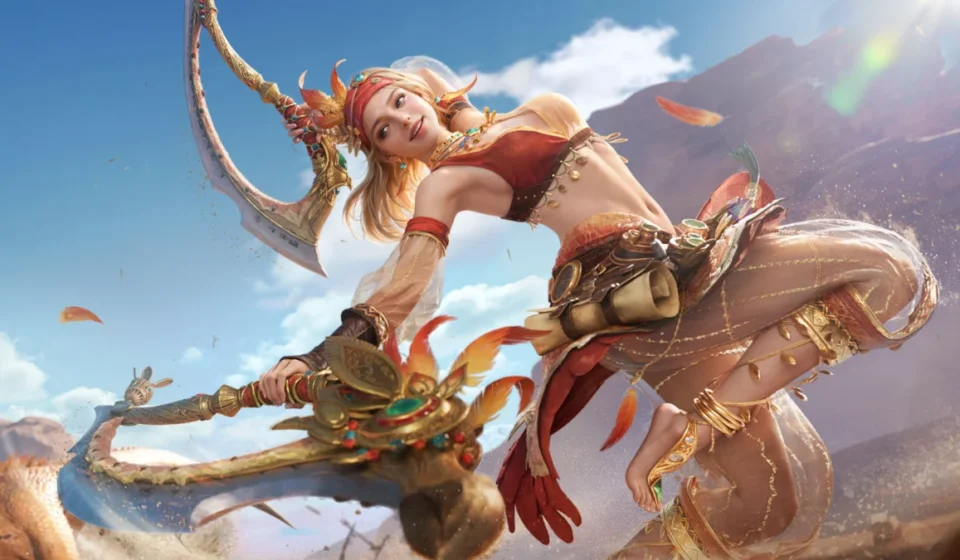
A notable departure from previous Monster Hunter titles, and a significant innovation for the series on mobile, is the introduction of distinct Monster Hunter Outlanders characters. While players will still have the ability to create and customize their own hunter avatars, Outlanders will also allow players to step into the shoes of several unique, pre-defined adventurers. These adventurers are envisioned as specialists, each tied to specific weapon types and seemingly possessing unique ties to certain monsters. Their aesthetics, including armor and gear, will reportedly reflect these monster affiliations, adding a layer of thematic depth and potential narrative integration.
During a Discord call with TiMi Studios prior to Monster Hunter Outlanders’ appearance at Tokyo Game Show (TGS), the development team clarified the acquisition of these new adventurers. They stated that players will be able to "obtain new adventurers for free by playing and through daily challenges." Crucially, they also added that "there will also be the option to pay for new adventurers." This statement suggests a character acquisition model that avoids the typical "gacha" mechanics prevalent in many mobile games. Instead, it appears to lean towards a system where adventurers are earnable through dedicated gameplay or purchasable directly, ensuring that core gameplay progression is not solely dependent on microtransactions, while still offering a monetization avenue for those who wish to acquire characters more quickly or support the game’s ongoing development. This approach could significantly impact player satisfaction and retention, by balancing accessibility with optional monetization.
Background and Context: The Monster Hunter Phenomenon
The Monster Hunter franchise, first launched by Capcom in 2004, has evolved from a niche title into a global gaming phenomenon. Its core appeal lies in its unique gameplay loop: players assume the role of a hunter who must track, battle, and defeat massive monsters in rich, interconnected environments. Upon defeating these creatures, hunters harvest their parts – scales, claws, teeth, and more – which are then used to craft new weapons and armor. This crafting system forms the backbone of player progression, encouraging repeated hunts and strategic gear choices to overcome increasingly formidable challenges.
The series has seen numerous mainline entries, spin-offs, and ports across various platforms, including PlayStation, Xbox, Nintendo Switch, and PC. Titles like Monster Hunter: World (2018) and Monster Hunter Rise (2021) achieved massive commercial and critical success, significantly broadening the franchise’s appeal and solidifying its status as a major player in the gaming industry. World, in particular, broke sales records for Capcom and introduced a more accessible yet still deep gameplay experience to a wider audience. Rise, on the other hand, brought back a more traditional Monster Hunter feel with faster-paced combat and unique traversal mechanics.
The foray into the mobile space has been a more gradual process. Monster Hunter Stories was an RPG spin-off released on mobile devices, and more recently, Monster Hunter Now, developed by Niantic (the creators of Pokémon GO), leveraged augmented reality to bring monster hunting to the real world. While Monster Hunter Now offered a novel way to interact with the franchise’s creatures, its gameplay was intentionally simplified to suit the AR mobile format. Monster Hunter Outlanders represents a more direct attempt to translate the intricate and demanding experience of the mainline console games into a mobile format, a feat that has been challenging for many developers due to the demanding nature of the gameplay and the limitations of mobile hardware and control schemes. The success of Outlanders could pave the way for further deep and engaging RPG experiences on mobile platforms, demonstrating that complex, console-quality gameplay can indeed be adapted for on-the-go play.