Seasonality and the AI Memory Boom Analyzing the Data Driven Patterns Behind Semiconductor and Storage Stock Fluctuations

OpenAI is reportedly in negotiations to secure up to five exabytes of data storage, a move that highlights the staggering physical infrastructure requirements of the generative artificial intelligence era. To contextualize a figure as vast as five exabytes, consider that a top-tier Apple Inc. iPhone typically offers one terabyte of storage, which is sufficient for approximately 250 high-definition movies. An exabyte is equivalent to one million terabytes. Consequently, OpenAI’s reported requirement represents a capacity five million times greater than a flagship consumer device, an order of magnitude that underscores the sheer volume of data required to train and maintain next-generation large language models.
This massive procurement effort is not an isolated incident. Current market data suggests that approximately 70% of all high-performance memory chips are currently being routed to a small group of "hyperscalers," including Microsoft Corp., Alphabet Inc., Amazon.com Inc., and Meta Platforms Inc. These technology giants are engaged in an unprecedented construction boom, erecting AI-specific data centers designed to handle the immense computational and storage demands of modern machine learning. As AI models evolve from simple text processors to multimodal systems capable of generating video and high-resolution imagery, the demand for physical storage has shifted from a secondary concern to a primary bottleneck in the global technology supply chain.
The Exponential Growth of Training Requirements
The transition from early-stage research to global AI deployment has been defined by an exponential increase in data consumption. In the early stages of development, OpenAI’s GPT-2 model was trained on a dataset comparable to the text found on approximately 2,800 library shelves. Just two years later, the development of GPT-3 required an expansion to the equivalent of 30,000 shelves. By 2024, the scale had shifted again; Meta Platforms’ Llama 3 model was trained on a dataset representing the contents of roughly one million library shelves.

This trajectory illustrates a fundamental law of current AI development: as models grow in complexity, the "surface area" of the data they must ingest expands. This ingestion process requires that every piece of training data—ranging from digitized archives and high-definition video to vast repositories of code—reside on physical hard drives within data centers before the training phase can even begin. This "data residency" requirement has transformed the once-commoditized memory and storage sector into one of the most volatile and high-growth segments of the equity market.
Market Performance and the Recent Correction
The surge in infrastructure demand initially resulted in historic gains for memory and storage providers. Western Digital Corp. (WDC) and Micron Technology Inc. (MU) emerged as primary beneficiaries of this trend. Over the past year, Western Digital shares experienced a staggering 800% increase, while Micron saw gains exceeding 700%. Micron’s performance was further bolstered by the announcement that its high-bandwidth memory (HBM)—a critical component that sits in close proximity to AI processors to facilitate rapid data transfer—is essentially sold out through the end of 2026.
However, the month of July introduced a period of significant volatility. Following record highs in June, Micron shares retraced by approximately 20%, while Western Digital saw a sharper decline of 26%. This correction has sparked a debate among institutional and retail investors regarding the sustainability of the AI bull market. Analysts are currently divided on whether this represents a definitive "market top" or a standard "healthy pause" within a broader multi-year cycle.
For many market participants, navigating these fluctuations based solely on headlines or earnings estimates has proven difficult. This uncertainty has led to a renewed interest in alternative analytical frameworks, specifically the study of market seasonality and historical trading patterns.
The Science of Seasonality and Green Days
Seasonality in the stock market refers to the study of how individual equities trade across specific calendar windows, regardless of broader macroeconomic factors like inflation, geopolitical conflict, or interest rate shifts. Keith Kaplan, CEO of TradeSmith and a software engineer by training, has spearheaded research into these recurring patterns. By applying algorithmic analysis to decades of historical stock market data, Kaplan’s team identified what they term "green days"—specific windows of time during which a stock has historically shown a high probability of appreciation.
The premise of this research is that while news cycles are unpredictable, certain institutional buying patterns, fiscal year-end behaviors, and industry-specific cycles create recurring "pockets" of bullishness. These windows often persist across both bull and bear markets, suggesting that timing can be as critical as the underlying fundamental story of a company.
Case Studies in Historical Accuracy
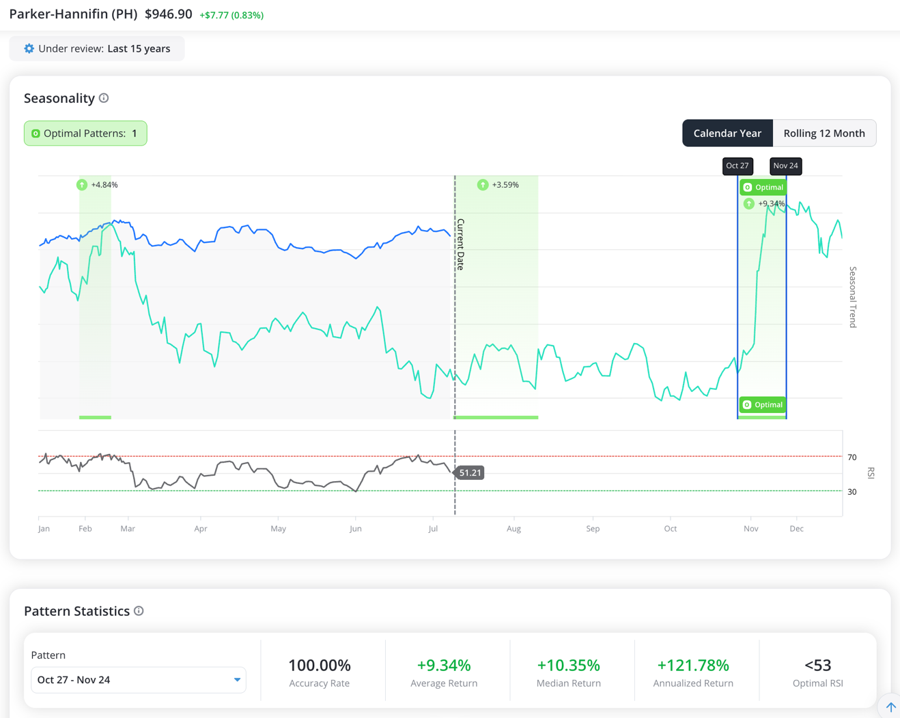
To demonstrate the efficacy of seasonality, research points to companies like Parker-Hannifin Corp. (PH), an aerospace and industrial firm. Data analysis reveals that over the last 15 years, the stock has entered a bullish window starting on October 27 with a 100% historical accuracy rate. Despite the company’s lack of direct involvement in the AI sector, the consistency of this pattern highlights the power of calendar-based analysis.
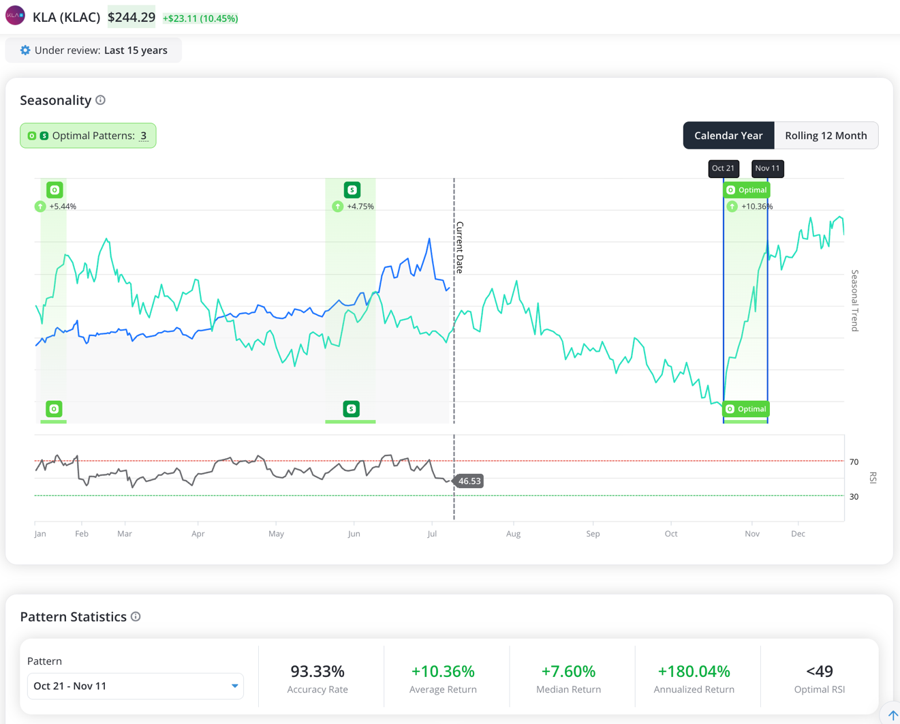
A similar pattern is observed in KLA Corp. (KLAC), which produces equipment for semiconductor manufacturers. Since October 21 of each year, the stock has risen in more than 93% of the last 15 years. While Parker-Hannifin and KLA Corp. operate in vastly different industries, they share the characteristic of having predictable windows of price appreciation that are detached from the daily news cycle.
Comparative Analysis Western Digital vs Micron
When applying the seasonality framework to the current AI memory trade, a distinct divergence emerges between the two major players, Western Digital and Micron. While both companies are central to the AI narrative, their historical "green windows" occur at different times.
Micron Technology, despite its status as the leader in high-bandwidth memory, does not enter its next high-probability seasonal window until August 20. Historical data indicates that from August 20 through September 9, the stock has appreciated 80% of the time over the last 15 years, with an average gain of 4.1% during that specific stretch. For investors looking at the immediate term in July, Micron’s data suggests a period of relative uncertainty.
Conversely, Western Digital’s seasonal window is currently active. The company, which specializes in the NAND flash and hard disk drives (HDDs) required for long-term data storage in AI centers, has historically seen a bullish trend from July 1 to July 22. Over the past 15 years, Western Digital shares have risen during this specific three-week window 86.7% of the time. This suggests that for traders focused on the "AI memory story," Western Digital may offer a more statistically favorable entry point during the mid-summer period than its competitors.
Broader Impact and Industry Implications
The shift toward data-driven seasonality comes at a time when traditional valuation metrics are being tested by the sheer scale of AI capital expenditure (CapEx). Big Tech firms have signaled that they intend to spend tens of billions of dollars annually on AI infrastructure for the foreseeable future. This "CapEx supercycle" provides a strong fundamental floor for the memory industry, but it does not eliminate the volatility inherent in high-growth tech stocks.
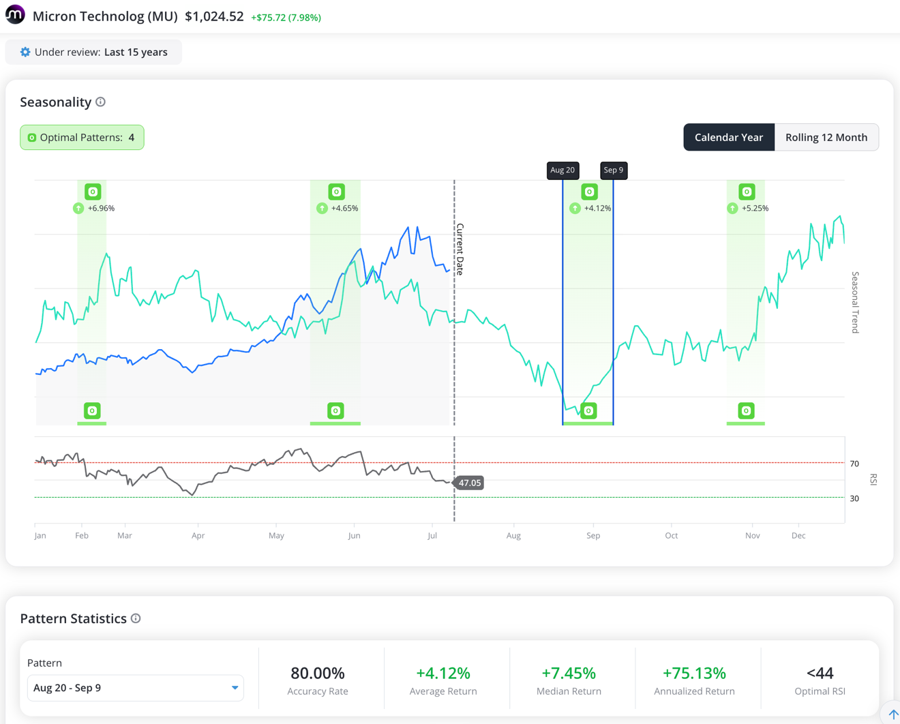
Industry analysts suggest that the current correction in memory stocks is likely a result of "digestion." After a massive run-up in share prices, the market is waiting for physical shipments and revenue realization to catch up with the hype. In this environment, the ability to identify specific windows of strength—such as Western Digital’s July window or Micron’s late-August window—becomes a vital tool for risk management.
Furthermore, the geopolitical landscape adds a layer of complexity. Ongoing trade restrictions regarding high-end semiconductor equipment to China and domestic subsidy programs like the U.S. CHIPS Act are creating a fragmented global market. These factors can cause sudden price swings that override fundamental analysis in the short term, making historical seasonal patterns an even more attractive "anchor" for investors seeking an edge.
Conclusion and Outlook for 2026
As the market looks toward 2026, the focus is expected to shift from the initial "build-out" phase of AI to the "optimization" phase. During this transition, the companies that provide the physical storage for the world’s data will remain indispensable. The reported five-exabyte requirement from OpenAI is likely just the beginning of a larger trend where data storage becomes as strategically important as the processors themselves.
For the investment community, the takeaway from the recent volatility in Micron and Western Digital is not that the AI story is over, but that the "buy and hold" strategy may face significant headwinds without a tactical understanding of timing. The integration of seasonality software and algorithmic pattern recognition represents the next evolution in retail and institutional trading. By identifying when the "green days" occur, investors can better position themselves to capitalize on the AI boom while avoiding the pitfalls of chasing a narrative at the wrong time. As the data shows, in a market driven by exabytes and exponential growth, the calendar may be the most reliable tool an investor has left.