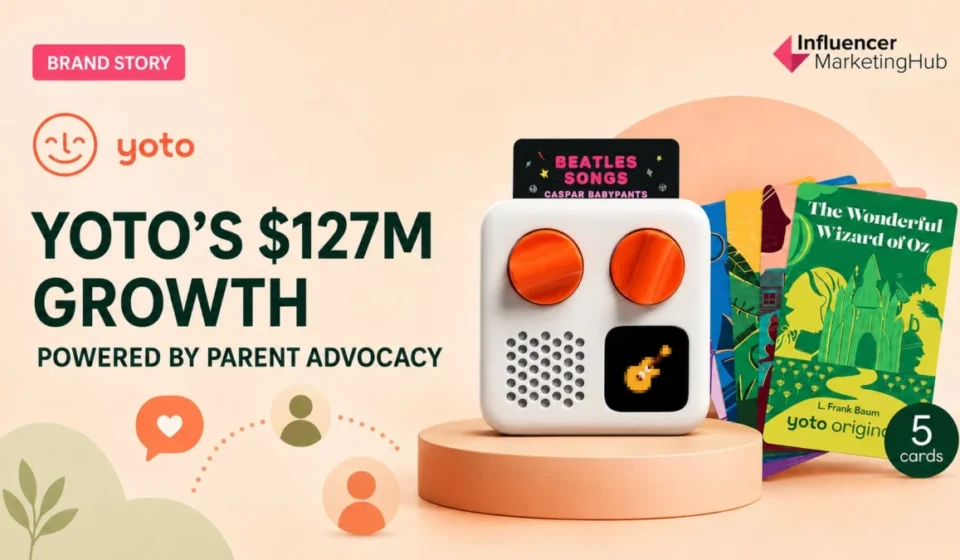

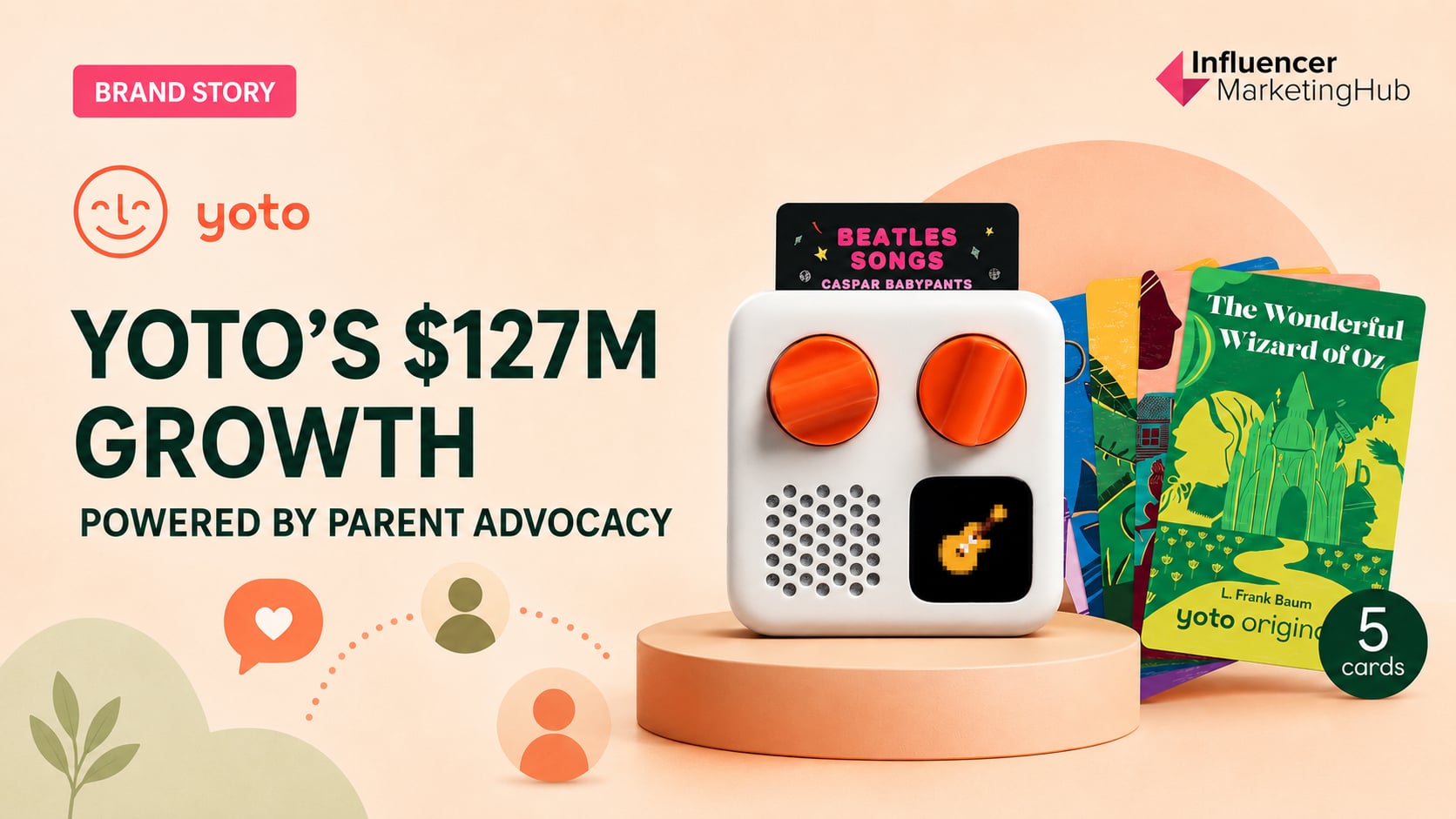
The global toy and educational technology market has witnessed a significant shift toward screen-free entertainment, a movement punctuated by the meteoric rise of Yoto, a London-based audio platform that recently surpassed $127 million in annual revenue. By prioritizing child-led exploration and leveraging a sophisticated network of parent advocates, Yoto has successfully carved out a dominant niche in an industry long dominated by screen-heavy devices. This financial milestone reflects a broader consumer trend: the "digital detox" for children, where parents are increasingly willing to invest in high-quality, tactile hardware that fosters independence without the risks associated with internet-connected screens or algorithm-driven content.
The Foundation of a Screen-Free Philosophy
Founded in 2017 by Ben Stanway and Filip Denker, Yoto was born out of a desire to return autonomy to children. The founders recognized a growing tension in modern parenting—the utility of digital content versus the detrimental effects of excessive screen time, including disrupted sleep patterns and reduced attention spans. Unlike traditional tablets or smart speakers, the Yoto Player utilizes physical cards equipped with Near Field Communication (NFC) technology. When a child inserts a card into the device, it triggers the playback of specific audio content, ranging from classic literature and educational podcasts to music and meditation guides.
This "physical-digital" bridge allows children as young as three to navigate their own entertainment without parental supervision, yet within a curated, safe environment. The device intentionally lacks a camera, a microphone, and an internet browser, addressing the primary privacy and safety concerns that have plagued other tech-centric toys. This design philosophy served as the bedrock for the brand’s marketing strategy, which relied not on traditional advertising, but on the lived experiences of parents seeking alternatives to the "YouTube rabbit hole."
A Chronology of Rapid Expansion
The trajectory of Yoto from a niche Kickstarter project to a $127 million powerhouse is marked by strategic funding rounds and timely product launches.
- 2017–2018: The Proof of Concept. Yoto launched its first hardware iteration on Kickstarter, raising over £30,000. This early stage was critical for establishing a core community of early adopters who provided feedback on the device’s durability and ease of use.
- 2019–2020: Scaling During Global Shifts. The launch of the Yoto Player (2nd Generation) coincided with the global pandemic. As schools closed and parents faced "Zoom fatigue," the demand for independent, educational entertainment skyrocketed. Yoto saw triple-digit growth during this period.
- 2021: Strategic Investment. The company secured $17 million in Series B funding, led by Acton Capital with participation from Manzanita Capital and others. This capital was earmarked for international expansion, particularly into the North American market, and for bolstering its content library.
- 2022: The Yoto Mini and Portability. The introduction of the Yoto Mini, a pocket-sized version of the original player, expanded the brand’s use case to travel and commuting, further cementing its presence in the daily lives of families.
- 2023–2025: Content Diversification. Partnerships with major publishers such as Disney, Penguin Random House, and Universal Music Group allowed Yoto to offer high-demand titles, from Frozen to The Chronicles of Narnia, increasing the lifetime value of each hardware sale through continuous card purchases.
- 2026: The $127M Revenue Milestone. By the mid-2020s, Yoto’s ecosystem of hardware, cards, and subscription services (the Yoto Club) culminated in a record-breaking financial year, driven largely by organic advocacy and a robust referral network.
The Mechanics of Parent Advocacy and Community-Led Growth
The centerpiece of Yoto’s success is its transition from a hardware manufacturer to a community-centric brand. While many companies struggle with high customer acquisition costs (CAC), Yoto capitalized on the high-trust environment of parenting groups.
The brand’s "Parent Advocacy" model operates on three distinct levels:
1. The Organic Influencer Effect
Yoto did not initially rely on celebrity endorsements. Instead, it targeted "micro-influencers"—parents on platforms like Instagram and TikTok who shared authentic "day-in-the-life" content. When these creators showed their children playing independently with a Yoto player, it solved a universal pain point for their audience. The visual nature of the tactile cards made for highly "shoppable" social content, leading to a viral spread that felt communal rather than corporate.
2. Yoto Space and Co-Creation
In an unconventional move for a toy brand, Yoto launched "Yoto Space," a digital community platform where parents can share "Make Your Own" (MYO) card ideas, record their own stories for their children, and provide direct feedback to the company’s developers. This level of engagement transformed customers into stakeholders. By allowing parents to record grandparents’ voices or local radio stations onto blank cards, Yoto integrated itself into the emotional fabric of the family, making the product indispensable.
3. The Referral and Loyalty Ecosystem
To sustain its $127 million valuation, Yoto implemented a tiered referral program. Existing owners receive discounts or free content cards for referring new customers. Given the high price point of the initial hardware (approximately $70–$100), these referrals served to lower the barrier to entry for new families. Data indicates that a significant percentage of Yoto’s sales are driven by word-of-mouth recommendations within school communities and neighborhood groups.
Supporting Data: The Economics of the Audio Card Model
Financial analysts attribute Yoto’s robust revenue to its "razor and blade" business model. While the hardware (the Player or Mini) is a one-time purchase, the ecosystem of cards ensures recurring revenue.
Key data points illustrating this growth include:
- Card Sales Volume: As of 2026, Yoto has sold over 15 million audio cards globally. The average Yoto household owns between 20 and 30 cards, representing a significant post-purchase spend.
- Subscription Retention: The "Yoto Club," a monthly subscription service that provides members with two cards per month and free shipping, maintains a retention rate significantly higher than the industry average for kids’ media. This provides a predictable, recurring revenue stream that contributes to the $127 million total.
- Market Share in the UK and US: Yoto now commands an estimated 35% of the screen-free audio market in the United Kingdom and is the fastest-growing brand in the category within the United States.
Official Responses and Industry Positioning
In statements following the release of the most recent fiscal reports, Yoto executives emphasized that the company’s growth is a reflection of a "cultural correction" regarding technology. "We are not just selling a speaker; we are selling a new way for children to interact with the world," a company spokesperson stated. "The fact that our growth is driven by parents telling other parents about their success with the device is the highest validation of our mission."
Industry analysts note that Yoto’s success has forced legacy toy manufacturers to reconsider their digital strategies. "Yoto has proven that you don’t need a screen to capture a child’s imagination or a parent’s wallet," says senior retail analyst Sarah Thompson. "They have successfully commoditized silence and independent play, which are two of the most valuable assets in modern parenting."
Competitive Landscape: Yoto vs. Tonies
The primary competitor in this space is the German brand Tonies, which uses hand-painted figurines (Tonies) instead of cards. While Tonies currently holds a larger total market share in Europe, Yoto’s growth among older children (ages 5–12) has been more pronounced. Analysts point out that while figurines appeal to toddlers, Yoto’s card-based system feels more "grown-up," allowing the brand to retain customers for a longer period. Furthermore, the "Make Your Own" card feature has given Yoto a competitive edge in the educational sector, where teachers use the cards to record personalized lessons.
Broader Impact and Future Implications
The success of Yoto carries implications far beyond the toy aisle. It signals a shift in the "attention economy," where the quality of engagement is starting to outweigh the quantity of time spent. As Yoto approaches its next phase of growth, the company is reportedly exploring partnerships in the neurodiversity space. Preliminary studies suggested by the brand indicate that the tactile, predictable nature of the Yoto player can be particularly beneficial for children with ADHD or autism, providing a sensory-friendly way to process information and transitions.
Furthermore, Yoto’s $127 million milestone demonstrates the viability of "privacy-first" technology. In an era where data harvesting is a constant concern, Yoto’s refusal to monetize user data or include tracking features has become a unique selling proposition. This has built a level of brand equity that is difficult for tech giants like Amazon or Google to replicate in the children’s sector.
As Yoto looks toward the future, the challenge will be maintaining its community-led feel while scaling into new markets such as Asia and South America. However, by keeping parent advocacy at the center of its growth strategy, Yoto has created a resilient business model that thrives on the most powerful force in retail: the recommendation of one parent to another. The $127 million figure is not just a measure of sales, but a testament to a global movement toward reclaiming childhood from the digital screen.