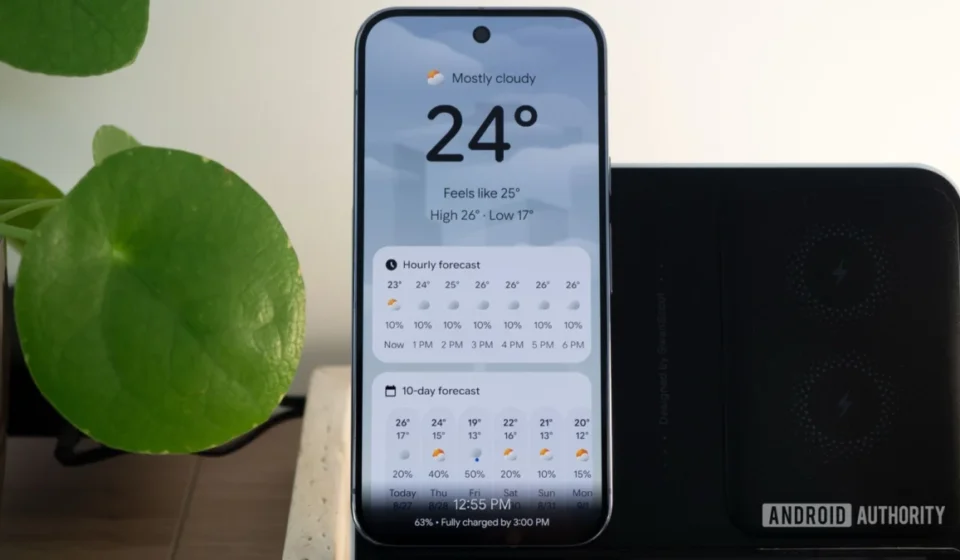

Google DeepMind has officially announced WeatherNext 3, its latest and most sophisticated artificial intelligence (AI) model designed to revolutionize global weather forecasting. This groundbreaking development promises to deliver significantly more detailed, frequently updated, and remarkably accurate weather predictions directly to millions of users through integrated Google services such as Google Search, Gemini, and Maps. The initiative aims to bridge the persistent gap between traditional weather predictions and the often-unpredictable reality experienced by individuals, particularly addressing common frustrations with inaccurate forecasts for localized phenomena like precipitation.
The announcement marks a pivotal moment in meteorological science, signaling a profound shift from conventional physics-based numerical weather prediction (NWP) models to data-driven, AI-powered systems capable of processing vast amounts of information with unprecedented speed and precision. WeatherNext 3 is touted by Google as its most advanced and accurate global weather model to date, boasting capabilities that represent a generational leap over its predecessors, including the previously established WeatherNext 2.
A New Standard in Granularity and Responsiveness
One of the most significant advancements introduced by WeatherNext 3 lies in its dramatically improved spatiotemporal resolution. While WeatherNext 2 produced forecasts in six-hour increments across a 25-kilometer grid, the new model can generate hourly forecasts and depict certain atmospheric conditions at an astonishing 5-kilometer resolution. This enhanced granularity is critical for capturing the nuances of weather patterns that can vary considerably even within short distances, such as sudden rain showers in one part of a city while another remains dry, or localized temperature inversions.
This leap in resolution and update frequency is directly attributed to WeatherNext 3’s innovative data integration strategy. Unlike previous models that largely relied on data derived from traditional weather simulations, which could be up to six hours behind actual conditions, WeatherNext 3 is fed live satellite observations. This direct assimilation of real-time atmospheric data provides the model with a much fresher and more accurate view of ongoing meteorological phenomena, enabling forecasts to be updated hourly based on the most recent environmental conditions. Such responsiveness is crucial for predicting rapidly evolving weather events, where a delay of even a few hours can render a forecast obsolete.
The Evolution of AI in Meteorology: From NWP to Neural Networks
For decades, numerical weather prediction (NWP) models have formed the backbone of global weather forecasting. These models operate by solving complex mathematical equations that describe atmospheric physics, requiring immense computational power from supercomputers to simulate the atmosphere’s behavior. While NWP has advanced considerably, it inherently faces limitations, including the computational cost of achieving very high resolutions, the need for precise initial conditions (which are often sparse), and the difficulty in accurately modeling small-scale atmospheric processes.
The advent of machine learning and artificial intelligence has opened new avenues for meteorological research. Google DeepMind has been a prominent player in this evolving landscape, with its earlier work on models like GraphCast demonstrating the potential of AI to rival, and in some cases surpass, traditional NWP models in terms of speed and accuracy for medium-range forecasting. WeatherNext 3 represents the culmination of these efforts, building upon the foundational research and iterative improvements gleaned from previous AI models. It signifies a maturation of AI’s role, moving from supplementary analysis to becoming a primary driver of forecast generation.
Precision in Precipitation: A Key User Benefit
A particular area of focus for WeatherNext 3, and one where users are expected to notice the most tangible improvements, is the forecasting of rain and snow. Google claims that for predictions looking a day or more ahead, WeatherNext 3 can deliver precipitation forecasts that are up to 50% more accurate than previous methods. This is a significant claim, as precipitation has historically been one of the most challenging variables for meteorologists to predict with high precision, especially regarding its exact timing, intensity, and geographical distribution.
The implications of this enhanced accuracy for precipitation are far-reaching. For individuals, it means more reliable information for daily planning – deciding whether to carry an umbrella, planning outdoor events, or anticipating travel disruptions. For sectors such as agriculture, precise precipitation forecasts are vital for irrigation scheduling, planting, and harvesting decisions. In emergency management, improved rain and snow predictions can enhance preparedness for flash floods, blizzards, and other weather-related hazards. The greatest improvements are anticipated in regions where traditional forecasting infrastructure is less robust, potentially democratizing access to high-quality weather information globally.
The Architecture Behind the Accuracy: Deep Learning and Satellite Data Fusion
While specific architectural details of WeatherNext 3 are proprietary, it is understood to leverage advanced deep learning techniques, likely employing neural networks capable of identifying intricate patterns and relationships within vast datasets. The model is trained on a massive corpus of historical weather data, alongside the real-time influx of satellite observations. These observations include data from geostationary and polar-orbiting satellites, capturing various spectral bands (visible, infrared, microwave) to monitor cloud cover, atmospheric moisture, temperature profiles, and even wind patterns.
This fusion of diverse data types allows WeatherNext 3 to build a comprehensive, multi-dimensional understanding of the atmosphere. The "live satellite observations" are crucial because they provide near-instantaneous snapshots of current weather conditions, allowing the AI to adjust its predictions dynamically. This contrasts sharply with traditional NWP, which relies on periodic "initialization" with observed data, leading to a lag that can accumulate errors as conditions diverge from the initial state. By constantly ingesting and learning from fresh satellite data, WeatherNext 3 effectively reduces the forecast "cold start" problem and maintains a more accurate representation of the atmosphere’s current state.
Broader Impact and Strategic Integration
The integration of WeatherNext 3 into Google’s ubiquitous services—Search, Gemini, and Maps—underscores the company’s strategic vision for AI. By embedding highly accurate, real-time weather data directly into platforms millions use daily, Google enhances the utility and intelligence of its ecosystem. This move positions Google not just as a search engine or mapping service, but as a critical provider of actionable environmental intelligence.
The implications extend across numerous sectors:
- Transportation and Logistics: Airlines can optimize flight paths to avoid turbulence, shipping companies can route vessels around severe storms, and ground transport can anticipate road conditions, improving safety and efficiency.
- Energy Sector: Wind and solar energy production are highly dependent on weather. More accurate forecasts for wind speed, cloud cover, and temperature can significantly improve renewable energy grid management and optimize power generation.
- Retail and Commerce: Businesses can better predict consumer behavior influenced by weather, such as demand for seasonal goods or indoor activities during inclement weather.
- Insurance: Improved forecasting can aid in risk assessment and proactive measures for weather-related claims.
- Public Safety and Disaster Management: While WeatherNext 3 focuses on shorter-term, localized forecasts, its improvements in precipitation prediction can be invaluable for issuing warnings for localized flooding or severe thunderstorms, enhancing response times for emergency services.
Addressing the Inherent Unpredictability: A Balanced Perspective
Despite the monumental advancements, Google DeepMind acknowledges that weather forecasts will never be entirely infallible. The Earth’s atmosphere is a chaotic system, inherently containing a degree of unpredictability that even the most sophisticated models cannot fully eliminate. This is a fundamental principle of meteorology, often referred to as the "butterfly effect," where tiny perturbations can lead to significant changes in long-term outcomes.
However, WeatherNext 3 aims to push the boundaries of what is predictably possible within these inherent limitations. By reacting more quickly to changing conditions, providing a more localized picture, and reducing errors in critical variables like precipitation, the model empowers users and industries with superior information for decision-making. The goal is not to achieve perfect prediction, but to minimize uncertainty and maximize the utility of forecasts for practical applications.
The Competitive Landscape and Future Outlook
The field of AI-driven weather forecasting is becoming increasingly competitive. Major players like IBM (with The Weather Company), NVIDIA, and various national meteorological agencies are also investing heavily in leveraging AI and supercomputing for atmospheric modeling. Google’s entry with WeatherNext 3, particularly its emphasis on real-time satellite data integration and high-resolution output, positions it as a frontrunner in this innovation race. The deployment across Google’s massive user base also provides an unparalleled platform for real-world validation and continuous improvement.
Looking ahead, the development of AI weather models is expected to continue at a rapid pace. Future iterations might integrate even more diverse data sources, such as ground-based radar, IoT sensors, and even crowdsourced observations, to further refine hyperlocal predictions. There is also ongoing research into extending the accuracy of AI models for longer-range forecasting, potentially bridging the gap between short-term weather and seasonal climate predictions.
The launch of WeatherNext 3 represents a significant milestone in the journey towards more accurate and accessible weather information. By harnessing the power of artificial intelligence and vast datasets, Google DeepMind is not merely improving an existing service; it is redefining the very capabilities of weather forecasting, promising a future where our interaction with the environment is informed by an unprecedented level of clarity and precision. The days of confidently heading out only to be drenched by an unforecasted downpour may soon become a less frequent, and less infuriating, occurrence.