






The Evolution of Humanoid Robotics and the Economic Shift Toward Tesla Optimus Mass Production

The global manufacturing landscape is currently navigating a pivotal transition as the integration of artificial intelligence and advanced mechanical engineering brings humanoid robotics from the realm of speculative fiction into the reality of industrial operations. While industrial robots have been a staple of automotive assembly lines for more than six decades, a new generation of general-purpose humanoid machines, led by projects such as Tesla Inc.’s Optimus, is poised to redefine the economics of labor. This shift is driven by the convergence of generative AI, which provides the "brain" for these machines, and sophisticated hardware that allows them to navigate environments designed specifically for human proportions and movement.
The Historical Foundation of Industrial Automation
To understand the magnitude of the current shift, one must look back to the inception of industrial robotics. In 1961, the automotive industry witnessed a landmark event when General Motors installed the Unimate at its Ternstedt plant in Ewing Township, New Jersey. Developed by George Devol and Joseph Engelberger, the Unimate was a 4,000-pound hydraulic arm that followed programmed instructions stored on a magnetic drum. Its primary function was to handle die-castings and perform spot welding—tasks that were notoriously dangerous and repetitive for human workers due to the presence of molten metal and toxic fumes.
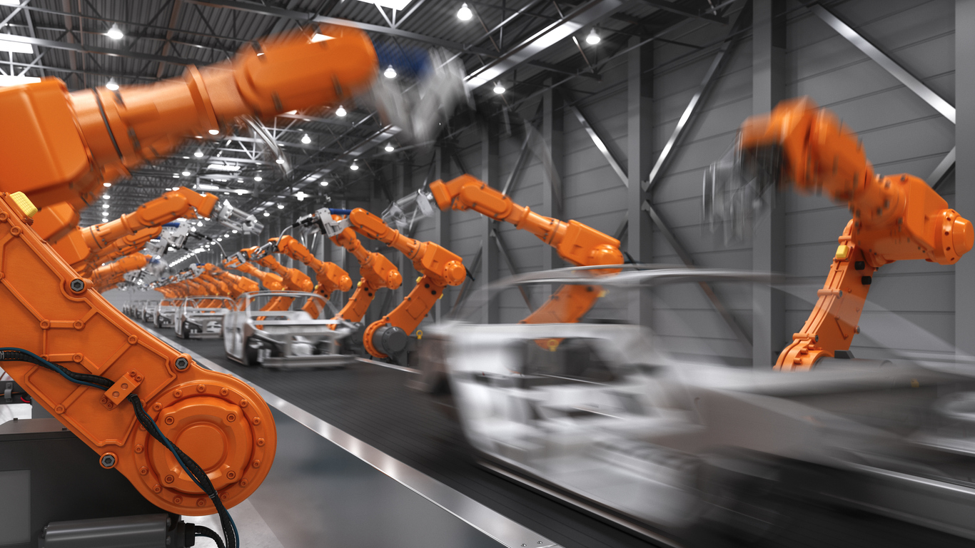
The success of the Unimate established a blueprint for the next half-century of automation. However, these traditional robots were inherently limited. They were specialized tools bolted to factory floors, operating within highly controlled environments where every variable was curated to suit the machine’s specific range of motion. If a task changed or a component was moved by a few inches, the robot required extensive reprogramming or physical reconfiguration. This "fixed automation" model required factories to be built around the robots, rather than the robots adapting to the existing infrastructure.
The Humanoid Paradigm: Adapting Machines to Human Spaces
The current technological frontier seeks to invert the traditional automation model. Rather than redesigning a multi-billion-dollar factory or warehouse to accommodate specialized machinery, engineers are developing humanoid robots capable of operating within spaces already optimized for humans. This includes navigating stairs, opening doors, using standard hand tools, and reaching shelves designed for human height.
The rationale for the humanoid form factor is pragmatic. The entirety of the world’s industrial and domestic infrastructure—from the grip of a power drill to the height of a workbench—is scaled to the human body. A robot that mimics this form can, in theory, step into any role currently held by a human without requiring a capital-intensive overhaul of the physical workspace.
Case Study: Humanoids in the Modern Factory
The transition from prototype to functional worker is already underway. Recently, the German automaker BMW concluded a 10-month pilot program at its Spartanburg, South Carolina, facility—the largest BMW manufacturing plant in the world. The pilot involved the deployment of a humanoid robot developed by Figure AI. During the trial, the robot was tasked with supporting the production of the BMW X3.
Data from the trial indicates that the robot successfully moved more than 90,000 components and logged approximately 1,250 hours of operation. It was integrated into the production of more than 30,000 vehicles, performing tasks that required a level of dexterity and spatial awareness previously reserved for human staff. While these robots are currently slower than their human counterparts, the trial proved that humanoid machines could maintain the "uptime" required for 24-hour industrial cycles without the fatigue or injury risks associated with human labor.

The Economic Crossover: Analyzing Labor Costs and Productivity
The widespread adoption of humanoid robots depends less on their ability to perform backflips for social media and more on their hourly operating costs. Financial analysts and industrial economists are closely watching the "crossover point" where robotic labor becomes cheaper than human labor.
Recent estimates from JPMorgan suggest that the operating cost of a humanoid robot in an industrial setting could eventually stabilize between $10 and $12 per hour. This figure includes the amortized cost of the hardware, electricity, maintenance, and software subscriptions. In contrast, the average hourly cost of a human manufacturing worker in the United States, including benefits and taxes, is often cited near $30.
However, a significant productivity gap remains. Current data suggests that it may take approximately two humanoid robots to match the output of one skilled human worker. Using the $12 per hour estimate, two robots would cost $24 per hour to produce the same output as a $30-per-hour human, representing a 20% cost saving. As AI improves and robot dexterity increases, this productivity gap is expected to narrow. By 2030, industry experts anticipate that humanoid robots will achieve 1:1 parity with human output in basic warehouse and assembly tasks, making the economic argument for automation undeniable.
Tesla’s Optimus and the "Machine That Makes the Machine"
Elon Musk, CEO of Tesla Inc., has positioned the Optimus (also known as Tesla Bot) as a central pillar of the company’s future value. Musk has projected that Tesla could eventually produce as many as 10 million Optimus units annually, with a long-term consumer price target between $20,000 and $30,000 per robot.
The challenge for Tesla lies in what Musk calls "the machine that makes the machine." While designing a functional humanoid is a feat of engineering, mass-producing millions of them with high precision and low cost is a feat of manufacturing. Tesla’s experience in scaling the Model 3 production—a period Musk described as "production hell"—serves as a precursor to the challenges the company faces with Optimus.
A humanoid robot is a complex assembly of specialized components:
- Actuators and Motors: These serve as the "muscles," requiring high torque-to-weight ratios.
- Sensors and Vision Systems: High-resolution cameras and LiDAR systems act as the "eyes," feeding data into AI neural networks.
- Power Systems: High-density battery packs must provide enough energy for an 8-hour shift without adding excessive weight.
- End Effectors: The hands of the robot, which require intricate gears and tactile sensors to handle objects ranging from heavy metal parts to delicate glass.
The Supply Chain Opportunity: The "Second-Order" Investment
As Tesla and other competitors like Boston Dynamics (owned by Hyundai), Agility Robotics, and Figure AI race toward mass production, a massive secondary market is emerging. Much like the "gold rush" of the 19th century benefited the shovel sellers more than the miners, the robotics boom is expected to create a windfall for the specialized suppliers that provide the internal components.
Even a vertically integrated company like Tesla cannot manufacture every individual sensor, rare-earth magnet, and semiconductor required for a humanoid. The demand for high-precision strain gauges, harmonic drive gears, and specialized AI chips is expected to skyrocket. Nvidia CEO Jensen Huang has suggested that the robotics industry could eventually address a $50 trillion market, as automation moves beyond the factory and into construction, logistics, and eventually, the home.
For investors, this creates a "shopping list" of essential technologies. Companies specializing in edge computing, which allows robots to process data locally rather than relying on a slow cloud connection, are becoming indispensable. Similarly, the demand for cobalt, lithium, and neodymium—essential for batteries and high-performance motors—will see sustained pressure as millions of robot "bodies" enter the global supply chain.
Broader Implications and Industry Reactions
The move toward humanoid automation is not without controversy. Labor advocates have raised concerns regarding the potential for mass displacement of workers in the manufacturing and logistics sectors. However, proponents argue that robots will primarily fill the "3D" jobs: those that are Dirty, Dull, or Dangerous.
Furthermore, many developed nations are facing a demographic crisis characterized by aging populations and shrinking labor forces. In countries like Japan, Germany, and China, the vacancy rate for manual labor positions is rising. In this context, humanoid robots are viewed not as a replacement for humans, but as a necessary supplement to maintain industrial output in the face of a disappearing workforce.
Official responses from industry leaders suggest a cautious but optimistic integration strategy. Most firms are following BMW’s lead, implementing "co-bot" strategies where robots and humans work in tandem. This allows the AI to learn from human movements while the humans focus on complex problem-solving tasks that robots cannot yet master.
Conclusion: The Path Toward 2030
The journey from the Unimate in 1961 to the Tesla Optimus of today represents the evolution of automation from a rigid tool to a flexible peer. While the technology is still in its nascent stages of deployment, the economic incentives are aligning. With operating costs projected to fall below human wages and the ability of AI to handle increasingly complex environments, the mass production of humanoid robots appears to be an industrial inevitability.
As the "shopping list" for these machines grows, the focus of the tech industry will shift from software-only AI to "Physical AI"—the marriage of intelligence with the physical world. For the global economy, this marks the beginning of a new era of productivity, where the constraints of human labor are mitigated by a new generation of machines built in our own image.


