





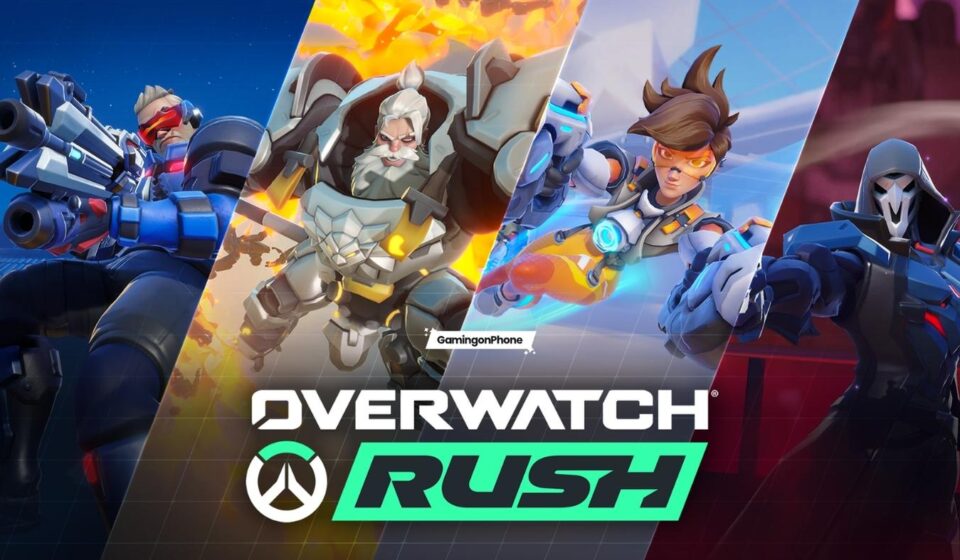
Blizzard Entertainment Launches Overwatch Rush Closed Beta: A Comprehensive Guide to Early Access and Strategic Implications

Following its highly anticipated announcement, Blizzard Entertainment has officially initiated a Closed Beta Test for Overwatch Rush, their innovative 4v4 top-down hero shooter tailored for mobile platforms. As of February 26, 2026, this early access period is live, exclusively available to Android users in the Philippines. This strategic rollout marks a significant milestone for both the venerable Overwatch franchise and Blizzard’s expanding commitment to the mobile gaming sector, culminating years of speculation and industry whispers. For eager players worldwide, navigating the access protocols for this geo-restricted beta requires specific steps, ensuring a glimpse into the future of mobile hero shooters.
The Genesis of Overwatch Rush: From Rumors to Reality
The journey to Overwatch Rush has been a protracted one, spanning over four years of intense speculation within the gaming community. Reports and job postings hinting at a mobile Overwatch title first surfaced around 2022, fueling widespread discussions about how Blizzard might adapt its iconic first-person shooter experience for smaller screens and touch controls. These early murmurs suggested a departure from the traditional FPS format, with many anticipating a title designed from the ground up for mobile rather than a direct port. The official unveiling of Overwatch Rush confirmed these predictions, introducing a top-down perspective that fundamentally redefines the gameplay while retaining the beloved characters, abilities, and strategic depth synonymous with the Overwatch universe.
Blizzard’s pivot towards mobile gaming is not new, but Overwatch Rush represents a critical evolution in their strategy. The company previously ventured into the lucrative mobile market with titles like Diablo Immortal, which, despite controversy surrounding its monetization model, achieved significant financial success, grossing hundreds of millions of dollars globally. More recently, Warcraft Arclight Rumble further solidified Blizzard’s intent to diversify its portfolio across platforms. Overwatch Rush now positions itself as the next flagship mobile title, aiming to capture a segment of the market that has shown immense appetite for competitive, hero-based experiences. The decision to adopt a top-down view for Overwatch Rush is particularly noteworthy, distinguishing it from popular mobile FPS titles and potentially attracting players who prefer a different strategic engagement model, akin to mobile MOBAs or twin-stick shooters, while still leveraging the distinct hero abilities and team synergies of Overwatch.
The Closed Beta Test: Initial Rollout and Strategic Geographic Focus
The immediate launch of a Closed Beta Test (CBT) concurrent with the game’s initial announcement underscores Blizzard’s readiness to gather real-world player feedback and fine-tune the experience. The selection of the Philippines as the exclusive launch region for this beta is a common industry practice. Southeast Asia, particularly the Philippines, boasts a vibrant and highly engaged mobile gaming community, making it an ideal testing ground for new titles. This regional focus allows developers to manage server load, identify and address latency issues within a controlled environment, and collect culturally relevant feedback on gameplay mechanics, user interface, and overall player experience before a broader global launch. Such a targeted approach helps ensure that the game’s infrastructure and core mechanics are robust enough to withstand a wider player base.
The 4v4 format of Overwatch Rush is another calculated design choice for mobile. It offers a more condensed and faster-paced experience compared to the 5v5 of Overwatch 2 or the 6v6 of the original Overwatch, perfectly suiting the quick play sessions typical of mobile gaming. Players will select from a roster of iconic Overwatch heroes, each possessing unique abilities and roles, and engage in objective-based combat. The top-down perspective necessitates a re-evaluation of how abilities are targeted and executed, requiring a different spatial awareness and strategic positioning than its FPS counterpart. This initial beta phase will be crucial in assessing how well these re-imagined hero mechanics translate to the mobile, top-down environment and how players adapt to the new control scheme and strategic depth.
Accessing the Overwatch Rush Beta: A Detailed Guide
For Android users eager to experience Overwatch Rush as of February 26, 2026, the method of access depends largely on geographic location. Blizzard has implemented geo-restrictions for this initial beta, meaning only accounts registered in the Philippines can officially download the game directly from the Google Play Store.
For Players in the Philippines (Official Google Play Store Method):
If you are physically located within the Philippines or your Google Play Store account is registered to this region, the process is straightforward and mirrors the download of any other mobile application:
- Open the Google Play Store: Navigate to the Google Play Store application on your Android device.
- Search for Overwatch Rush: Use the search bar at the top of the store interface and type "Overwatch Rush."
- Locate the Official Listing: Identify the official game listing by Blizzard Entertainment. Be wary of unofficial or look-alike applications.
- Initiate Download and Installation: Tap the "Install" button to begin downloading the game to your device. Once the download is complete, the game will automatically install.
- Launch and Play: After installation, an Overwatch Rush icon will appear on your device’s home screen or app drawer. Tap the icon to launch the game and begin playing.
For Global Enthusiasts (Circumventing Geo-Restrictions):
Players outside the Philippines will need to employ alternative methods to access the Overwatch Rush beta due to the regional restrictions. These methods typically involve masking your geographical location or directly installing the game’s application package. It is crucial to proceed with caution when using these methods, as they may carry inherent risks and are not officially supported by Blizzard Entertainment.
-
Utilizing a Virtual Private Network (VPN):

- Understanding VPNs: A VPN allows you to route your internet connection through a server in a different geographical location, effectively making it appear as if you are browsing from that region.
- Selecting a Reputable VPN: Choose a well-regarded VPN service that offers servers in the Philippines. Free VPNs may offer inconsistent performance, inject ads, or compromise your data security. Paid services typically provide better speed, reliability, and privacy.
- Connecting to a Philippine Server: Once you have installed and configured your VPN, select a server located in the Philippines and establish a connection.
- Creating a New Google Account (Recommended): To ensure seamless access to the Philippine Play Store, it is often necessary to create a new Google account while your VPN is active and connected to a Philippine server. This new account will register its region as the Philippines.
- Clearing Play Store Data: Before accessing the Play Store with your new account, navigate to your device’s settings, find "Apps" or "Applications," locate "Google Play Store," and clear its cache and data. This ensures the Play Store refreshes its regional settings.
- Accessing the Play Store: Open the Google Play Store and switch to your newly created Philippine Google account. You should now be able to search for and download Overwatch Rush as if you were in the Philippines.
- Important Note: You may need to keep the VPN active while playing the game, depending on Blizzard’s server-side checks. Continuous VPN usage can impact latency and battery life.
-
Downloading the APK File:
- Understanding APKs: An APK (Android Package Kit) is the file format used by the Android operating system for the distribution and installation of mobile apps. When you download an app from the Play Store, you’re essentially downloading an APK.
- Locating a Reliable Source: Search for the Overwatch Rush APK file on reputable third-party Android app repositories. Exercise extreme caution, as downloading APKs from untrusted sources can expose your device to malware, viruses, or compromised game files. Prioritize sources with strong community reviews and a history of providing legitimate game files.
- Enabling "Unknown Sources" Installation: Before installing an APK downloaded outside the Play Store, you must enable "Install unknown apps" or "Unknown sources" in your device’s security settings. The exact path varies by Android version and manufacturer.
- Installing the APK: Once downloaded, locate the APK file in your device’s "Downloads" folder or wherever your browser saves files. Tap on the file to initiate the installation process. Follow the on-screen prompts.
- Potential for OBB Data: Some larger games require an additional OBB (Opaque Binary Blob) file, which contains game assets. If Overwatch Rush requires an OBB, you will need to manually place this file in the correct directory (typically
Android/obb/com.blizzard.overwatchrushor a similar path) after installing the APK. Instructions for this are usually provided by the APK source. - Post-Installation: After successful installation, you may still need a VPN to connect to the game’s servers if they perform regional checks.
Regardless of the method used, players should be aware that beta access is not guaranteed, and server capacity might be limited. Furthermore, as an "early build," the game is subject to bugs, performance issues, and significant changes before its final release.
Technical Prerequisites: Ensuring Optimal Performance
Before attempting to download and play Overwatch Rush, it is essential to verify that your Android device meets the minimum system requirements specified by Blizzard Entertainment. While precise details regarding the minimum specifications were not fully elaborated in the initial beta information, typically, mobile games of this caliber demand a certain level of hardware to ensure a playable experience. General requirements for modern mobile games often include:
- Operating System: Android 7.0 (Nougat) or higher.
- Processor: A mid-range to high-end mobile chipset (e.g., Snapdragon 600 series or higher, MediaTek Helio G series or higher, Exynos 9 series or higher).
- RAM: A minimum of 4GB of RAM, with 6GB or more recommended for smoother gameplay.
- Storage: At least 3GB-5GB of free internal storage for the initial installation, with additional space required for future updates and game content.
- Internet Connection: A stable and robust internet connection (Wi-Fi or 4G/5G) is crucial for a smooth online multiplayer experience.
Failing to meet these requirements can result in poor performance, frequent crashes, graphical glitches, and an overall unsatisfactory gaming experience. As this is an early beta, Blizzard will likely continue to optimize the game, and these requirements may evolve closer to the official global launch.
Implications and Future Outlook
The launch of the Overwatch Rush Closed Beta carries significant implications for the Overwatch franchise, Blizzard Entertainment, and the broader mobile gaming landscape.
For the Overwatch Franchise: This new title represents a strategic expansion, aiming to introduce the beloved Overwatch universe to a massive new audience on mobile. By offering a distinct top-down gameplay experience, Overwatch Rush avoids directly competing with its PC/console counterparts while potentially attracting players who might not typically engage with first-person shooters. This could foster a new generation of Overwatch fans and potentially encourage cross-pollination, drawing mobile players to the mainline Overwatch 2 experience.
For Blizzard Entertainment: Overwatch Rush underscores Blizzard’s aggressive push into the mobile market, signaling a commitment to diversifying its revenue streams and intellectual property reach. Learning from the successes and controversies of Diablo Immortal, Blizzard will likely pay close attention to monetization strategies, aiming for a balance that is both profitable and well-received by the community. The beta period will be invaluable for gathering data on player engagement, retention, and feedback, informing the game’s development trajectory.
For the Mobile Gaming Market: The entry of a high-profile IP like Overwatch into the top-down hero shooter genre on mobile could intensify competition and elevate quality standards. It adds another major player to a market already populated by successful titles, potentially driving innovation in gameplay, graphics, and online infrastructure. The success of Overwatch Rush could influence other major publishers to adapt their flagship IPs in similar innovative ways for mobile.
Community reception will be a critical factor. While many fans are excited to see Overwatch on mobile, there may also be skepticism, particularly regarding the genre shift and potential monetization models. Blizzard’s transparency and responsiveness to player feedback during the beta will be crucial in building a positive relationship with the community ahead of a global launch.
In conclusion, the Overwatch Rush Closed Beta Test, live as of February 26, 2026, marks a pivotal moment for Blizzard Entertainment and the Overwatch universe. It represents the culmination of years of development and strategic planning, aiming to carve out a significant niche in the ever-expanding mobile gaming market. For players around the globe, the opportunity to dive into this early build, even through unofficial channels, offers an exciting glimpse into a new dimension of hero shooter gameplay. As the beta progresses, the insights gained will undoubtedly shape the future of Overwatch Rush, setting the stage for what could become another major success for Blizzard on mobile platforms. The journey from beta to a full global release will be closely watched by fans and industry observers alike, eager to see how this top-down take on a beloved franchise evolves.