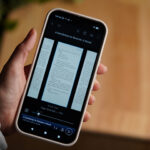







Amidst a flurry of rumors and evolving display technologies, Apple’s perennial contender for the e-reader throne, the iPad mini, is poised for a significant transformation. The next iteration of the compact tablet is widely expected to feature an OLED display, a move that could dramatically enhance its appeal as a dedicated reading device and potentially challenge the dominance of established e-readers like Amazon’s Kindle and Kobo. This potential shift, coupled with ongoing speculation about improved water resistance, signals a strategic evolution for the iPad mini, aiming to capture a segment of the market traditionally underserved by multipurpose tablets.
The Allure of OLED for Reading
The anticipated transition from the current Liquid Retina LCD to an OLED panel represents a fundamental leap in display technology for the iPad mini. OLED (Organic Light-Emitting Diode) technology offers inherent advantages that directly benefit the reading experience. Unlike LCDs, which require a backlight to illuminate pixels, each pixel in an OLED display generates its own light. This allows for pixels to be individually turned off, resulting in perfect blacks and an infinitely high contrast ratio.
This capability is particularly impactful for text rendering. On an OLED screen, text against a dark background, especially in dark mode, appears sharper, more defined, and significantly easier on the eyes. This heightened clarity can reduce perceived eye strain during extended reading sessions. Furthermore, OLED displays typically offer superior comfort for night reading. By emitting less light overall and allowing for precise dimming, they can provide a more subdued and comfortable viewing experience in low-light conditions.
Beyond monochrome text, the benefits extend to visually rich content. OLED panels boast superior color reproduction and wider viewing angles compared to their LCD counterparts. This translates to more vibrant and accurate colors for graphic novels, magazines, and illustrated books, making them a more engaging and immersive experience. The improved color fidelity and reduced color shift at off-angles can also contribute to a more consistent and enjoyable reading experience across different viewing positions.
Power Efficiency and Durability: Closing the Gap
Another crucial advantage of OLED technology lies in its power efficiency, particularly when displaying dark content. Because individual pixels can be turned off, the display consumes less energy when showing black or dark hues. While the overall battery life of an iPad mini will still be dictated by its powerful processor and extensive feature set, this improved efficiency during reading sessions could translate to a modest but welcome extension of battery life. This is a significant consideration for avid readers who often find themselves away from charging points for extended periods.
Furthermore, rumors suggest Apple is actively exploring ways to enhance the durability of the iPad mini, specifically by addressing its current lack of official water resistance. This is a key differentiator for dedicated e-readers. Devices like the Amazon Kindle Paperwhite and Kobo Libra Color often come with IPX8 ratings, meaning they can withstand submersion in water. This feature provides users with peace of mind when reading by the pool, at the beach, or even in the bathtub. Reports indicate that Apple may be investigating a more sealed design for the next iPad mini, potentially incorporating vibration-based speakers and minimizing ingress points for liquids. Such an enhancement would directly counter one of the practical advantages that e-readers currently hold.
The Enduring Strengths of E-Ink
Despite the compelling advancements brought by OLED technology, dedicated e-readers are unlikely to be entirely supplanted. The fundamental technology underpinning most popular e-readers – E Ink – offers distinct advantages that OLED, and indeed any emissive display, cannot replicate.
E Ink screens are fundamentally different in their operation. They are reflective displays, meaning they mimic the appearance of paper by reflecting ambient light rather than emitting their own light. This characteristic is often cited as the primary reason why E Ink displays cause less eye fatigue during prolonged reading sessions. The absence of a direct light source shining into the eyes can significantly reduce strain, making them the preferred choice for readers who spend many hours engrossed in books.
Outdoor readability is another area where E Ink maintains a clear superiority. As ambient light increases, E Ink screens become easier to read, much like a physical book. In bright sunlight, where emissive displays like LCD and OLED can struggle with glare and reduced contrast, E Ink screens often become even more legible. This makes them ideal for outdoor enthusiasts and travelers.

The Battery Life Chasm and Focus Factor
The difference in battery life between an iPad mini and a dedicated e-reader remains a stark contrast. E-readers, due to the nature of E Ink technology, can last for weeks on a single charge. Power is primarily consumed only when a page is turned or text is refreshed. In contrast, even with an OLED display, an iPad mini, with its powerful processors, vibrant screen, and array of active applications, typically offers battery life measured in hours or, at best, a couple of days of mixed usage. For users whose sole purpose is reading, the prolonged battery life of an e-reader is a significant convenience that the iPad mini cannot match.
Moreover, the fundamental design philosophy of these devices plays a crucial role. Dedicated e-readers are intentionally minimalist, designed to foster focused reading. Their operating systems are streamlined, and their app ecosystems are limited, minimizing distractions. Tablets, on the other hand, are designed for multitasking. The iPad mini, with its access to a vast array of apps, internet browsing, gaming, and social media, can be a breeding ground for distractions. For some users, the constant temptation to switch tasks can hinder the deep immersion that reading requires. While an OLED iPad mini might offer a better visual experience, it still operates within a framework that encourages distraction.
Price Point: A Significant Hurdle
The financial aspect also presents a substantial barrier to the iPad mini fully replacing e-readers. The current iPad mini starts at $499, and industry analysts anticipate that the OLED variant could see a price increase of up to $100, placing it in the $599 to $699 range. This positions the iPad mini firmly in the premium tablet category.
In stark contrast, dedicated e-readers offer significantly more accessible price points. Many popular Kindle and Kobo models are available for between $110 and $300, depending on their features and screen technology. This considerable price difference makes e-readers a far more economical choice for consumers whose primary interest is reading, allowing them to invest in a device specifically optimized for that purpose without a significant financial outlay. The cost-effectiveness of e-readers ensures they will continue to appeal to a broad segment of the market.
A Shift in the Balance, Not a Revolution
The introduction of an OLED display to the iPad mini would undoubtedly represent a significant upgrade for its reading capabilities. The enhanced contrast, sharper text rendering, improved color reproduction, and potential for better low-light performance would make it a far more compelling device for casual readers and those who consume visually rich content. The addition of water resistance, if realized, would further diminish one of the key advantages of dedicated e-readers.
However, the fundamental physics of E Ink displays, which reflect ambient light and minimize eye strain, provide benefits that OLED technology simply cannot replicate. The week-long battery life and distraction-free environment of dedicated e-readers are also powerful arguments in their favor.
Ultimately, the OLED iPad mini is unlikely to be a direct replacement for the vast majority of dedicated e-reader users. Instead, it is more likely to shift the balance slightly. For a subset of consumers who already own or are considering an iPad mini for its versatility and are also keen readers, the improved reading experience might make purchasing a separate e-reader feel less necessary. It could become "good enough" for their reading needs, consolidating their device ownership.
Looking Ahead: Performance and Release Window
The upcoming OLED iPad mini is expected to be powered by Apple’s next-generation A19 Pro chip, a testament to its advanced capabilities and performance. This powerful processor will ensure a smooth and responsive user experience across all its functionalities, not just reading.
Industry watchers are currently anticipating the launch of this new iPad mini in the second half of 2026. This timeline suggests that Apple is investing significant resources into perfecting the technology and integrating it seamlessly into its compact tablet. The integration of OLED technology into the iPad mini represents a strategic move by Apple to further differentiate its product line and cater to a broader range of consumer needs, even if it doesn’t signal the immediate demise of its established competitors.