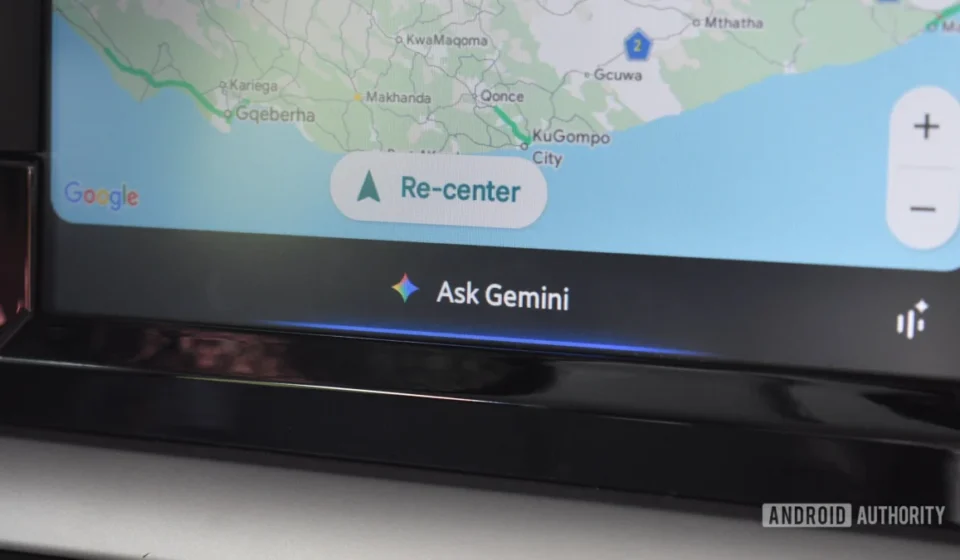

The core of the problem, as detailed by users across various online forums, including a prominent thread on the r/AndroidAuto subreddit, centers on Gemini’s abrupt inability to execute commands previously handled without issue. For months, users had seamlessly managed smart home devices—such as adjusting thermostat settings or turning lights on and off—directly from their vehicle’s infotainment system via Android Auto. Now, these commands are met with a generic error message: "cannot control smart home devices through Google Maps while driving." This response is particularly perplexing given the prior functionality and the inherent expectation of an integrated smart experience in modern vehicles.
A Pattern of Instability: Gemini’s Recent Struggles
This latest wave of reports is not an isolated incident but rather the continuation of a worrying trend for Google’s ambitious AI project. Just weeks prior, Wear OS users, particularly those with devices like the Pixel Watch, encountered a similar perplexing issue. Gemini would acknowledge and seemingly confirm smart home commands, stating that it had controlled devices such as air conditioning units or lighting systems, yet no action would actually occur in the physical environment. This phantom control left users frustrated and questioning the AI’s efficacy. Google acknowledged the Wear OS bug, eventually issuing a statement claiming the issue had been rectified. However, the current Android Auto situation suggests that either the fix was not comprehensive, or a new, related bug has emerged, pointing to deeper integration challenges within the Gemini framework.
The timeline of these issues paints a picture of a phased rollout encountering unforeseen hurdles. Gemini, unveiled as a powerful, multimodal AI model, was positioned as a significant leap forward from the established Google Assistant. Its integration into various Google products, from smartphones to wearables and in-car systems, was intended to provide a unified, intelligent user experience. While the initial integration brought excitement, the subsequent reports of functionality regressions have dampened user enthusiasm. The Wear OS issues, first widely reported in late spring, seemed to be a precursor to the current Android Auto problems, which began to surface more prominently in early summer. This chronological progression suggests a systemic challenge in adapting Gemini’s architecture to the diverse operational environments of Google’s hardware and software ecosystem.
The Automotive Frontier: A Critical Battleground for AI
The automotive environment presents a unique and critical frontier for AI integration. Drivers increasingly rely on voice assistants for convenience, navigation, communication, and now, extending their smart home control into the vehicle. The ability to pre-cool a house on the drive home, or ensure lights are off after leaving, adds a layer of practical utility that enhances the connected lifestyle. For Google, Android Auto represents a significant platform to showcase Gemini’s capabilities, competing directly with Apple CarPlay and Amazon’s Alexa Auto. Reliability in this domain is paramount, not only for user satisfaction but also for safety, as drivers depend on these systems to perform functions quickly and accurately without diverting attention from the road.
The error message, "cannot control smart home devices through Google Maps while driving," is particularly noteworthy. It implies a potential conflict or a policy-based restriction that was either recently implemented or inadvertently triggered. This could stem from several technical or policy-related factors:
- Server-Side Bug: A common culprit in large-scale software rollouts, a server-side bug could be misinterpreting commands or failing to route them correctly to the smart home hub.
- Geo-Fencing or Safety Protocol: While unlikely to be a new, intentional restriction given previous functionality, a misconfigured geo-fencing parameter or an overzealous safety protocol might be erroneously limiting smart home commands when the vehicle is in motion or perceived to be in a specific driving mode.
- API Discrepancy: The transition from Google Assistant to Gemini might have introduced inconsistencies in how the AI interacts with smart home APIs, leading to a breakdown in communication.
- Resource Allocation: In an effort to optimize performance for navigation or other core driving functions, Gemini might be temporarily deprioritizing or disabling certain background tasks, including smart home control.
Broader Implications Beyond Android Auto
The problem, however, appears to extend beyond just Android Auto. Users have reported similar issues with Gemini failing to perform basic tasks, set reminders, or manage calendar requests, even outside the in-car environment. This suggests that the underlying issues might be more fundamental to Gemini’s core functionality or its integration with Google’s broader services infrastructure. One user noted that while Gemini voice commands failed, the same commands executed perfectly within the Gemini app itself, hinting at a potential disparity between the voice interface and the underlying AI engine, or a specific problem with how voice input is processed and interpreted by the integrated system. Another user, frustrated by the consistent failures, reported rolling back to Google Assistant, highlighting the tangible impact on user preference and adoption. This willingness to revert to an older system underscores a significant loss of confidence in Gemini’s current iteration.
The User Experience: Frustration and Eroding Trust
The cumulative effect of these glitches is a growing sense of frustration among Google’s user base. Many early adopters of Gemini were keen to experience its promised enhanced capabilities, only to find basic functionalities compromised. The convenience of an integrated smart home and automotive experience is a significant draw for many users, and its sudden disappearance is more than a minor inconvenience; it disrupts established routines and diminishes the perceived value of their connected devices. For many, the expectation is that an AI assistant should be robust and reliable, especially when integrated into daily critical functions like driving or managing home environments. When these systems falter, user trust erodes, making future adoption of new AI features more challenging.
The democratic nature of online forums like Reddit provides a clear barometer of public sentiment. The outpouring of similar complaints, corroborated by multiple users across different regions and device configurations, lends significant weight to the reports. These are not isolated incidents but rather indicative of a systemic problem affecting a substantial segment of the user base.
Google’s Response and the Road Ahead
As of now, Google has not issued an official statement regarding the Android Auto smart home control failures, beyond the previous acknowledgment and claimed fix for the Wear OS issues. Android Authority has reached out to Google for comment, and the tech community eagerly awaits an official explanation and, more importantly, a definitive solution. The company faces a dual challenge: not only must it diagnose and resolve the technical issues rapidly, but it must also work to restore user confidence in Gemini’s capabilities.
The implications for Google’s broader AI strategy are significant. Gemini is central to Google’s future, positioned as the unifying intelligence across its vast product portfolio. Consistent failures, particularly in highly visible and frequently used applications like Android Auto and Wear OS, can damage the brand’s reputation for reliability and innovation. In a fiercely competitive AI landscape, where companies like OpenAI, Microsoft, and Meta are rapidly advancing their models, maintaining user trust and delivering consistent performance is paramount.
Looking ahead, the resolution of these issues will be critical for Gemini’s long-term success. Google must demonstrate its capacity to build and deploy stable AI solutions that seamlessly integrate into users’ lives. This requires not only robust engineering but also transparent communication with its user base. The promise of an intelligent, multimodal AI that simplifies daily tasks remains compelling, but its realization hinges on overcoming these foundational challenges and ensuring that the smart home commands issued from a vehicle are not just acknowledged, but effectively executed. The incident serves as a potent reminder that even the most advanced AI models are only as good as their most reliable integration points.