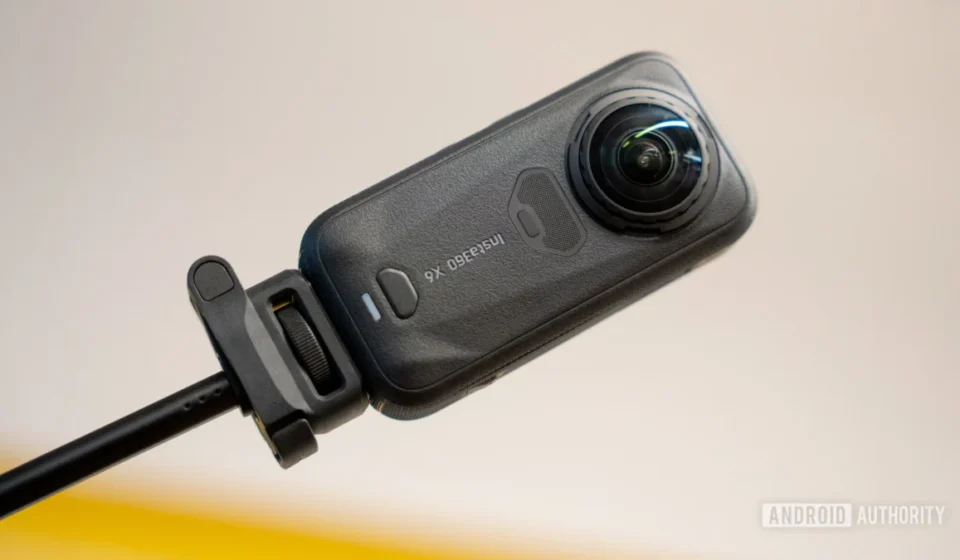
Insta360 Introduces ‘Spatial Capture,’ Revolutionizing Immersive Memory Creation with 3D Gaussian Splatting for X6, X5, and X4 Air Cameras.

Insta360, a prominent innovator in the realm of 360-degree and action camera technology, has officially announced a significant advancement in how users interact with their recorded memories. The company is set to launch "Spatial Capture," an innovative software feature that will empower owners of its X6, X5, and X4 Air cameras to transform their conventional video footage into explorable, three-dimensional digital environments. This groundbreaking capability, which does not necessitate new hardware, is poised to redefine immersive content creation by leveraging cutting-edge 3D Gaussian Splatting technology. The feature is slated for a phased rollout, commencing on September 28, with an initial launch exclusively for users within the United States.
The Genesis of Immersive Memory: Unveiling Spatial Capture
Spatial Capture represents a pivotal shift from passive video consumption to active engagement with recorded moments. Instead of merely replaying a linear video stream, users will be able to navigate and explore a meticulously reconstructed 3D scene derived directly from their original footage. This functionality will be integrated seamlessly into the Insta360 companion application, appearing as a dedicated "Spatial Capture" tab, signifying its importance within the app’s ecosystem. The core promise of this feature lies in its accessibility: it aims to democratize sophisticated 3D content creation by removing the traditional barriers of specialized capture equipment, intricate software, and complex post-production workflows.
The operational principle behind Spatial Capture is remarkably straightforward from the user’s perspective. To generate a 3D scene, a user simply records a video, ideally no longer than two minutes, of the desired physical space. If the initial recording exceeds this duration, the Insta360 app provides intuitive tools to trim the footage down to the optimal length prior to processing. Within the Spatial Capture tab, users select their chosen video clip and initiate the "Generate" command. This action triggers the secure upload of the footage to Insta360’s cloud infrastructure, where proprietary algorithms, powered by 3D Gaussian Splatting technology, commence the intricate process of converting the two-dimensional video into a fully explorable 3D environment. Insta360 has indicated that this cloud-based processing typically requires an estimated one to two hours to complete, during which users are free to close the app and attend to other tasks. Upon successful generation, users receive a notification confirming that their interactive 3D scene is ready for exploration.
The Technological Bedrock: Demystifying 3D Gaussian Splatting
The technological heart of Spatial Capture is 3D Gaussian Splatting (3DGS), a relatively nascent yet highly impactful innovation in the field of 3D reconstruction and novel view synthesis. Introduced in late 2023, 3DGS has rapidly gained traction for its ability to generate high-fidelity 3D representations from standard 2D images or video sequences, often outperforming previous state-of-the-art methods like Neural Radiance Fields (NeRFs) in terms of both reconstruction quality and rendering speed.
At its core, 3DGS operates by representing a 3D scene as a collection of thousands, or even millions, of anisotropic 3D Gaussian primitives. Each Gaussian is essentially a small, soft, transparent ellipsoid characterized by its position (mean), orientation, scale (covariance matrix), opacity, and color properties. When viewing a scene, these Gaussians are "splatted" onto the image plane, and their contributions are composited to form the final pixel colors. The brilliance of 3DGS lies in its differentiability, which allows it to be efficiently optimized using standard deep learning techniques. By training against multiple views of a scene (derived from the input video), the system learns the optimal parameters for each Gaussian to accurately reproduce the scene from any viewpoint.
Compared to traditional photogrammetry, which relies on generating mesh models and texture maps, 3DGS offers several advantages. It can often handle challenging scenes with complex geometries or reflective surfaces more effectively. More critically, for real-time applications, 3DGS allows for exceptionally fast rendering of novel views, making interactive exploration of reconstructed scenes fluid and responsive. This speed is a crucial enabler for the immersive experience promised by Spatial Capture. The computational intensity required to initially generate these Gaussian representations necessitates cloud-based processing, explaining the stated processing time, but once created, the resulting 3D scenes can be rendered efficiently on consumer devices. This blend of sophisticated backend processing and lightweight frontend exploration is key to Insta360’s approach.
Insta360’s Strategic Vision and the Broader Context of Spatial Computing
Insta360’s foray into spatial capture is not an isolated development but rather a strategic move firmly aligned with broader industry trends toward spatial computing and immersive experiences. Since its inception, Insta360 has been at the forefront of democratizing 360-degree video capture, making professional-grade immersive content accessible to a wide audience. Their product line, including the popular X-series cameras, has consistently pushed the boundaries of what consumers can achieve with relatively compact and user-friendly devices.
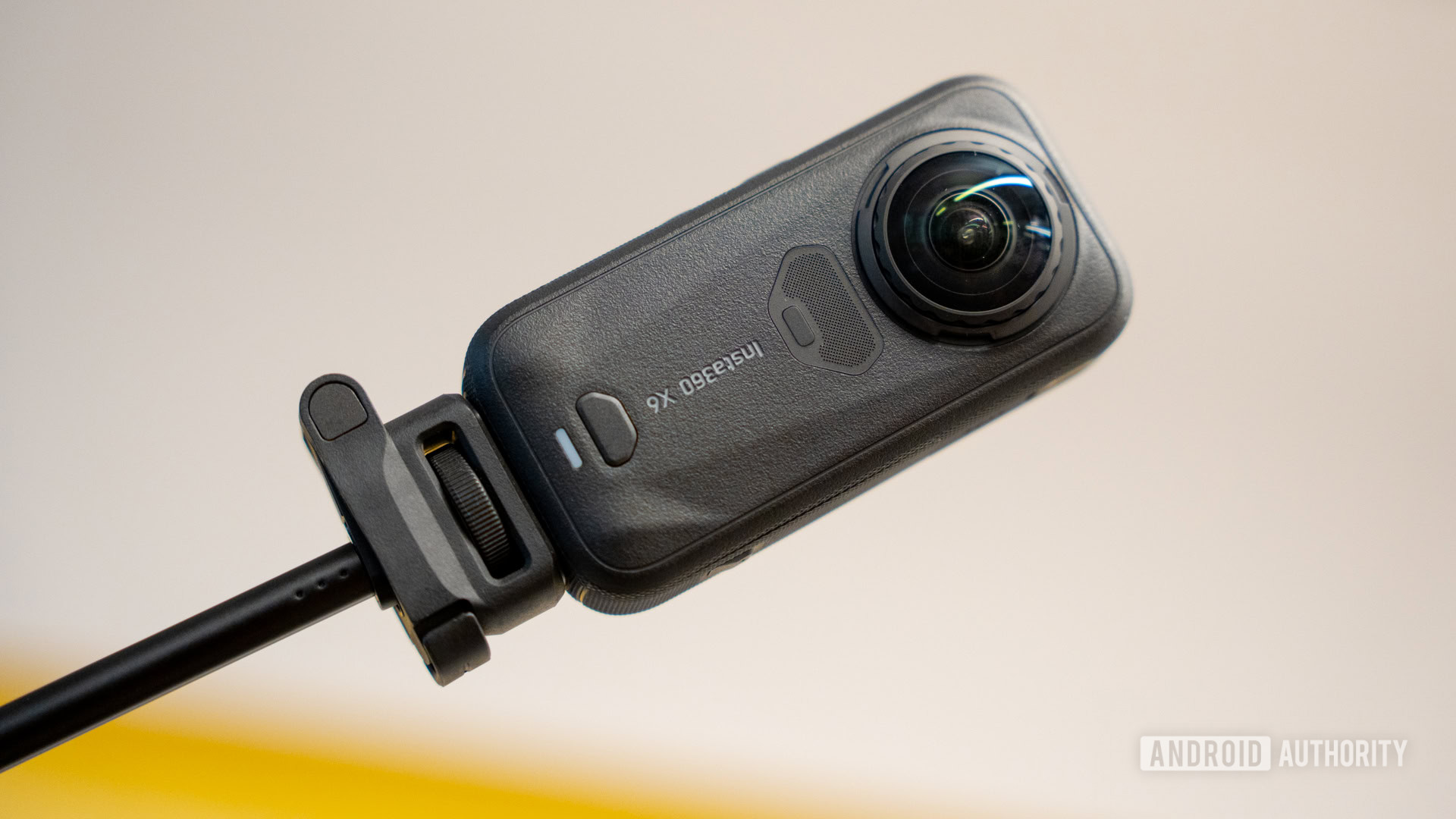
The timing of Spatial Capture’s introduction is particularly significant given the increasing momentum around spatial computing platforms. With the advent of devices like Apple’s Vision Pro, Meta’s Quest headsets, and other augmented and virtual reality solutions, there is a growing demand for native 3D content that can populate these immersive environments. Traditional 2D video, while still valuable, cannot fully leverage the capabilities of these spatial interfaces. By enabling users to convert their existing video footage into explorable 3D scenes, Insta360 is directly addressing this content gap, positioning itself as a key enabler for the burgeoning spatial web.
This move also strategically differentiates Insta360 within the competitive camera market. While other manufacturers focus on resolution, frame rates, or stabilization, Insta360 is leveraging its expertise in multi-lens capture and computational photography to offer a fundamentally new way of experiencing recorded reality. It transforms their cameras from mere recording devices into tools for creating interactive digital twins of real-world spaces, thereby expanding their utility and appeal beyond traditional videography.
Empowering Creativity: User Experience and Application Potential
Once a 3D scene has been successfully processed, users are presented with a rich array of options for exploration and creative expression. Navigation within the scene is designed to be intuitive, offering multiple control schemes: touch controls for direct manipulation, a virtual joystick for fluid movement, and even the device’s gyroscope for a more physically immersive experience, allowing users to "look around" by simply moving their phone. This multi-modal interaction ensures accessibility and caters to different user preferences.
Beyond simple exploration, Spatial Capture unlocks a powerful suite of creative tools. Users will have the freedom to add various visual effects to their scenes, enhancing atmosphere or highlighting specific elements. More impressively, the feature allows for the creation of custom camera paths. This means users can choreograph virtual tours through their captured 3D environments, setting specific viewpoints and transitions to tell a narrative or guide viewers through key areas. These custom paths can then be exported as conventional video files, making the immersive content shareable even with those who may not have access to the interactive link. Alternatively, the entire interactive 3D scene can be shared via a unique link, allowing others to experience the spatial memory directly in their web browser or within the Insta360 app.
The applications of Spatial Capture extend far beyond personal memory archiving. For content creators, this opens up new avenues for storytelling and engagement. Imagine travel vloggers creating interactive 3D tours of destinations, real estate agents offering truly immersive property walkthroughs, or educators providing virtual field trips to historical sites or scientific labs. Event organizers could capture venues in 3D for planning purposes, and small businesses could create interactive storefronts. The ability to easily generate and share these spatial experiences has the potential to foster a new ecosystem of immersive content that is both engaging and informative.
Phased Rollout, Accessibility, and Future Prospects
The launch of Spatial Capture is scheduled for September 28. Insta360 has confirmed that the feature will be compatible with its most recent flagship 360-degree cameras: the X6, X5, and X4 Air. This decision ensures that a significant portion of Insta360’s existing user base, particularly those who have invested in their premium offerings, can immediately benefit from this new capability.
However, the initial rollout will be geographically limited, with availability exclusively in the United States. While Insta360 has not yet provided specific timelines for international expansion, such phased rollouts are common for new cloud-dependent features, allowing companies to fine-tune server infrastructure, address early feedback, and manage computational resources effectively before a wider deployment.
Regarding usage, Insta360 has announced a generous model: users will be able to generate up to four 3DGS scenes per month free of charge. This tiered access strategy is typical for cloud-intensive services, providing a substantial free tier to encourage adoption and experimentation, while likely paving the way for potential premium subscription models in the future for users requiring more extensive scene generation capabilities. Such models could offer increased monthly scene limits, faster processing times, or enhanced storage options, aligning with how many software-as-a-service (SaaS) offerings operate.
The introduction of Spatial Capture by Insta360 represents a crucial step in the evolution of consumer-grade immersive technology. By making advanced 3D reconstruction techniques like Gaussian Splatting accessible through a user-friendly app and leveraging existing camera hardware, Insta360 is effectively lowering the barrier to entry for spatial content creation. This initiative not only enhances the value proposition of their cameras but also contributes significantly to the broader spatial computing ecosystem by fostering the creation of more abundant and diverse 3D content. As the digital world continues its trajectory towards deeper immersion, features like Spatial Capture will undoubtedly play a vital role in shaping how we capture, share, and relive our most cherished memories and experiences.