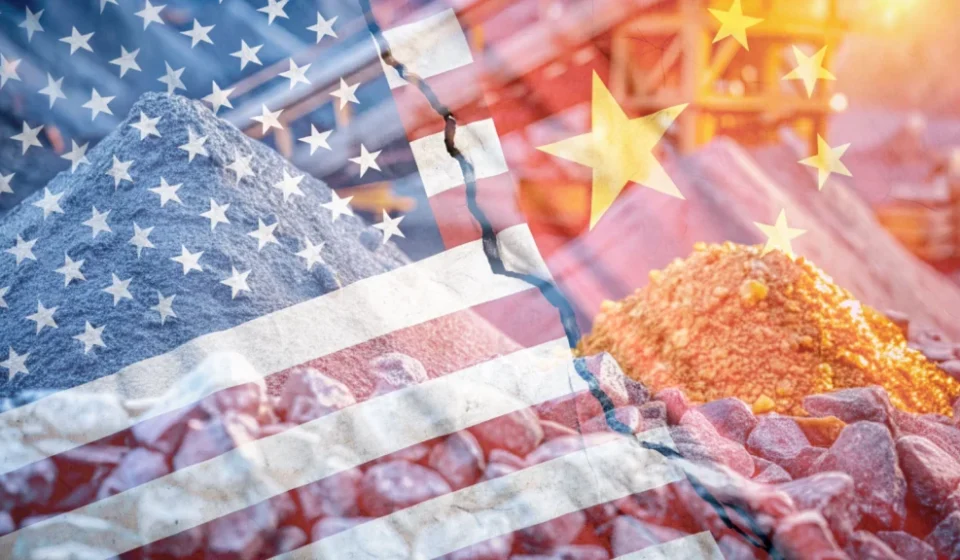

The global industrial landscape is currently witnessing a strategic realignment reminiscent of the most significant energy shifts of the 20th century. In October 1973, the United States faced a transformative crisis when Arab oil producers initiated an embargo, leading to a quadrupling of energy prices, national fuel rationing, and a period of prolonged stagflation. That era established a fundamental geopolitical maxim: a concentrated dependency on a critical resource held by a strategic rival constitutes a dormant weapon. Today, that weapon is being unsheathed once again, but the theater of conflict has shifted from the oil fields of the Middle East to the rare earth mineral deposits and processing facilities largely controlled by the People’s Republic of China.
As the global economy transitions toward high-tech manufacturing, automation, and renewable energy, the demand for rare earth elements (REEs) has moved from the periphery of material science to the center of national security and industrial strategy. These seventeen elements, particularly those used in the production of high-strength permanent magnets, are the essential components of the 21st-century economy. Recent trade data and policy shifts from Beijing indicate that the "rare earth squeeze" is no longer a theoretical threat but an active instrument of economic statecraft, placing American domestic producers like MP Materials at the forefront of a new industrial frontline.
The Geopolitical Chokepoint: China’s Dominance and Export Controls
China’s control over the rare earth supply chain is not merely a matter of geological fortune but the result of decades of deliberate industrial policy. While rare earth elements are not geographically "rare," the infrastructure required to extract, refine, and process them into usable magnets is highly specialized and environmentally intensive. Currently, China accounts for approximately 60% of global rare earth mining but, more critically, controls over 85% of the world’s refining capacity and roughly 90% of the production of finished rare earth magnets.
In mid-2024, the tension surrounding this dependency escalated. China’s Ministry of Commerce formally expanded its export-control and government-procurement blacklists, targeting several U.S. firms. This move was widely interpreted as a direct response to American efforts to de-risk its supply chains and limit Chinese access to advanced semiconductor technology. The impact of these controls is already visible in trade statistics; Chinese customs data recently revealed that shipments of rare earth magnets to the United States fell to 512 metric tons in August, representing a 20% decline from the previous month and a 13% drop year-over-year.
This systematic restriction of supply serves as a potent reminder of Beijing’s ability to exert pressure on specific sectors, including the automotive and defense industries. During previous diplomatic standoffs, such as the "Liberation Day" tariff disputes, export license delays caused significant disruptions for manufacturers like Tesla, highlighting the vulnerability of just-in-time manufacturing processes to geopolitical interference.
The Physical AI Revolution: A New Driver of Demand
The urgency to secure a domestic supply of rare earths is being accelerated by the "Physical AI" boom. While the first wave of artificial intelligence focused on Large Language Models and data processing, the second wave involves the integration of AI into the physical world through robotics and autonomous systems.
Physical AI relies heavily on precision motion, which is facilitated by electric motors. The most efficient motors for these applications utilize neodymium-iron-boron (NdFeB) magnets. These magnets offer the highest power-to-weight ratio available, making them indispensable for high-performance applications where space and battery life are at a premium.
- Humanoid Robotics: Machines such as Tesla’s Optimus require dozens of actuators to mimic human movement. Each humanoid robot can contain between 2 to 4 kilograms of rare earth magnets, a volume that exceeds the requirements of many standard electric vehicles.
- Electric Vehicles (EVs): High-efficiency traction motors in EVs are the primary drivers of current magnet demand. As the global fleet transitions away from internal combustion engines, the requirement for neodymium and praseodymium (NdPr) is expected to surge.
- Aerospace and Defense: Modern defense systems, including precision-guided munitions, radar systems, and drone swarms, are entirely dependent on rare earth components.
- Renewable Energy: Large-scale wind turbines, particularly offshore models, utilize massive quantities of rare earth magnets to convert kinetic energy into electricity with minimal maintenance.
Market analysts from institutions such as Goldman Sachs and McKinsey project that global demand for rare earth magnets could triple by 2040. This creates a supply-gap reality: if the West cannot produce these materials domestically, its technological future remains subject to the approval of the Chinese government.
A Chronology of Supply Chain Escalation
The current crisis is the culmination of a decade-long trajectory of resource nationalism and trade friction:
- 2010: China drastically reduced rare earth exports to Japan following a maritime dispute, causing global prices to spike and alerting the world to the risks of supply concentration.
- 2017: MP Materials acquired the Mountain Pass mine in California, the only operational rare earth mining and processing site in North America, signaling the start of a domestic recovery.
- 2021: The Biden Administration issued Executive Order 14017, identifying rare earth elements as a primary vulnerability in the U.S. industrial base.
- 2023: China implemented export restrictions on gallium and germanium, two other critical minerals used in semiconductors, signaling its willingness to use mineral wealth as a counter-lever in the "chip wars."
- 2024: Beijing banned the export of rare earth extraction and separation technologies, attempting to prevent other nations from building their own refining infrastructure.
- January 2027: A looming regulatory deadline set by the U.S. Department of Defense will require contractors to completely phase out the use of Chinese-origin rare earth magnets in military hardware.
MP Materials and the "Mine-to-Magnet" Strategy
In response to these threats, MP Materials has emerged as the cornerstone of the United States’ strategy to reclaim its mineral independence. The company’s Mountain Pass facility currently accounts for approximately 10% of global rare earth concentrate production. However, the strategic value of MP Materials lies in its transition from a mining company to a fully integrated "mine-to-magnet" manufacturer.
The U.S. government has taken an unprecedented role in supporting this transition. Through the Defense Production Act and Department of Energy grants, Washington has funneled billions into domestic mineral projects. Notably, the Pentagon secured a 15% equity stake in MP Materials and established a 10-year offtake agreement for magnet materials. This agreement includes a guaranteed price floor of approximately $110 per kilogram for certain outputs, providing the company with a buffer against the price volatility often engineered by dominant market players to stifle competition.
The company’s "10X" expansion plan aims to reach an annual production capacity of 10,000 metric tons of magnets by 2028. This expansion includes the commissioning of heavy rare earth separation capabilities at Mountain Pass, which will allow for the isolation of dysprosium and terbium—elements essential for magnets used in high-temperature environments, such as robot joints and jet engines.
Corporate Alliances and Financial Performance
The private sector is following the government’s lead in securing non-Chinese supply chains. Major corporations are increasingly entering into long-term supply agreements with MP Materials to ensure their production lines remain insulated from trade shocks:
- Apple: The technology giant signed a $500 million agreement to procure American-made rare earth magnets, which includes a dedicated recycling program at MP’s Fort Worth, Texas facility.
- General Motors: GM has established a long-term partnership to source magnets for its EV traction motors, moving toward a localized supply chain that qualifies for federal tax credits under the Inflation Reduction Act.
- Aerospace and Defense: MP recently announced a nine-figure agreement with a major U.S. aerospace manufacturer for the supply of gadolinium.
- International Ventures: MP has formed a joint venture with the Saudi Arabian state mining company to develop refining capacity in the Kingdom, further diversifying supply outside of East Asia.
The financial impact of this strategic pivot is becoming evident. In the second quarter of 2024, MP Materials reported an 89% year-over-year increase in revenue, reaching $108.5 million. Production of NdPr rose by 41%, while adjusted EBITDA improved significantly compared to the previous year. These figures suggest that the market is beginning to price in the "security premium" of domestic rare earth production.
Analysis of Broader Implications
The "rare earth squeeze" represents a fundamental shift in the nature of global trade. For the past thirty years, global supply chains were optimized for efficiency and cost, leading to the current concentration of processing in China. The new era is defined by "resilience" and "friend-shoring," where the reliability of supply is prioritized over the lowest possible price.
The January 2027 deadline for the defense industry acts as a hard regulatory floor for demand. As military contractors scramble to replace Chinese magnets, the competition for MP Materials’ output is expected to intensify. This regulatory pressure, combined with the exponential growth of the robotics and EV sectors, creates a unique market condition where demand is virtually guaranteed by both policy and technological progress.
Furthermore, the integration of rare earth supply chains is becoming a prerequisite for the industrial ambitions of figures like Elon Musk. Between Tesla’s Optimus project, the massive motor requirements of the Tesla vehicle fleet, and the specialized needs of SpaceX’s satellite constellations, the "Musk empire" represents one of the largest potential consumers of rare earth magnets in the world. While formal contracts between these entities are often confidential, the structural necessity of a domestic supply source makes a partnership between major U.S. tech hubs and MP Materials almost inevitable.
Conclusion: The Strategic Imperative
The 1973 oil embargo taught the United States that energy security is national security. In the 2020s, the lesson is that mineral security is the prerequisite for technological sovereignty. China’s decision to restrict magnet shipments and export technology is a clear signal that it views its monopoly on rare earths as a strategic asset to be used in broader geopolitical negotiations.
For the United States, the development of MP Materials and the broader domestic rare earth ecosystem is no longer just an industrial project; it is a defensive necessity. As the world moves toward a future defined by Physical AI and autonomous systems, the elements at the bottom of the periodic table will determine which nations lead the next industrial revolution and which remain dependent on their rivals for the components of progress. The regulatory clock is ticking toward 2027, and the race to secure the "new oil" is now in its most critical phase.