IPO Day Is When Most Investors Get It Wrong: The 2026 AI IPO Gold Rush and the Structural Shift in Public Markets

The global financial landscape is currently navigating a period of unprecedented divergence between the rapid technological advancement of artificial intelligence and the availability of direct investment opportunities within public equity markets. While the "AI boom" has dominated headlines and driven significant gains for established semiconductor manufacturers and cloud service providers, the primary entities responsible for the "intelligence layer"—the foundational large language models and autonomous systems—remain largely sequestered within private markets. This structural delay has created a significant bottleneck for retail and institutional investors alike, setting the stage for a historic wave of initial public offerings (IPOs) projected for 2026.
Industry analysts and market data suggest that 2026 will represent a watershed moment for the technology sector, as the most influential private AI firms transition to the public stage. This transition is not merely a matter of company maturation but is expected to involve a fundamental restructuring of how major stock indices incorporate high-growth technology firms. The anticipated listings of OpenAI, Anthropic, xAI, and defense-tech pioneer Anduril Industries are projected to involve valuations reaching into the trillions of dollars, potentially triggering a massive reallocation of capital across global markets.
The Intelligence Layer: Why Current AI Exposure Is Indirect
To date, the primary beneficiaries of the AI revolution in the public markets have been "picks-and-shovels" plays. Nvidia Corporation (NVDA) has seen its valuation soar as the primary supplier of the H100 and Blackwell chips necessary for training advanced models. Similarly, hyperscalers like Microsoft (MSFT), Amazon (AMZN), and Alphabet (GOOGL) have benefited from increased demand for cloud computing resources. However, these investments offer only indirect exposure to the proprietary intelligence models themselves.
Microsoft, for instance, maintains a complex partnership with OpenAI, providing infrastructure and capital in exchange for a share of profits and licensing rights, yet it does not own the entity outright. Consequently, public market investors are currently excluded from the direct equity growth of the companies defining the frontier of generative AI. This exclusion is expected to end as the capital requirements for scaling these models—which now involve multi-billion-dollar clusters of GPUs and massive energy infrastructure—necessitate the liquidity of public markets.
Profiles of the 2026 IPO Heavyweights
The anticipated 2026 IPO cohort is characterized by firms with unprecedented private valuations and significant revenue trajectories.
OpenAI: The Trillion-Dollar Benchmark
OpenAI, the creator of ChatGPT, remains the most anticipated listing in the sector. Recent financial disclosures indicate the company is generating over $20 billion in annualized revenue, supported by a user base of approximately 810 million monthly active users and a robust enterprise segment comprising over one million customers. Following a funding round that valued the company at approximately $730 billion, OpenAI is reportedly targeting a public debut as early as the fourth quarter of 2026. If the company achieves its internal valuation goals, it could become the first firm to go public with a valuation approaching $1 trillion.

The SpaceX-xAI Conglomerate
Elon Musk’s corporate strategy has evolved into a highly integrated ecosystem. The recent merger of SpaceX and xAI has created a vertical titan that combines orbital launch dominance with frontier AI development. By utilizing SpaceX’s Starlink infrastructure to provide the data backbone for xAI’s models, the combined entity represents a unique "space-AI" crossover. Current estimates from Bloomberg and CNBC suggest SpaceX may file for an IPO in the near term, with a target valuation exceeding $1.75 trillion. This would make it the largest IPO in history, offering investors a stake in both the future of space exploration and the Grok AI platform.
Anthropic: The Safety-First Alternative
Anthropic, founded by former OpenAI executives with a focus on "AI safety" and "constitutional AI," has emerged as the primary competitor to the GPT series. Backed by multi-billion-dollar investments from Google and Amazon, Anthropic was recently valued at $380 billion in a Series G funding round. The company’s Claude models have gained significant traction in the enterprise sector due to their emphasis on steerability and reduced hallucination rates. Market observers expect Anthropic to seek a public listing in tandem with OpenAI to capitalize on institutional demand for diversified AI exposure.
Anduril Industries: The Rise of Autonomous Defense
While consumer AI captures the most attention, the defense sector is undergoing a parallel transformation. Anduril Industries, led by Oculus founder Palmer Luckey, is positioning itself as the "first software-first defense prime." The company’s Lattice OS platform serves as an AI-driven operating system for autonomous drones, underwater vehicles, and border surveillance systems. With revenue approaching $2 billion and a valuation that has surged to $60 billion, Anduril represents the critical intersection of AI and national security. The company has recently expanded its physical footprint with a $1 billion manufacturing facility in Ohio, signaling a shift toward the scale required for a public entity.
The Bloomberg Analysis: The $48 Billion "Index Squeeze"
A critical and often overlooked component of the 2026 IPO wave is the potential for a "structural supply-demand imbalance" driven by changes in index inclusion rules. Historically, newly public companies were required to undergo a "seasoning period"—often 12 months—before being eligible for inclusion in major benchmarks like the S&P 500 or the Nasdaq 100.
However, new reporting from Bloomberg Intelligence indicates that S&P Global and FTSE Russell are considering "fast-track" provisions for "mega-cap" IPOs. Under these proposed rules, companies with valuations exceeding a certain threshold (likely $100 billion or more) could be added to indices within days of their debut.
The Mathematics of Forced Buying
The implications of fast-track inclusion are profound:
- Passive Demand: There is approximately $12 trillion in assets currently tied to passive index-tracking funds.
- Forced Allocation: Bloomberg estimates that if OpenAI or SpaceX are fast-tracked, passive funds would be "forced" to purchase between $24 billion and $48 billion worth of shares within the first week of trading to maintain accurate tracking.
- Low Float Constraints: These companies are expected to list with a "free float" (the percentage of shares available to the public) of only 5% to 10%.
If $48 billion in forced demand hits a limited supply of $75 billion in available shares, the result could be an artificial inflation of the stock price that is decoupled from the company’s fundamental value. This creates a scenario where the "opening-day pop" is driven by mechanical index requirements rather than organic investor sentiment.

Chronology of the AI IPO Super-Cycle
The path toward 2026 has been marked by several key milestones in capital formation:
- 2023-2024: The "Private Consolidation Phase," where OpenAI, Anthropic, and xAI secured massive late-stage funding from "Big Tech" partners to build compute clusters.
- Early 2025: Expected regulatory filings and the formalization of fast-track index rules.
- Mid-2026: The projected window for the SpaceX-xAI listing, likely serving as the "bellwether" for the broader market.
- Late 2026: The OpenAI and Anthropic debuts, marking the maturation of the generative AI sector.
Historical Context and Market Implications
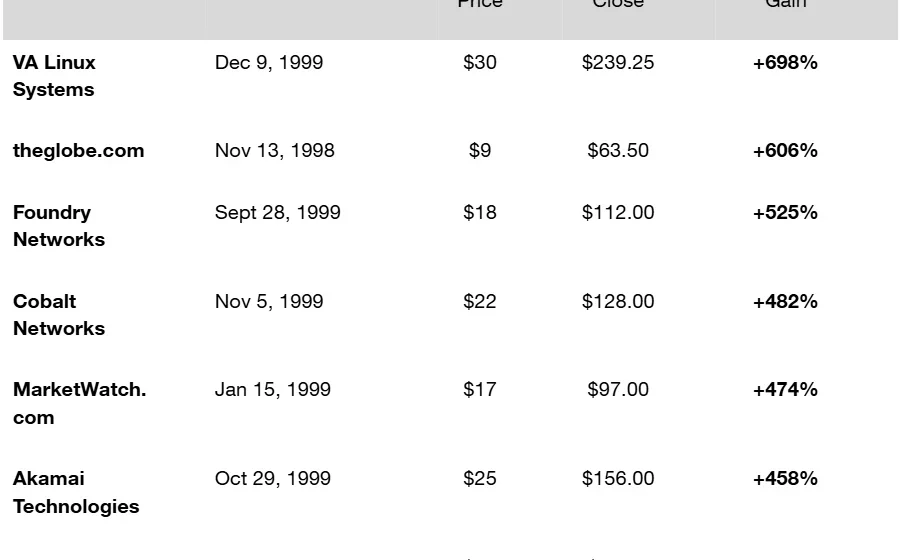
The current excitement surrounding AI IPOs draws inevitable comparisons to the Dot-com era of the late 1990s. During that period, companies like Netscape and VA Linux saw triple-digit gains on their first day of trading, only to see their valuations collapse in the following years.
However, analysts point to a key difference: revenue. Unlike the pre-revenue startups of 1999, the 2026 IPO class consists of companies with billions in annualized revenue and established enterprise contracts. Nonetheless, the "IPO Day trap" remains a concern. If the majority of a company’s growth occurs in the private market—as has been the case with SpaceX and OpenAI—the public listing may serve more as an "exit event" for venture capitalists rather than an "entry event" for new investors.
The Democratization of Pre-IPO Access
In response to the traditional barriers to private equity, a new category of investment vehicles has emerged. These "crossover" funds and specialized ETFs allow non-accredited investors to gain exposure to private firms like SpaceX or OpenAI through publicly traded structures.
Data from Bloomberg shows that certain private-public crossover ETFs have already seen unrealized gains of over 700% on their early SpaceX positions. As the 2026 deadline approaches, these vehicles are seeing increased inflows from investors looking to circumvent the anticipated "index squeeze" on IPO day.
Broader Economic Impact and National Security
The public listing of these entities will have implications far beyond the stock market. The infusion of public capital into Anduril and SpaceX will accelerate the integration of AI into global defense infrastructures and space-based telecommunications. Furthermore, the sheer scale of these IPOs will likely influence central bank policies and global liquidity, as the massive shift in capital could impact interest rate sensitivities within the technology sector.
As 2026 approaches, the financial community remains focused on the structural mechanics of these listings. The transition of the AI "intelligence layer" from private hands to the public domain will likely be remembered as the definitive market event of the decade, reshaping the indices that govern global wealth and setting the stage for the next era of industrial competition.