AMD FSR 4 to Revolutionize Handheld Gaming Graphics, Excluding Steam Deck

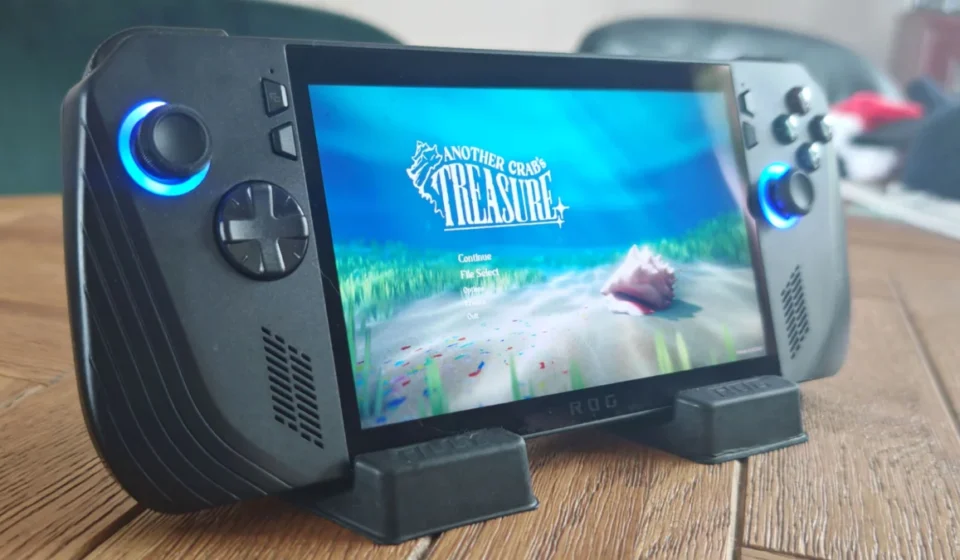
A significant advancement in graphical technology is on the horizon for owners of AMD-powered handheld gaming devices, with a specialized version of AMD’s FidelityFX Super Resolution (FSR) 4 set to enhance visual fidelity and performance. This forthcoming update, confirmed by AMD’s Senior Vice President of Computing and Graphics, Jack Huynh, will bring the company’s cutting-edge upscaling technology to a wider array of devices. However, a notable exception to this rollout is Valve’s popular Steam Deck. The targeted devices are expected to include prominent models such as the Lenovo Legion Go and the Asus ROG Ally X, both of which are built upon AMD’s RDNA 3 architecture. This strategic move by AMD aims to bolster the gaming capabilities of these portable powerhouses, potentially solidifying their positions as leading options in the burgeoning handheld gaming market.
The Arrival of FSR 4 for RDNA 3 Handhelds
Recent reports, originating from Korean outlet The Elec and corroborated by TechSpot, indicate that AMD is prioritizing the integration of FSR 4 support for RDNA 3-class handhelds. The current timeline suggests this implementation will occur before the close of 2024. This timeframe positions the technology to be available for devices like the Asus ROG Ally X and the Lenovo Legion Go, both of which have garnered significant attention and positive reviews for their performance and portability.
FSR 4, AMD’s answer to NVIDIA’s Deep Learning Super Sampling (DLSS), is a temporal upscaling solution designed to render games at a lower resolution and then intelligently upscale them to a higher resolution. This process significantly reduces the computational load on the GPU, allowing for higher frame rates and smoother gameplay, particularly in demanding titles. The specific iteration of FSR 4 destined for these handhelds is described as a "lightweight version." This suggests a focus on optimizing the software for the unique constraints and capabilities of mobile chipsets, aiming to maximize improvements in image quality and address potential issues related to input latency. While AMD has yet to release concrete performance benchmarks, the prospect of FSR 4 integration has generated considerable excitement within the gaming community.
Understanding the RDNA Architecture Divide
The exclusion of the Steam Deck from this initial FSR 4 rollout is directly attributable to its underlying architecture. The Steam Deck, both its original iteration and the recent OLED model, utilizes an APU (Accelerated Processing Unit) based on AMD’s RDNA 2 architecture. In contrast, the devices slated to receive FSR 4 support, such as the ROG Ally X and Legion Go, are equipped with newer APUs that incorporate the RDNA 3 architecture. This distinction is critical, as FSR 4’s advanced features and optimizations are specifically designed to leverage the capabilities of RDNA 3 and subsequent architectures.
Similarly, the original Asus ROG Ally, which also features an RDNA 2-based APU, will not benefit from this immediate FSR 4 update. This creates a clear bifurcation in the handheld gaming landscape, where newer devices with more advanced hardware will be the first to experience the graphical uplift. For owners of RDNA 2-based handhelds like the Steam Deck and the original ROG Ally, the path forward for FSR 4 integration remains uncertain. They will likely need to await further announcements from AMD regarding potential support for older architectures or the possibility of a future FSR version tailored for RDNA 2.
Background and Context: The Evolution of Upscaling Technology
The development and widespread adoption of upscaling technologies represent a pivotal moment in PC and console gaming. For years, developers have grappled with the challenge of delivering visually stunning games that can run smoothly on a variety of hardware configurations, especially on portable devices where power and thermal constraints are paramount. Traditional methods often involved rendering games at lower resolutions, which could lead to a noticeable degradation in image quality.
AMD’s FidelityFX Super Resolution (FSR) technology emerged as a direct competitor to NVIDIA’s DLSS, offering an open-source alternative that could be implemented more broadly across different GPU vendors. FSR 1, released in 2021, was primarily a spatial upscaler, meaning it reconstructed the image from a single frame. While it provided a performance boost, its visual quality could sometimes fall short of more advanced temporal solutions. FSR 2, introduced in 2022, marked a significant leap forward by incorporating temporal data from previous frames, resulting in substantially improved image quality and detail preservation.
FSR 4 represents the next evolutionary step, building upon the successes of its predecessors. While specific details about its internal workings are scarce, it is widely anticipated to further refine temporal upscaling techniques, potentially incorporating features like frame generation. Frame generation, a technology that inserts entirely new frames between rendered frames, can dramatically increase perceived frame rates, leading to an even smoother visual experience. The "lightweight" nature of the FSR 4 version for handhelds suggests a careful balancing act, aiming to deliver these advanced features without imposing an undue performance penalty on the mobile hardware.
Chronology of AMD’s Handheld Graphics Advancements
- Mid-2021: AMD releases FSR 1, its initial open-source spatial upscaling technology, aiming to improve performance across a wide range of GPUs.
- Early 2022: The gaming industry sees the emergence of more powerful handheld PCs, including early iterations of devices that would pave the way for current-generation offerings.
- April 2022: AMD announces FSR 2.0, a significant upgrade featuring temporal upscaling for improved image quality and performance.
- June 2023: The Asus ROG Ally is launched, featuring an AMD Ryzen Z1 Extreme APU with RDNA 3 graphics, marking a new era for high-performance Windows handhelds.
- Late 2023 – Early 2024: The Lenovo Legion Go enters the market, also powered by AMD APUs and demonstrating the growing capabilities of the handheld PC segment.
- February 2024: Asus announces the ROG Ally X, an updated model promising enhanced battery life and other improvements, still utilizing RDNA 3 architecture.
- Present: Reports surface indicating AMD’s intention to bring a specialized version of FSR 4 to RDNA 3-based handhelds by the end of 2024.
This timeline illustrates AMD’s consistent focus on improving graphical performance for its PC gaming ecosystem, with a particular emphasis on the rapidly growing handheld segment. The phased rollout of FSR 4 reflects a strategic approach to ensuring optimal performance and compatibility with evolving hardware architectures.

Supporting Data and Industry Trends
The handheld gaming market has witnessed exponential growth in recent years. According to various market research firms, the global handheld gaming market size was valued at approximately USD 11.9 billion in 2023 and is projected to expand at a compound annual growth rate (CAGR) of over 10% from 2024 to 2030. This surge is driven by increasing consumer demand for portable gaming experiences, advancements in mobile processing power, and the growing popularity of PC gaming on the go.
The performance capabilities of handheld devices are intrinsically linked to their graphical processing units. AMD’s APUs, which combine CPU and GPU cores onto a single chip, have become a dominant force in this space. The RDNA 3 architecture, found in the latest generation of these APUs, offers significant improvements in terms of compute performance, ray tracing capabilities, and power efficiency compared to its RDNA 2 predecessor. FSR 4’s integration is expected to further unlock the potential of these RDNA 3 chips, allowing them to render visually complex games at higher frame rates and resolutions than would otherwise be possible.
For instance, a game running at 1080p native resolution might require a substantial amount of GPU power. By utilizing FSR 4 to render the game at, say, 720p and then upscale it to 1080p, the GPU load can be reduced by as much as 50% or more, depending on the quality setting chosen. This performance uplift can translate to a tangible improvement in gameplay, enabling higher graphical settings or more consistent frame rates, which are crucial for an immersive handheld experience.
Official Statements and Inferred Reactions
While AMD’s Senior Vice President Jack Huynh has been cited as confirming the upcoming FSR 4 support for specific devices, direct quotes or detailed official statements from AMD regarding the exact implementation and its impact have been limited. The reports from The Elec and TechSpot serve as the primary conduit for this information.
Inferred reactions from device manufacturers like Lenovo and Asus are likely to be overwhelmingly positive. The addition of FSR 4 would represent a significant value proposition for their respective handhelds, enhancing their appeal to a broader gaming audience. Such an update would allow these companies to market their devices with improved graphical capabilities and performance, potentially boosting sales and market share.
Conversely, the situation for Valve and Steam Deck owners presents a challenge. While Valve has not directly commented on the FSR 4 news, the exclusion of their flagship device from this particular rollout is likely to be met with disappointment by some users. This underscores the ongoing race in hardware development, where architectural differences can lead to varying levels of software support.
Broader Impact and Implications
The introduction of FSR 4 to RDNA 3 handhelds carries several significant implications for the gaming industry and consumers alike:
- Enhanced Gaming Experience: For owners of compatible devices, FSR 4 promises a tangible improvement in visual fidelity and performance, making modern AAA titles more playable and enjoyable on the go. This could lead to an increased adoption of demanding games on handheld platforms.
- Competitive Landscape: This move by AMD further intensifies the competition in the handheld gaming space. Devices equipped with RDNA 3 architecture will gain a distinct advantage, potentially influencing consumer purchasing decisions.
- Future Hardware Development: The reliance on RDNA 3 architecture for FSR 4 support highlights the importance of next-generation hardware. It also raises expectations for future AMD APUs and potentially for Valve’s next-generation Steam Deck, which may need to incorporate newer architectures to remain competitive in terms of software feature support.
- Software Optimization: The development of a "lightweight" FSR 4 version specifically for handhelds demonstrates AMD’s commitment to optimizing its technologies for diverse hardware platforms. This approach is crucial for ensuring that advanced features are accessible and performant on power-constrained devices.
- The Role of Upscaling: The increasing sophistication and adoption of upscaling technologies like FSR and DLSS underscore their critical role in the future of gaming. They enable developers to push graphical boundaries while making games accessible to a wider range of hardware.
The Speculative Future of Steam Deck 2
Adding another layer to the discourse surrounding AMD’s graphics technology and Valve’s portable gaming ambitions are recent rumors concerning the Steam Deck 2. While speculative at this stage, reports have emerged suggesting that the processor for a potential Steam Deck 2 could be an AMD APU codenamed ‘Gainsborough.’ This hypothetical chip would presumably be based on a more recent AMD architecture, potentially RDNA 3 or even a future iteration, which would then pave the way for broader FSR 4 compatibility in future Valve hardware.
Valve has officially confirmed that a successor to the Steam Deck is in development, but concrete details regarding its specifications, release date, or pricing remain elusive. Some unconfirmed rumors have hinted at a potential launch window in late 2027 or 2028, though these should be treated with a degree of caution. If the Steam Deck 2 does indeed feature an APU capable of supporting FSR 4, it would signal a significant step forward for Valve’s portable platform and address the current architectural disparity. Until then, owners of the current Steam Deck will be looking to AMD for any potential future optimizations or broader compatibility updates for RDNA 2.