The Pokémon Mankey: A Comprehensive Guide to Its Evolution, Locations, Stats, and Moveset

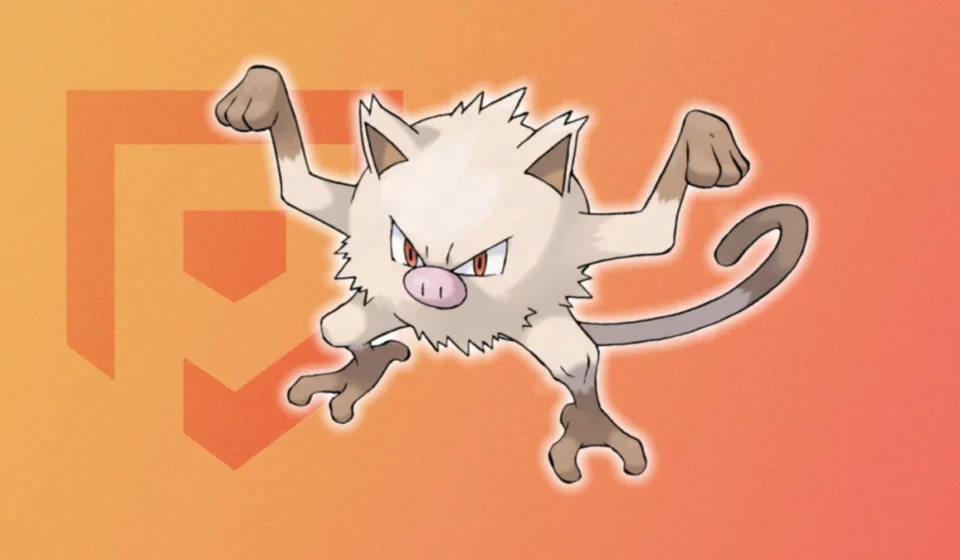
Mankey, a Gen 1 Pokémon hailing from the Kanto region, is often characterized by its volatile temperament, a trait that belies its otherwise diminutive and somewhat endearing appearance. While its initial form might be perceived as more cute than commanding, its evolutionary line culminates in formidable power. This detailed exploration delves into the intricacies of Mankey, charting its journey from its nascent stages to its more potent evolutions, Primeape and the recently introduced Annihilape. We will meticulously examine its habitat across various Pokémon generations, its statistical strengths and weaknesses, and the comprehensive array of moves it can master. For trainers seeking to understand and effectively utilize this Fighting-type Pokémon, this guide provides an exhaustive resource, serving as a valuable addition to any comprehensive Pokédex, which features creatures from all generations.
Mankey: Core Attributes and Early Development
At its core, Mankey is a pure Fighting-type Pokémon, a classification that immediately signals its predisposition towards physical combat. Introduced in the first generation of Pokémon games, Mankey has remained a consistent presence in the franchise, appearing in numerous titles since its debut. Its inherent nature is one of fierce energy and a quick temper, often provoked by the slightest inconvenience. This aggressive disposition, however, is a key component of its combat effectiveness.
Here is a breakdown of Mankey’s fundamental characteristics:
- National Pokédex Number: #0056
- Type: Fighting
- Abilities:
- Vital Spirit: Prevents the Pokémon from falling asleep. This is particularly useful in battles where status conditions can turn the tide.
- Anger Point: Maximizes the Pokémon’s Attack stat when it is hit by a critical hit. This ability rewards a Mankey for enduring a powerful blow, potentially turning a disadvantage into an offensive advantage.
- Hidden Ability:
- Defiant: Lowers the Pokémon’s Attack stat but raises its Speed stat by two stages when any of its stats are lowered by an opponent. This is a strategic ability that can surprise opponents who attempt to debuff Mankey, as it rewards defiance with increased offensive pressure.
- Gender Ratio: 50% Male / 50% Female. This balanced ratio ensures fair availability for breeding and team composition.
- Egg Group: Field. This classification is common for mammalian Pokémon and influences its breeding compatibility with other species.
- EV Yield: 1 Attack. This indicates that defeating a Mankey grants trainers one point towards their Pokémon’s Attack stat, reflecting its offensive prowess even in its base form.
The Evolutionary Path: From Fury to Fury Unleashed
Mankey’s journey of growth is marked by two distinct evolutionary stages, each amplifying its combat capabilities. The initial transformation occurs at a relatively early level, setting the stage for greater power.
-
Evolution into Primeape: Mankey evolves into Primeape upon reaching level 28. Primeape, a larger and more physically imposing Pokémon, retains the Fighting-type classification and exhibits a significant increase in its offensive stats. Its temperament often escalates with its power, making it an even more aggressive combatant. The transition to Primeape signifies a leap in raw power, making it a more reliable offensive threat in battles.
-
Evolution into Annihilape: The most recent and powerful evolution in Mankey’s lineage is Annihilape, a Fighting/Ghost dual-type Pokémon. This transformation is not achieved through leveling alone but requires a specific combat condition: using the signature move Rage Fist 20 times. This unique evolution method emphasizes the Pokémon’s ability to absorb and channel damage, turning perceived weakness into immense strength. Annihilape’s dual typing offers a broader range of resistances and offensive capabilities, making it a formidable late-game Pokémon. The requirement to use Rage Fist 20 times highlights a narrative of overcoming adversity and channeling pent-up rage into ultimate power, a fitting conclusion to Mankey’s developmental arc.
Habitat and Acquisition: Where to Find Mankey Across Generations
Mankey’s presence has been a constant thread throughout the Pokémon universe, with its availability varying across different game generations and specific locations. Understanding these locations is crucial for trainers looking to add this spirited Pokémon to their roster.
Generation 1 Locations:
- Red: Routes 5, 6, 7, and 8. These routes in the Kanto region were the primary areas for encountering wild Mankey.
- Blue: Available only through trading.
- Blue (Japan): Available only through trading.
- Yellow: While not explicitly detailed in the provided snippet, typically if a Pokémon is available in Red and Blue, it would also be in Yellow, possibly in similar or slightly altered locations.
Generation 2 Locations:
- Gold: Routes 9 and 42. These new routes in the Johto region offered players a chance to encounter Mankey.
- Silver: Available only through trading.
- Crystal: Available only through trading.
Generation 3 Locations:
- Ruby and Sapphire: Available only through trading.
- Emerald: Available only through trading.
- FireRed and LeafGreen: Routes 3, 4, 22, 23, and Rock Tunnel. As remakes of the original games, these titles brought Mankey back to its Kanto roots with familiar locations.
- Colosseum: Available only through trading.
- XD: Available only through trading.
Generation 4 Locations:

- Diamond and Pearl: Routes 225 and 226, specifically via the Poké Radar. The Poké Radar introduced a new method for encountering specific Pokémon in tall grass.
- Platinum: Routes 225 and 226, also utilizing the Poké Radar.
- HeartGold: Routes 9 and 42. Similar to the original Gold version, these routes in the remade Johto region were home to Mankey.
- SoulSilver: Available only through trading.
- Pal Park: The "Mountain" area. Pal Park allowed players to migrate Pokémon from the Game Boy Advance generations, offering a way to obtain Mankey if it wasn’t found in the Sinnoh region itself.
Generation 5 Locations:
- Black and White: Route 15, appearing as a swarm. Swarms were special events where a particular Pokémon would appear in large numbers in a specific location for a limited time.
- Black 2 and White 2: Trade with Curtis in Nimbasa City, specifically requiring a female Mankey. This represented a unique in-game trade opportunity.
- Dream World: Rugged Mountain. The Dream World was an online feature that allowed players to encounter Pokémon in a special forest environment.
Generation 6 Locations:
- X and Y: Friend Safari. The Friend Safari is a post-game area where players can encounter a variety of Pokémon, often with hidden abilities, depending on the friends they have registered.
- Omega Ruby and Alpha Sapphire: Jagged Pass. This volcanic area in the Hoenn region provided a new location for Mankey encounters.
Generation 7 Locations:
- Sun and Moon: Route 3. A familiar route in the Alola region served as a habitat for Mankey.
- Ultra Sun and Ultra Moon: Route 3. The Ultra versions mirrored the original Sun and Moon locations for Mankey.
- Let’s Go Pikachu: Routes 3 and 4. These Kanto-based routes were revisited in the Let’s Go games, offering a direct nod to Mankey’s origins.
- Let’s Go Eevee: Available only through trading.
Generation 8 Locations:
- Sword and Shield: Unobtainable in the base game. This marked a departure from previous generations where Mankey was consistently available. Its absence may have been due to the focus on the Galar region’s native Pokémon or limitations in the game’s design.
- Brilliant Diamond and Shining Pearl: Routes 225 and 226 (Poké Radar) and the Grand Underground (Spacious Cave, Grassland Cave, Sunlit Cavern). The return to Sinnoh brought back the Poké Radar method and introduced the Grand Underground, offering multiple avenues for acquisition.
- Legends: Arceus: Unobtainable. This title focused on the ancient Hisui region, and Mankey, as a Kanto native, was not part of its ecological makeup.
Generation 9 Locations:
- Scarlet and Violet: South Province (Area One and Area Five), West Province (Area One), and Tera Raid Battles. Mankey returns to Paldea with familiar wild encounters and the added dimension of Tera Raid Battles, offering a dynamic way to obtain it.
- The Hidden Treasure of Area Zero (DLC): Kitakami Road, Apple Hills, Oni Mountain, Wistful Fields, Paradise Barrens, Kitakami Wilds, Timeless Woods. The DLC introduced a vast new region with numerous locations where Mankey can be found, enriching its presence in the latest generation.
- Legends: Z-A: Available only through trading. This upcoming title’s specific mechanics for Mankey acquisition are yet to be fully detailed but will likely involve trading.
- Mega Dimension: Hyperspace Lumiose. This entry suggests a new, perhaps alternate-reality or dimension, where Mankey resides, indicating its continued expansion within the Pokémon universe.
Mankey’s Combat Prowess: Stats, Strengths, and Weaknesses
Mankey’s effectiveness in battle is dictated by its base stats and typing. As a Fighting-type, it possesses inherent advantages and disadvantages that trainers must consider when strategizing.
Mankey’s Base Stats:
(Note: The provided text does not list specific base stats for Mankey. A complete analysis would typically include its base HP, Attack, Defense, Special Attack, Special Defense, and Speed. However, we can infer from its typing and role that it likely prioritizes Attack and Speed.)
Mankey’s Type Matchups:
As a pure Fighting-type, Mankey engages in a dynamic dance of strengths and weaknesses against other Pokémon types:
- Resistant to: Rock, Bug, Dark. Mankey takes reduced damage from attacks of these types, making it a solid choice against Pokémon that rely on these offensive categories.
- Weak to: Flying, Psychic, Fairy. Attacks of these types deal super-effective damage to Mankey, requiring trainers to be cautious when facing opponents with these typings.
- Normal Damage: Mankey deals and receives normal damage from a wide array of types including Normal, Fighting, Poison, Ground, Ghost, Steel, Fire, Water, Grass, Electric, Ice, and Dragon.
- Immune to: None. Unlike some dual-type Pokémon, Mankey has no types that it is completely immune to, meaning it will always take at least neutral damage from any incoming attack.
This type chart highlights Mankey’s role as a dedicated physical attacker. Its resistances to Rock and Bug are particularly beneficial, as these types often feature in early-game encounters. However, its vulnerability to Psychic and Fairy types necessitates careful team building, ensuring it is not overwhelmed by common threats.
Mankey’s Movepool: A Symphony of Strikes
Mankey’s arsenal of moves is crucial to its success in battle. Its movepool, accessible through leveling up, TMs, and breeding, reflects its aggressive Fighting-type nature, with a blend of direct attacks and utility moves.
Level-Up Moves (Scarlet and Violet):
This list showcases the moves Mankey learns as it gains experience in the latest generation:

| Level | Move | Type |
|---|---|---|
| One | Covet | Normal |
| One | Scratch | Normal |
| One | Leer | Normal |
| One | Focus Energy | Normal |
| Five | Fury Swipes | Normal |
| Eight | Low Kick | Fighting |
| 12 | Seismic Toss | Fighting |
| 17 | Swagger | Normal |
| 22 | Cross Chop | Fighting |
| 26 | Assurance | Dark |
| 29 | Thrash | Normal |
| 33 | Close Combat | Fighting |
| 36 | Screech | Normal |
| 40 | Stomping Tantrum | Ground |
| 44 | Outrage | Dragon |
| 48 | Final Gambit | Fighting |
This selection demonstrates Mankey’s progression from basic physical attacks to more powerful and strategic moves like Close Combat and Final Gambit, which can be devastating in the right circumstances. The inclusion of Assurance and Stomping Tantrum provides coverage against types that might otherwise resist its primary Fighting-type attacks.
Level-Up Moves (Legends: Z-A):
The movepool for Legends: Z-A offers a slightly different progression, reflecting the game’s unique mechanics and emphasis on different battle styles:
| Level | Move | Type |
|---|---|---|
| One | Tackle | Normal |
| One | Leer | Normal |
| One | Focus Energy | Normal |
| Eight | Rock Throw | Rock |
| Ten | Rock Smash | Fighting |
| 13 | Take Down | Normal |
| 16 | Low Sweep | Fighting |
| 18 | Knock Off | Dark |
| 22 | Bulldoze | Ground |
| 25 | Brick Break | Fighting |
| 28 | Facade | Normal |
| 40 | Screech | Normal |
| 44 | Close Combat | Fighting |
| 50 | Outrage | Dragon |
| 54 | Dynamic Punch | Fighting |
The inclusion of Rock Throw and Rock Smash in the early levels of Legends: Z-A suggests a different approach to early game encounters or a specific design philosophy for this title. The presence of Knock Off and Bulldoze provides valuable utility and coverage.
Learnable TMs (Scarlet and Violet):
The vast array of TMs available in Scarlet and Violet significantly expands Mankey’s movepool, allowing for extensive customization:
| Move | Type |
|---|---|
| Take Down | Normal |
| Scary Face | Normal |
| Protect | Normal |
| Low Kick | Fighting |
| Acrobatics | Flying |
| Thief | Dark |
| Facade | Normal |
| Bulldoze | Ground |
| Swift | Normal |
| Rock Tomb | Rock |
| Low Sweep | Fighting |
| Fling | Dark |
| Endure | Normal |
| Sunny Day | Fire |
| Rain Dance | Water |
| Dig | Ground |
| Brick Break | Fighting |
| U-turn | Bug |
| Shadow Claw | Ghost |
| Bulk Up | Fighting |
| Body Slam | Normal |
| Fire Punch | Fire |
| Thunder Punch | Electric |
| Ice Punch | Ice |
| Sleep Talk | Normal |
| Seed Bomb | Grass |
| Drain Punch | Fighting |
| Metronome | Normal |
| Poison Jab | Poison |
| Stamping Tantrum | Ground |
| Rest | Psychic |
| Rock Slide | Rock |
| Taunt | Dark |
| Gunk Shot | Poison |
| Substitute | Normal |
| Encore | Normal |
| Thunderbolt | Electric |
| Helping Hand | Normal |
| Reversal | Fighting |
| Earthquake | Ground |
| Stone Edge | Rock |
| Outrage | Dragon |
| Overheat | Fire |
| Focus Blast | Fighting |
| Close Combat | Fighting |
| Tera Blast | Normal |
| Spite | Ghost |
| Uproar | Normal |
| Focus Punch | Fighting |
| Lash Out | Dark |
| Double Edge | Normal |
| Endeavor | Normal |
| Throat Chop | Dark |
| Curse | Ghost |
The TM list is extensive, offering Mankey access to powerful coverage moves like Earthquake, Stone Edge, and Thunderbolt, as well as utility moves like Bulk Up and Taunt, allowing for diverse combat strategies. The inclusion of elemental punches (Fire, Thunder, Ice) further diversifies its offensive capabilities.
Learnable TMs (Legends: Z-A):
This list provides the TM learnable moves for Mankey in Legends: Z-A, demonstrating some overlap and unique additions compared to Scarlet and Violet:
| Move | Type |
|---|---|
| Headbutt | Normal |
| Rock Smash | Fighting |
| Roar | Normal |
| Brick Break | Fighting |
| Bulk Up | Fighting |
| Rock Slide | Rock |
| Protect | Normal |
| Power-Up Punch | Fighting |
| Thunder Punch | Electric |
| Ice Punch | Ice |
| Swift | Normal |
| Dig | Ground |
| Fire Punch | Fire |
| Body Slam | Normal |
| Night Slash | Dark |
| Endure | Normal |
| Rock Tomb | Rock |
| Knock Off | Dark |
| Overheat | Fire |
| Double Edge | Normal |
| Shadow Claw | Ghost |
| Stone Edge | Rock |
| Thunderbolt | Electric |
| Earthquake | Ground |
| Poison Jab | Poison |
| Bulldoze | Ground |
| U-turn | Bug |
| Substitute | Normal |
| Curse | Ghost |
| Outrage | Dragon |
| Taunt | Dark |
| Metronome | Normal |
| Gunk Shot | Poison |
| Focus Blast | Fighting |
| Work Up | Normal |
| Close Combat | Fighting |
| Comet Punch | Normal |
| Facade | Normal |
| Low Sweep | Fighting |
| Pay Day | Normal |
| Torment | Dark |
| Seed Bomb | Grass |
| Circle Throw | Fighting |
| Drain Punch | Fighting |
| Dual Chop | Dragon |
| Storm Throw | Fighting |
| Swagger | Normal |
The TM list for Legends: Z-A also offers a broad selection, with notable additions like Night Slash and Circle Throw, suggesting game-specific tactical options.
Egg Moves:
Egg moves are learned when a Pokémon hatches from an egg, provided its parent shares a compatible Egg Group and knows the move. These moves are often unique and can significantly enhance a Pokémon’s capabilities.
| Move | Type | Breed with (Examples) |
|---|---|---|
| Beat Up | Dark | Sneasel, Weavile, Houndour, Houndoom, Shiftry, Scraggy, Scrafty, Passimian |
| Counter | Fighting | Slakoth, Vigoroth, Slaking, Zangoose, Lucario, Lycanroc (Dusk and Midnight forms), Mudbray, Mudsdale, Scorbunny, Robot, Cinderace, Skwovet, Greedent, Annihilape |
| Curse | Ghost | Numel, Camerupt, Torkoal, Zangoose, Hisuian Zorua, Hisuian Zoroark |
| Encore | Normal | Seel, Dewgong, Slakoth, Vigoroth, Slaking, Oshawott, Dewott, Samurott, Hisuian Samurott, Minccino, Cinccino, Popplio, Brionne, Primarina, Finizen, Palafin |
| Night Slash | Dark | Dugtrio, Alolan Dugtrio, Alolan Meowth, Alolan Persian, Zangoose, Stunky, Skuntank, Weavile, Zoroark, Meowscarada |
| Spite | Ghost | Vulpix, Alolan Vulpix, Ninetales, Alolan Ninetales, Hisuian Zorua, Hisuian Zoroark |
These egg moves provide Mankey with access to powerful Dark and Ghost-type attacks, as well as strategic options like Counter and Encore, which can disrupt an opponent’s strategy or set up for a powerful follow-up attack. The inclusion of Annihilape in the "Breed with" list for Counter is particularly noteworthy, indicating a potential for legacy move inheritance within its own evolutionary line.
Broader Implications and Trainer Strategy
Mankey, and by extension its evolved forms, represent a classic archetype in Pokémon: the fast, hard-hitting physical attacker. Its journey from a seemingly simple primate to the formidable Annihilape is a testament to the growth and potential inherent in all Pokémon. Trainers who invest in Mankey will find a Pokémon that, with proper training and strategic move selection, can excel in various combat scenarios. Its accessibility across numerous generations and diverse locations makes it a relatively easy Pokémon to acquire for many players. However, its typing necessitates careful consideration of matchups, particularly against Flying, Psychic, and Fairy-type opponents. The unique evolution into Annihilape also adds a layer of strategic depth, rewarding players who utilize its signature move effectively. As the Pokémon universe continues to expand, Mankey remains a staple, a reminder of the raw power that can be found in even the most common of creatures, and the enduring appeal of a classic Kanto original.