Apple’s Auditory Arsenal: AirPods Max 2 Emerge to Challenge Sony’s Reign, But At What Cost?

In a surprising turn of events that caught the tech world by storm, Apple, after a flurry of product unveilings including the anticipated iPhone 17e, the revamped iPad Air with its M4 chip, and a new line of M5-powered MacBooks, including the innovative MacBook Neo, has once again expanded its premium audio offering. On March 17, 2026, the tech giant discreetly launched the AirPods Max 2, the long-awaited successor to its 2020 flagship over-ear headphones. This unexpected release immediately ignited discussions about its positioning against established market leaders, particularly Sony’s highly acclaimed WH-1000XM6.
The original AirPods Max, released in December 2020, marked Apple’s ambitious entry into the premium headphone market, lauded for its distinctive design and integration within the Apple ecosystem. However, it faced criticism for its hefty price tag and lack of certain practical features compared to competitors. The 2026 iteration, the AirPods Max 2, arrives with the weight of expectation to rectify these shortcomings and solidify Apple’s presence in the competitive landscape of high-fidelity audio. Early indications suggest Apple has made significant strides, boasting improved Active Noise Cancellation (ANC), enhanced sound quality, the integration of wired lossless audio, and the inclusion of Precision Finding. While these advancements aim to meet user expectations, a direct comparison with rivals like the Sony WH-1000XM6, renowned for its versatility, superior noise cancellation, and cross-platform compatibility, reveals a nuanced market dynamic.

The launch of the AirPods Max 2 continues Apple’s strategy of offering premium, ecosystem-locked devices, while Sony’s WH-1000XM6 represents a more universally appealing option, catering to a broader range of users across different operating systems. This analysis delves into the key specifications, features, and market positioning of both devices to guide potential buyers through this significant decision.
Price and Availability: A Tale of Two Market Strategies
The AirPods Max 2 are slated to enter the market with a premium price tag of $549, with pre-orders commencing on March 25, 2026, and shipments expected in early April. Apple is offering the new headphones in a familiar palette of five sophisticated colors: Midnight, Starlight, Blue, Orange, and the newly introduced Purple. This pricing strategy firmly positions the AirPods Max 2 at the upper echelon of the consumer headphone market, reinforcing Apple’s commitment to its premium product lines.
In contrast, the Sony WH-1000XM6, which debuted in May 2025, launched at a more accessible $449. Currently, the model is available on Sony’s official website for $399.99, representing a substantial $150 price difference compared to the AirPods Max 2. This aggressive pricing makes the WH-1000XM6 a more financially attractive option for a wider consumer base. Sony offers its headphones in four distinct colorways: Black, Platinum Silver, Midnight Blue, and Sand Pink, providing a good range of aesthetic choices.

The differing pricing and availability strategies underscore the distinct market approaches of Apple and Sony. Apple targets users deeply invested in its ecosystem, willing to pay a premium for seamless integration and advanced proprietary features. Sony, on the other hand, aims for broader market appeal by offering a compelling balance of advanced technology, cross-platform compatibility, and competitive pricing, making its flagship headphones a more accessible choice for a global audience.
Technical Specifications: A Deep Dive into the Hardware
A side-by-side comparison of the technical specifications reveals where each headphone excels and where it falls short.
| Feature | Apple AirPods Max 2 (2026) | Sony WH-1000XM6 (2025) |
|---|---|---|
| Design | ||
| Form factor | Over-ear, circumaural | Over-ear, circumaural |
| Weight | 386.2 g (13.6 oz) | 254 g (9 oz) |
| Foldable | No | Yes |
| Materials | Aluminum ear cups, stainless steel headband, mesh canopy | Synthetic leather, plastic/resin frame, carbon fiber dome driver |
| Colors | Midnight, Starlight, Blue, Orange, Purple | Black, Silver, Midnight Blue |
| Water resistance | N/A | N/A |
| Case included | Smart Case (ultra-low-power mode) | Hard-shell magnetic carry case |
| Audio | ||
| Driver size | 40 mm Apple-custom dynamic | 30 mm carbon fiber dome neodymium |
| Lossless audio | 24-bit / 48 kHz via USB-C cable only | Hi-Res Audio wireless via LDAC (990 kbps) |
| Spatial / Immersive audio | Personalized Spatial Audio with head tracking (Dolby Atmos) | 360 Reality Audio with head tracking; 360 Upmix for Cinema |
| EQ | Via the Apple Music app | 10-band graphic EQ + Game EQ (Sony Sound Connect app) |
| Processor | ||
| Processor / chip | Apple H2 | HD Noise Canceling Processor QN3 (7x faster than QN1) |
| Total microphones | 9 | 12 |
| ANC & transparency | ||
| ANC type | Computational ANC via H2; up to 1.5x better than gen 1 | Multi Noise Sensor Technology via QN3; adaptive real-time |
| Transparency / ambient | Transparency mode (H2-optimized DSP) | Ambient Sound Mode + Auto Ambient Sound |
| Speak-to-Chat / Conversation | Conversation Awareness (auto-lowers music) | Speak-to-Chat (detects speech, enters ambient mode) |
| Connectivity | ||
| Bluetooth version | Bluetooth 5.3 | Bluetooth 5.3 |
| Wireless codecs | AAC (optimized) | SBC, AAC, LDAC, LC3 |
| LE Audio / LC3 | Not confirmed | Yes (LC3) |
| Auracast | N/A | Yes |
| Multipoint | Yes (Apple ecosystem seamless switching) | Yes (2 devices) |
| Wired connection | USB-C (lossless audio + ultra-low latency) | USB-C (charging) + 3.5 mm headphone jack |
| Thread smart home | Yes | N/A |
| Precision finding (UWB) | Yes (U2 chip, directional Find My) | N/A |
| Battery | ||
| Battery life (ANC on) | Up to 20 hrs | Up to 30 hrs |
| Full charge time | Not specified | ~3.5 hrs |
| Smart features | ||
| Controls | Digital Crown (volume/playback) + Listening Mode button | Touch panel (swipe/tap) + 2 physical buttons |
| Voice assistant | Siri | Google Assistant, Alexa, Siri |
| Voice isolation (calls) | Yes (H2 computational audio) | Yes (AI beamforming + noise reduction) |
| Live Translation | Yes (Apple Intelligence) | N/A |
| Camera remote | Yes (Digital Crown triggers iPhone/iPad camera) | N/A |
| Head tracking | Yes (Personalized Spatial Audio) | Yes (360 Reality Audio) |
| Find My / tracking | Apple Find My (Precision Finding w/ U2 chip) | Sony Sound Connect + Google Find My Device |
| Price and availability | ||
| Launch price (USD) | $549 | $449 (discounted to ~$400) |
| Release date | Ships early April 2026 | May 2025 |
AirPods Max 2: Premium Design Meets Intelligent Software
The AirPods Max 2 inherit the distinctive aesthetic of their predecessor, featuring an all-aluminum ear cup construction and a stainless steel headband with a breathable mesh canopy. This premium build quality stands in stark contrast to the plastic and resin frames of many competitors, including the WH-1000XM6. The tactile experience of the Digital Crown, borrowed from the Apple Watch, offers precise control over volume and playback, a feature many users find more intuitive than touch panels.

Sonically, the AirPods Max 2 are equipped with 40mm custom Apple drivers and a new high-dynamic-range amplifier, promising cleaner, more detailed audio reproduction and an expanded, immersive soundstage. While the supported wireless codec remains AAC, a limitation for audiophiles seeking the highest fidelity wireless audio, Apple introduces 24-bit/48 kHz lossless audio support via a wired USB-C connection. This wired capability directly addresses a key differentiator, as the WH-1000XM6 does not offer audio playback through its USB-C port.
The computational prowess of the AirPods Max 2 is powered by the Apple H2 chip, the same silicon found in the AirPods Pro 2. This chip significantly enhances ANC performance, reportedly delivering up to 1.5 times better noise cancellation than the original AirPods Max. The H2 chip also underpins a suite of intelligent audio features, including Transparency mode, Adaptive Audio (a dynamic blend of ANC and Transparency), Conversation Awareness (which automatically lowers music volume when speech is detected), and Loud Sound Reduction. Further expanding the feature set are AirPods Pro-inspired functionalities such as Personalized Volume, Voice Isolation for clearer calls, Personalized Spatial Audio with Dolby Atmos and head tracking, and a unique Camera Remote function activated by the Digital Crown.
A particularly noteworthy addition is Live Translation, a feature that debuted with the AirPods Pro 3. While its practical utility may vary depending on the user’s location and language needs, it represents a significant advancement in real-time communication assistance. Furthermore, the integration with Logic Pro enables studio-quality audio recording, catering to content creators. The inclusion of the U2 chip is also a game-changer for those prone to misplacing their devices, enabling Precision Finding through Apple’s robust Find My network. This feature allows users to precisely locate their AirPods Max 2 within close proximity, a significant advantage for maintaining the security and accessibility of these high-value headphones.

For iPhone users, the AirPods Max 2 offer an unparalleled level of integration and premium user experience. The seamless automatic device switching within the Apple ecosystem is a hallmark of Apple’s product strategy. However, the $549 price point remains a significant hurdle, potentially prompting some users to consider alternatives like the AirPods Pro 3 for a more budget-conscious yet feature-rich option.
Sony WH-1000XM6: Practicality, Versatility, and Enduring Battery Life
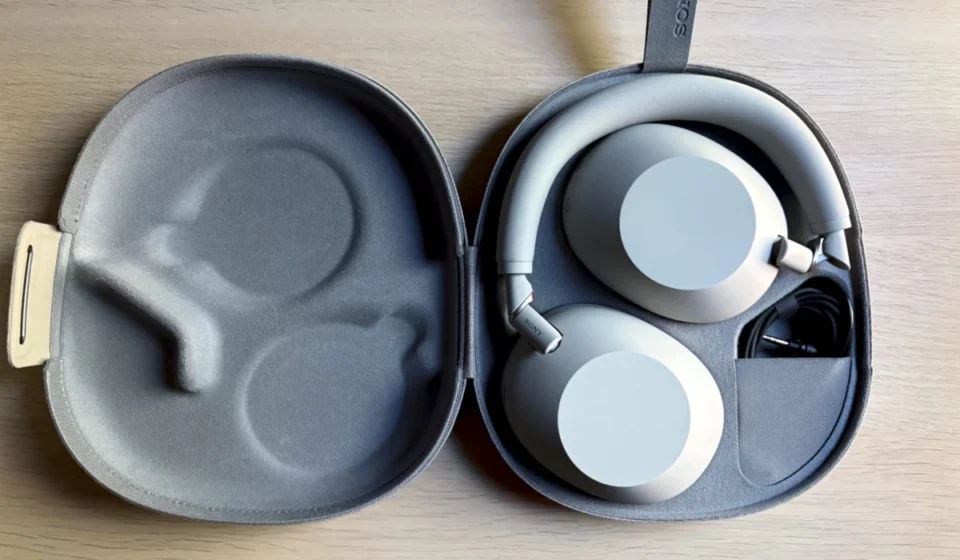
From a practical standpoint, the Sony WH-1000XM6 immediately distinguish themselves with their foldable design, a feature notably absent in the AirPods Max 2. This, combined with their included hard-shell magnetic carry case, positions them as the more travel-friendly option. While the WH-1000XM6 utilize a plastic and resin construction, which may not exude the same sense of luxury as Apple’s aluminum, this choice results in a considerably lighter headset (254 grams versus 386.2 grams). This reduced weight contributes to enhanced comfort during extended listening sessions, a crucial factor for frequent travelers or those who spend long hours immersed in music or media.
Another practical advantage is the inclusion of a 3.5mm headphone jack, offering a wired audio option that is absent on the AirPods Max 2. For users prioritizing high-fidelity wireless audio, the WH-1000XM6 support LDAC, enabling true Hi-Res wireless audio transmission at up to 990 kbps, and LC3 via Bluetooth LE Audio. This broad codec support makes them a more versatile choice for audiophiles across different platforms.

The audio hardware on the WH-1000XM6 comprises 30mm carbon fiber dome drivers. These drivers, coupled with Sony’s DSEE Extreme upscaling technology, a comprehensive 10-band graphic equalizer accessible through the Sony Sound Connect app, and support for 360 Reality Audio, offer users a greater degree of control and customization over their listening experience compared to Apple’s more curated audio settings.
In terms of noise cancellation, reviews of the WH-1000XM6 indicate noticeable improvements over their predecessors, attributed to the 12 microphones and the new HD Noise Canceling Processor QN3. While the ANC is highly effective, some independent assessments suggest it may still lag slightly behind the benchmark set by the Bose QuietComfort Ultra headphones. Sony’s suite of ambient sound features includes Ambient Sound Mode, an Auto NC Optimizer, Quick Attention Mode, and Speak-to-Chat. While these features are functional, they are often described as less seamlessly integrated and intuitive than Apple’s equivalent offerings.
Where the WH-1000XM6 truly shine is in their battery performance. Boasting up to 30 hours of playback with ANC enabled, they significantly outperform the AirPods Max 2’s 20-hour capacity. Furthermore, Sony’s quick charge functionality provides an impressive three hours of playback from just three minutes of charging, a considerable advantage for users on the go.

The paramount strength of the WH-1000XM6 lies in their cross-platform compatibility. They seamlessly connect with a wide array of operating systems, including Android, Windows, iOS, and macOS. They also support multiple voice assistants, such as Google Assistant, Alexa, and Siri, making them the most versatile headphones available in 2026. While the AirPods Max 2 offer superior integration for Apple device owners, the WH-1000XM6 present a more practical and universally appealing solution for a broader demographic, and at a lower price point.
It is important to note a caveat for iPhone and macOS users: the WH-1000XM6 do not support LDAC and LE Audio / LC3 codecs when paired with these Apple devices. This limitation means that for the absolute highest wireless audio quality, Apple users might still lean towards the AirPods Max 2, despite the price difference.
The Broader Implications: Ecosystem Dominance vs. Universal Appeal
The introduction of the AirPods Max 2 further solidifies Apple’s strategy of creating a deeply integrated ecosystem where its hardware and software work in concert to deliver a premium, albeit exclusive, user experience. For those firmly entrenched in the Apple universe, the AirPods Max 2 offer a compelling upgrade path, boasting enhanced features and intelligent software that leverage the existing Apple infrastructure. The Precision Finding and Live Translation capabilities, in particular, represent forward-thinking additions that enhance the utility and appeal of the headphones beyond mere audio playback.

However, the premium pricing strategy and the inherent limitations in cross-platform codec support mean that the AirPods Max 2 will likely remain a niche product for dedicated Apple enthusiasts. The significant price gap between the AirPods Max 2 and the Sony WH-1000XM6, coupled with the latter’s superior battery life, foldable design, and broader codec support (especially for Android users), positions the Sony headphones as the more pragmatic and versatile choice for the majority of consumers.
Sony’s continued innovation in noise cancellation and audio processing, alongside its commitment to universal compatibility, ensures its continued dominance in the premium headphone market for users who value flexibility and an uncompromised listening experience across all their devices. The decision between the AirPods Max 2 and the WH-1000XM6 ultimately hinges on a user’s existing technological ecosystem and their priorities regarding premium features versus practical versatility and value for money. As the high-fidelity audio market continues to evolve, the competition between these two giants is set to drive further innovation, benefiting consumers in the long run.