DoorDash Air and the Rise of Physical Artificial Intelligence in the American Manufacturing Sector

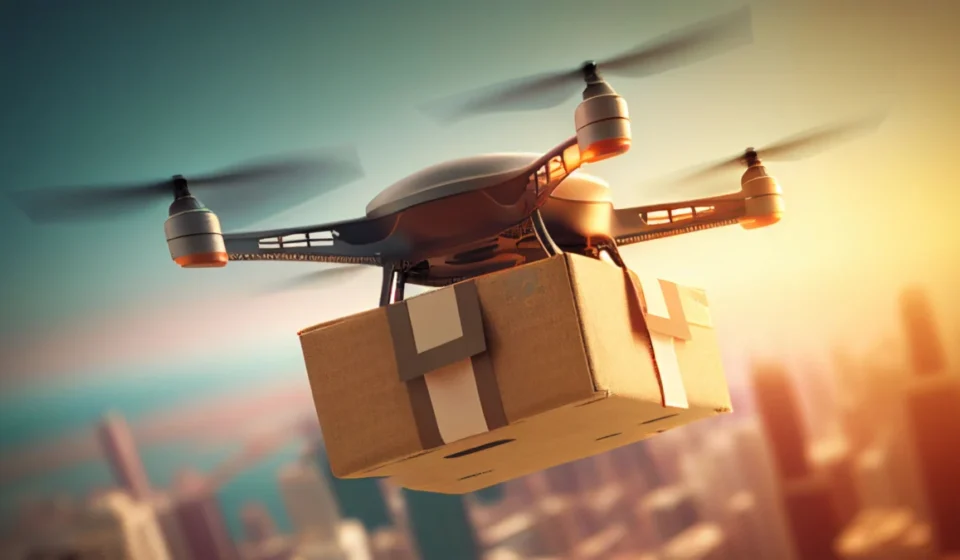
The logistical challenges of last-mile delivery have long remained the primary bottleneck for the global gig economy. While digital platforms have revolutionized the way consumers order goods, the physical act of transporting a hot cup of coffee or a fresh meal across a congested urban environment remains subject to the unpredictable nature of metropolitan traffic. For companies like DoorDash Inc. (DASH), the discrepancy between digital efficiency and physical delay has become a focal point for technological innovation. On September 30, DoorDash officially unveiled "DoorDash Air," an autonomous drone delivery initiative designed to bypass ground-level congestion and redefine the speed of local commerce.
The introduction of DoorDash Air marks a significant transition from theoretical automation to applied "Physical AI"—a term describing machines that utilize artificial intelligence to interact with and navigate the physical world. This shift represents a broader industrial movement where the value of AI is increasingly measured not just by its ability to process data, but by its capacity to move objects safely and efficiently through three-dimensional space.
The Launch of DoorDash Air and Initial Pilot Programs
DoorDash Air was introduced with a series of pilot programs scheduled for Northern California. To ensure the viability of the service, the company has partnered with major national brands, including Chipotle Mexican Grill Inc. (CMG) and Popeyes. These partnerships are critical, as they provide the high-volume order flow necessary to test the system’s durability and integration within existing kitchen workflows.
Preliminary data released by DoorDash suggests that the system is capable of delivering orders from a restaurant to a customer’s residence in an average of under five minutes. While these results stem from a controlled sample size and specific geographic conditions, they represent a drastic reduction from traditional courier times, which often exceed 20 to 30 minutes in high-traffic corridors. The company has clarified that while these initial results are promising, delivery times are not yet guaranteed as the system scales to handle diverse weather conditions and varied urban architectures.
The Evolution of Drone Delivery: A Brief Chronology
The journey toward commercial drone delivery has been a decade-long endeavor characterized by regulatory hurdles and engineering breakthroughs.
- 2013: Amazon first announced "Prime Air," sparking global interest in the potential for unmanned aerial vehicles (UAVs) in logistics.
- 2016–2019: Early-stage testing by companies like Alphabet’s Wing and Zipline focused on rural deliveries and medical supplies, where airspace was less crowded.
- 2020–2022: The Federal Aviation Administration (FAA) began issuing Part 135 air carrier certifications, allowing companies to operate drones beyond the visual line of sight (BVLOS) under specific conditions.
- 2023–2024: Major retailers like Walmart expanded their drone networks, and DoorDash entered the fray by focusing on the "instant needs" market, such as hot food and beverages.
This timeline illustrates a shift from speculative technology to a regulated, commercially viable industry. DoorDash’s entry into the space signals that the technology has reached a level of maturity where it can be integrated into one of the world’s largest delivery infrastructures.
Beyond the Flight: The Infrastructure of Physical AI
While the sight of a drone in flight captures public attention, the most significant challenges—and investment opportunities—exist on the ground. A functioning drone delivery network requires a complete overhaul of restaurant and warehouse logistics. For a system like DoorDash Air to succeed, the "hand-off" from human to machine must be seamless.
DoorDash has emphasized that its loading systems are designed to fit into existing restaurant operations without requiring massive architectural changes. However, this transition necessitates a suite of secondary technologies:
- Automated Loading Equipment: Robotic arms or conveyor systems that can secure a package to a drone without human intervention.
- Advanced Sensor Arrays: LiDAR, ultrasonic sensors, and high-definition cameras that allow drones to detect obstacles such as power lines, trees, and domestic pets.
- Smart Packaging: Thermal-regulated containers that can withstand the vibrations and wind speeds of aerial transit while maintaining food temperature.
This creates a ripple effect throughout the supply chain. Manufacturers of sensors, specialized motors, and lightweight materials are seeing increased demand as Physical AI moves out of the laboratory and onto the doorstep.
The Battery Bottleneck and the Quest for Energy Density
The primary constraint on the expansion of Physical AI is power. Unlike software-based AI, which resides in data centers connected to the power grid, drones and autonomous robots must carry their own energy. This creates a direct trade-off between range and payload capacity.
Most current commercial drones rely on lithium-ion batteries. While reliable, these batteries have limited energy density, meaning they are heavy relative to the power they provide. For a delivery drone, every kilogram of battery weight is one less kilogram of cargo it can carry. Furthermore, the time required for recharging can limit a drone’s "uptime," reducing the overall return on investment for the operator.
To address this, researchers at institutions such as the Oak Ridge National Laboratory and Sandia National Laboratories are investigating Solid-State Batteries (SSBs). By replacing the liquid electrolyte found in standard batteries with a solid material, SSBs could potentially offer:
- Higher Energy Density: Allowing drones to fly longer distances or carry heavier loads.
- Improved Safety: Reducing the risk of thermal runaway and fire, which is a critical concern for aircraft flying over residential areas.
- Faster Charging: Minimizing the time drones spend grounded between deliveries.
The development of these power sources is no longer just an "electric vehicle story"; it is a foundational requirement for the viability of the entire autonomous logistics sector.
Economic Impact and the Resurgence of U.S. Manufacturing
The scale-up of Physical AI is increasingly being viewed as a catalyst for a domestic manufacturing renaissance. As the demand for drones and robotic systems grows, there is a mounting strategic need to produce these machines within the United States to ensure supply chain security and national defense readiness.
In July 2024, Re:Build Manufacturing announced a new line of U.S.-assembled battery packs specifically designed for commercial and defense drones. This announcement coincided with an $81 million investment in a Pennsylvania-based facility aimed at revitalizing domestic drone production. This trend was further highlighted during the Pennsylvania Defense and Innovation Summit at the U.S. Army War College, where leaders from government and finance discussed more than $10 billion in new investment commitments for shipbuilding, AI, and robotics.
For investors, the focus is shifting toward companies that provide the "picks and shovels" of this industrial shift. Symbotic Inc. (SYM), for instance, has become a prominent example of success in the Physical AI space. The company provides robotic warehouse systems that organize and move goods with high precision. In its third quarter of fiscal 2024, Symbotic reported $721 million in revenue, a 22% increase year-over-year, demonstrating that there is a substantial market for machines that can perform useful physical labor autonomously.
Regulatory and Social Implications
The widespread adoption of DoorDash Air and similar systems will face ongoing scrutiny regarding privacy, noise pollution, and safety. The FAA continues to refine the rules for "Remote ID," which acts as a digital license plate for drones, and "Detect and Avoid" (DAA) requirements.
Moreover, the impact on the labor market remains a point of contention. While drones may replace some traditional courier roles, proponents argue they will create new high-tech jobs in maintenance, remote piloting, and system management. From a sustainability perspective, drone delivery offers a potential reduction in carbon emissions, as small electric aircraft are significantly more energy-efficient for transporting a two-pound meal than a 4,000-pound internal combustion engine vehicle.
Conclusion: A New Frontier for Logistics and Investment
The unveiling of DoorDash Air is more than a corporate milestone; it is a signal that the infrastructure for a fully automated last-mile delivery system is being built in real-time. The success of this endeavor depends on a complex interplay of advanced AI software, high-performance hardware, and robust domestic manufacturing.
As Physical AI continues to move into the real world, the economic benefits will likely accrue to the companies that solve the fundamental problems of power, reliability, and scale. Whether it is a drone delivering a hot coffee in five minutes or a robotic system managing a massive fulfillment center, the transition to autonomous physical labor represents one of the most significant shifts in the modern industrial landscape. For the consumer, it means the end of the "lukewarm disappointment"; for the economy, it means the beginning of a new era of machine-driven productivity.