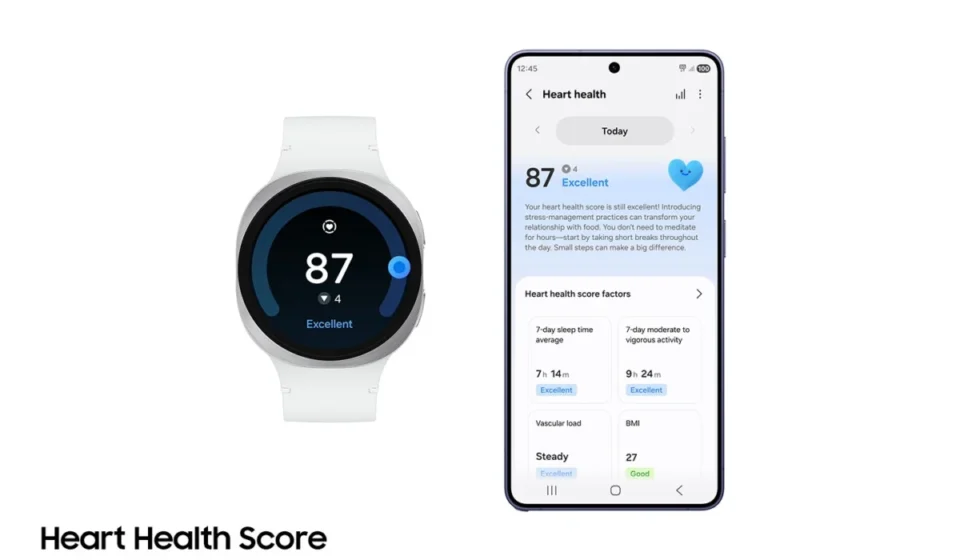

Samsung is delivering a significant upgrade to its existing smartwatch lineup, bringing advanced health monitoring capabilities previously exclusive to the latest Galaxy Watch 9 and Watch Ultra 2 models to older devices. The One UI 9 Watch update, which began its rollout in mid-November, extends a suite of sophisticated health tracking tools, including Vitals, Heart Health Score, Daily Cardio Load, and Fitness Index, to the Galaxy Watch 8 and Watch 8 Classic. Even more remarkably, features like Sleep Coaching are now accessible on devices as far back as the Galaxy Watch 4 series, demonstrating Samsung’s commitment to enhancing the user experience across its wearable ecosystem without requiring a new hardware purchase.
This strategic move by Samsung underscores a growing trend in the tech industry to offer enhanced software features on existing hardware, thereby increasing the value proposition for current customers and fostering long-term brand loyalty. The decision to provide these advanced health metrics, some of which have received regulatory clearance, signifies a proactive approach to consumer wellness technology, empowering users with deeper insights into their physiological well-being.

Vitals and Heart Health Score: A Deeper Dive into Overnight Wellness
A cornerstone of this update is the Vitals feature, a comprehensive overnight monitoring system designed to track five key physiological readings: heart rate, heart rate variability (HRV), breathing rate, skin temperature, and blood oxygen levels (SpO2). By continuously monitoring these metrics throughout sleep, Vitals aims to provide users with a holistic view of their health during rest. The system is designed to analyze patterns over time, and crucially, it can alert users if any of these readings deviate significantly from their baseline, potentially indicating an underlying health concern.
Complementing Vitals is the Heart Health Score, a new metric that synthesizes data from various sources – including sleep quality, daily activity levels, and other physiological indicators – into a single, easily digestible score. This score aims to offer a simplified yet informative overview of a user’s cardiovascular health. Samsung, however, is careful to emphasize that these features are intended for general wellness tracking and are not designed to diagnose, treat, cure, or prevent any medical condition. This disclaimer is crucial, aligning with regulatory guidelines for health-related consumer technology.
The implementation of Vitals and the Heart Health Score on devices like the Galaxy Watch 8 and Watch 8 Classic signifies a leap in the sophistication of consumer-grade health tracking. Previously, such detailed overnight physiological monitoring was often limited to specialized medical devices or was part of more expensive, newer-generation smartwatches. The availability of these features on devices that are at least a generation old is a testament to Samsung’s software development capabilities and its strategy to extend the lifecycle and utility of its existing products.

Advanced Fitness Metrics for Enhanced Performance
Beyond overnight health monitoring, the One UI 9 Watch update introduces advanced fitness and performance metrics, including Daily Cardio Load and Fitness Index.
The Daily Cardio Load feature provides an estimation of the strain that both strenuous workouts and everyday activities place on the user’s cardiovascular system. This metric is designed to help users understand their exertion levels and can offer guidance on appropriate exercise intensity and recovery periods. By analyzing workout intensity and duration, Daily Cardio Load can assist users in optimizing their training regimens to prevent overtraining and maximize performance gains.
The Fitness Index, on the other hand, takes a more comprehensive approach to assessing a user’s fitness level. It combines body composition data, such as body fat percentage and muscle mass, with VO2 max estimates. VO2 max, a widely recognized indicator of aerobic fitness, measures the maximum amount of oxygen an individual can utilize during intense exercise. By integrating these diverse data points, the Fitness Index aims to provide personalized workout recommendations tailored to the user’s current fitness profile and goals. Samsung has confirmed that both Daily Cardio Load and Fitness Index are compatible with the Galaxy Watch 7 series, provided it is running the One UI 9 Watch software, further extending the reach of these advanced analytics.

Sleep Coaching: A Familiar Feature Reimagined for Older Devices
One of the most significant expansions in functionality is the reintroduction and broader availability of Sleep Coaching. This feature, designed to help users improve their sleep habits, is now accessible on a wider range of Samsung wearables, extending back to the Galaxy Watch 4 series. The Galaxy Watch 4, launched in 2021, was a pivotal device for Samsung, marking its return to the Wear OS platform and significantly contributing to its market share in the smartwatch segment, particularly in key regions.
The decision to bring Sleep Coaching to older, yet still popular, models like the Watch 4 is a strategic move that rewards long-time customers. Sleep Coaching operates by analyzing sleep patterns over several nights. After a minimum of three nights of data collection, the feature begins to provide personalized weekly tips and insights aimed at improving sleep quality. This data-driven approach to sleep improvement is a valuable tool for anyone seeking to optimize their rest and overall well-being.
Furthermore, the update includes the Sleep Apnea feature, which received U.S. Food and Drug Administration (FDA) clearance in July. This feature monitors breathing disruptions during sleep and categorizes them into minimal, occasional, or frequent levels, offering users a preliminary indication of potential sleep apnea concerns. While not a diagnostic tool, it can serve as an important prompt for users to consult with healthcare professionals. The availability of Sleep Coaching and the Sleep Apnea feature across such a broad spectrum of devices, including the Galaxy Fit 3 and the forthcoming Galaxy Ring, highlights Samsung’s unified approach to health and wellness across its product ecosystem.

Beyond Health: Enhanced Usability and Navigation Features
The One UI 9 Watch update is not solely focused on health metrics. It also introduces several quality-of-life improvements and navigation enhancements designed to make the smartwatch experience more intuitive and functional.
A new Portrait watch face allows users to personalize their watch by displaying the clock interface around a chosen portrait from their photos. This adds a touch of personalization and aesthetic appeal to the wearable.
For outdoor enthusiasts and those who frequently navigate unfamiliar environments, the update brings Compass Waypoints. This feature enables users to mark specific locations directly on their compass, such as a parking spot, a campsite, or a scenic viewpoint. This functionality is further enhanced by the Track Back feature, which allows users to retrace their steps along a previously recorded route. This combination of waypoint marking and route retracing is particularly useful for hiking, exploring, or simply ensuring you can find your way back to a starting point.

To fully leverage these features, users will generally need a compatible Samsung Galaxy phone running Android 11 or later. Additionally, the Samsung Health app must be updated to its latest version. The availability of specific features may also vary depending on the country, the specific watch model, and the mobile carrier. These requirements ensure that the advanced software capabilities are supported by the necessary hardware and software infrastructure, providing a seamless user experience.
Broader Implications for the Wearable Market
Samsung’s aggressive software update strategy for its smartwatches has significant implications for the broader wearable technology market. By extending advanced health and navigation features to older models, Samsung is setting a new benchmark for post-purchase product support. This approach not only enhances customer satisfaction but also potentially slows down the upgrade cycle for consumers who may find their existing devices sufficiently capable with the new software.
The inclusion of features like Vitals and Sleep Apnea monitoring, which have regulatory considerations, also signals a maturing market where smartwatches are increasingly viewed as legitimate health monitoring tools. This pushes competitors to invest more heavily in their own software development and to consider the long-term support of their device portfolios.

Furthermore, the successful integration of these advanced functionalities onto older hardware suggests that the distinction between flagship and older models might become less about exclusive features and more about incremental hardware improvements like processor speed, display quality, or battery life. This could lead to a more competitive landscape where software plays an even more critical role in differentiating products.
The timeline of this rollout, beginning in mid-November, indicates Samsung’s consistent pace in delivering major software updates. This proactive approach to software evolution ensures that Galaxy Watch users, regardless of the age of their device, can benefit from the latest technological advancements in health and usability. As the wearable market continues to evolve, the emphasis on comprehensive software support and feature parity across device generations will likely become a key determinant of consumer choice and brand loyalty. Samsung’s One UI 9 Watch update for its Galaxy Watch series is a clear indicator of this direction, prioritizing user experience and long-term value.