HOSHIKAGE brings one-finger Japanese sword-fighting action to Android, iOS, and PC browsers.

Takashi Ohida, an independent solo developer, has officially launched their latest creation, HOSHIKAGE, a distinctive one-finger sword-action title now accessible across multiple platforms: Android, iOS, and PC browsers. This multi-platform release underscores a growing trend in the gaming industry towards broader accessibility and diverse engagement, allowing players to experience the game seamlessly whether on a mobile device or a desktop browser. HOSHIKAGE transports players into a stark, moonlit world where they embody a skilled swordswoman, clad in white, whose journey unfolds through intense, precise combat against relentless waves of adversaries. The game’s core mechanics revolve around a unique blend of timing, precision, and minimalist controls, offering a fresh take on the traditional Japanese sword-fighting genre.
The Vision Behind HOSHIKAGE: A Solo Developer’s Journey
The development of HOSHIKAGE by Takashi Ohida as a solo indie developer is a testament to the power of individual creativity and perseverance within the competitive gaming landscape. The journey of a solo developer is often fraught with numerous challenges, from conceptualization and coding to art design, sound engineering, marketing, and quality assurance, all typically managed by a single individual. This intensive process demands not only technical proficiency but also an unwavering artistic vision. Ohida’s decision to focus on a "one-finger" control scheme for a sword-fighting game speaks volumes about a design philosophy centered on accessibility without sacrificing depth. In an era dominated by complex control schemes and intricate button combinations, HOSHIKAGE aims to distil the essence of sword combat into intuitive, yet challenging, interactions. This approach broadens the game’s appeal, inviting both seasoned gamers and casual players to engage with its unique mechanics. The announcement of its launch follows what can be inferred as a dedicated development cycle, characteristic of indie projects, culminating in its simultaneous release across major mobile and browser platforms, a strategic move to maximize reach.
Mastering the Blade: Core Gameplay Mechanics
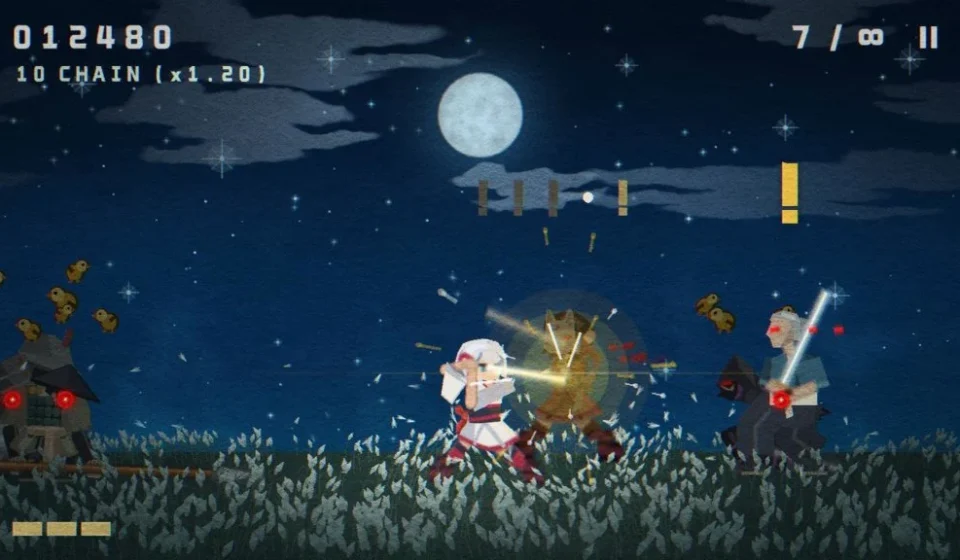
At its heart, HOSHIKAGE is designed as a Japanese sword-fighting action game that prioritizes timing and precision over convoluted controls. Players engage with the combat system through simple, directional swipes, which serve as the primary means of interaction. A swipe in one of four directions allows the swordswoman to deflect incoming attacks, a critical maneuver that not only parries enemy blows but also initiates a tactical advantage by breaking their stance. This deflection mechanic is central to the game’s flow, requiring keen observation of enemy attack patterns and split-second reactions.
Successful deflections are not merely defensive; they are offensive opportunities. By staggering opponents, players create openings for a powerful finishing move known as "Issen." This mechanic introduces a crucial strategic layer: once multiple enemies are vulnerable, players can simply touch and hold the screen to unleash a devastating strike that cleaves through all exposed foes simultaneously. This satisfying execution is the culmination of successful defensive play and precise timing, rewarding players for their mastery of the deflection system. The visual feedback of an Issen strike, combined with the minimalist aesthetic, amplifies its impact, making each successful chain feel incredibly impactful.
Evolving Challenges and Tactical Depth
As players progress through HOSHIKAGE’s moonlit arenas, the combat encounters grow increasingly complex and demanding. Enemies begin to approach from multiple directions, often coordinating their attacks to overwhelm the player. This necessitates a heightened sense of situational awareness and the ability to manage threats from both sides simultaneously. The game introduces "Quickening" as a further layer of tactical depth. Successful deflections, particularly in rapid succession, can trigger Quickening, a temporary state that further weakens enemy stances and accelerates the player’s ability to prepare for subsequent counterattacks. This mechanic encourages aggressive yet calculated play, rewarding players who can maintain a rhythm of deflections and counter-offensives.
Beyond the standard waves of enemies, HOSHIKAGE features challenging boss encounters. These formidable adversaries are designed to push players’ skills to their absolute limit, demanding not only impeccable timing but also a thorough understanding of their unique attack patterns and weaknesses. Each boss presents a distinct set of challenges, forcing players to adapt their strategies and exploit specific windows of opportunity. The minimalist art style, rather than detracting from these encounters, enhances the focus on pure gameplay mechanics, ensuring that every movement and reaction feels crucial. The game’s design philosophy here mirrors classic arcade experiences, where pattern recognition and refined execution are paramount.
Artistic Presentation and Narrative Nuance
Beyond its engaging combat system, HOSHIKAGE distinguishes itself through a captivating and unconventional presentation. The game adopts a stark, minimalist art style, characterized by a muted color palette dominated by whites, greys, and blacks, set against the ethereal glow of a moonlit sky. This aesthetic choice not only contributes to the game’s atmospheric tension but also serves a functional purpose, allowing players to focus on enemy movements and attack tells without visual clutter. The protagonist, a swordswoman draped in white, stands out against this backdrop, embodying both purity and lethal grace.

The narrative of HOSHIKAGE is equally distinctive, opting for subtlety and implication over explicit dialogue. The story follows the swordswoman as she repeatedly encounters a mysterious figure adorned with a fox mask. Their relationship, central to the game’s overarching narrative, unfolds not through spoken words or lengthy cutscenes, but through their interactions in combat and through nuanced, understated gestures. This minimalist storytelling approach encourages players to interpret the unfolding events, fostering a deeper, more personal connection to the characters and their evolving dynamic. This method of narrative delivery is a hallmark of certain indie titles, allowing for a more atmospheric and introspective experience, often leaving a lasting impression through what is not said. The emotional resonance is derived from the player’s engagement with the silent confrontations and the implied history between the two figures.
The Landscape of Indie and Mobile Gaming
The launch of HOSHIKAGE on Android, iOS, and PC browsers strategically positions it within some of the fastest-growing segments of the global gaming market. The mobile gaming sector, in particular, has seen exponential growth over the past decade, projected to reach revenues exceeding hundreds of billions of dollars annually, driven by the ubiquity of smartphones and tablets. Similarly, browser-based gaming, while perhaps not as dominant as dedicated console or PC platforms, maintains a significant niche, offering instant accessibility without the need for downloads or installations. This multi-platform approach significantly broadens HOSHIKAGE’s potential audience, catering to players who prefer gaming on the go, during short breaks, or those who simply seek a quick, engaging experience without the commitment of a large download.
Solo indie developers like Takashi Ohida are increasingly leveraging these platforms due to lower entry barriers and direct access to a global player base. The success stories of minimalist, high-concept indie games on mobile have paved the way for titles like HOSHIKAGE, demonstrating that compelling gameplay and unique artistic vision can thrive without multi-million dollar budgets. The "one-finger" control scheme is particularly well-suited for touchscreens, providing an intuitive and comfortable experience for mobile users, while also translating effectively to mouse-based input on PC browsers. This adaptability is key to its cross-platform appeal.
Implications for Accessible Gaming and Indie Development
HOSHIKAGE represents more than just a new game; it embodies several significant trends and implications within the broader gaming industry. Firstly, its commitment to accessible controls demonstrates a viable path for creating deep, engaging experiences that do not require complex inputs. This could inspire other developers to explore simplified control schemes, potentially lowering the barrier to entry for new players and expanding the definition of what constitutes a "hardcore" game. The precision-based combat of HOSHIKAGE proves that simplicity in control does not equate to a lack of challenge or strategic depth.
Secondly, the success of a solo developer in bringing such a polished and distinct title to market highlights the increasing democratization of game development tools and distribution channels. Platforms like Unity or Unreal Engine, combined with digital storefronts like Google Play, Apple App Store, and various browser game portals, empower individuals to realize their creative visions without the need for large publishing houses. This fosters innovation and allows for more experimental and niche titles to find their audience. Takashi Ohida’s work serves as an encouraging example for aspiring solo developers worldwide, showcasing that a focused vision and dedication can yield impressive results.
Finally, HOSHIKAGE’s multi-platform release strategy underscores the importance of flexibility in today’s interconnected gaming ecosystem. By being available across Android, iOS, and PC browsers, the game maximizes its reach, allowing players to choose their preferred method of engagement. This user-centric approach is crucial in an environment where players expect seamless experiences across their devices. The game is likely to appeal to a demographic that appreciates thoughtful design, challenging gameplay, and an atmospheric presentation, all wrapped in an easily accessible package.
Conclusion and Availability
In summary, HOSHIKAGE offers a refreshingly direct yet deeply engaging Japanese sword-fighting experience. Its blend of minimalist design, precise one-finger controls, and evocative storytelling provides a unique entry into the action genre. Takashi Ohida’s accomplishment as a solo developer in delivering such a polished multi-platform title is noteworthy, reflecting a vibrant segment of the gaming industry driven by innovation and individual passion. The game’s focus on timing, deflection, and strategic counter-attacks, complemented by its stark aesthetic and non-verbal narrative, sets it apart from its contemporaries.
Players eager to test their reflexes and immerse themselves in HOSHIKAGE’s moonlit world can now download the game. It is readily available on the Google Play Store for Android devices and the App Store for iOS devices. For those who prefer gaming on a larger screen or through a web browser, the PC browser version offers an equally compelling experience. HOSHIKAGE stands as a testament to the fact that profound gaming experiences can emerge from simple yet brilliantly executed concepts, proving that sometimes, less is indeed more.