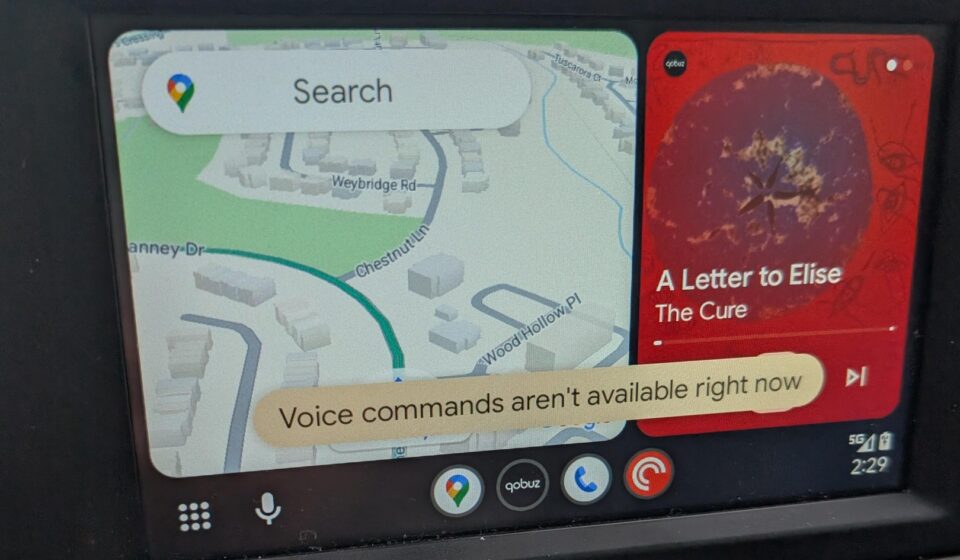
Android Auto Users Report Widespread Voice Command Failures, Causing Significant Disruption

A critical malfunction has rendered voice commands in Google’s Android Auto system inoperable for a growing number of users, prompting widespread frustration and raising concerns over driver safety. Reports from numerous individuals across various online forums, most notably the r/AndroidAuto subreddit, indicate a pervasive error message stating, "Voice commands aren’t available right now." This disruption, which appears to have emerged late last week, affects a diverse array of vehicle makes and smartphone models, suggesting a systemic issue rather than an isolated incident. The core functionality of Android Auto, designed to minimize driver distraction by enabling hands-free operation, is severely compromised by this bug, forcing users to interact manually with their infotainment systems or forgo essential features.
The Critical Role of Voice Commands in Android Auto
Android Auto serves as a vital bridge between a user’s smartphone and their vehicle’s infotainment system, projecting a simplified, driver-friendly interface onto the car’s display. Its primary objective is to enhance safety by allowing drivers to access navigation, communication, and media controls without diverting their attention from the road. Voice commands, powered primarily by Google Assistant (and increasingly, Gemini), are the cornerstone of this safety-centric design. Through verbal prompts, drivers can initiate calls, send messages, get directions, play music, and perform a multitude of other tasks, all while keeping their hands on the wheel and eyes focused forward. The ability to dictate a destination, inquire about traffic, or even reply to a text message without physically touching the screen is not merely a convenience; it is a fundamental safety feature. Disabling this functionality effectively negates a significant portion of Android Auto’s value proposition, pushing users towards potentially dangerous manual interactions or forcing them to pull over to safely manage their digital tasks. The reliance on voice commands is particularly crucial for individuals with accessibility needs, for whom physical interaction with a touchscreen might be challenging or impossible while driving.
Chronology of Disruption: A Weekend of Frustration
The first significant wave of reports detailing the voice command failure began to surface around Friday, [specific date, if inferred from "past couple of days" and image URL’s year – e.g., February X, 2026, or more generally "late last week"]. Users initially reported the issue on community platforms such as Reddit, describing the sudden appearance of the "Voice commands aren’t available right now" message across the Android Auto interface, often while actively using applications like Google Maps or streaming music services. One prominent Reddit thread on r/AndroidAuto, initiated by a user sharing a screenshot of the error, quickly amassed dozens of similar complaints. The original poster detailed attempts to troubleshoot the issue by restarting and unplugging their phone, all to no avail. As the weekend progressed, the number of affected individuals grew, indicating that the problem was not an isolated glitch but a more widespread phenomenon. The timing of the issue, coinciding with weekend travel for many, amplified the inconvenience and frustration, as drivers found their navigation and communication tools severely hampered during critical journeys.
A Multifaceted Problem: Devices, Vehicles, and Android Versions
A key aspect of this developing situation is the broad spectrum of hardware and software configurations experiencing the voice command failure. Reports from affected users span numerous automotive manufacturers, including but not limited to Ford, Hyundai, Kia, Subaru, Toyota, and Nissan. This wide range of vehicle models suggests that the issue is not specific to a particular car’s infotainment system or its integration with Android Auto. Similarly, the problem has been observed across various smartphone devices, including Google’s own Pixel line and Samsung Galaxy models, running different versions of the Android operating system. This diverse combination of affected vehicles, phones, and Android builds points away from a localized hardware defect or a specific OS incompatibility. Instead, it strongly implicates a common software component, likely an application or service managed directly by Google, that interacts with Android Auto’s voice command functionality. Such widespread and non-specific impact underscores the systemic nature of the bug, making it a critical concern for Google’s Android Auto development team.
The Search for a Cause: Google App and Gemini Speculation
In the absence of an official diagnosis, the affected user community has engaged in collective troubleshooting and speculation regarding the root cause of the voice command outage. A recurring theory points towards the core Google app as a potential culprit. Several users reported that the issue either resolved itself after an update to the Google app or temporarily abated after they cleared its cache or uninstalled its latest update. This observation suggests a possible regression or conflict introduced by a recent update to the Google app, which is deeply intertwined with Google Assistant and its voice recognition capabilities. Given that Google Assistant is the primary engine for voice commands within Android Auto, any instability or bug within the Google app could directly impact this functionality.
Another prominent theory circulating among users involves the ongoing transition of Google Assistant to Gemini, Google’s new multimodal AI model. While Gemini is intended to eventually replace Google Assistant across various platforms, including Android Auto, some users have noted that they have had Gemini enabled for some time without encountering issues. However, the timing of the voice command failure, coinciding with a period of active development and integration for Gemini, fuels speculation that an incomplete rollout, a server-side change, or an unforeseen compatibility conflict related to this transition could be contributing to the problem. The complexity of migrating such a fundamental AI service across a diverse ecosystem like Android Auto presents numerous opportunities for unforeseen bugs to emerge. While these remain speculative, the community’s focus on the Google app and Gemini highlights the intricate dependencies within Google’s software ecosystem and the potential for cascading failures when core components are updated or changed.
Community-Driven Solutions: Temporary Workarounds Emerge
Faced with a critical disruption to their driving experience, the Android Auto community has actively shared various temporary workarounds, offering some respite to affected users, though without a universally effective fix. Among the most frequently suggested solutions are:
- Restarting the phone: A classic IT troubleshooting step, this often resolves minor software glitches by refreshing system processes.
- Unplugging and reconnecting the phone: For wired Android Auto connections, this can re-initialize the connection between the phone and the car’s infotainment system.
- Clearing the cache of the Google app: This removes temporary data that might be corrupted or conflicting, forcing the app to rebuild it.
- Uninstalling the latest update to the Google app: This rolls back the app to a previous, potentially stable version, which some users reported temporarily restored voice commands.
- Force-stopping Android Auto: Similar to restarting, this terminates all running processes of the Android Auto application, allowing it to restart cleanly.
- Disconnecting and reconnecting the phone: For wireless Android Auto setups, this attempts to re-establish the wireless link.
While these community-suggested fixes have provided relief for some individuals, their effectiveness appears inconsistent, indicating that the underlying issue might manifest differently across various setups or that these are merely superficial solutions to a deeper problem. The need for users to resort to such manual and often temporary fixes underscores the severity of the bug and the urgency for an official resolution.
The Broader Context: Android Auto’s Ecosystem and Evolution
Android Auto’s journey since its inception in 2015 has been one of continuous evolution, marked by increasing integration into modern vehicles. Initially requiring a wired connection, it has expanded to support wireless connectivity, making the user experience even more seamless. The platform’s success is largely due to its ability to bring familiar smartphone functionalities — Google Maps, Spotify, WhatsApp, and Google Assistant — directly into the car’s dashboard, tailored for safe in-car use. As of recent data, Android Auto supports hundreds of car models from virtually every major automotive manufacturer, with millions of active users globally. The platform’s widespread adoption reflects a growing consumer demand for connected car experiences and the critical role technology plays in modern commuting.
The architecture of Android Auto is complex, involving a delicate interplay between the smartphone’s operating system, the Android Auto application, the Google app (which houses Assistant/Gemini), and the car’s proprietary infotainment system. Any update or change in one component can potentially ripple through the entire ecosystem. Google’s ongoing efforts to integrate Gemini, its next-generation AI, into various products, including Android Auto, represent a significant technological undertaking. While promising enhanced capabilities and a more natural conversational experience, such transitions inherently carry risks of compatibility issues and unexpected bugs. The current voice command failure could be an unfortunate side effect of these ambitious developmental changes, highlighting the challenges of maintaining stability across a vast and interconnected software landscape.
Implications for User Safety and Google’s Reputation
The widespread failure of voice commands in Android Auto carries significant implications, primarily for user safety and Google’s reputation as a reliable technology provider. In an era where distracted driving remains a leading cause of accidents, tools like Android Auto are explicitly designed to mitigate this risk. When these tools malfunction, particularly their hands-free features, drivers may be tempted to revert to interacting directly with their phone or the car’s touchscreen, increasing the likelihood of distraction. This directly contradicts the core safety premise of the system, potentially exposing users to unnecessary hazards.
For Google, a bug of this magnitude can erode user trust. Consumers increasingly rely on integrated technology for daily functions, and a core feature failure in a safety-critical application like Android Auto can be particularly damaging. The expectation is for a seamless and reliable experience, especially when navigating unfamiliar territories or managing urgent communications. Persistent issues or a slow response to widespread problems can tarnish Google’s brand image in the automotive tech sector, potentially influencing future adoption rates or user loyalty. Furthermore, it could strain relationships with automotive partners who integrate Android Auto into their vehicles and face customer service inquiries related to third-party software issues. The incident underscores the importance of rigorous testing, quality assurance, and robust rollback strategies for critical software components, especially those with direct implications for user safety and operational reliability.
The Path Forward: Awaiting Official Intervention
As of the latest reports, there has been no official acknowledgment from Google regarding the "Voice commands aren’t available right now" bug. This lack of communication, while not uncommon in the early stages of widespread software issues, adds to user frustration and uncertainty. Typically, in such situations, Google’s engineering teams would be actively investigating the reports, analyzing diagnostic data, and working towards identifying the root cause. Once identified, a fix would likely be rolled out via an update to the Android Auto application, the Google app, or potentially a server-side adjustment.
Users are advised to monitor official channels and community forums for updates. While the community-suggested workarounds may offer temporary relief, a permanent and comprehensive solution will almost certainly require an official patch from Google. Until then, drivers affected by this issue should exercise caution, prioritize road safety, and avoid attempts to interact manually with their infotainment system while the vehicle is in motion. The swift resolution of this issue is paramount, not only to restore functionality but also to reaffirm the commitment to user safety and the reliability of advanced in-car technologies. The incident serves as a stark reminder of the intricate dependencies in modern digital ecosystems and the critical need for robust development and support for widely adopted platforms like Android Auto.