Your Squad Busters experience ends this December 14th, one year after Supercell pulled the plug

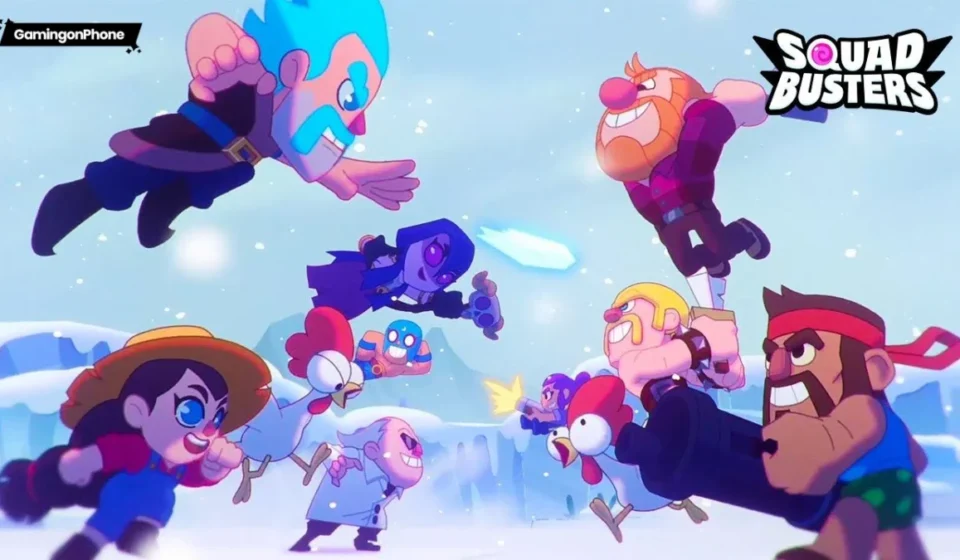
Mobile gaming enthusiasts and the wider industry are marking a significant date as Supercell’s ambitious cross-over title, Squad Busters, prepares for its final curtain call on December 14, 2026. This definitive server shutdown follows an earlier announcement made in October of the preceding year, confirming the game’s termination of development and its eventual closure. The decision concludes Squad Busters‘ journey, a game that sought to unite popular characters from across Supercell’s celebrated franchises into a single, chaotic multiplayer experience, yet ultimately failed to meet the developer’s stringent long-term quality expectations.
The Final Countdown: Phased Deactivation and Server Closure
The impending shutdown of Squad Busters will occur in a series of steps leading up to the complete cessation of services. As of December 1, 2026, the game will be removed from both the Google Play Store and Apple App Store, making it unavailable for new downloads. Existing players, however, will retain the ability to play the game for an additional two weeks, offering a final opportunity to engage with its unique blend of characters and gameplay. The absolute end will arrive on December 14, 2026, when all in-game events and timers will conclude, and the servers will permanently go offline. This date marks the definitive end for a title that, despite its potential and beloved characters, could not secure its place in Supercell’s highly competitive portfolio.
The journey towards this closure began long before the final date was set. Supercell had already disabled in-app purchases, a standard procedure for games slated for discontinuation, and the window for players to transfer the value of their purchases to other Supercell titles closed at the end of 2025. This proactive approach aimed to mitigate potential player dissatisfaction and manage expectations regarding the game’s lifecycle. For those who have remained loyal, logging in regularly to enjoy the last matches, December 14 will serve as a poignant farewell to a game that, for a time, promised much.
A Brief History of Squad Busters: Conception to Conclusion
Squad Busters emerged from Supercell’s renowned Finnish development studios with considerable anticipation. Known for creating some of the most enduring and profitable mobile games in history, Supercell’s new IP always garners significant attention. Squad Busters was envisioned as a vibrant, character-driven action game that brought together iconic figures from Clash of Clans, Brawl Stars, Hay Day, and Boom Beach. The premise was compelling: players would assemble a squad of familiar heroes and engage in fast-paced, often chaotic, multiplayer battles.
The game underwent various soft launch phases in select markets, a common strategy in the mobile gaming industry to test core mechanics, gather player feedback, and refine the user experience before a broader global release. During this period, the development team introduced several updates, including the "Heroes Update," which arrived around the game’s first anniversary. This particular update was a significant attempt to recalibrate the game’s direction and address player feedback, aiming to inject new life and long-term appeal into the title. However, despite these efforts and the initial excitement surrounding its concept, Squad Busters struggled to achieve the sustained engagement and commercial viability that Supercell demands from its flagship titles.
Supercell’s development philosophy is famously rigorous, often summarized by its "kill early, kill fast" mantra. The company prefers to invest heavily in a few exceptional games rather than spread resources thinly across many. This approach has yielded massive successes like Clash of Clans and Clash Royale, which have maintained global popularity and generated billions in revenue over many years. When a game, even one with a strong concept and beloved characters, fails to demonstrate the potential for a similar long-term trajectory during its beta or soft launch phases, Supercell is historically quick to make the difficult decision to cease development.
Supercell’s Uncompromising Quality Bar: A Double-Edged Sword
Supercell publicly stated that Squad Busters failed to "reach the long-term quality bar it expects from games intended to run for years." This "quality bar" is a cornerstone of Supercell’s business model and reputation. It’s not merely about initial polish or aesthetic appeal, but encompasses deep gameplay mechanics, robust progression systems, strong community engagement potential, and the capacity for continuous innovation that keeps players invested over extended periods. For Supercell, a game must demonstrate the potential to become a global phenomenon, capable of sustaining a dedicated player base and generating consistent revenue for half a decade or more.
This philosophy, while contributing to Supercell’s impressive track record of hit games, also means that many promising titles, like Squad Busters, are culled before they ever reach a global audience or shortly after. The company operates with an almost brutal efficiency in its internal assessment process, preferring to learn from projects that don’t meet expectations and reallocate resources to more promising ventures. This approach minimizes the risk of pouring substantial resources into a game that ultimately won’t achieve the desired longevity or market penetration.
However, this strict adherence to a high quality bar can also lead to questions about missed opportunities. In the highly dynamic mobile gaming market, player tastes evolve rapidly, and a game’s true potential might sometimes take longer to manifest or require more radical shifts in design than initially conceived. The decision to shut down Squad Busters within approximately a year of its initial launch, despite attempts to reshape its direction with updates like the "Heroes Update," highlights the challenge of balancing stringent internal standards with the organic, sometimes unpredictable, evolution of a game’s community and market fit.

Player Reception and Community Sentiment
From its initial announcement, Squad Busters generated significant buzz, primarily due to the novelty of seeing characters from different Supercell universes interacting. Players expressed excitement at the prospect of building diverse teams and experiencing new gameplay dynamics with familiar faces. During its soft launch and subsequent updates, feedback from the community was a mix of enthusiasm for the core concept and constructive criticism regarding various aspects of the gameplay, progression, and overall experience.
Many players found the chaotic multiplayer battles enjoyable, appreciating the lighthearted tone and accessible mechanics. However, a recurring sentiment among parts of the player base was that "something was missing." This vague but persistent feeling often points to a lack of deep engagement loops, insufficient strategic depth, or perhaps a failure to establish a unique identity beyond its crossover appeal. In a market saturated with mobile games, merely being "fun" is often not enough; a game needs a compelling hook, a strong sense of progression, and a vibrant, self-sustaining community to thrive.
The "Heroes Update" was Supercell’s direct response to this feedback, attempting to introduce elements that would deepen the gameplay and address perceived shortcomings. While it may have temporarily boosted engagement or garnered positive reactions from some segments, it ultimately did not sway the development team’s overarching decision. The closure of Squad Busters underscores the difficulty even for established giants like Supercell to consistently meet evolving player expectations and carve out a lasting niche in the fiercely competitive mobile gaming landscape. The disappointment among the game’s remaining loyal players is palpable, as they prepare for a final farewell to a title they had invested time and hope into.
The Mo.co Conundrum: A Tale of Two Supercell Titles
The shutdown of Squad Busters gains further context when contrasted with Supercell’s handling of another struggling title, mo.co. The article highlights a key discrepancy: while Squad Busters is being shut down, mo.co is being given an unprecedented second chance. Supercell has decided to take mo.co back to beta, signaling a willingness to fundamentally "rethink its direction," "give it a new look," and undertake a "major refresh" to win players over again, even after it initially struggled to maintain its audience. This includes a "Neo Refresh" with new game modes, weapons, and a gacha system, scheduled for May 21, 2026.
This divergent treatment raises pertinent questions about Supercell’s internal assessment criteria and strategic priorities. Why would one game, Squad Busters, with a roster of beloved characters and a seemingly strong IP foundation, be deemed beyond salvation, while another, mo.co, which also faced significant challenges, is granted a lifeline and substantial further investment?
Several factors might contribute to this disparity:
- Genre and Market Potential: mo.co is a monster-hunting action RPG, a genre that, while competitive, might be perceived by Supercell as having a different or potentially larger long-term market ceiling, especially if it can carve out a unique identity. Squad Busters, while innovative, might have been seen as occupying a more niche or already saturated casual multiplayer space, or perhaps its core loop was deemed less adaptable for long-term depth.
- Core Gameplay Loop: It’s possible that Supercell’s internal creative teams identified a more fundamentally sound or salvageable core gameplay loop within mo.co that, with significant retooling, could eventually meet their quality bar. Squad Busters’ foundational mechanics, despite adjustments, might have been seen as inherently limited or too difficult to evolve into a multi-year phenomenon.
- Development Stage and Investment: The point at which a game is deemed problematic can also influence the decision. mo.co might have shown early signs of a breakthrough with a significant overhaul, whereas Squad Busters might have exhausted its potential avenues for significant improvement without a complete rebuild, which could be deemed too costly or time-consuming.
- Innovation vs. Familiarity: While Squad Busters leveraged existing IP, mo.co offered a fresh world and concept. Supercell might be more willing to nurture a truly new IP that could become the "next big thing" rather than an iteration, however clever, on existing characters if the core gameplay isn’t revolutionary.
Ultimately, these decisions are made in the "creative room," where developers and executives weigh numerous factors, including market trends, projected costs, potential revenue, and the subjective "fun factor." The contrasting fates of Squad Busters and mo.co underscore the complex, often opaque, nature of game development and the high-stakes decisions faced by major studios in the competitive mobile gaming market.
Broader Implications for the Mobile Gaming Industry
The closure of Squad Busters is more than just the end of another mobile game; it offers several insights into the broader mobile gaming industry:
- The Power of IP is Not Enough: Even leveraging Supercell’s iconic characters was insufficient to guarantee Squad Busters‘ longevity. This demonstrates that while established intellectual property can attract initial interest, it cannot sustain a game if the core gameplay and long-term engagement mechanics are lacking. Developers must prioritize innovative and deep gameplay loops over mere brand recognition.
- The "Live Service" Challenge: Squad Busters‘ journey highlights the immense challenge of running a successful live service game. These titles require continuous content updates, diligent community management, and a flexible development pipeline to respond to player feedback and market shifts. The expectation for games to run "for years" places immense pressure on developers to maintain freshness and relevance.
- High Development Costs and Risk Aversion: Developing a high-quality mobile game, especially one from a studio like Supercell, involves significant financial and human resource investment. The decision to shut down a game, even a year into its life, is often a calculated move to cut losses and reallocate resources to projects with a higher probability of success. This reflects an industry trend towards risk aversion, where only the most promising titles receive sustained backing.
- Player Trust and Investment: Each game shutdown, especially from a prominent developer, subtly impacts player trust. Players invest not just money but also time and emotional attachment into games. Repeated closures can make players hesitant to commit to new titles, particularly those in early access or soft launch, fearing their investment might be rendered moot. Developers must balance this risk with the need to experiment and innovate.
- The Evolution of Mobile Gaming: The market for mobile games is constantly evolving. What constitutes a "quality bar" today might be different tomorrow. Supercell’s commitment to adapting its strategy, as seen with mo.co, indicates a recognition that even industry leaders must remain agile and willing to re-evaluate their approaches to game design and market penetration.
Conclusion: A Final Farewell
As December 14, 2026, approaches, the gaming community prepares to bid a final farewell to Squad Busters. While the announcement of its eventual demise was made over a year ago, the specificity of the date brings a renewed sense of finality to the situation. For the developers at Supercell, it represents another learning experience in their relentless pursuit of creating global gaming phenomena. For the players who cherished its unique crossover appeal and chaotic battles, it is a reminder of the transient nature of digital entertainment and the high standards set by one of the industry’s most successful studios.
The legacy of Squad Busters will likely be one of ambitious concepts meeting the harsh realities of a fiercely competitive market and uncompromising internal quality controls. It serves as a testament to Supercell’s "quality over quantity" philosophy, even if it leaves some wondering what might have been had the game been granted the same extensive second chance afforded to titles like mo.co. Regardless, the mobile gaming landscape continues its rapid evolution, and Supercell, with its strategic decisions, continues to shape its future.