Samsung Galaxy S26 Ultra: A Closer Look Reveals Disappointing Downgrades Amidst Industry Advancements

The highly anticipated Samsung Galaxy S26 Ultra has officially launched, and initial market reception indicates a divergence of opinions. While many consumers eagerly await the newest iteration of Samsung’s flagship device, a deeper examination of its specifications and early reviews reveals a series of unexpected cutbacks and compromises that challenge the narrative of a straightforward upgrade. This report delves into the critical areas where the S26 Ultra falls short, particularly when contrasted with its predecessor, the S25 Ultra, and the rapidly evolving landscape of its competitors.
The initial enthusiasm surrounding the Galaxy S26 Ultra has been tempered by a series of revelations concerning its display technology, camera hardware, and design choices. These findings suggest that while Samsung has introduced some innovative features, the company may have also made significant compromises in core functionalities, potentially impacting user experience and diminishing the device’s competitive edge. This analysis aims to provide a comprehensive overview of these critical aspects, offering potential buyers a more informed perspective before committing to the upgrade.
The Privacy Display: A Compromise on Brightness and Clarity
The headline feature of the Galaxy S26 Ultra, the "Privacy Display," has been lauded for its innovative approach to screen security in public spaces. This technology aims to restrict the viewing angles of the screen, preventing onlookers from easily deciphering sensitive information. However, early reports and laboratory tests indicate that this cutting-edge feature comes at a significant cost: reduced overall screen brightness and potential clarity issues.
Samsung officially rates the S26 Ultra’s display for a peak brightness of up to 2,600 nits. This figure, however, has been called into question by independent lab testing, which measured a peak brightness of 1,806 nits. This is notably lower than the 1,860 nits recorded for the Galaxy S25 Ultra. While the numerical difference may appear marginal on paper, real-world usage suggests it is perceptible. This reduction in brightness can impact outdoor visibility, especially under direct sunlight, and may diminish the overall vibrancy of HDR content.
Adding to these concerns, several reviewers have reported that text on the S26 Ultra’s display appears blurrier compared to the S25 Ultra, even when the Privacy Display feature is deactivated. This degradation in text clarity can lead to eye strain and discomfort, particularly for users who spend extended periods reading articles, engaging in messaging, or performing other text-intensive tasks. One user on social media platform X (formerly Twitter) shared their experience of eye fatigue after prolonged use of the S26 Ultra, highlighting this as a potential dealbreaker. This issue raises questions about the calibration and optimization of the display panel, particularly in its standard operating mode.
The 10-Bit Color Controversy: A Misleading Specification
A significant point of contention surrounding the Galaxy S26 Ultra has been the discrepancy between initial marketing claims and the actual display technology implemented. During the official press briefing, Samsung communicated that the S26 Ultra would feature a 10-bit color depth display, representing a substantial upgrade in color accuracy and visual fidelity over the S25 Ultra’s 8-bit panel. True 10-bit color depth allows for a billion distinct colors, enabling smoother gradients and more nuanced color transitions, particularly crucial for HDR content.

However, upon closer inspection of the product’s official specifications page, users and tech journalists discovered that the display was listed as offering 16.7 million colors, which is characteristic of an 8-bit display. Following the emergence of this controversy, a Samsung spokesperson clarified that the S26 Ultra’s display is, in fact, an 8-bit panel that utilizes techniques to simulate 10-bit color depth. This simulation, while improving the appearance of color depth to some extent, does not achieve the true fidelity and range of a native 10-bit panel.
This distinction is not merely a technicality. Hands-on testing conducted by industry publications, comparing the S26 Ultra side-by-side with devices featuring genuine 10-bit panels, such as the OnePlus 15, revealed noticeable differences. Observers noted less smooth color transitions in the skies of HDR content and harsher, more abrupt shifts in darker scenes on the S26 Ultra. The discrepancy between Samsung’s initial representation and the confirmed specifications represents a significant communication failure and may erode consumer trust, particularly for users who prioritize display quality for content creation or consumption.
Camera Hardware: A Step Backward in Low Light Performance
While the camera specifications on paper might appear similar to the S25 Ultra, a detailed examination reveals a subtle but significant downgrade in the hardware of the 3x telephoto lens. Both the S25 Ultra and S26 Ultra are equipped with 10MP telephoto sensors featuring an f/2.4 aperture, a 67mm focal length, PDAF, OIS, and 3x optical zoom. However, the critical difference lies in the sensor and pixel size.
The Galaxy S25 Ultra utilizes a larger 1/3.52-inch sensor with 1.12µm pixels. In contrast, the S26 Ultra employs a smaller 1/3.94-inch sensor with 1.0µm pixels. In well-lit conditions, the performance difference between these two cameras may be negligible, with both producing comparable images. However, in low-light environments, such as dimly lit restaurants or during evening shoots, the impact of the smaller sensor and pixels on the S26 Ultra becomes apparent. A smaller sensor captures less light, leading to increased image noise and a reduction in fine detail. This compromise directly affects the camera’s ability to perform optimally in challenging lighting conditions, a scenario where users often rely on their flagship smartphones.
Design Revisions: Questionable Material Choices and Ergonomics
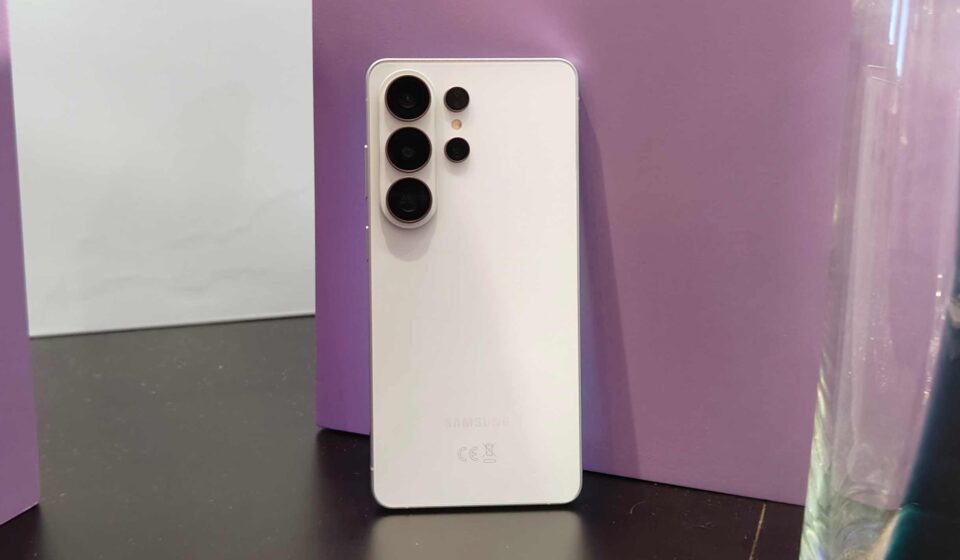
Samsung’s design philosophy for the S26 Ultra has also drawn criticism. While subjective preferences vary, the new camera island design has been met with a lukewarm reception by some, who feel it detracts from the device’s aesthetic appeal compared to the S25 Ultra. More critically, the decision to revert to an aluminum frame from the titanium used in the S25 Ultra has been perceived by some as a retrograde step, potentially influenced by design trends seen in competing devices.
The device’s physical dimensions have also seen changes. Although the S26 Ultra is described as slimmer, it is also taller and wider than its predecessor, resulting in a slightly worse screen-to-body ratio. While the more rounded edges of the new design may enhance grip comfort for some users, the combination of these design choices has led some to feel that the S26 Ultra represents a marginal downgrade in terms of build quality and physical design, despite its premium price point.
Battery Charging Cycles: A Statistical Anomaly Explained
An alarming detail that emerged from the EPREL database, the European Union’s database for energy products, indicated that the S26 Ultra is rated for 1,200 charge cycles before its battery capacity drops to 80%. This figure stands in stark contrast to the 2,000 charge cycles rated for the S25 Ultra. This substantial reduction in rated battery longevity initially raised significant concerns among consumers.

However, a deeper contextual analysis suggests this figure is likely a result of evolving regulatory standards rather than a hardware deficiency. The S25 Ultra was launched prior to June 2025, when EU testing methodologies for battery charge cycles were less stringent and less precisely defined. The S26 Ultra, on the other hand, was subjected to testing under the newer, more rigorous EU regulations. These updated standards provide a more standardized and potentially more demanding benchmark for battery endurance.
In practical terms, real-world battery performance of the S26 Ultra is expected to remain comparable to, if not exceed, that of the S25 Ultra. The implementation of the more power-efficient Snapdragon 8 Elite Gen 5 chip in the S26 Ultra contributes to longer on-device battery life per charge. Therefore, the reduced charge cycle rating in the EPREL database appears to be a statistical artifact of regulatory changes rather than an indication of a compromised battery lifespan in everyday use. This aspect, while initially alarming, seems to be a non-issue for most users.
Competitive Landscape: Samsung’s Diminishing Dominance
The Samsung Galaxy S26 Ultra enters a highly competitive smartphone market, and its perceived shortcomings become more pronounced when examined against the offerings of its rivals. At a starting price of $1,299, the S26 Ultra is positioned at the premium end of the market, where consumers expect industry-leading innovation and performance.
Competitors such as the OnePlus 15 offer comparable performance at a significantly lower price point, coupled with a battery that demonstrably outclasses Samsung’s flagship in endurance. The Xiaomi 17 Ultra further intensifies this competition by boasting a superior 12-bit display with an impressive 3,500 nits of peak brightness, and a substantial 6,000 mAh battery supported by 90W fast charging. These advancements by competitors highlight a shift in the market, where Samsung’s flagship is no longer the undisputed leader in every category.
The implications of these developments are significant for Samsung. While the S26 Ultra may still represent a compelling upgrade for users transitioning from older devices, such as the S23 Ultra or earlier models, the value proposition for S25 Ultra owners appears weak. The incremental upgrades are overshadowed by the aforementioned compromises, making the substantial investment in the S26 Ultra difficult to justify for those already owning the previous generation. This situation challenges Samsung’s long-held dominance in the premium smartphone segment and underscores the need for continuous innovation and transparency to maintain consumer loyalty and market share.
In conclusion, while the Samsung Galaxy S26 Ultra introduces some novel features, a thorough analysis reveals a series of downgrades and misleading specifications that warrant careful consideration. The reduced screen brightness, the 8-bit color simulation instead of true 10-bit, the compromised low-light camera performance, and the questionable design choices collectively paint a picture of a device that, for many, may not represent the substantial leap forward anticipated from Samsung’s flagship line. As the market evolves with increasingly capable and value-driven offerings from competitors, Samsung faces the challenge of reaffirming its leadership through genuine innovation and transparent communication.