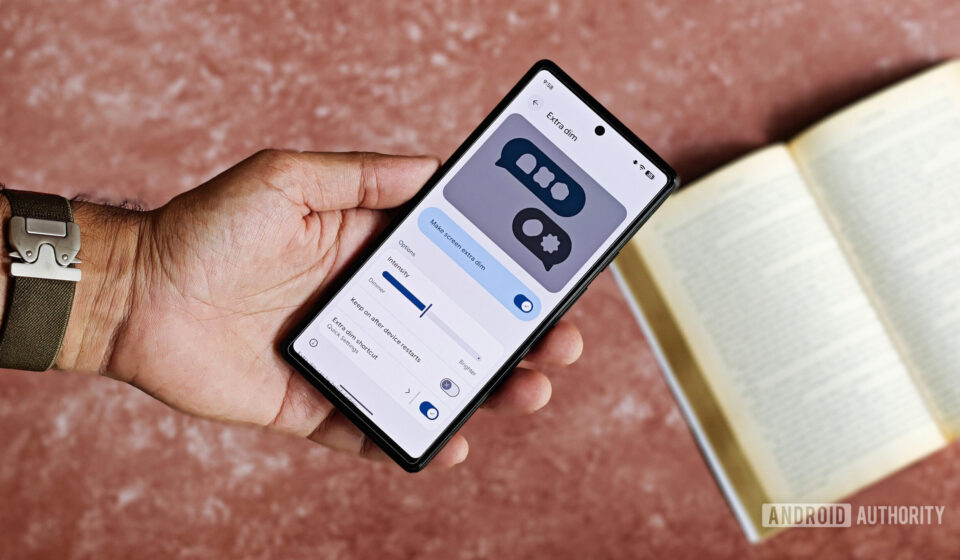
Android’s Extra Dim Feature Poses Significant Safety Hazard with Android Auto, Samsung Offers a Critical Workaround

The integration of advanced accessibility features within modern smartphone operating systems is generally lauded for enhancing user experience and inclusivity. However, a specific confluence of Android’s "Extra Dim" accessibility feature and Google’s Android Auto platform has inadvertently created a persistent usability and safety challenge for drivers, particularly under bright daylight conditions. While Extra Dim is designed to provide crucial eye comfort in low-light environments by reducing screen brightness below the standard minimum, its default manual activation and lack of intelligent context-awareness lead to dangerously diminished visibility when mirrored onto a vehicle’s infotainment display via Android Auto. This oversight compels users to either endure an unsuitably dim screen or engage in risky manual adjustments while driving, underscoring a gap in seamless feature integration that a proprietary Samsung solution, "Modes and Routines," currently addresses.
The Genesis of Extra Dim: A Boon for Nighttime Viewing
Introduced with Android 12 in October 2021, Extra Dim emerged as a welcome addition to Android’s suite of accessibility options. Its primary function is to allow users to lower their phone’s screen brightness beyond the typical minimum threshold, providing a more comfortable viewing experience in dark environments, especially before sleep or in dimly lit rooms. This feature complements Dark Mode, which inverts color schemes to reduce emitted light, by further reducing the luminance of pixels. For many users, including the original author, Extra Dim has become an indispensable tool for mitigating eye strain and promoting better sleep hygiene by minimizing exposure to bright blue light during evening hours. Its utility in personal, low-light settings is undeniable, representing Google’s commitment to enhancing digital well-being.
However, a key characteristic of Extra Dim, unlike Dark Mode, is its manual activation. While Dark Mode can be scheduled to toggle on and off based on time of day or ambient light conditions, Extra Dim requires direct user intervention to enable or disable. This manual requirement, while seemingly minor in isolation, forms the root of the problem when the smartphone ecosystem extends into the automotive domain. Users often activate Extra Dim at night and subsequently forget to deactivate it, leading to a potentially hazardous scenario during daytime driving.
Android Auto: Mirroring the Problem Onto the Dashboard
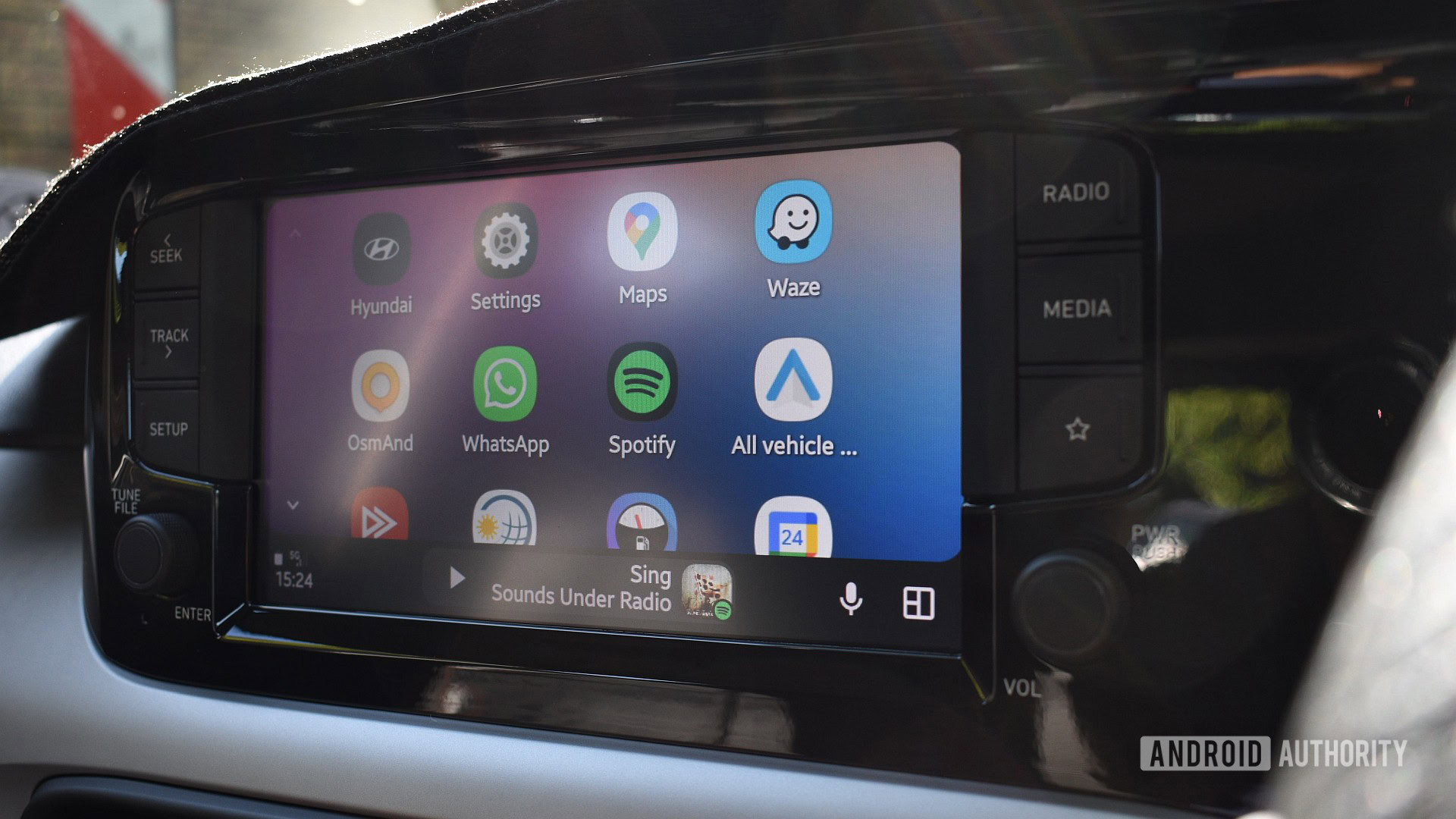
Android Auto, Google’s platform designed to extend Android functionality safely into the car, essentially mirrors a user’s smartphone interface onto the vehicle’s built-in display. This allows drivers to access navigation, music, messaging, and communication apps through a simplified, car-optimized interface, reducing distraction by keeping the phone out of hand. The seamless integration is generally a major advantage, but it also means that any active accessibility features on the phone, such as Extra Dim, are directly replicated on the car’s display.
The conflict becomes glaringly apparent when a driver, having left Extra Dim active from the previous night, connects their phone to Android Auto during daylight hours. Car interiors, especially during sunny periods, are often subject to significant glare and reflections. Drivers frequently wear sunglasses, further reducing ambient light perception. In such conditions, the paramount requirement for the car’s infotainment screen is maximum brightness to ensure optimal legibility of critical information like navigation maps, speed limits, and incoming call alerts. Extra Dim, by its very design, directly counteracts this need, plunging the car’s display into a state of severe dimness.
This diminished visibility poses a tangible safety risk. According to the National Highway Traffic Safety Administration (NHTSA), distracted driving remains a significant factor in road accidents, with visual distractions being particularly dangerous. A screen that is too dim to read clearly forces a driver to strain their eyes, lean closer, or repeatedly glance at the display, diverting attention from the road for longer periods. This is exacerbated by the fact that the only way to disable Extra Dim is through the connected smartphone itself, not via the Android Auto interface on the car’s screen.
The Dangerous Dilemma: Manual Intervention vs. Compromised Safety
Drivers encountering this issue are presented with an unenviable choice: either tolerate a dangerously dim screen, potentially missing crucial navigation cues or critical warnings, or attempt to manually deactivate Extra Dim on their phone. The latter option is fraught with peril. It necessitates stopping the vehicle, locating the phone, navigating through settings to find and disable Extra Dim – a multi-step process that is inherently distracting and illegal in many jurisdictions if performed while driving. Even pulling over to the side of the road can introduce its own set of risks, depending on traffic conditions and location.
Online forums and user communities, such as Reddit threads and Google support pages, have consistently highlighted this issue for "years," indicating a widespread and long-standing frustration among Android Auto users. The consensus points to a clear need for a more intelligent system: either Android Auto should automatically override Extra Dim during daytime operation, or Extra Dim itself should gain scheduling capabilities akin to Dark Mode. The absence of such native solutions from Google has left users searching for workarounds.
Samsung’s Modes and Routines: A Proactive, Context-Aware Solution
In the absence of a universal Android or Android Auto-specific fix, Samsung smartphone users benefit from a powerful proprietary automation tool: "Modes and Routines" (formerly Bixby Routines). This feature, a staple of Samsung’s One UI, allows users to define custom "If This, Then That" rules, triggering specific actions or settings changes based on predefined conditions. It represents a sophisticated approach to context-aware computing, enabling the phone to adapt its behavior to various scenarios without constant manual intervention.
Modes and Routines has proven invaluable for a wide array of daily tasks, from optimizing battery life by deactivating mobile data when Wi-Fi is connected, to streamlining productivity by launching specific apps at certain locations or times. For instance, a user might create a routine to automatically force-update apps on the Play Store when connected to home Wi-Fi and charging, or activate NFC when Google Wallet is opened. Its versatility lies in its ability to automate mundane tasks and proactively adjust phone settings, thereby enhancing convenience and, in this specific case, safety.
Implementing the Extra Dim Deactivation Routine
The application of Modes and Routines to the Android Auto Extra Dim problem is elegantly straightforward. The core of the solution involves creating a routine that recognizes when the phone connects to Android Auto and, as a subsequent action, automatically deactivates Extra Dim.
Here’s a detailed breakdown of how Samsung users can configure this critical routine:

- Access Modes and Routines: Open the "Settings" app on your Samsung phone, scroll down, and select "Modes and Routines."
- Create a New Routine: Tap on the "Routines" tab at the bottom, then tap the "+" icon to add a new routine.
- Define the "If" Condition (Trigger):
- Tap "Add what will make this routine start."
- Select "Connectivity."
- Choose "Android Auto."
- Select "Connected" as the state. This sets the trigger: whenever your phone establishes a connection with Android Auto, the routine will activate.
- Alternatively, if using Samsung’s built-in "Driving Mode": Users can base their routine around the activation of "Driving Mode." This mode itself can be configured to activate when connected to a specific Bluetooth device (e.g., the car’s Bluetooth system) or when a specific app (like Android Auto) is launched. Selecting "Driving Mode" as the "If" condition provides an equally effective trigger.
- Define the "Then" Action:
- Tap "Add what this routine will do."
- Scroll through the available actions and select "Accessibility."
- Find and select "Extra Dim."
- Set the status to "Off." This ensures that Extra Dim is deactivated the moment Android Auto connects.
- Name and Save the Routine: Give the routine a descriptive name, such as "Android Auto Brightness Fix" or "Driving Mode Extra Dim Off," and save it.
Once this routine is active, the driver no longer needs to remember to manually switch off Extra Dim. The phone intelligently handles the transition, ensuring that the car’s display operates at its optimal brightness for daytime visibility, thereby mitigating the safety risks associated with a dim screen.
Beyond Deactivation: Re-enabling for Nighttime Comfort
A well-designed automation system also considers the inverse scenario. For the Extra Dim feature to remain beneficial for nighttime use, it needs to be re-enabled automatically. The original author mentions integrating Extra Dim activation with their phone’s "Sleep Mode," which automatically activates at 10:00 pm and deactivates at 5:00 am. This demonstrates the power of chaining routines and modes:
- Routine 1 (Driving): If Android Auto connects, then Extra Dim Off.
- Routine 2 (Nighttime): If Sleep Mode activates (at 10:00 pm), then Extra Dim On.
- Prioritization: Samsung’s Modes and Routines typically allow for prioritization or define how conflicting routines are handled. In this case, the "Driving Mode" routine’s demand to deactivate Extra Dim would logically take precedence if the user were to drive during the designated "Sleep Mode" hours, ensuring safety remains paramount.
This layered approach highlights the sophistication of Samsung’s automation tools, offering a robust and user-centric solution to a persistent problem that Google has yet to address natively.
Broader Implications and the Path Forward
The Extra Dim and Android Auto conundrum is more than just a minor inconvenience; it underscores critical aspects of user experience, accessibility, and developer responsibility in the rapidly evolving landscape of connected technology.
- User Experience and Safety: The primary implication is the impact on user safety. Features designed for comfort in one context should not inadvertently create hazards in another, especially one as critical as driving. The need for drivers to interact with their phone to resolve a display issue directly contradicts the safety philosophy behind Android Auto.
- Developer Responsibility: Google, as the developer of both Android and Android Auto, bears the responsibility to ensure seamless and context-aware integration of its features. The lack of a scheduled Extra Dim option or an intelligent override within Android Auto suggests an oversight in considering diverse user scenarios and inter-feature dependencies. This situation highlights the importance of comprehensive testing and user feedback loops across various product ecosystems.
- The Power of Automation: The success of Samsung’s Modes and Routines in addressing this issue showcases the immense value of powerful, user-configurable automation tools. These features empower users to tailor their devices to their unique needs and routines, filling gaps left by default system behavior. While Samsung offers a robust native solution, users of other Android devices might need to resort to third-party automation apps like Tasker to achieve similar results, often requiring a steeper learning curve.
- Future of Android Auto and Accessibility: This ongoing issue should serve as a clear signal for Google to enhance the intelligence of both Extra Dim and Android Auto. Implementing a scheduling option for Extra Dim would provide a universal solution, regardless of the car connection. Alternatively, Android Auto could be programmed to detect ambient light conditions or simply override Extra Dim when connected, prioritizing driving safety. Such an update would significantly improve the user experience for millions of drivers globally.
In conclusion, while Android’s Extra Dim feature is a commendable accessibility tool for low-light scenarios, its current implementation creates a significant and dangerous conflict with Android Auto in daylight. Samsung’s "Modes and Routines" provides a powerful and elegant workaround, enabling users to automate the deactivation of Extra Dim when connecting to their vehicle, thereby prioritizing safety and convenience. Until Google implements a native, context-aware solution, proprietary automation tools remain essential for mitigating this frustrating and potentially hazardous display annoyance on the road. The incident serves as a crucial reminder for technology developers to consider the full spectrum of user environments and interactions when designing and integrating features, especially those with safety implications.