
San Francisco, CA – March 9, 2026 – In a significant leap forward for artificial intelligence and music recognition, ChatGPT has officially integrated Shazam’s powerful song identification technology. This groundbreaking feature allows users to effortlessly discover the name of any song playing around them simply by asking the AI. The announcement, made today, marks a pivotal moment in how consumers interact with both AI assistants and their musical environments, promising a more seamless and intuitive experience for millions worldwide.
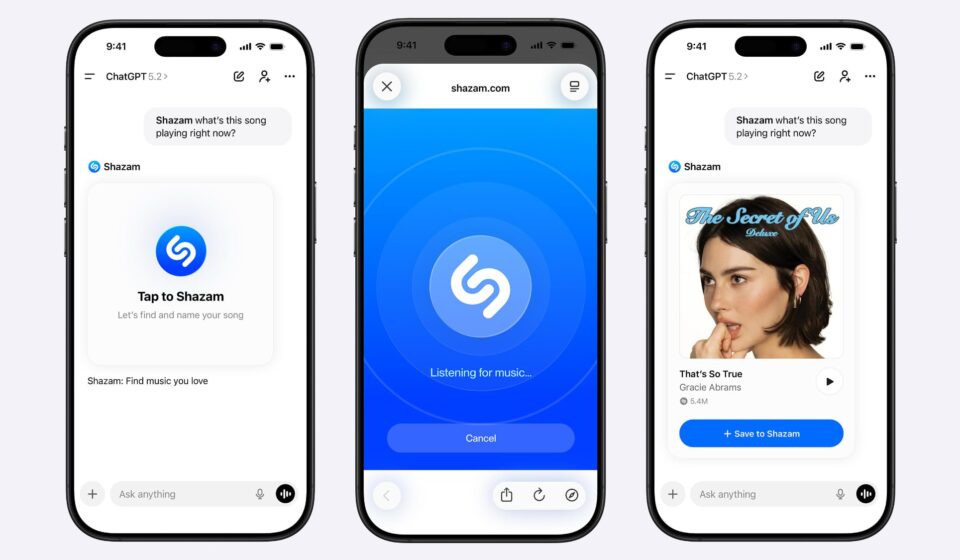
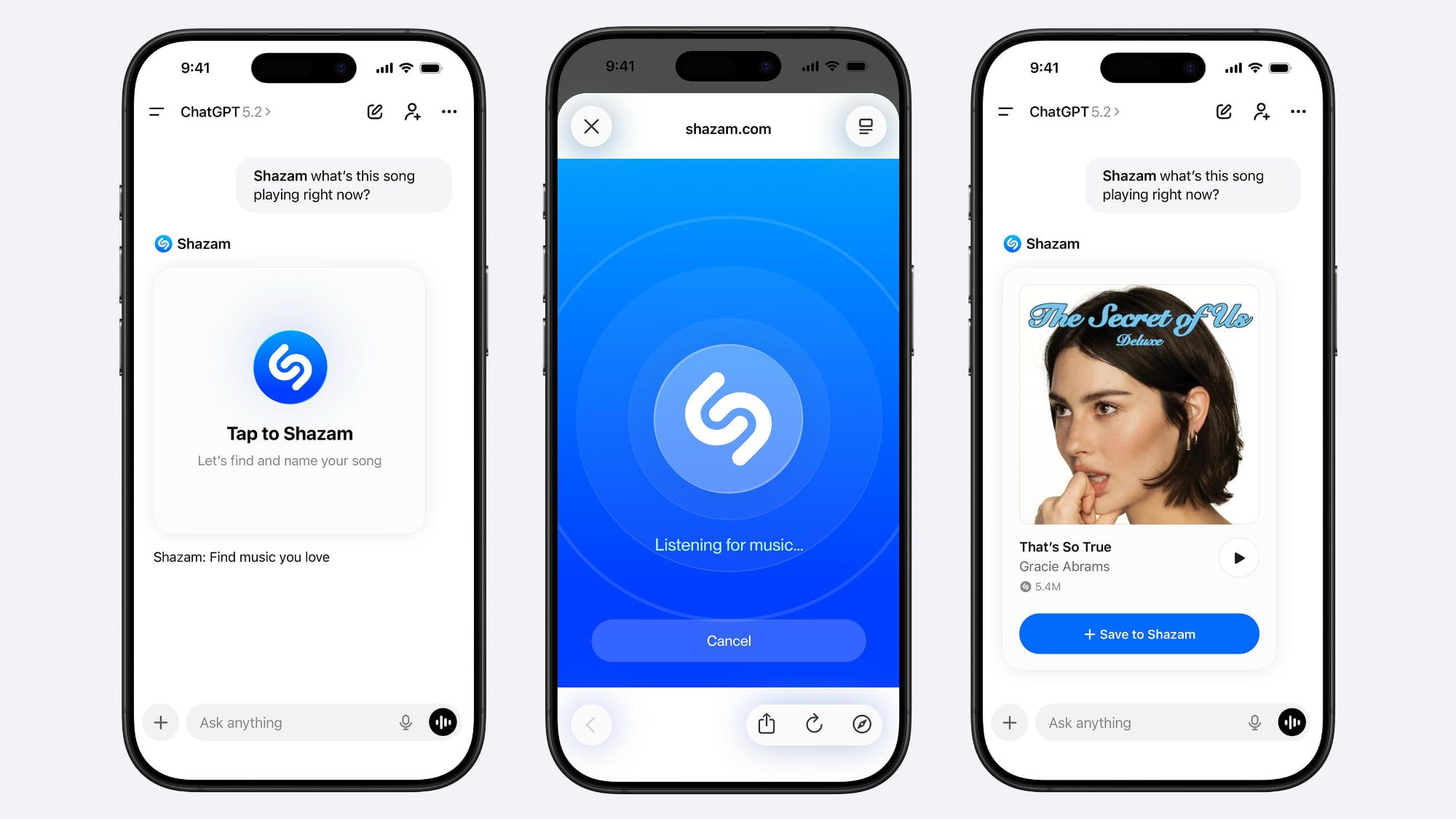
The integration, which began rolling out this morning, enables ChatGPT users to initiate a music identification request with a simple prompt such as, "Shazam, what is this song?" Upon receiving such a query, ChatGPT will present a "Tap to Shazam" interface. This intuitive design mirrors the familiar user experience of the standalone Shazam app, allowing for immediate song recognition without the need to switch between applications.
Seamless Integration and Enhanced User Experience
At the core of this new functionality is Shazam’s robust and highly accurate music recognition engine. This means that once invoked within ChatGPT, users will not only receive the song title but can also access an inline preview of the track, all without leaving the ChatGPT interface. This eliminates the friction of exiting the AI conversation to identify a piece of music, thereby preserving the flow of interaction and enhancing overall user convenience.
The process of enabling Shazam within ChatGPT is designed for straightforward adoption. Users can access the integration by navigating to the ChatGPT settings, selecting the "Apps" section, and then searching for "Shazam." Once installed within the ChatGPT ecosystem, the Shazam functionality can be activated by starting any request with the keyword "Shazam." This simple activation command ensures that users can quickly and efficiently leverage the music identification capabilities when the need arises.
A key advantage of this integration is its platform independence. Users do not need to have the dedicated Shazam app installed on their devices to utilize the song recognition feature within ChatGPT. This broad accessibility means that the technology is available to a wider audience, regardless of their device or existing app ecosystem. However, for users who do have the Shazam app installed, identified songs will be automatically added to their personal Shazam library, creating a convenient catalog of discovered music for future reference and listening.
Background and Chronology of the Integration
The development and rollout of Shazam’s integration into ChatGPT represent the culmination of ongoing efforts by both Apple, which acquired Shazam in 2018, and OpenAI, the creators of ChatGPT. While specific details regarding the timeline of negotiations and development are not publicly disclosed, the seamless nature of the integration suggests a period of close collaboration.
Apple’s acquisition of Shazam for an estimated $400 million was a strategic move aimed at bolstering its music services and integrating the popular song identification technology across its ecosystem. Over the years, Shazam has been progressively woven into Apple Music, Siri, and various iOS features, enhancing its utility for Apple device users.
The decision to extend Shazam’s capabilities to a prominent third-party AI platform like ChatGPT signals a strategic shift, indicating a willingness to broaden the reach of Shazam’s core technology beyond Apple’s proprietary services. This move is likely driven by the immense user base and the conversational nature of ChatGPT, which presents a unique opportunity for ambient music discovery.
The initial announcement of a potential collaboration between OpenAI and Apple in the realm of AI-powered music recognition would have likely generated significant industry buzz. Industry analysts have long speculated about the synergistic potential between advanced AI models and established music recognition services. This integration appears to be the realization of such predictions.
The rollout commencing today is a testament to the robust testing and development that likely preceded this public release. The phased deployment ensures stability and allows for efficient troubleshooting, aiming to provide a smooth experience for all users as the feature becomes widely available.
Supporting Data and Industry Context
Shazam boasts an impressive track record in music identification. Prior to this integration, the Shazam app had accumulated over 200 million monthly active users globally and had been used to identify more than 50 billion songs. This vast dataset and proven performance are critical factors in the success of the ChatGPT integration.
The AI landscape is rapidly evolving, with a growing emphasis on multimodal capabilities – the ability of AI models to understand and interact with various forms of data, including text, images, audio, and video. Shazam’s audio recognition technology represents a significant advancement in audio processing for AI, allowing ChatGPT to interpret and respond to auditory cues in a highly sophisticated manner.
This integration also aligns with OpenAI’s broader strategy of enhancing ChatGPT’s utility and expanding its application across diverse domains. By incorporating specialized tools like Shazam, ChatGPT moves beyond its foundational language processing capabilities to become a more comprehensive digital assistant.
Reactions and Implications
While official statements from Apple and OpenAI regarding the specific benefits and vision behind this partnership are anticipated, the implications are far-reaching. For users, the immediate benefit is unparalleled convenience in discovering music. Imagine being at a restaurant, in a car, or attending an event where a song captivates your attention; a simple voice command to ChatGPT can now instantly reveal its identity and provide access to a preview.
This integration could also have a significant impact on music discovery trends. By making song identification so effortless within a widely used conversational AI, it may lead to an increase in users actively seeking out new music, potentially boosting engagement with streaming services.
For artists and the music industry, this could translate into increased exposure. As more songs are identified through ChatGPT, artists may see a corresponding rise in streams and engagement, particularly for tracks that gain traction through this new discovery channel. It also offers a novel way for music to permeate everyday conversations and AI interactions.
Furthermore, this collaboration underscores the growing trend of specialized AI integrations. As AI models mature, their utility is amplified by the seamless incorporation of specialized tools and services. This approach allows AI platforms to offer more targeted and effective solutions for specific user needs, moving beyond general-purpose capabilities.
Broader Impact and Future Prospects
The successful integration of Shazam into ChatGPT sets a precedent for future collaborations between AI developers and established technology companies. It highlights the potential for AI models to act as intelligent hubs, orchestrating access to a vast array of specialized functionalities.
Looking ahead, one can anticipate further advancements in multimodal AI. The ability of ChatGPT to now process audio cues for music identification could pave the way for more complex auditory interactions, such as understanding ambient sounds, deciphering spoken language in noisy environments, or even assisting with tasks that require audio analysis.
The partnership also raises questions about potential future integrations. Could ChatGPT, for example, integrate with image recognition services to identify objects or scenes, or with translation services to facilitate real-time cross-lingual communication? The current Shazam integration suggests a future where AI assistants become increasingly versatile and context-aware, capable of leveraging a diverse toolkit of specialized technologies.
In conclusion, the advent of Shazam within ChatGPT represents a significant evolution in the capabilities of conversational AI. It not only simplifies music discovery for users but also showcases the power of integrating specialized technologies into broader AI platforms, promising a more connected and intelligent digital experience for the future. The seamless fusion of Shazam’s proven audio recognition prowess with ChatGPT’s advanced conversational abilities is poised to redefine how we interact with music and AI alike.