
The annual NCAA Men’s and Women’s Division I Basketball Tournament, colloquially known as March Madness, has long been a cultural phenomenon, captivating millions of Americans. Beyond the thrilling upsets and Cinderella stories, a significant aspect of the tournament’s engagement lies in the widespread practice of filling out brackets for office pools, friendly wagers, and online competitions. For enthusiasts like Peter Horan, a seasoned participant with over four decades of experience, the process traditionally involved a blend of personal allegiance, gut feeling, and a dash of hopeful guesswork. However, the advent of sophisticated artificial intelligence has introduced a new, data-driven dimension to this beloved ritual. This article delves into Horan’s experiment of leveraging ChatGPT to construct his NCAA tournament bracket, exploring the AI’s analytical approach, its surprisingly insightful query, and the broader implications of integrating AI into traditionally human-centric decision-making processes.

Horan’s personal approach to bracketology, while enjoyable, was rooted in a limited scope of observation. His engagement with college basketball typically centered on his favored teams and their immediate opponents, with only occasional viewership of major national games. This resulted in the perennial challenge of navigating the vast unknowns within the tournament bracket: the obscure teams, the perennial upset threats, and the agonizing decisions about whether to trust the top-seeded favorites or embrace the allure of potential upsets. This often led to a "lot of anxiety and not much insight," a sentiment shared by many bracket participants who grapple with incomplete information and subjective biases.
The pivotal moment in Horan’s experiment arrived when he posed a question to ChatGPT: how would it construct a model to predict the NCAA tournament winner? The AI’s response was not merely a prediction, but a comprehensive exposition of its analytical framework, showcasing a depth of consideration far beyond typical human intuition. ChatGPT outlined a multi-faceted approach, capable of building anything from a rudimentary seed-based model to a complex probability engine. Its proposed methodology incorporated factors such as KenPom-style efficiency ratings, team pace, injury status, travel considerations, coaching acumen, and historical upset patterns. Furthermore, it offered capabilities in calculating bracket win probabilities, identifying upset picks by round, employing Monte Carlo simulations, and utilizing statistical models like Elo or logistic regression.

At the core of ChatGPT’s predictive engine was a detailed assessment of team strength on a neutral court. This evaluation encompassed offensive and defensive efficiency, the strength of schedule faced by each team, their consistency throughout the season, and an overall measure of squad strength. These data points were then synthesized through a logistic model to consider the matchups between two teams, predicting the outcome of each potential game. This systematic, data-intensive approach stands in stark contrast to the more qualitative and emotional decision-making often employed by human participants.
To further refine its predictions, ChatGPT engaged in extensive simulation. The AI ran the entire tournament not once, but over 50,000 times, using its established model. This colossal number of simulations allows for a robust exploration of probabilistic outcomes, identifying the most likely paths to victory for each team and the overall tournament champion. The sheer computational power and statistical rigor involved in such an undertaking underscore the transformative potential of AI in complex predictive tasks.

The AI’s Crucial Question: Winning vs. Being Right
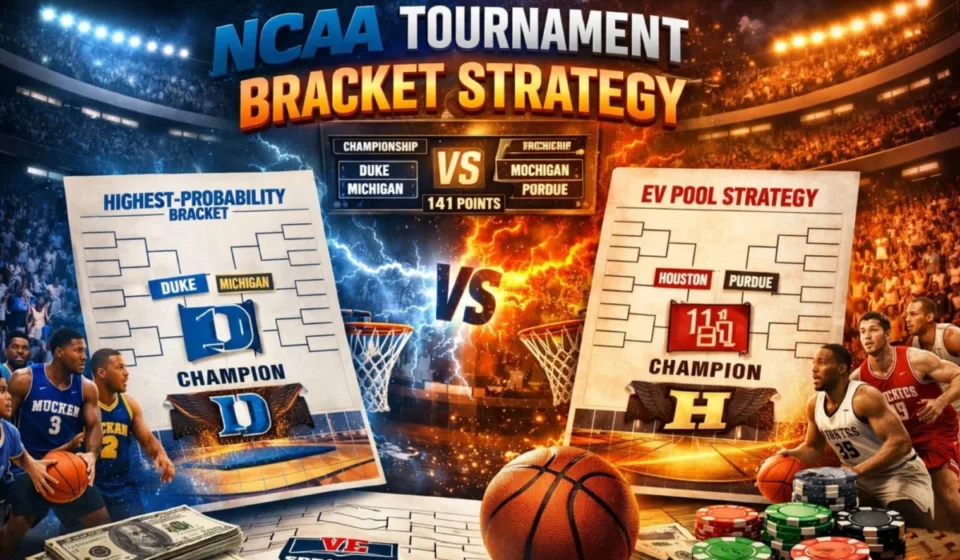
The most profound aspect of ChatGPT’s engagement, however, was not its technical prowess, but its insightful query: "Is it more important to be right or to win money in your pool?" This question immediately shifted the paradigm from purely predictive accuracy to strategic game theory within the context of a bracket pool. The AI recognized a fundamental tension inherent in most pools: picking all the favorites will likely result in a higher percentage of correct individual game picks, but it rarely leads to winning the pool. Winning requires identifying and correctly predicting upsets that other participants have overlooked. This distinction is critical. A bracket filled solely with chalk (favorites) will often be very similar to many other brackets, diluting the potential reward. To achieve a top ranking and claim victory, a participant must take calculated risks.
ChatGPT’s understanding of this strategic nuance demonstrated a level of comprehension that transcended simple data analysis. It acknowledged that human participants often have different objectives within their pools. Some might prioritize the intellectual satisfaction of correctly predicting the most games, while others are driven by the desire to distinguish themselves and win prizes by accurately forecasting improbable outcomes.

Based on this understanding, ChatGPT proposed a dual-bracket strategy for Horan’s most significant pool – the one where poor performance invited considerable teasing. It offered to generate one bracket that prioritized accuracy (likely leaning heavily on favorites) and another that emphasized the strategic advantage of picking upsets to maximize winning potential. This approach directly addressed Horan’s own anxieties about the inherent risk in bracket selection.
Integrating Personal Allegiance with Algorithmic Strategy
While embracing the AI’s analytical power, Horan also introduced a personal element into the process. He made minor adjustments to the AI’s recommendations by including his three favorite college basketball teams – Santa Clara, Gonzaga, and UCLA – in the early rounds. He acknowledged, with a touch of self-awareness, that while he hoped to be wrong, he did not anticipate these teams advancing deep into the tournament. This blend of algorithmic guidance and personal sentiment highlights a potential pathway for AI integration in domains where human emotion and historical connection play a role. The AI provided the data-driven foundation, while Horan retained a degree of personal agency, a compromise that likely enhanced his engagement with the process.

The author’s commitment to transparency in this experiment is notable. He plans to meticulously track the performance of ChatGPT’s bracket predictions throughout the tournament, providing updates on its success or failure. This longitudinal study promises to offer valuable insights into the practical efficacy of AI in a real-world, competitive scenario. The outcome will reveal whether the sophisticated algorithms can indeed outperform decades of human intuition and strategic gambits in the unpredictable arena of March Madness.
The implications of Horan’s experiment extend beyond the realm of sports pools. It serves as a tangible example of how artificial intelligence can be applied to complex decision-making processes that involve a blend of data analysis, probability, and strategic thinking. As AI technologies continue to evolve, their integration into fields ranging from finance and healthcare to personal planning and entertainment is becoming increasingly prevalent. Understanding the capabilities and limitations of AI, as well as its potential to augment rather than merely replace human judgment, is crucial for navigating this evolving landscape. ChatGPT’s ability to not only process vast amounts of data but also to pose a strategically critical question underscores the developing sophistication of these tools and their capacity to offer novel perspectives on familiar challenges. The coming weeks of the NCAA tournament will provide a fascinating case study in the interplay between human instinct and artificial intelligence.