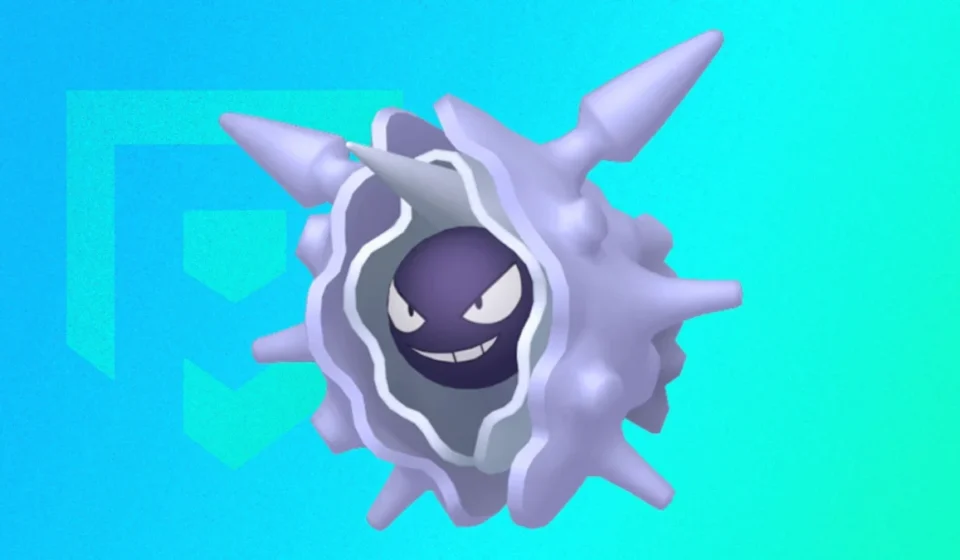

The Pokémon universe, a rich tapestry of creatures with unique abilities and compelling backstories, features many evolutions that transform humble beginnings into formidable powerhouses. Among these, the Water/Ice-type Pokémon Cloyster stands out as a testament to defensive prowess and offensive potential. Evolving from the unassuming Shellder, Cloyster presents a significantly more imposing figure, its hardened shell a symbol of its resilience and its dual typing offering a strategic advantage in numerous battles. For trainers aiming to build a team with a strong aquatic or icy core, or those simply seeking to understand the intricacies of one of the original 151 Pokémon, a deep dive into Cloyster’s capabilities, origins, and strategic applications is essential. This guide aims to provide an exhaustive overview of Cloyster, from its foundational statistics to its strategic deployment in various Pokémon generations.
Cloyster: A Stalwart of the Pokédex
Cloyster, officially cataloged as National Pokédex #0091, is a dual-type Water/Ice Pokémon introduced in the very first generation of games. Its appearance is characterized by a massive, rigid shell, often depicted with sharp spikes, which it uses as both a formidable defense and an offensive weapon. This evolution from Shellder, a much smaller and seemingly less threatening Pokémon, highlights a significant power increase. While Shellder’s primary characteristic is its ability to clamp down with surprising force, Cloyster takes this defensive trait to an extreme, becoming an almost impenetrable fortress that can also unleash devastating attacks.
The Pokémon’s typing, Water and Ice, grants it a unique set of resistances and weaknesses, making it a strategic consideration for any trainer. Its inherent resilience is further bolstered by its potential abilities: Shell Armor, which prevents critical hits, and Skill Link, which ensures multi-hit moves always hit the maximum number of times. Its hidden ability, Overcoat, provides immunity to weather damage, adding another layer of survivability. With a balanced gender ratio of 50% male and 50% female, and a catch rate of approximately 14.8%, finding and training a Cloyster is a rewarding endeavor for dedicated trainers. Its place within the Water 3 egg group signifies its potential for breeding and passing down specific moves. The EV yield of two Defense points underscores its role as a defensive powerhouse.
The Evolution of a Shell: From Shellder to Cloyster
The transformation of Shellder into Cloyster is a straightforward yet crucial step for trainers seeking to harness its full potential. This evolution occurs when Shellder is exposed to a Water Stone. Unlike many Pokémon evolutions that are tied to specific levels or battle conditions, Shellder’s evolution into Cloyster is solely dependent on the use of this evolutionary item, making it accessible at any point in a trainer’s journey once a Water Stone is acquired. This immediacy allows trainers to quickly bolster their teams with a powerful defensive and offensive unit.

The history of this evolution dates back to the initial release of Pokémon Red and Blue in 1996. In these early games, the primary method of obtaining Cloyster was by evolving Shellder. This remained consistent across subsequent generations, with minor variations in where Shellder could be found, thus indirectly influencing the availability of Cloyster. The introduction of trading mechanics in later generations also provided alternative routes to acquiring Cloyster, particularly in games where Shellder might have been less common or absent.
Generational Presence: Cloyster’s Footprints Across the Pokémon World
Cloyster’s journey through the Pokémon game series showcases its consistent presence and the evolving methods of its acquisition.
- Generation 1 (Red, Blue, Yellow): In the foundational games, Cloyster was exclusively obtainable through the evolution of Shellder. These games laid the groundwork for Cloyster’s identity as a Water/Ice type with significant defensive capabilities.
- Generation 2 (Gold, Silver, Crystal): The sequel generation maintained the evolutionary path for Cloyster, with Shellder being the prerequisite. This era solidified Cloyster’s role as a strong contender, especially in the early competitive metagames.
- Generation 3 (Ruby, Sapphire, Emerald, FireRed, LeafGreen, Colosseum, XD): This generation introduced more varied acquisition methods. While evolving Shellder remained a primary route, trading became a significant factor, particularly in Ruby, Sapphire, and Emerald, where Shellder’s wild encounter rate might have been lower. FireRed and XD continued to offer the evolutionary path.
- Generation 4 (Diamond, Pearl, Platinum, HeartGold, SoulSilver): The Sinnoh and Johto remakes largely adhered to the established pattern, with Shellder evolution being the key to obtaining Cloyster. These games often refined the in-game environments where Shellder could be found, making the evolutionary process more accessible.
- Generation 5 (Black, White, Black 2, White 2): For the first time, wild encounters with Cloyster became a possibility in Black and White, specifically in areas like Route 13, Undella Bay, and Undella Town. Black 2 and White 2 expanded these locations to include Humilau City, Seaside Cave, and Undella Town, offering trainers direct opportunities to capture Cloyster without relying solely on evolution.
- Generation 6 (X, Y, Omega Ruby, Alpha Sapphire): The Kalos region introduced the Friend Safari in X and Y, a feature that allowed players to encounter a variety of Pokémon, including Cloyster, making it a reliable source. Route 8 also became a location for wild Cloyster encounters. Omega Ruby and Alpha Sapphire, remakes of the Hoenn games, largely reverted to trading as a primary acquisition method, reflecting their original game’s mechanics.
- Generation 7 (Sun, Moon, Ultra Sun, Ultra Moon, Let’s Go Pikachu, Let’s Go Eevee): Sun and Moon maintained the evolutionary requirement for Cloyster. However, in Let’s Go Pikachu and Let’s Go Eevee, Cloyster could be found directly on Seafoam Island, offering a more direct path to obtaining this Pokémon in the Kanto region’s remakes.
- Generation 8 (Sword, Shield, Expansion Pass, Brilliant Diamond, Shining Pearl, Legends: Arceus): Sword and Shield provided numerous wild encounter locations for Cloyster across the Galar region, including areas like the Dusty Bowl and Giant’s Seat. The Expansion Pass further diversified these locations. Brilliant Diamond and Shining Pearl returned to the evolutionary method, while Pokémon Legends: Arceus notably excluded Cloyster from its obtainable roster.
- Generation 9 (Scarlet, Violet): The Paldea region offers widespread opportunities to find Cloyster in its aquatic environments, specifically in the East Paldean Sea, North Paldean Sea, South Paldean Sea, and West Paldean Sea. Legends: Z-A, a future installment, has yet to confirm its roster, but Cloyster’s historical presence suggests a potential return.
Understanding Cloyster’s Strengths and Weaknesses: A Tactical Analysis
Cloyster’s dual Water/Ice typing is a double-edged sword, offering significant resistances but also critical vulnerabilities. Understanding these interactions is paramount for any trainer planning to use Cloyster in battle.
- Resistances: Cloyster is resistant to Ice and Water-type attacks. This makes it a formidable opponent against Pokémon that rely heavily on these types, allowing it to absorb hits and retaliate effectively.
- Weaknesses: Conversely, Cloyster is weak to Electric, Fighting, Grass, and Rock-type attacks. These types can inflict super-effective damage, and trainers must be mindful of these threats when deploying Cloyster. An Electric-type attack, in particular, can be devastating, given the prevalence of Electric-type Pokémon and their often high Special Attack stats. Grass-type moves, with their STAB (Same Type Attack Bonus) bonus, can also pose a significant threat.
- Immunities: Notably, Cloyster has no type immunities. This means that while it resists certain types, it does not possess an outright nullification of any specific offensive typing.
This typing profile suggests a Pokémon best suited for defensive roles or as a powerful offensive threat against Pokémon that do not exploit its weaknesses. Its high Defense stat, which increases significantly upon evolution, makes it capable of withstanding physical attacks. However, its Special Defense is comparatively lower, making it more susceptible to special attackers that exploit its weaknesses.
Cloyster’s Base Stats: The Foundation of its Power

While the provided data does not explicitly list Cloyster’s base stats, its role in the Pokémon ecosystem is heavily influenced by them. Based on its in-game performance and typical stat distributions for its type and evolutionary stage, Cloyster is known for:
- High Defense: This is its most defining stat, allowing it to tank physical hits effectively.
- High Special Attack: While often overlooked due to its defensive capabilities, Cloyster possesses a respectable Special Attack stat, enabling it to dish out significant damage with its Water and Ice-type moves.
- Moderate HP and Special Defense: These stats are generally average, meaning while it can take a few hits, it is not an impenetrable wall against special assaults.
- Low Speed: Cloyster is typically a slow Pokémon, often acting last in turn order. This necessitates strategies that either compensate for its speed or leverage its bulk to set up powerful attacks.
These stats collectively paint a picture of a Pokémon that excels at taking hits and retaliating with powerful special attacks, often after setting up or when facing opponents that cannot effectively counter it.
Cloyster’s Arsenal: Movesets for Every Occasion
Cloyster’s movepool is diverse, offering a range of offensive and supportive options that complement its typing and stats. Its evolution from Shellder via a Water Stone unlocks powerful moves, and its subsequent leveling and TM/TR acquisition further expand its tactical utility.
Level-Up Moves: Upon evolution and through continued leveling, Cloyster gains access to a formidable array of moves. Signature moves like Icicle Spear and Razor Shell highlight its offensive capabilities. Strategic moves such as Shell Smash, which drastically boosts its offensive stats at the cost of its defensive ones, can turn Cloyster into a devastating sweeper. Other key level-up moves include:
- Icicle Crash: A powerful Ice-type attack.
- Toxic Spikes and Spikes: Entry hazard moves that wear down opposing teams.
- Hydro Pump and Water Pulse: Strong Water-type special attacks.
- Ice Beam and Aurora Beam: Reliable Ice-type special attacks.
- Leer and Supersonic: Status-inflicting moves.
- Iron Defense: Boosts its already impressive physical defense.
- Whirlpool: A Water-type move that traps the opponent.
Learnable TMs/TRs: The vastness of TM and TR moves available to Cloyster allows for significant customization. This includes powerful STAB moves like Blizzard and Avalanche, as well as coverage options like Drill Run and Poison Jab. Supportive TMs such as Light Screen and Rain Dance can further enhance its team utility. The ability to learn moves like Giga Impact and Hyper Beam provides it with potent, albeit sometimes risky, finishing moves.
Egg Moves: Through breeding, Cloyster can inherit specialized moves. Aqua Ring and Life Dew offer valuable recovery options, while Bubble Beam and Water Pulse provide additional Water-type STAB. These egg moves can be crucial for fine-tuning Cloyster’s strategy, especially for competitive play.

Strategic Implications and Broader Impact
Cloyster’s consistent presence across generations and its diverse movepool solidify its status as a significant Pokémon in both casual and competitive play. Its defensive bulk, coupled with its offensive potential, makes it a versatile Pokémon capable of fulfilling multiple roles. The introduction of moves like Shell Smash has significantly amplified its offensive threat, allowing it to become a potent late-game sweeper if given the opportunity to set up.
The strategic implications of Cloyster extend to team building. Trainers often pair Cloyster with Pokémon that can cover its weaknesses or capitalize on its defensive presence. For instance, Pokémon with access to Electric-type attacks can pose a threat to Cloyster, while Pokémon that can set up entry hazards or disrupt the opponent’s momentum can create openings for Cloyster to unleash its power.
Furthermore, Cloyster’s evolution from Shellder serves as a classic example of how seemingly ordinary Pokémon can transform into formidable creatures through natural progression and the strategic use of evolutionary items. This narrative arc is a core element of the Pokémon experience, encouraging players to explore the depths of the Pokédex and understand the potential hidden within each creature. As the Pokémon franchise continues to evolve, Cloyster remains a recognizable and potent force, a testament to its enduring design and strategic depth. Its journey from the original Red and Blue to the latest installments in the series underscores its legacy as a foundational element of the Pokémon world.