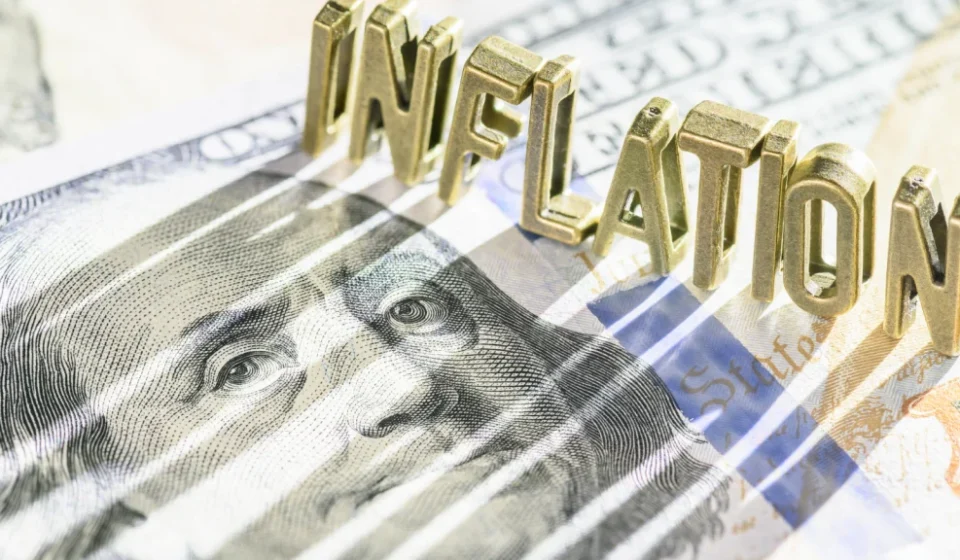

The United States Department of Labor’s April Consumer Price Index (CPI) report, released this morning, has sent ripples through the financial markets by revealing an annual inflation rate of 3.8%. This figure represents the highest level of price acceleration since May 2023, surpassing both the March reading of 3.3% and the consensus estimate of 3.7%. The data suggests that the Federal Reserve’s long-standing campaign to cool the economy and return inflation to its 2% target is meeting significant resistance, primarily driven by a resurgence in energy costs and persistent "sticky" prices in the service and housing sectors.
The primary driver behind the hotter-than-expected headline number is the energy sector, which saw costs jump nearly 18% year-over-year. This represents the steepest annual increase since September 2022. Within this category, gasoline prices have surged by 28.4%, while fuel oil costs have skyrocketed by 54.3%. These increases are largely attributed to ongoing geopolitical tensions, specifically the broadening conflict involving Iran, which has disrupted global supply chains and injected a volatility premium into crude oil markets. However, the inflationary pressure is no longer confined to the energy sector. Shelter costs, a heavily weighted component of the CPI, rose to 3.3% in April, up from 3% in March. Food prices increased by 2.3%, and airline fares experienced a monthly jump of 2.8%, bringing the 12-month gain for air travel to a staggering 20.7%.
Core inflation, which excludes the more volatile food and energy categories to provide a clearer view of underlying price trends, also showed signs of acceleration. The annual core CPI edged up to 2.8%, higher than the 2.6% reported in March and exceeding the 2.7% forecast. More concerning for economists is the monthly core reading, which rose 0.4% in April—effectively doubling the 0.2% pace recorded in both February and March. This acceleration indicates that high energy inputs are beginning to bleed into the broader economy, raising the cost of production and service delivery across multiple industries.
Chronology of the Inflationary Pivot and Consumer Reaction
The transition from a period of disinflation to the current "hot" environment has occurred over a relatively short window. In early 2024, market sentiment was largely optimistic, with many investors pricing in multiple interest rate cuts from the Federal Reserve. However, the sequence of events over the last quarter has forced a dramatic recalibration.
In February and March, inflation readings began to stabilize rather than decline, signaling a plateau. By late March and April, the escalation of the conflict in the Middle East provided the catalyst for a spike in crude oil prices. This geopolitical shift coincided with a collapse in consumer confidence. Last Friday’s University of Michigan Consumer Sentiment Survey reported its lowest reading since the university began tracking the data in 1952. Analysts suggest that the "kitchen-table" reality of rising gas and grocery prices, combined with stagnant wage growth and record-high credit card balances, has pushed consumer morale to historic lows.
Market strategist Louis Navellier, chairman of Navellier & Associates, provides a sobering outlook for the energy market. In his latest analysis, Navellier indicated that drivers and businesses should not expect relief at the pump until at least October. He notes that worldwide demand typically declines in the autumn, which may provide a natural cooling effect. However, he warns that even if a peace deal were reached or the Strait of Hormuz were fully reopened, the lag in supply restoration would prevent prices from returning to pre-conflict levels immediately. Citing data from Rystad Energy, Navellier pointed out that for every month of supply outage, it typically takes an equivalent amount of time for the market to return to equilibrium. Consequently, the prospect of oil returning to the $60-per-barrel range appears unlikely in the near term.
The Bifurcation of the Equity Markets
The current economic climate has created what analysts are calling a "tale of two markets." While the broader economy grapples with the pressures of stagflation—characterized by high inflation and slowing growth—a specific segment of the market is thriving. This divergence is most evident when comparing companies involved in Artificial Intelligence (AI) infrastructure against the rest of the S&P 500.
Data from Jefferies indicates that AI-focused companies have generated over 80% of the S&P 500’s year-to-date returns. Over the past month, the S&P 500 has climbed nearly 7%; however, when excluding "Artificial Intelligence Enablers" (as measured by the SPXXAI index), the benchmark has gained less than 1%. This bifurcation is becoming even more pronounced during the current earnings season.
Luke Lango, editor of Innovation Investor, describes this phenomenon as the "Summer of AI" clashing with the "Summer of Stagflation." Lango points to recent earnings reports from traditional industrial and consumer-facing companies as a warning sign. For instance, Whirlpool Corporation recently reported a 7.4% decline in U.S. appliance demand for the first quarter, with a 10% drop in March alone. Whirlpool’s leadership compared these conditions to the "recession-level industry decline" seen during the 2008 global financial crisis, citing a collapse in consumer confidence following the escalation of Middle Eastern tensions.

Strategic Focus on AI Infrastructure and NAND Flash Storage
Despite the grim outlook for traditional consumer sectors, Navellier and Lango remain bullish on the infrastructure required to power the AI revolution. Navellier highlights the massive capital expenditure (CapEx) spending from "hyperscalers" such as Alphabet, Amazon, Meta Platforms, and Microsoft. Analysts recently revised their 2026 AI spending estimates for these four companies upward from $670 billion to $725 billion.
A critical component of this infrastructure buildout is NAND flash storage. NAND is the technology utilized in solid-state drives (SSDs) and memory chips that store data in everything from mobile devices to massive data centers. Because AI workloads—including training large language models and running complex inferences—require enormous amounts of data to be processed and stored with high speed and energy efficiency, demand for NAND is soaring.
According to reports from the Commercial Times, demand for NAND is projected to grow by more than 20% this year. However, the supply side is only expected to increase by 15% to 17%. This structural imbalance has led to significant price appreciation for memory providers. For example, SanDisk (which recently operated as a pure-play NAND provider after spinning off from Western Digital) has seen its stock price rise over 3,500% over the last 52 weeks. Navellier argues that because major new production capacity is not expected to come online until 2027, the elevated pricing environment for NAND is likely to persist, offering a "runway" for investors positioned in this sector.
Official Responses and Monetary Policy Implications
The Federal Reserve finds itself in an increasingly difficult position. The April CPI report complicates the central bank’s path toward interest rate normalization. While the market had previously hoped for a series of cuts beginning in the summer, the "hot" inflation data suggests that rates may need to remain "higher for longer" to suppress demand.
However, some market observers are looking toward potential shifts in Fed leadership. Navellier has noted that the market may be underestimating the potential for a more accommodative monetary policy environment under a possible future Fed Chair, such as Kevin Warsh. Warsh, a former member of the Federal Reserve Board of Governors, is viewed by some as a figure who could usher in a more flexible policy stance that favors growth and small-cap stocks, even if inflation remains slightly above the 2% target.
For now, the official stance from the Federal Reserve remains cautious. Central bank officials have repeatedly stated that they require "greater confidence" that inflation is moving sustainably toward their target before considering rate reductions. The April data has, if anything, eroded that confidence.
Broader Economic Impact and Future Outlook
The implications of the April inflation report extend beyond Wall Street. For the average American household, the combination of rising energy costs and shelter inflation represents a direct hit to discretionary income. This is reflected in the record-low consumer sentiment scores and the shift in spending patterns away from big-ticket items like appliances toward essential goods.
As the "Summer of Stagflation" takes hold for much of the economy, the investment community is increasingly concentrating capital into the "Summer of AI." The logic is that while general consumer demand may wane, the corporate race to achieve AI dominance is a secular trend that is relatively insensitive to short-term interest rate fluctuations or fuel prices.
In summary, the April CPI report has confirmed that the U.S. economy is navigating a complex and volatile period. While energy prices and "sticky" core inflation pose significant risks to the broader market and consumer stability, the structural shift toward AI infrastructure provides a distinct, albeit narrow, path for growth. Investors are being advised to "follow the money"—which currently leads toward the semiconductor and storage companies powering the next generation of computing—while remaining wary of the traditional sectors currently caught in the crosshairs of rising costs and falling confidence. The next several months will be critical as the Federal Reserve weighs the risks of a slowing economy against the persistent threat of re-accelerating prices.