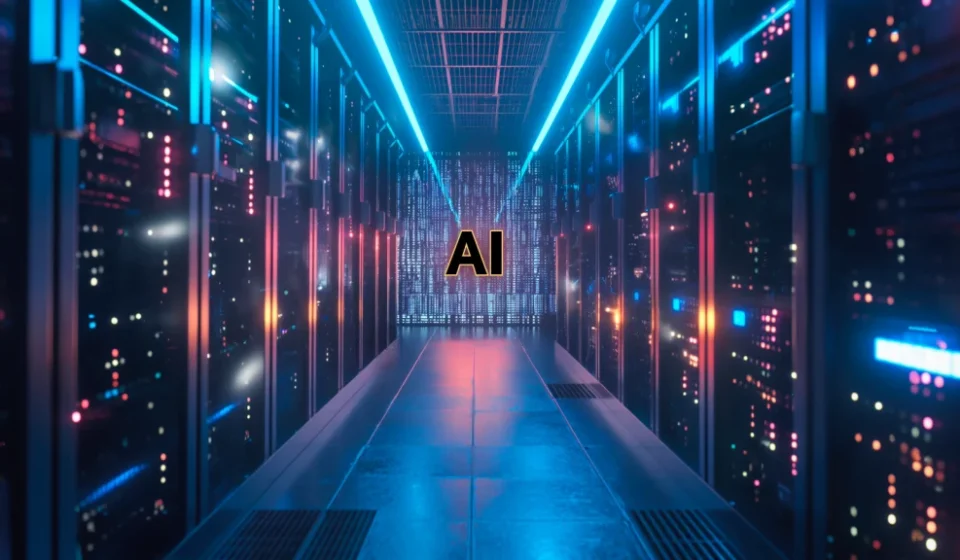

The landscape of artificial intelligence policy in the United States reached a pivotal juncture this week as New York Governor Kathy Hochul enacted legislation that establishes a significant moratorium on the construction of new hyperscale AI data centers. This move makes New York the first state to formally pause the physical expansion of the infrastructure required to power large-scale generative AI. However, the decision has highlighted a profound policy contradiction: within twenty-four hours of signing the restrictive law, Governor Hochul’s administration confirmed it is actively utilizing AI tools to streamline the review of the state’s extensive regulatory books. According to official statements, processes that historically required five years of human labor are now being completed in months through automated systems.
This juxtaposition—seeking the efficiency gains of AI while simultaneously restricting the physical facilities necessary to generate that computing power—marks the beginning of what economists and policy analysts are calling the "Messy Middle." This period is characterized by a disconnect between the rapid adoption of transformative technology and the societal, environmental, and political capacity to host the underlying infrastructure.
Historical Context: The Precedent of Engels’ Pause
To understand the current friction, historians point toward the British Industrial Revolution, specifically the period between 1790 and 1840. During this era, now known among economic historians as "Engels’ Pause," the United Kingdom experienced a massive surge in industrial output and technological innovation. However, for the working class, particularly skilled tradespeople like weavers in Manchester, the transition was catastrophic.
As automated looms replaced hand-weaving, productivity skyrocketed, but real wages for workers remained stagnant for nearly half a century. The "extraordinary leap forward" celebrated by later economists was, for those living through it, a time of displacement, urban overcrowding, and social unrest. It took decades for social institutions, labor laws, and public infrastructure to adapt to the new industrial reality.
Current analysts suggest that the AI revolution is entering a similar "pause" or "Messy Middle." While the long-term potential for global GDP growth is estimated in the trillions, the immediate reality for local governments involves strained power grids, rising utility costs for residents, and the disruption of local labor markets.
The Economic and Infrastructure Trade-offs
The decision in New York is not merely a symbolic gesture but carries significant fiscal implications. The moratorium has effectively stalled a proposed $19.4 billion data center project in Genesee County. This project was expected to be a cornerstone of the regional economy, providing thousands of construction jobs and substantial long-term tax revenue.
The primary driver behind the legislative pushback is the sheer scale of energy consumption required by modern hyperscale facilities. In New York alone, more than 12 gigawatts of future data center capacity are currently in the interconnection queue, waiting for approval to link to the state’s power grid. For context, one gigawatt can power approximately 750,000 homes. The rapid influx of these "energy-hungry" tenants threatens to drive up electricity prices for residential consumers and complicates the state’s transition toward renewable energy goals.
Economist Thomas Sowell’s maxim that "there are no solutions, only trade-offs" is increasingly applicable here. Policymakers are being forced to choose between the long-term productivity gains of being an AI hub and the short-term stability of their local energy markets and community environments.
A Bipartisan Pattern of Resistance
While New York is the first to sign a formal pause into law, the trend of political caution regarding data centers is crossing party lines and geographic boundaries.
In Pennsylvania, Democratic Governor Josh Shapiro, frequently mentioned as a potential 2028 presidential candidate, initially courted data center developers to boost the state’s industrial profile. However, following public outcry regarding potential hikes in utility bills and the environmental impact of large-scale cooling systems, Shapiro’s administration has adopted a more "selective" approach to project approvals.
Similarly, in Texas—the most data-center-friendly state in the nation—Republican Governor Greg Abbott has recently called for restrictions on data center developments in rural and residential areas. While Abbott remains supportive of industrial-corridor development, his pivot reflects a growing necessity to protect his political base from the "noise and resource drain" associated with facilities that often operate 24/7 with minimal permanent onsite staff.
This alignment of Hochul, Shapiro, and Abbott suggests that the political reward for blocking or slowing AI infrastructure is beginning to outweigh the perceived economic benefits of rapid expansion.
The Sixth Prisoner’s Dilemma of the AI Economy
The current political climate introduces what some analysts describe as a "sixth Prisoner’s Dilemma" for the AI era. In game theory, a Prisoner’s Dilemma occurs when individual actors make rational choices for their own benefit that ultimately lead to a suboptimal outcome for the entire group.
The first five dilemmas in AI typically involve corporate competition:
- The Hardware Race: Companies over-ordering chips to prevent being left behind.
- The Talent War: Spiraling salaries for AI engineers.
- Data Acquisition: The aggressive scraping of the internet before access is restricted.
- Safety vs. Speed: Reducing oversight to beat competitors to market.
- Capital Expenditure: Massive spending on R&D without immediate paths to profitability.
The sixth dilemma is political. If every governor or local official acts rationally to protect their specific constituents from higher electricity bills and local disruption, the United States may collectively fail to build the infrastructure necessary to maintain technological leadership. Pennsylvania Senator John Fetterman recently voiced this concern, stating that unilateral pauses in American AI development effectively allow international competitors, specifically China, to seize the strategic advantage.
Market Implications for Investors
The shift in the regulatory environment has immediate consequences for the real estate investment trust (REIT) sector and the broader technology market. Companies with significant exposure to the New York market, such as Equinix (EQIX) and Digital Realty (DLR), are being closely watched by analysts.
If New York’s moratorium serves as a template for other states, the projected timeline for the AI buildout will need to be revised. Investors may need to pivot toward companies that specialize in "edge computing"—smaller, more distributed facilities—or those that focus on states with independent power grids and vast, non-residential land, such as parts of the Midwest or the Intermountain West.
However, the larger risk is not a lack of capital, but a lack of "permittable" land. As the "Messy Middle" deepens, the bottleneck for AI growth is shifting from the availability of GPUs to the availability of power and political permission.
Rising Social Unrest and the "Substitution Effect"
Perhaps the most concerning aspect of the "Messy Middle" is the emergence of physical resistance and political violence. As the economic benefits of AI remain concentrated among tech hubs and investors, the perceived costs are being felt by local communities.
Recent incidents highlight a disturbing trend:
- Indiana: A city councilman’s home was targeted with gunfire following a vote to approve a local data center.
- California: Threats were directed at OpenAI’s headquarters and executive leadership.
- National Security: Federal investigators recently disrupted a plot targeting public events where the perpetrators specifically cited "resource depletion by data centers" as a primary grievance.
Security analysts refer to this as a "substitution effect." As high-level tech CEOs increase their private security details, populist anger is redirected toward "softer targets"—local township officials and city council members who lack protection and whose home addresses are public record. This localized backlash creates a significant chilling effect on the approval of new infrastructure projects.
Outlook: The 2028 Political Tipping Point
As the United States moves toward the 2028 election cycle, the "Messy Middle" is expected to become a central theme in national discourse. Technology experts suggest that the window for "transformational wealth creation" in the current AI cycle remains open for the next two to three years, but the political "expiration date" is approaching.
The tension between AI-driven productivity and human displacement is no longer a theoretical debate for the future. It is a present-day reality manifesting in state legislatures and local town halls. Whether the U.S. can navigate this transition without a prolonged "Engels’ Pause" depends on the ability of both the public and private sectors to address the very real costs of the infrastructure that powers the digital age.
For now, the "Messy Middle" remains a period of high volatility, where the destination of AI abundance is visible on the horizon, but the path to get there is increasingly obstructed by the realities of modern governance and social friction.