
The Evolution of Artificial Intelligence Markets and the Emerging Era of Strategic Mega-Acquisitions

The global technology sector is currently witnessing a fundamental transition in how capital is allocated within the artificial intelligence (AI) ecosystem, moving from an era defined by infrastructure build-out to one increasingly characterized by strategic consolidation. This shift, identified by market analysts as the "second phase" of the AI boom, suggests that the primary drivers of shareholder value are moving away from the providers of hardware and toward the innovators of niche applications and proprietary breakthroughs. As major technology conglomerates amass unprecedented cash reserves, the industry is preparing for a wave of acquisitions reminiscent of the mobile and social media revolutions of the early 2010s.
The Anthropic Case Study and the Venture Capital Catalyst
The current trajectory of AI investment can be traced back to pivotal moves made by venture capital firms before the technology entered the mainstream consciousness. In May 2023, Spark Capital executed a landmark investment in Anthropic, an AI safety and research startup. At the time of the initial $75 million funding round, Anthropic lacked a public ticker symbol and generated negligible revenue. However, within three years, that stake has grown to an estimated paper value of $7 billion, representing a nearly 100-fold return.
This case study serves as a microcosm for the broader AI investment cycle. It highlights a period where private capital provided the necessary fuel for early-stage innovators to scale into multi-billion-dollar entities. However, as these startups—including Anthropic and OpenAI—mature into industry giants, the barrier to entry for new competitors has risen. Consequently, the focus for investors is shifting from identifying the next independent "giant" to identifying the smaller, agile firms that the existing giants must acquire to maintain their competitive edge.
Historical Precedents: The "Instagram Model" of Acquisition
To understand the potential for future AI acquisitions, market historians point to the 2012 acquisition of Instagram by Facebook (now Meta Platforms Inc.). At the time, the $1 billion price tag was widely criticized by Wall Street analysts. Instagram had only 13 employees and no established revenue model. Critics argued that Mark Zuckerberg had overpaid for a simple photo-sharing application.
In retrospect, the acquisition is regarded as one of the most successful strategic moves in corporate history. By 2023, Instagram’s brand value was estimated at over $70 billion, contributing approximately $67 billion in annual revenue to Meta’s bottom line. The acquisition was driven not by a lack of capital on Facebook’s part, but by a lack of time. The social media giant recognized that building a competing mobile-first platform from scratch would take longer than the market would allow, making the acquisition a strategic necessity.
This pattern has repeated across various tech cycles:
- Alphabet (Google): The acquisition of Android in 2005 for an estimated $50 million allowed Google to dominate the mobile operating system market before smartphones became ubiquitous. Similarly, the 2006 purchase of YouTube for $1.65 billion secured its dominance in online video.
- Microsoft: The $7.5 billion acquisition of GitHub in 2018 provided Microsoft with a central role in the cloud-based software development ecosystem.
- Meta (Facebook): The $19 billion acquisition of WhatsApp in 2014 solidified its control over global messaging.
In each instance, the buyers were not purchasing current earnings; they were purchasing "time-to-market" and neutralizing potential future threats.

The $700 Billion AI Arms Race
The financial scale of the current AI boom dwarfs previous technological cycles. In 2024 alone, the "Big Four" technology firms—Amazon, Microsoft, Alphabet, and Meta—are projected to spend a combined $700 billion on capital expenditures. This equates to nearly $2 billion in spending every single day.
A breakdown of projected annual capital projects reveals the intensity of this competition:
- Amazon: Estimated $200 billion.
- Microsoft: Estimated $190 billion.
- Alphabet: Estimated $190 billion.
- Meta Platforms: Estimated $135 billion.
While a significant portion of this capital is currently flowing into hardware and infrastructure—specifically Nvidia chips, high-speed networking, and massive data centers—analysts suggest this is merely the foundation. As infrastructure matures, these companies will face the challenge of differentiation. No single company, regardless of its valuation or cash on hand, can internalize every breakthrough or employ every top-tier AI engineer. This creates a structural necessity for a "buy over build" strategy.
Analyzing the Shift: Phase One vs. Phase Two
The "Phase One" of the AI boom was characterized by a "picks and shovels" investment strategy. Investors who recognized early that AI would require massive amounts of compute power, specialized memory, and sophisticated cooling systems saw significant returns from companies like Nvidia, Broadcom, and Vertiv.
"Phase Two," however, is expected to focus on the application layer and strategic intellectual property. As the largest AI players—now including heavily funded private firms like OpenAI and Anthropic—race to build the "next great computing platform," they are encountering specific technical hurdles. These include data scarcity, energy efficiency, specialized Large Language Model (LLM) architectures, and vertical-specific AI applications (such as those for healthcare or legal services).
The strategic framework for Phase Two involves identifying companies that solve these specific bottlenecks. These smaller innovators are often "pre-IPO" or trading at valuations that do not yet reflect their strategic importance to a potential acquirer.
The Changing Dynamics of Public and Private Markets
A notable shift in the modern tech landscape is the delayed entry of high-growth companies into the public markets. Historically, the Initial Public Offering (IPO) was the starting line for retail investors to participate in a company’s growth. Today, the IPO often marks the conclusion of a company’s primary growth phase.
Space Exploration Technologies Corp. (SpaceX) is frequently cited as an example of this trend. While public interest remains high, much of the value creation occurred during private funding rounds. When companies do eventually go public, they often face significant volatility as early private investors seek liquidity, as seen in various high-profile tech debuts where shares experienced drawdowns shortly after the offering.
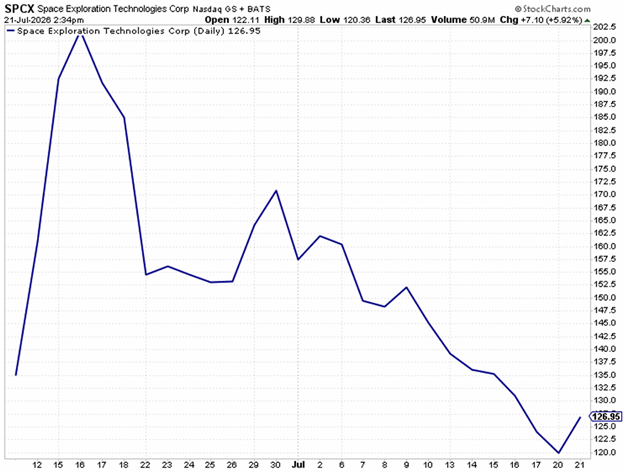
For investors, this means that the "ticker" is no longer the starting line. The most significant value may be captured by those who identify companies that are either destined for a blockbuster IPO or are so vital to the ecosystem that they will be acquired before reaching the public markets.
Regulatory and Economic Implications
While the appetite for acquisitions is high, the regulatory environment presents a complex challenge. Antitrust regulators in the United States (FTC and DOJ) and the European Union have increased scrutiny of "killer acquisitions"—deals where a dominant firm buys a smaller competitor to eliminate a potential threat.
In response, Big Tech has pivoted toward "strategic partnerships" and "acqui-hires." Microsoft’s multi-billion-dollar partnership with OpenAI and its recent hiring of the leadership team from Inflection AI are seen as innovative ways to gain access to technology and talent without triggering traditional merger-and-acquisition (M&A) reviews. These "quasi-mergers" are a hallmark of the current phase, allowing giants to integrate innovation while navigating a hostile regulatory landscape.
However, as the AI race intensifies, analysts believe that the pressure to fully own proprietary technology will eventually outweigh regulatory concerns, leading to a surge in traditional M&A activity. The objective will be to own the "full stack" of AI—from the chips and data centers to the consumer-facing applications.
Conclusion: Preparing for the Next Cycle
The transition from the infrastructure phase to the acquisition phase of the AI boom represents a maturation of the technology. The massive capital expenditures by the world’s largest corporations have created a "gravity well" that will inevitably pull in smaller, innovative firms.
The framework for navigating this new era involves a shift in perspective: rather than asking which companies can build AI from scratch, market participants are increasingly asking which companies possess the unique intellectual property that the giants cannot afford to let their competitors own. As the industry approaches the mid-point of the decade, the ability to identify these "megadeal" targets before they become household names may define the next generation of market leadership.
The upcoming "2026 AI Megadeal" briefings and similar market analyses are expected to provide further clarity on this framework. By following the flow of capital and identifying the technological gaps in the portfolios of the "Magnificent Seven," observers can gain a clearer understanding of how the next phase of the AI revolution will unfold. History suggests that while the giants dominate the headlines, the most profound transformations often occur in the strategic movements happening just beneath the surface of the public markets.