Tesla Grok AI Update Signals Shift Toward Physical Vehicle Integration and Autonomous Control Systems

The automotive landscape reached a significant milestone in the third quarter of 2026 with the release of Tesla’s Summer Update, version 2026.26. This software deployment marks a fundamental transition for Tesla’s integrated artificial intelligence, Grok, moving the system from a passive conversational interface to an active vehicle controller. While early iterations of Grok in Tesla vehicles were characterized by industry analysts as "all talk and no hands," the latest update grants the AI direct agency over the vehicle’s mechanical and electronic systems. This evolution represents a pivotal moment in the broader transition toward "Physical AI," where large language models (LLMs) transcend digital screens to interact directly with the physical world.
Evolution of the Grok Interface: From Chatbot to Controller
When Tesla first introduced Grok into its vehicle lineup in mid-2024, the integration was primarily limited to infotainment functions. Users could engage in complex dialogues, query the AI for historical facts, or request real-time news updates. However, the system remained isolated from the vehicle’s primary control systems. Critics at the time noted that while the AI was sophisticated in its reasoning, it lacked the ability to execute commands that affected the driving environment, such as adjusting the climate or operating hardware components.
With the rollout of version 2026.26, Tesla has bridged this gap. The AI assistant now possesses the capability to manipulate a wide array of vehicle functions through natural language processing. This includes, but is not limited to, managing phone calls, adjusting seat configurations, operating the glovebox, and controlling exterior hardware like windshield wipers, headlights, and side mirrors.
A critical technical advancement in this update is the introduction of multi-intent command processing. Previous voice-control systems in the automotive sector typically required sequential commands—one request followed by a confirmation before the next could be issued. The 2026 update allows for complex, compound instructions. For example, a driver can now issue a single sentence such as, "Fold the mirrors, set the cabin temperature to 68 degrees, and navigate to the nearest charging station," and the AI will execute all three tasks simultaneously.
The Competitive Landscape and the Global Shift to Physical AI
Tesla’s move to integrate LLMs with vehicle hardware is part of a larger global trend toward the "Software-Defined Vehicle" (SDV). While Tesla has long been considered a leader in automotive software, industry analysts from Electrek and Autoblog have noted that the company is currently in a "catch-up" phase regarding deep AI integration.
The Chinese automotive market has been particularly aggressive in this sector. Premium manufacturers such as NIO, Xpeng, and Li Auto have already standardized advanced AI assistants that control nearly every aspect of the vehicle’s interior and exterior environment. In these markets, AI integration is no longer viewed as a luxury feature but as "table stakes"—a baseline requirement for consumer relevance. Even entry-level electric vehicles (EVs) in the Chinese domestic market are increasingly shipping with sophisticated voice-activated controllers that utilize local LLM processing.
The transition toward Physical AI is not merely a convenience feature; it is a shift in how machines are operated. By embedding intelligence into motors, actuators, and sensors, manufacturers are moving away from rigid, pre-programmed menus toward fluid, reasoning-based interactions.
Technical Implications of Physical AI Integration
The term "Physical AI" refers to the fusion of advanced reasoning capabilities with robotic hardware. Unlike generative AI, which operates within the confines of digital text, images, or code, Physical AI must sense the environment, interpret data through a lens of safety and physics, and take real-world actions with tangible consequences.
In the context of a Tesla vehicle, this involves a sophisticated stack of hardware and software:
- Sensors: Cameras and microphones provide the AI with raw data about the vehicle’s internal and external state.
- Reasoning Engine: The Grok model processes natural language and determines the intent of the user.
- Actuators: The AI sends signals to the vehicle’s CAN bus (Controller Area Network) to move physical components like mirrors or adjust electrical currents for heating elements.
This shift is significant because it moves the AI from a "contained" environment to an "embodied" one. When an AI can control a two-ton vehicle, the stakes for accuracy and reliability increase exponentially compared to a chatbot generating an email.
Economic Impact and the $55 Trillion Labor Market
The broader implications of Physical AI extend far beyond the automotive sector. Leading technology figures, including Nvidia CEO Jensen Huang, have identified Physical AI as the next multi-trillion-dollar frontier. The rationale behind this valuation lies in the global labor market.
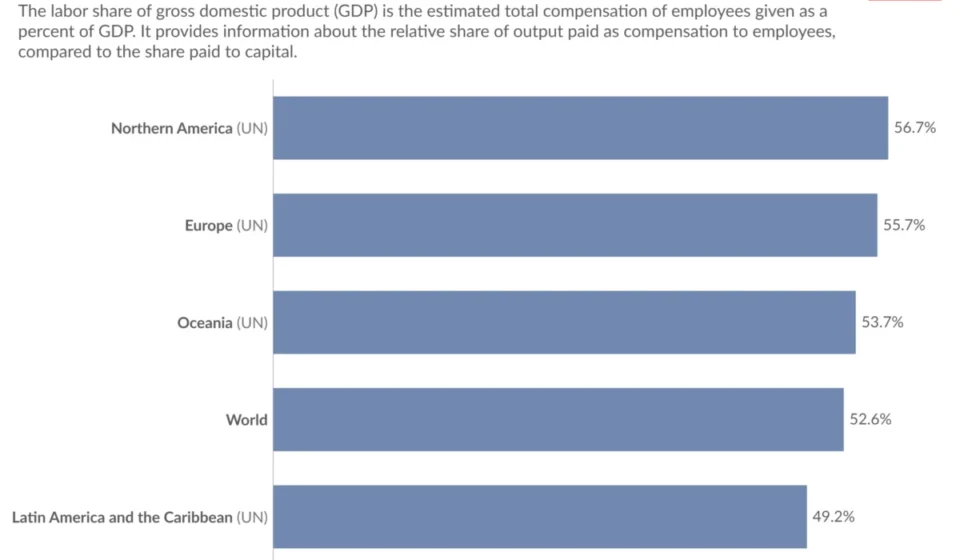
Currently, human labor accounts for roughly 50% to 60% of global GDP, representing an annual expenditure of approximately $55 trillion. While the first wave of AI—the chatbot era—focused on white-collar tasks like data entry, coding, and content creation, Physical AI targets the physical labor sector. This includes manufacturing, logistics, maintenance, and transportation.
Tesla’s integration of Grok is a consumer-facing application of this technology, but the underlying architecture is being mirrored in industrial settings. By automating the "limbs" of a machine through an intelligent "brain," companies aim to reduce the reliance on manual intervention for routine tasks. In the automotive industry alone, the transition to AI-controlled manufacturing and vehicle operation is expected to significantly alter cost structures over the next decade.
Chronology of Tesla’s AI Development
To understand the significance of the 2026.26 update, it is necessary to view it within the timeline of Tesla’s broader AI ambitions:
- 2021: Tesla announces the "Tesla Bot" (later named Optimus), signaling an intent to move into humanoid robotics.
- 2023: Grok is unveiled by xAI, Elon Musk’s AI firm, with a focus on real-time data access and "edgy" conversational capabilities.
- Summer 2024: Grok is first introduced to Tesla vehicles as an infotainment enhancement, primarily functioning as a voice-activated search engine.
- Early 2025: Tesla begins internal testing of "End-to-End" neural networks for vehicle control, aiming to replace manual coding with AI-learned behaviors.
- Summer 2026: Version 2026.26 is released, marking the first time Grok is given direct control over vehicle hardware across the global fleet.
Convergence Across the Musk Ecosystem
Analysts observe that the 2026.26 update is not an isolated event but part of a convergent strategy across Elon Musk’s various enterprises. The Grok models powering the vehicle interface are the same foundational models being utilized for Optimus, Tesla’s humanoid robot.
Recent reports indicate that production lines for the next generation of Optimus are currently being installed at Tesla’s Fremont factory. These robots are designed to use the same "Physical AI" logic to navigate factory floors and perform assembly tasks. Furthermore, the Starlink satellite network provides the low-latency connectivity required to update and manage these intelligent systems globally.
This ecosystem creates a feedback loop: data gathered from millions of Tesla vehicles on the road helps train the AI models, which are then refined for use in robotics and factory automation. The car, in this framework, is essentially a "robot on wheels," serving as a mass-market testbed for the intelligence that will eventually power a wide range of autonomous machines.
Industry Reactions and Future Outlook
The reaction from the tech and automotive press has been cautiously optimistic. While Electrek described the update as "the piece Grok was missing," others have raised questions regarding privacy and safety. As AI gains the ability to control physical hardware, the cybersecurity of the vehicle becomes even more paramount. A "hallucination" in a chatbot is a minor inconvenience; a "hallucination" in a system that controls windshield wipers or headlights during a storm could be a safety hazard.
Tesla has addressed these concerns by stating that critical driving functions remain siloed from the conversational AI to prevent unintended activations. However, the trajectory is clear: the boundary between the "driver" and the "assistant" is blurring.
As we move toward the final quarter of 2026, the automotive industry will be watching the performance of version 2026.26 closely. If successful, it will likely trigger a wave of similar updates from European and American legacy automakers who are currently struggling to match the software integration of Tesla and their Chinese counterparts.
The shift from "Screen AI" to "Physical AI" represents more than just a software update. It is a fundamental change in the relationship between humans and machines. By handing the "keys" to the AI, Tesla is betting that the future of transportation lies not just in electrification, but in the total embodiment of intelligence within the machine. This transition is expected to influence everything from vehicle design—where physical buttons may eventually disappear entirely—to the global supply chain for sensors, actuators, and high-performance automotive chips.