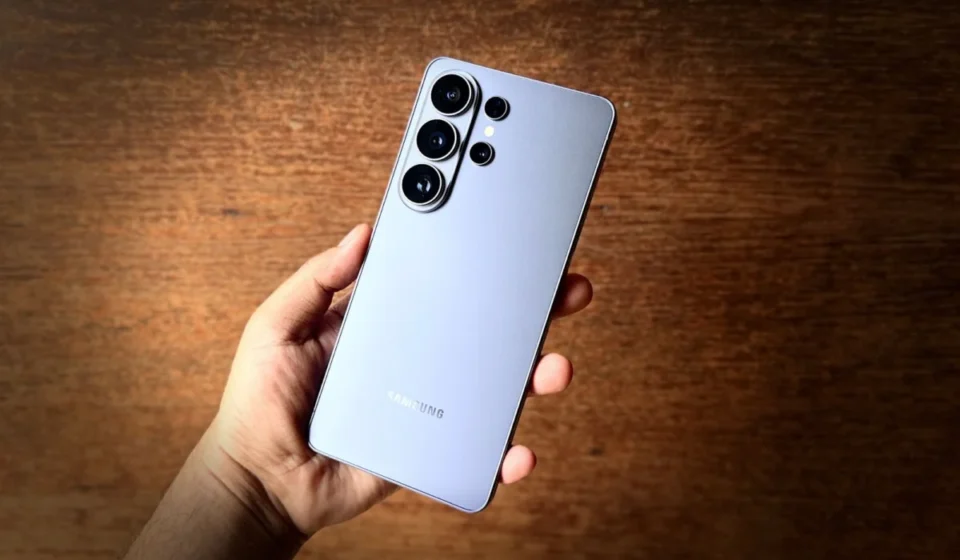
Galaxy S27 Ultra could reach 5,700mAh as Samsung explores silicon-carbon batteries

Samsung’s upcoming flagship smartphone, the Galaxy S27 Ultra, is reportedly set to receive a significant battery capacity upgrade, potentially reaching up to 5,700mAh. This advancement is attributed to the company’s increasing adoption of silicon-carbon battery technology, a move previously hinted at with the Galaxy Z Fold 8 series. This development signals a renewed focus on addressing one of the most persistent user concerns in premium smartphones: battery longevity.
The latest insights, emerging from a GalaxyClub report, suggest that both the Galaxy S27 Pro and the S27 Ultra will see substantial increases in their battery cells. The Galaxy S27 Pro is anticipated to house a rated battery capacity of 5,087mAh, which is likely to be marketed as 5,200mAh. More notably, the Galaxy S27 Ultra is tipped to feature a 5,534mAh rated cell, potentially advertised as either 5,700mAh or even 5,800mAh. This would mark a crucial milestone, pushing Samsung’s top-tier Ultra model beyond the 5,000mAh threshold that has been a consistent benchmark for several generations.
The Evolution of Samsung’s Battery Strategy
Samsung’s approach to battery technology in its flagship Galaxy S series has been characterized by a steady, albeit sometimes incremental, evolution. For years, the company has relied on traditional lithium-ion batteries, typically capping the capacity of its top-tier models around the 5,000mAh mark. While these batteries have been optimized for performance and longevity within their technological constraints, the demand for longer usage times, driven by increasingly powerful processors, brighter displays, and more sophisticated camera systems, has continued to grow.

The introduction of silicon-carbon battery technology represents a significant technological leap. This innovative approach involves replacing a portion of the graphite in a lithium-ion battery’s anode with silicon. Silicon boasts a theoretical energy density significantly higher than graphite, meaning it can store more lithium ions – and therefore more energy – within the same physical volume. This characteristic is crucial for smartphone manufacturers striving to increase battery capacity without making devices noticeably thicker or heavier.
The initial foray of this technology into Samsung’s foldable lineup, specifically the Galaxy Z Fold 8 series, indicates a deliberate and cautious strategy. Foldable phones present unique engineering challenges due to their complex internal structures and the need to accommodate flexible displays. By first implementing silicon-carbon batteries in these devices, Samsung likely aims to thoroughly test and refine the technology’s safety, long-term reliability, and overall performance in a demanding form factor. The subsequent integration into the more traditional slab-style Galaxy S series suggests a growing confidence in the technology’s maturity and its potential to deliver tangible user benefits.
Silicon-Carbon Technology: A Deeper Dive
The scientific underpinnings of silicon-carbon batteries are rooted in the electrochemical properties of silicon. When used as an anode material, silicon can alloy with lithium ions, forming lithium-silicon compounds. This alloying process allows silicon to hold a far greater number of lithium ions compared to graphite, which typically intercalates (absorbs) lithium ions between its layers. This enhanced ion storage capacity directly translates to higher energy density.

However, the widespread adoption of silicon in battery anodes has faced historical challenges. One of the primary hurdles has been the significant volume expansion and contraction of silicon during charging and discharging cycles. This repeated swelling and shrinking can lead to mechanical stress, pulverization of the silicon particles, and ultimately, a rapid degradation of battery performance and lifespan.
The development of silicon-carbon composites aims to mitigate these issues. By combining silicon with carbon materials (such as carbon nanotubes, graphene, or carbon black), manufacturers can create a more stable electrode structure. The carbon component can help to buffer the volume changes of silicon, improve its electrical conductivity, and provide a robust framework that enhances cycle life. This synergistic approach allows for the exploitation of silicon’s high energy density while addressing its inherent structural instabilities.
The implications of this technology for the mobile industry are profound. As smartphone components become more power-hungry, the battery capacity has become a critical bottleneck for innovation. Silicon-carbon batteries offer a pathway to overcome this limitation, potentially enabling devices with significantly longer battery life without compromising on design or portability. This could lead to a paradigm shift in how users interact with their devices, reducing the anxiety associated with battery drain and enabling more intensive usage patterns, such as prolonged gaming sessions, high-definition video streaming, and advanced AR/VR applications.

Potential Impact on User Experience and Competition
The rumored battery upgrades for the Galaxy S27 Pro and S27 Ultra are not merely incremental improvements; they represent a potential turning point for Samsung’s flagship devices. For years, users have expressed a desire for more substantial battery life, especially in the premium segment where expectations for all-around performance are highest. An increase to 5,700mAh or more on the S27 Ultra could translate into a full day of heavy usage, or even extend into a second day for moderate users, significantly enhancing the overall user experience.
This enhanced battery performance could also have a competitive edge. While many Android manufacturers have been experimenting with larger battery capacities and faster charging technologies, Samsung has historically prioritized a balanced approach, often balancing battery size with device thickness and premium design. The adoption of silicon-carbon technology allows Samsung to increase capacity without necessarily compromising these design principles.
Furthermore, the move towards silicon-carbon batteries aligns Samsung with technological advancements already being explored and implemented by some Chinese manufacturers. Companies like Vivo and Xiaomi have already showcased smartphones with batteries exceeding 7,000mAh, leveraging similar advanced battery chemistries. By adopting silicon-carbon technology, Samsung can ensure it remains competitive in a rapidly evolving landscape where battery endurance is increasingly becoming a key differentiator.

The cautious approach Samsung is reportedly taking with silicon-carbon batteries, as evidenced by its initial implementation in foldables and the projected capacities for the S27 series, suggests a commitment to long-term viability and user satisfaction. Unlike a rapid push for the absolute highest capacities, this measured rollout prioritizes safety, battery health, and consistent performance over time. This strategy could build greater consumer trust in the new technology, setting a precedent for future advancements.
Accompanying Hardware Enhancements: Camera and Beyond
Beyond the battery, the Galaxy S27 series is also rumored to receive notable upgrades in its camera systems, further solidifying its position as a premium smartphone offering. A separate report from WinFuture indicates that both the S27 Pro and S27 Ultra could feature Sony’s IMX855 sensor for their ultrawide cameras. This 1/2.55-inch sensor is a step up from the 50MP Samsung ISOCELL JN3 found in the Galaxy S26 Ultra, potentially offering improved low-light performance, dynamic range, and detail capture for ultrawide shots.
The front-facing cameras are also expected to see improvements. Both the S27 Pro and Ultra might be equipped with a new 16MP Samsung front camera that includes autofocus capabilities. This addition is particularly significant for selfie enthusiasts and those who utilize their front cameras for video calls, as autofocus ensures sharper and more consistently focused images. Rumors suggest that the Galaxy S27 Pro might even incorporate optical image stabilization (OIS) for its selfie camera, a feature rarely seen in front-facing camera modules, which would further enhance the quality of self-portraits and videos.

For the standard Galaxy S27 and S27+, details about their zoom cameras remain less clear. However, it is anticipated that they will retain a 50MP main camera with OIS and a 12MP ultrawide lens, maintaining a strong core camera setup for the mid-tier flagships. The consistency in camera hardware across the Pro and Ultra models, with specific enhancements for the top-tier device, reflects Samsung’s tiered product strategy.
The integration of these advanced camera sensors, coupled with the potential for enhanced battery life, paints a picture of a significantly upgraded Galaxy S27 lineup. These improvements address key areas of user demand and competition, positioning Samsung to maintain its strong presence in the premium smartphone market.
Looking Ahead: A Prudent Rollout and Future Implications
It is crucial to reiterate that these specifications are based on leaks and rumors, and Samsung has yet to officially confirm any details regarding the Galaxy S27 series. The company’s product development cycles are dynamic, and hardware specifications can undergo changes before a device’s official launch. Samsung’s major product unveil events, such as the Galaxy Unpacked series, typically occur at specific times of the year, with the S series usually being announced in the early part of the year. The S27 lineup is therefore still several months away from its official debut, leaving ample room for adjustments.
However, the consistent reporting from multiple sources regarding silicon-carbon battery technology and increased capacities suggests a strong likelihood of these advancements materializing. Samsung’s strategic decision to first implement this technology in its foldable devices, known for their technical complexity, speaks to a measured and deliberate approach. This strategy is likely designed to ensure that the technology is robust, reliable, and meets Samsung’s stringent quality standards before wider deployment.
The broader implications of Samsung’s move towards silicon-carbon batteries extend beyond just the Galaxy S27 series. It signals a significant investment in next-generation battery technology that could influence future product lines across its entire mobile portfolio, including wearables and potentially even laptops. As the demand for longer battery life continues to rise across all electronic devices, the successful integration of silicon-carbon technology could pave the way for a new era of portable electronics that offer unprecedented endurance and performance. The industry will be closely watching Samsung’s rollout and the real-world performance of these advanced batteries.