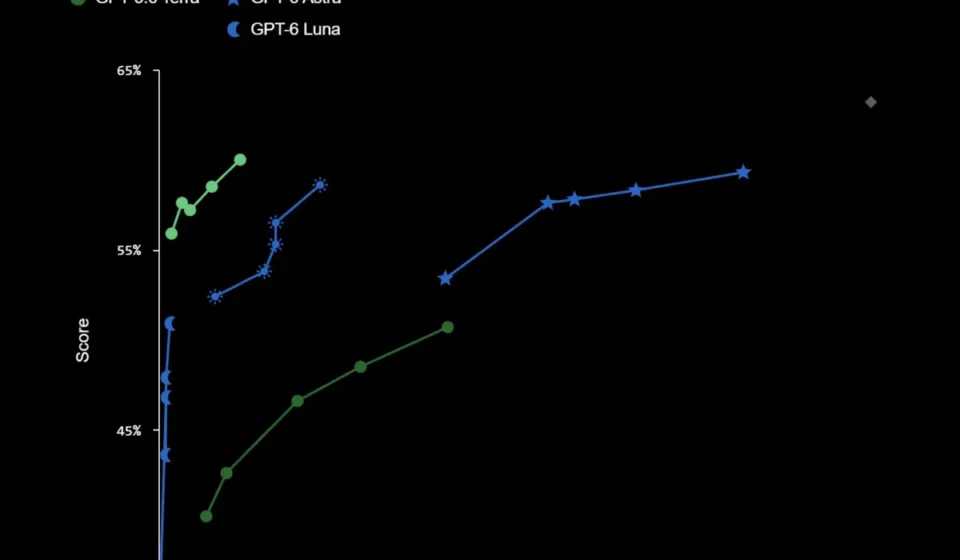

The relentless pace of artificial intelligence development continues its exponential trajectory, with breakthroughs often focusing not just on raw power but also on efficiency and accessibility. In a significant move that underscores this evolving paradigm, OpenAI has announced the release of GPT-6.1 Terra, its latest large language model designed to offer a compelling balance of high performance and remarkably low operational cost. This new iteration signifies a strategic shift within the AI industry, where optimizing resource utilization without sacrificing capability is becoming paramount for widespread adoption and sustainable growth.
The unveiling of GPT-6.1 Terra arrives less than a month after the introduction of GPT-6.1 Sol, and it marks another critical milestone in OpenAI’s ongoing efforts to diversify its model offerings to meet a broad spectrum of user needs. Terra builds upon the foundation laid by its predecessor, GPT-5.6 Terra, launched earlier this year, by delivering substantial improvements in both computational efficiency and output quality. This latest model is positioned as a versatile solution, bridging the gap between ultra-high-performance but resource-intensive models and highly economical, albeit less powerful, alternatives.
The Race for AI Efficiency: A Shifting Paradigm
For years, the primary objective in AI research and development was often to achieve the highest possible performance, pushing the boundaries of what models could accomplish. This quest led to the creation of increasingly vast and complex neural networks, requiring immense computational power for both training and inference. While these "heavyweight" models, like OpenAI’s GPT-6 Astra, demonstrate unparalleled capabilities, their operational costs and computational demands can be prohibitive for many applications and users.
However, the industry is increasingly recognizing that raw power alone is not sufficient for widespread, practical application. The economic realities of deploying AI at scale, coupled with growing concerns about energy consumption and environmental impact, have propelled efficiency to the forefront of innovation. Developers and businesses are actively seeking models that can deliver robust performance for specific tasks at a fraction of the cost, making advanced AI more accessible and sustainable. This strategic pivot towards efficiency is not merely a cost-cutting measure but a fundamental shift towards democratizing AI, enabling smaller businesses, independent developers, and resource-constrained environments to leverage cutting-edge capabilities.
Introducing GPT-6.1 Terra: Balancing Power and Economy
GPT-6.1 Terra is designed precisely to address this demand. Positioned strategically within OpenAI’s burgeoning family of 6.1 models, Terra aims to strike an optimal balance between the high-end capabilities of GPT-6.1 Sol and the extreme cost-effectiveness of GPT-6 Luna. As OpenAI itself describes, Terra endeavors to find the "just right" spot, offering performance comparable to its more expensive siblings while significantly reducing the financial burden.
According to preliminary benchmarks released by OpenAI, GPT-6.1 Terra manages to achieve performance metrics that closely rival those of GPT-6.1 Sol across a variety of common tasks, including natural language understanding, content generation, and code assistance. What truly sets Terra apart, however, is its unprecedented efficiency. OpenAI reports that the API cost for GPT-6.1 Terra is a remarkable 50% lower than that of its direct predecessor, GPT-5.6 Terra. This dramatic reduction in operational expenditure represents a substantial leap forward, making sophisticated AI more economically viable for a wider range of applications.
A Deeper Dive into the Model Lineup
To fully appreciate the significance of GPT-6.1 Terra, it’s essential to understand its place within OpenAI’s evolving model hierarchy:
- GPT-6 Astra: Currently the flagship "heavyweight" model, Astra represents the pinnacle of OpenAI’s capabilities in terms of raw power and intelligence. However, its development for a 6.1 iteration has reportedly faced security concerns, delaying its broader release and highlighting the complexities associated with managing such advanced systems. Astra is typically reserved for the most demanding, mission-critical applications where absolute performance trumps cost considerations.
- GPT-6.1 Sol: Introduced recently, Sol was designed as a high-performance alternative to Astra, offering a significant portion of Astra’s capabilities at a more manageable cost. It targets users who require robust performance but need a more budget-friendly option than the unreleased 6.1 Astra.
- GPT-6 Luna: At the other end of the spectrum, Luna prioritizes minimal operational costs above all else. While still highly capable, its design choices are geared towards scenarios where cost-efficiency is the primary driver, making it suitable for high-volume, less complex tasks where minor performance compromises are acceptable.
- GPT-6.1 Terra: This is where Terra shines. It aims to bridge the performance gap between Sol and Luna, providing near-Sol-level performance at a significantly reduced cost, often approaching Luna’s efficiency. Its objective is to deliver a highly capable model that is also exceptionally economical, making it ideal for a vast middle ground of enterprise and developer use cases.
The strategic differentiation of these models allows OpenAI to cater to a diverse market, from research institutions pushing the boundaries of AI to startups seeking cost-effective solutions for their nascent products.
Performance and Cost Breakthroughs: Data and Benchmarks
OpenAI’s internal evaluations highlight several key areas where GPT-6.1 Terra excels:
- Cost Reduction: As noted, Terra slashes API costs by 50% compared to GPT-5.6 Terra. Furthermore, it runs at roughly half the cost of GPT-6.1 Sol, while delivering comparable performance in many benchmarks. This positions Terra as a highly attractive option for organizations managing tight budgets or operating at scale.
- Speed and Throughput: Efficiency is not just about cost per token; it also encompasses the speed at which tasks are completed. OpenAI reports that GPT-6.1 Terra completes "computer-use tasks" – a category encompassing tasks requiring tool utilization, API calls, and complex reasoning – three times faster than both the current Astra and Sol models. This significant speed improvement translates directly into reduced latency for applications and higher throughput for batch processing, further enhancing its cost-effectiveness in real-world deployments.
- Reduced Error Rates: A common challenge with more efficient or smaller models can be a compromise in accuracy or an increased propensity for "hallucinations" (confidently incorrect responses). OpenAI states that Terra demonstrates "significantly lower error rates" than GPT-6 Luna. While specific percentages were not provided, this indicates a marked improvement in reliability and factual consistency, a crucial factor for enterprise applications where accuracy is paramount. In some complex reasoning tasks, Terra’s performance even "ekes by Astra," suggesting that in certain specific domains, its optimized architecture can outperform the larger model, particularly when speed is also a factor.
These combined improvements in cost, speed, and accuracy make GPT-6.1 Terra a compelling offering for a wide array of applications, from intelligent chatbots and customer service automation to sophisticated content generation and data analysis.
Technical Underpinnings of Enhanced Efficiency
While OpenAI has not divulged the granular technical details of GPT-6.1 Terra’s architecture, the improvements likely stem from a combination of advanced techniques:

- Model Distillation: This process involves training a smaller, "student" model to replicate the behavior of a larger, more complex "teacher" model. The student model learns to produce similar outputs with significantly fewer parameters and computational resources.
- Optimized Architectures: Continuous research in neural network design leads to more efficient architectures that can achieve similar performance with fewer layers or parameters, or with more efficient processing pathways.
- Improved Training Methodologies: More sophisticated training algorithms and data curation techniques can lead to models that learn more effectively and generalize better, requiring less "over-engineering" in their architecture.
- Hardware and Software Co-optimization: OpenAI’s close collaboration with Microsoft and its extensive cloud infrastructure likely allows for deep optimizations at the hardware and software levels, squeezing more performance out of existing resources.
- Quantization: Reducing the precision of numerical representations (e.g., from 32-bit floating point to 16-bit or 8-bit integers) within the model can significantly reduce memory footprint and computational requirements during inference, often with minimal impact on accuracy.
These advancements collectively contribute to Terra’s ability to deliver high performance at a fraction of the cost and speed of its predecessors and contemporaries.
Implications for Developers and Enterprises
The release of GPT-6.1 Terra holds significant implications for the broader AI ecosystem:
- Enhanced Accessibility for Startups and SMEs: The drastically reduced API costs will make advanced AI capabilities more accessible to startups, small and medium-sized enterprises (SMEs), and individual developers who might have been deterred by the operational expenses of more powerful models. This can foster innovation and broaden the adoption of AI across various industries.
- Scalability for Enterprise Applications: Larger enterprises can now deploy AI solutions at a greater scale without incurring prohibitive costs. For applications requiring high-volume processing, such as automated customer support, personalized marketing, or data analysis pipelines, Terra offers an economically viable path to scaling AI.
- Faster Development Cycles: The increased processing speed means developers can iterate faster during testing and deployment, leading to quicker development cycles and reduced time-to-market for AI-powered products and services.
- Diverse Use Cases: With a finely tuned balance of performance and cost, Terra is well-suited for a wide range of applications, including:
- Customer Service: Powering advanced chatbots and virtual assistants that provide accurate and quick responses.
- Content Creation: Generating marketing copy, summaries, articles, and social media content efficiently.
- Developer Tools: Assisting with code generation, debugging, and documentation.
- Data Analysis: Summarizing complex reports, extracting insights, and performing sentiment analysis.
- Education: Creating personalized learning materials and interactive tutoring systems.
- Strategic Advantage for OpenAI: By offering a more granular spectrum of models tailored to specific cost-performance requirements, OpenAI strengthens its position in the highly competitive AI market, attracting a wider user base and solidifying its platform as a versatile foundation for AI innovation.
OpenAI’s Strategic Vision: Statements and Outlook
While specific executive quotes regarding GPT-6.1 Terra were not available at the time of this report, the launch aligns perfectly with OpenAI’s stated mission to ensure that artificial general intelligence (AGI) benefits all of humanity. This often translates into making powerful AI tools accessible, reliable, and economically viable for a broad audience.
It can be inferred that OpenAI leadership views efficiency as a cornerstone of responsible AI deployment. A hypothetical statement from an OpenAI executive, perhaps Mira Murati, CTO, might emphasize: "Our commitment to advancing AI is matched by our dedication to making these powerful tools universally accessible. GPT-6.1 Terra is a testament to this philosophy, delivering top-tier performance at an unprecedented level of efficiency. We believe this will unlock a new wave of innovation, enabling developers and businesses globally to integrate advanced AI into their operations without prohibitive costs."
Sam Altman, OpenAI CEO, might add: "The future of AI isn’t just about building bigger models; it’s about building smarter, more accessible, and more sustainable ones. Terra represents a significant step towards democratizing access to cutting-edge AI, allowing more people to harness its transformative power."
These inferred statements reflect the broader industry trend and OpenAI’s consistent messaging regarding accessibility and impact.
Competitive Landscape and Future Directions
The introduction of GPT-6.1 Terra also intensifies the competitive landscape in the large language model space. Companies like Google with its Gemini series, Anthropic with Claude, and Meta with Llama are all vying for market share by developing their own powerful and efficient models. OpenAI’s strategy of offering a highly diversified model lineup, with distinct cost-performance profiles, allows it to effectively compete across different market segments.
Google’s recent focus on optimizing Gemini models for various device types and applications (e.g., Nano, Pro, Ultra) mirrors OpenAI’s approach of offering specialized solutions. Similarly, Anthropic’s emphasis on safety and interpretability alongside performance showcases another dimension of competition. Terra’s launch signals that the battle for AI dominance is increasingly being fought not just on raw intelligence, but on practical considerations such as cost, speed, and tailored utility.
Looking ahead, the trend towards highly efficient and specialized AI models is expected to continue. Future developments will likely include even greater optimization, the integration of multi-modal capabilities into more economical models, and further advancements in model distillation and compression techniques. The goal will remain consistent: to bring increasingly sophisticated AI capabilities to a broader user base, powering a new generation of intelligent applications and services across every sector.
Availability
For those eager to harness the capabilities of GPT-6.1 Terra, access has commenced today. The model is being rolled out to users of ChatGPT Work and Codex, and is available for Plus, Pro, Enterprise, and Edu subscribers. This broad initial rollout suggests OpenAI’s confidence in Terra’s stability and its readiness for diverse, real-world applications. Especially for existing users of GPT-6.1 Sol who have appreciated its performance, Terra presents an irresistible proposition: very similar capabilities, but at a significantly reduced cost, making it an invaluable addition to their AI toolkit.
In conclusion, GPT-6.1 Terra is more than just another model release; it represents a strategic evolution in how advanced AI is developed, deployed, and consumed. By striking an impressive balance between high performance and unparalleled efficiency, OpenAI is not only expanding the reach of its cutting-edge technology but also setting a new benchmark for accessible and sustainable AI innovation in the years to come.