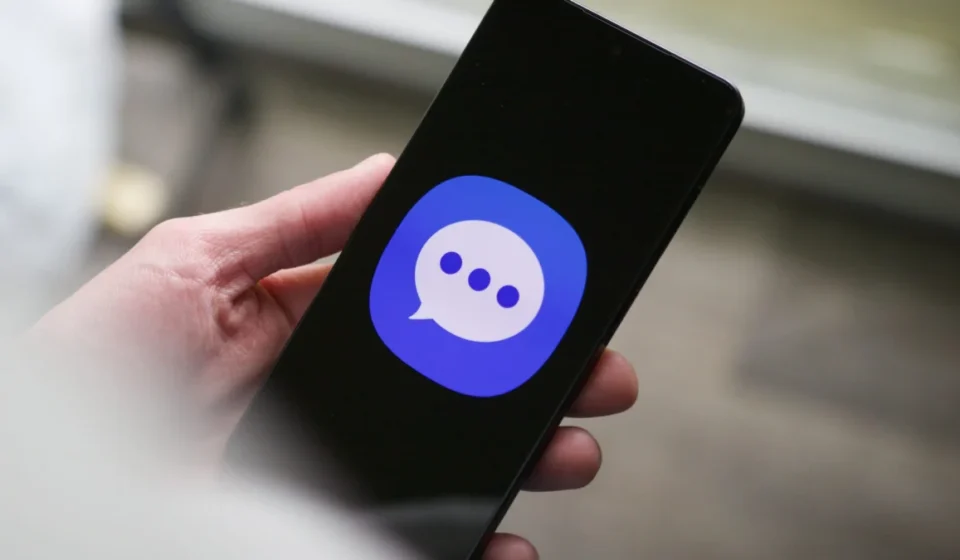
OzarksMade Launches "Messages" App, Offering Galaxy Users a Familiar Alternative After Samsung Messages Discontinuation

The recent official discontinuation of Samsung Messages in the United States has left a significant void for long-term Samsung Galaxy users, many of whom have expressed disappointment over the forced transition to Google Messages. While Google’s offering is robust and widely adopted, its distinct interface and user experience diverge from the deeply integrated aesthetic of Samsung’s One UI, which had defined the native messaging application for years. In response to this palpable user sentiment, a new third-party application, "Messages by OzarksMade," has emerged, aiming to meticulously recreate the familiar Samsung Messages experience, offering a potential lifeline to those resistant to adopting Google’s default. This development underscores the strong user loyalty to OEM-specific software experiences and the challenges inherent in standardizing core functionalities across the Android ecosystem.
The Shifting Sands of Android Messaging: Samsung’s Retreat
Earlier this month, Samsung officially pulled the plug on its proprietary messaging application, Samsung Messages, for users in the U.S. This decision was not an abrupt one but rather the culmination of a strategic shift that has been unfolding within the Android landscape for several years. Historically, Android device manufacturers, including Samsung, developed and pre-installed their own suite of core applications – dialers, contacts, calendars, and messaging apps – to differentiate their devices and offer a cohesive user experience tailored to their respective UIs, such as Samsung’s One UI. Samsung Messages, with its clean, intuitive design and seamless integration into the Galaxy ecosystem, was a prime example of this strategy. It allowed for deep customization, themes, and interactions that resonated with its user base, distinguishing it from generic Android applications.
However, the broader industry trend, largely driven by Google, has been towards greater standardization and unification, particularly concerning crucial communication protocols. Google has been aggressively pushing for the widespread adoption of Rich Communication Services (RCS) as the modern successor to SMS and MMS, aiming to provide an iMessage-like experience for Android users, complete with read receipts, typing indicators, high-quality media sharing, and enhanced group chats. To achieve this, Google has invested heavily in its own "Google Messages" application, positioning it as the universal default for RCS on Android. This push included striking partnerships with various OEMs, encouraging them to adopt Google Messages as their stock messaging app.
For Samsung, a pivotal moment arrived in 2019 when it began collaborating more closely with Google on messaging, leading to a gradual integration of Google’s RCS backend into Samsung Messages. While this initially allowed Samsung Messages users to benefit from RCS features, the ultimate trajectory pointed towards a full embrace of Google Messages. The rationale for Samsung’s full pivot is multi-faceted: it reduces redundant development efforts, aligns with Google’s vision for a unified Android messaging experience, and potentially streamlines updates and feature rollouts for RCS. However, for a significant segment of its loyal customer base, the transition represents a loss of familiarity and a distinct part of the "Samsung experience." Users accustomed to the specific layout, color schemes, notification behaviors, and subtle design cues of Samsung Messages now face a learning curve with Google Messages, which, while functional, presents a different visual and interactive paradigm. This move also reflects a broader trend where Google’s core services and applications are increasingly becoming the default across the Android ecosystem, sometimes at the expense of OEM-specific alternatives.
OzarksMade’s "Messages": A Bid for Familiarity
In this landscape of strategic shifts and user disquiet, "Messages by OzarksMade" emerges as a direct response to a perceived market demand. The app’s developers explicitly state their intention: to cater to One UI and Galaxy users who cherish the Samsung messaging experience and are reluctant to switch to Google Messages’ different design philosophy. The most compelling aspect of OzarksMade’s offering, as highlighted by initial screenshots and developer statements, is its striking resemblance to the discontinued Samsung Messages. From the overall interface layout to the specific iconography and even the application icon itself, the app is designed to evoke a sense of immediate familiarity and continuity for former Samsung Messages users. This deliberate aesthetic mirroring is the app’s primary selling point, aiming to reduce the friction of transition by providing a near-identical visual and navigational experience.
Beyond superficial resemblance, OzarksMade’s "Messages" app also promises core messaging functionalities essential for a modern communication tool. The developer claims support for standard SMS (Short Message Service) and MMS (Multimedia Messaging Service), which remain the backbone of text communication, especially when advanced data-based messaging is unavailable. Crucially, it also integrates group messaging capabilities, a feature vital for social and collaborative interactions. The inclusion of scheduled messages, allowing users to compose and pre-set messages for future delivery, and local backups, offering a degree of data control and recovery, further positions it as a comprehensive alternative.
However, the implementation of RCS (Rich Communication Services), the modern standard for advanced messaging on Android, introduces a unique technical nuance. OzarksMade’s app supports RCS through what it terms "Companion Mode." This mode is designed to leverage Google Messages in the background, acting as an intermediary to facilitate RCS functionalities. The necessity for this workaround stems from a fundamental architectural limitation: third-party developers do not have direct access to Google’s proprietary RCS infrastructure. Google, having invested heavily in its RCS backend and E2EE (end-to-end encryption) within Google Messages, maintains tight control over this critical communication layer. Therefore, for "Messages by OzarksMade" to offer RCS, it must essentially "piggyback" on Google Messages, acting as a custom frontend for Google’s underlying service. This approach ensures compatibility with the broader RCS network but also introduces a dependency that could impact performance, battery life, and potentially the seamlessness of the user experience. For users who prefer to avoid Google Messages entirely, the app also offers a "standalone mode" dedicated solely to SMS and MMS, providing a basic, privacy-focused alternative without the complexities of RCS integration.
Initial Impressions and Cautionary Considerations
As of the current reporting, "Messages by OzarksMade" is available for beta sign-ups through the Google Play Store, and a full official release is anticipated with a modest price tag of $0.99. Given its nascent stage, comprehensive hands-on reviews and long-term user feedback are still pending. Consequently, an objective assessment of its real-world performance, stability, and reliability remains to be fully established. As with any new application, particularly one that handles sensitive personal communications like text messages, users are advised to exercise a degree of caution before designating it as their default messaging client.
Several critical aspects warrant consideration. Firstly, the technical implications of the "Companion Mode" for RCS are significant. While innovative, routing messages through Google Messages raises questions about potential latency, the additional processing overhead, and potential battery consumption. Users might experience a slight delay in message delivery or a higher drain on their device’s power compared to a native, fully integrated solution. Furthermore, the dependency on Google Messages for RCS means that any changes or updates to Google’s app could potentially affect the functionality of OzarksMade’s "Messages." The user experience might not be entirely seamless, requiring Google Messages to be installed and potentially running in the background for full RCS functionality.
Secondly, the security and privacy posture of a new third-party messaging app are paramount. While the developer’s website may offer reassurances, it is crucial for users to understand how their data, including message content, contact information, and usage patterns, is handled. Official applications from major OEMs like Samsung or Google undergo rigorous security audits and adhere to established privacy policies. A smaller, independent developer might face greater challenges in demonstrating the same level of security assurance and transparency. Users should scrutinize the app’s permissions requests and privacy policy before entrusting it with their communications.
Finally, the long-term viability and support for "Messages by OzarksMade" are open questions. Maintaining a messaging application in the rapidly evolving Android ecosystem requires continuous updates, bug fixes, and adaptation to new Android versions and device specificities. A one-time purchase model for a nominal fee might present challenges for sustained development and support, especially if the user base remains relatively niche. The app’s future success will depend not only on its initial functionality but also on the developer’s commitment to ongoing maintenance and responsiveness to user needs.
Legal Scrutiny and Intellectual Property Implications
The deliberate and extensive visual resemblance of "Messages by OzarksMade" to the discontinued Samsung Messages, from its interface elements to its app icon, raises potential legal concerns regarding intellectual property. While the developer states the app is "inspired by" Samsung Messages, the degree of similarity could be interpreted as crossing the line into infringement of Samsung’s intellectual property rights. These rights could include trademark (for logos and branding elements), copyright (for user interface design and graphical assets), and potentially trade dress (for the overall "look and feel" of the application).
Samsung, as a global technology giant, rigorously protects its brand identity and proprietary designs. Even if "Messages by OzarksMade" is a small-scale operation, Samsung could issue a cease-and-desist order or initiate legal proceedings if it perceives the app as causing user confusion, diluting its brand, or unfairly leveraging its established design language. The motivation for such action would not necessarily be to stifle innovation but to protect its significant investment in branding and design and to prevent a precedent from being set for unauthorized replication of its software interfaces. The legal precedent in such cases can be complex, often hinging on whether the similarities are functional (and thus less protected) or purely aesthetic and distinctive (and thus more protected). The fact that the app is explicitly marketed as a "Samsung Messages substitute" based on its visual fidelity only amplifies this potential for legal challenge. The developer would need to demonstrate that their design choices are either distinct enough or fall within acceptable parameters of inspiration rather than outright copying. The longevity of this app in its current form could very well depend on Samsung’s stance and whether it chooses to pursue legal action.
Broader Implications for the Android Ecosystem
The emergence of "Messages by OzarksMade" and the context surrounding it highlight several broader trends and implications within the Android ecosystem. Firstly, it underscores the persistent desire among Android users for choice and customization. While Google’s push for a unified messaging experience through Google Messages and RCS is understandable from a strategic standpoint, it inevitably clashes with the historical strength of Android: its openness and the ability for OEMs to differentiate through software. The demand for an app like OzarksMade’s "Messages" signifies that a segment of users values OEM-specific experiences over a standardized Google-centric approach.
Secondly, this situation reflects the ongoing power dynamics between Google and its hardware partners. Google’s increasing influence over core Android applications, often leading to the deprecation of OEM alternatives, centralizes control and development. While this can lead to a more consistent and potentially more secure user experience across different Android devices, it also reduces the autonomy of manufacturers to craft unique software identities. The messaging app is a particularly sensitive area, as it is a primary communication tool and often a major gateway for user engagement.
Thirdly, the challenges faced by "Messages by OzarksMade" in implementing RCS (requiring a "Companion Mode") illustrate the technical hurdles third-party developers face when trying to innovate within Google’s increasingly closed communication stacks. While Android remains open at its core, certain critical services and protocols are becoming more tightly controlled, limiting the extent to which independent developers can offer truly native, full-featured alternatives without relying on Google’s infrastructure.
Finally, the entire narrative ties into the larger debate around messaging interoperability and the "green bubble vs. blue bubble" phenomenon that divides the mobile messaging world. Google’s sustained effort to promote RCS is a direct attempt to bridge the feature gap with Apple’s iMessage. While unifying Android messaging under Google Messages might simplify this effort, it also means that users accustomed to their OEM’s distinct messaging apps are asked to sacrifice a familiar experience for the sake of broader platform consistency and advanced features. The response from users and the market to apps like "Messages by OzarksMade" will provide valuable insights into how much importance users place on brand-specific software experiences versus universal functionality and standardization.
Conclusion
The discontinuation of Samsung Messages in the US marks a notable moment in the evolution of Android messaging, signaling a broader shift towards standardization under Google’s purview. For a segment of Samsung Galaxy users, this move represents a loss of a deeply familiar and integrated software experience. Into this void steps "Messages by OzarksMade," an application that directly addresses this user sentiment by meticulously recreating the visual and functional aspects of the departed Samsung Messages.
While the app’s commitment to familiarity and its innovative "Companion Mode" for RCS are compelling, its future is fraught with both technical and legal uncertainties. Questions surrounding its long-term stability, security, developer support, and potential intellectual property conflicts with Samsung loom large. Whether "Messages by OzarksMade" can successfully establish itself as a viable, enduring alternative or if it will simply be a temporary solution in a rapidly changing landscape remains to be seen. Its existence, however, undeniably highlights the powerful connection users form with their device’s native software and the ongoing tension between platform standardization and the desire for differentiated, brand-specific user experiences within the vibrant, yet increasingly centralized, Android ecosystem. For now, it offers a glimmer of hope for those who wish to cling to a piece of Samsung’s unique software identity, albeit with inherent risks and dependencies.