From Personal Project to Industry Insight: Leveraging AI to Revolutionize Custom App Development

The increasing accessibility of artificial intelligence (AI) has empowered a new wave of "citizen developers" to craft personalized software solutions, exemplified by a recent case where an individual successfully utilized Anthropic’s Claude to build a bespoke household management system. This journey, beginning with a progressive web app (PWA) and evolving towards a native Android application, underscores the transformative potential of AI in democratizing app development and tailoring digital tools to unique personal needs. This initiative not only addressed a specific user’s desire for a hyper-customized organizational tool but also highlighted the strengths and limitations of AI-assisted coding, offering valuable insights into the future of software creation.
The Genesis of a Tailored Household Management System
The impetus for this ambitious project arose several months ago from a common domestic challenge: the need for a highly personalized and integrated household management system. While proficient in routine chores, the user sought a more sophisticated framework to oversee a family calendar, track specific family goals, and maintain a comprehensive household inventory. Crucially, existing market solutions failed to provide the desired level of customization, particularly concerning unique family dynamics, pet-specific routines, and the precise layout and number of rooms in their home.
Numerous off-the-shelf applications, including popular choices like Cozi Family Organizer, OurHome, and Sweepy, were explored. These platforms offered various features, with Sweepy providing highly customizable chore lists and a decent calendar, and Cozi excelling in shopping list functionalities. However, a recurring shortfall was the absence of a truly comprehensive household inventory feature, or the inability to pre-populate lists with common household products for easy modification. Furthermore, many advanced functionalities were often locked behind subscription paywalls, adding to the frustration of finding a "close enough" solution that still required significant manual input and lacked seamless integration. This critical gap spurred the realization that a custom-built solution, designed from the ground up to meet precise specifications, was the only viable path.
Chronology of an AI-Assisted Development Journey
The development process unfolded over several months, marked by distinct phases of experimentation, learning, and iteration:
- Initial Conception (Approximately 6 months prior): The user identifies the core problem and the inadequacy of existing commercial apps. The idea of leveraging AI for a custom solution begins to form, inspired by the growing trend of AI in programming and "vibe coding."
- Phase 1: Attempting Native Android with Claude Code (Early in the process): The initial approach involved using Claude Code to develop a native Android application. A detailed reference document, outlining core features and desired presentation, was created using Google Sheets. While a rudimentary alpha build was achieved, the process proved slow and manually intensive, requiring tools like Android Studio and significant human intervention to bridge the gaps in AI-generated code.
- Phase 2: Pivoting to Progressive Web App (PWA) Development (Mid-process): Recognizing the need for rapid prototyping and quicker iteration cycles, the strategy shifted to building a PWA. This method, significantly less resource-intensive, allowed for faster testing of ideas. Claude was instrumental in generating the necessary web application code.
- Phase 3: PWA Enhancement and Deployment (Ongoing for several months): To elevate the web app to a PWA, Claude assisted in generating essential files like
manifest.json(for app metadata) andservice-worker.js(for offline caching). The PWA was then hosted online, typically via platforms like GitHub, to ensure Chrome recognized it as a PWA, bypassing limitations of local file execution. This phase involved continuous back-and-forth interaction with Claude to refine features, leading to multiple iterations. - Phase 4: Addressing PWA Limitations and Feature Expansion (Later stages of PWA development): As the PWA matured, advanced features like Google Calendar integration and rudimentary family spending tracking were implemented. The challenge of cross-device syncing was initially tackled with manual file import/export and later by dedicating an old tablet as a central family hub. Experimentation with Firebase began to lay the groundwork for a more robust, database-driven syncing solution.
- Phase 5: Transition to Native Android Rewrite (Present day): Armed with extensive learning from the PWA phase, the user initiated a complete rewrite of the application as a native Android app. This new phase leverages Claude Code, Android Studio, and other advanced tools, incorporating lessons learned about robust syncing and refined user interface design, with a test build already in progress.
The Power of AI in Rapid Prototyping: The PWA Advantage
The decision to pivot to a Progressive Web App (PWA) proved to be a pivotal moment in the development journey. Unlike traditional native applications that demand specific SDKs, development environments like Android Studio, and a deeper understanding of platform-specific languages (Java/Kotlin for Android), PWAs are essentially advanced websites that can be "installed" on a device, offering an app-like experience. They leverage standard web technologies (HTML, CSS, JavaScript) and can be accessed via a browser, yet offer offline capabilities, push notifications, and home screen icons.
This inherent flexibility makes PWAs an ideal candidate for rapid prototyping, especially when paired with AI tools like Claude. Industry analyses indicate that PWA development can be significantly faster and more cost-effective than native app development, with some studies suggesting up to a 3x speed advantage in initial deployment. Claude’s ability to generate coherent code snippets and complete file structures based on natural language prompts dramatically accelerated the process. Developers, or even non-developers, could describe desired features, and Claude would output the necessary HTML, CSS, and JavaScript. This "vibe coding" approach, where iterative requests and refinements guide the AI, minimized the technical overhead and steep learning curve associated with traditional programming. The generation of crucial PWA components like manifest.json (which defines the app’s name, icons, and theme colors) and service-worker.js (responsible for caching and offline functionality) directly by Claude streamlined the transformation of a simple web page into a fully functional PWA. This low-barrier-to-entry methodology allowed for quick validation of ideas and immediate user feedback, a critical factor in personal projects where time and resources are often limited.
Navigating the Limitations: From Syncing to UI Refinement
While AI-assisted PWA development offers significant advantages, it is not without its limitations. The initial versions of the custom household app, though functional, often lacked the polish and advanced capabilities inherent in fully native applications.
One of the most significant hurdles encountered was cross-device data synchronization. A household management app thrives on shared, up-to-date information across multiple family members’ devices. The initial workaround of manual file-based import/export was cumbersome and quickly proved inadequate. The temporary solution of a dedicated "family hub" tablet, magnetically affixed to the fridge, offered a centralized display but didn’t solve the fundamental syncing challenge. This highlighted a core area where AI-generated PWA code often falls short: complex backend infrastructure. While Claude could assist with front-end code, building a robust, real-time database for seamless syncing required deeper architectural understanding. The eventual experimentation with Firebase, a Google-backed platform providing backend services, demonstrated the need for integrating specialized tools beyond direct AI code generation for advanced functionalities.
Another inherent limitation of AI-generated PWAs, particularly without extensive manual refinement, is the generic nature of their design and user interface (UI). While functional, the visual aesthetics and user experience (UX) often appear less refined compared to professionally developed native apps. This can be attributed to the AI’s reliance on common patterns and templates, rather than bespoke design principles. Overcoming this requires either significant manual CSS/JavaScript manipulation or a more sophisticated design-to-code pipeline, which extends beyond simple prompt-based AI interaction.
Furthermore, interactions with large language models (LLMs) like Claude have practical usage limits. The iterative nature of "vibe coding," with frequent back-and-forth prompts for code adjustments, can quickly consume API quotas or free-tier allowances. This necessitates a strategic approach to prompting and a growing understanding of coding principles to minimize redundant queries. The choice of AI model also proved crucial, with more capable models like Claude Opus providing superior results but potentially at a higher cost or with stricter usage policies. Finally, while PWAs offer an app-like experience, officially publishing them to app stores like Google Play or Apple App Store requires additional steps, such as wrapping the web app in a native shell using frameworks like Capacitor or Cordova, adding another layer of complexity that moves beyond simple AI generation.
The Evolution to a Native Android Rewrite and Broader Implications
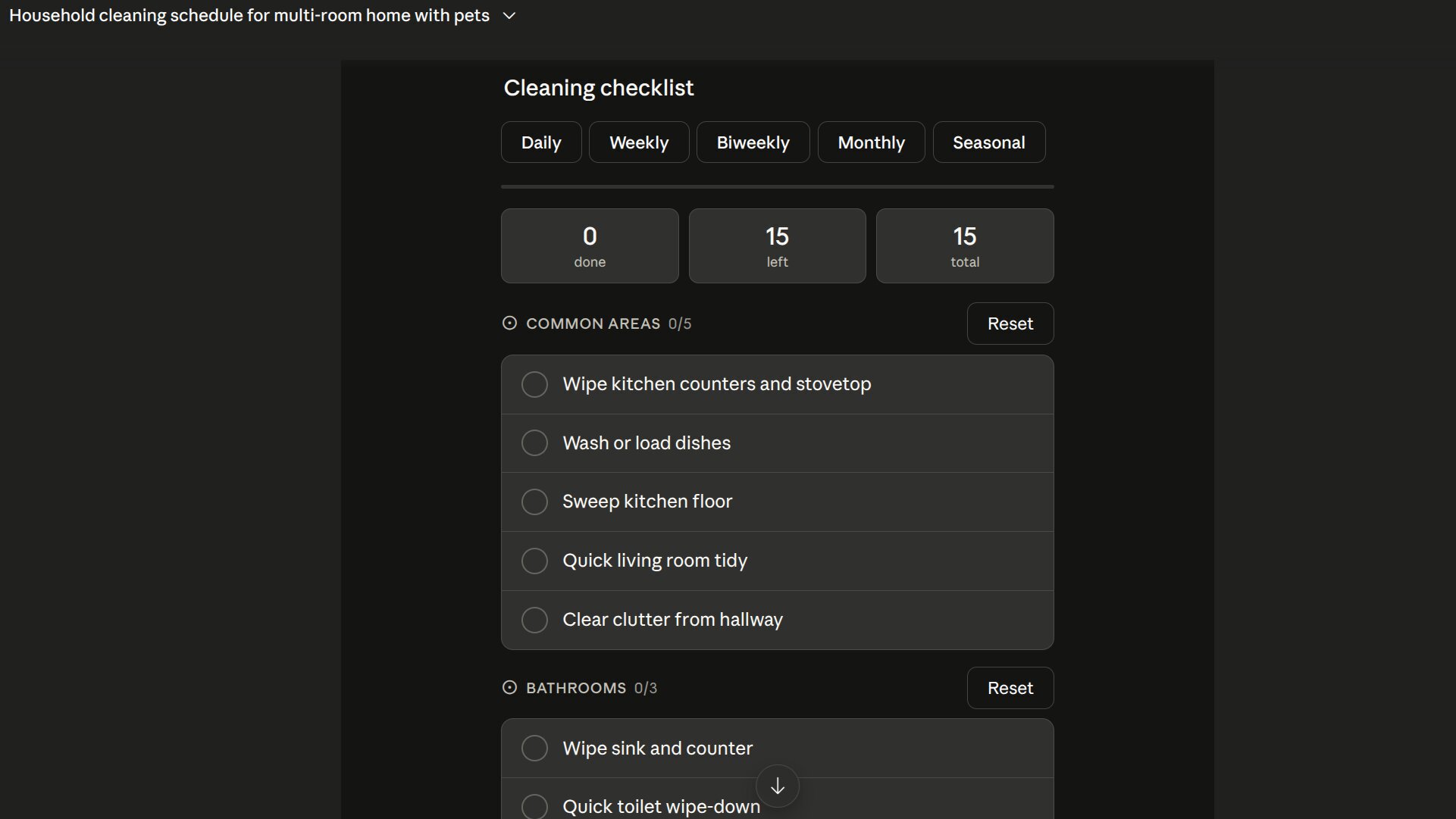
The journey through PWA development, despite its limitations, served as an invaluable learning experience. The "training wheels" of rapid PWA prototyping fostered a deeper understanding of coding principles, development tools, and problem-solving methodologies. This acquired confidence and knowledge laid the groundwork for the next, more ambitious phase: a complete rewrite of the household management system as a native Android application.
This transition involves leveraging Claude Code in conjunction with professional tools like Android Studio, aiming for a more robust, feature-rich, and aesthetically refined application. The experience gained from integrating Google Calendar and experimenting with Firebase for the PWA directly informs the architectural decisions for the native app, particularly concerning web-based syncing and database management. The current test build of the native application, while still in its alpha stages, is reportedly "a million miles ahead" of its PWA predecessor in terms of functionality and user experience, validating the iterative learning process.
This personal project, moving from a basic concept to an AI-assisted PWA, and finally to a more sophisticated native application, offers compelling insights into the broader implications of AI in software development:
- Democratization of Development: AI tools like Claude significantly lower the barrier to entry for non-programmers or "citizen developers." Individuals with specific needs, but without formal coding education, can now conceptualize and build functional applications, moving beyond the constraints of commercial off-the-shelf software.
- Enhanced Prototyping and Iteration: AI accelerates the prototyping phase, allowing for rapid testing of ideas and quick pivots. This agile approach is invaluable for refining concepts and ensuring the final product aligns closely with user requirements.
- Learning and Skill Acquisition: Engaging with AI for code generation naturally exposes users to programming concepts, syntax, and development workflows. As users encounter limitations, they are prompted to learn complementary skills, such as database integration, hosting, or UI/UX principles, fostering a more holistic understanding of software engineering.
- The Rise of Hyper-Personalized Software: The ability to custom-build applications for niche requirements suggests a future where software is increasingly tailored to individual preferences, household needs, or specific business workflows, moving away from a "one-size-fits-all" model.
- AI as a Development Co-Pilot: This case demonstrates AI’s role not as a replacement for human developers, but as a powerful co-pilot. It handles repetitive coding tasks, generates boilerplate, and offers solutions to specific problems, freeing human developers to focus on higher-level design, complex logic, and unique feature implementation.
Expert Perspectives and Industry Context
While Anthropic, the developer of Claude, has not commented on this specific individual project, the company consistently emphasizes its AI models’ capabilities in accelerating development and making coding more accessible. Industry analysts largely concur, with reports from firms like Gartner predicting that by 2025, 70% of new applications developed by enterprises will use low-code or no-code technologies, often augmented by AI. This trend signals a significant shift in how software is created, with AI playing a central role in empowering both professional developers and citizen developers.
The market for household management applications, estimated to be worth over $500 million annually and growing, underscores the demand for efficient organizational tools. However, the recurring theme of dissatisfaction with existing solutions highlights a persistent gap in customization that AI-powered development can now address. The integration of advanced features like real-time syncing, which previously required significant backend expertise, is becoming increasingly manageable through AI’s ability to interface with cloud services like Firebase, further bridging the gap between concept and fully functional application.
Conclusion: The Future of Personalized Software
The journey from a custom household PWA to an evolving native Android app, facilitated by Claude, stands as a testament to the transformative power of AI in personalizing and democratizing technology. While the path from a raw idea to a polished, publishable application remains challenging, AI tools provide an unprecedented starting point. They empower individuals to solve their unique problems, foster learning in complex technical domains, and pave the way for a future where software is not just consumed but actively shaped by its users. The experience illustrates that even if the ultimate goal is a sophisticated native application, beginning with AI-assisted PWA development can serve as an invaluable training ground, building confidence and technical acumen for more ambitious projects. This trend signifies a future where highly customized digital tools, once the exclusive domain of professional developers, are increasingly within reach for anyone with a problem to solve and an AI assistant at their side.