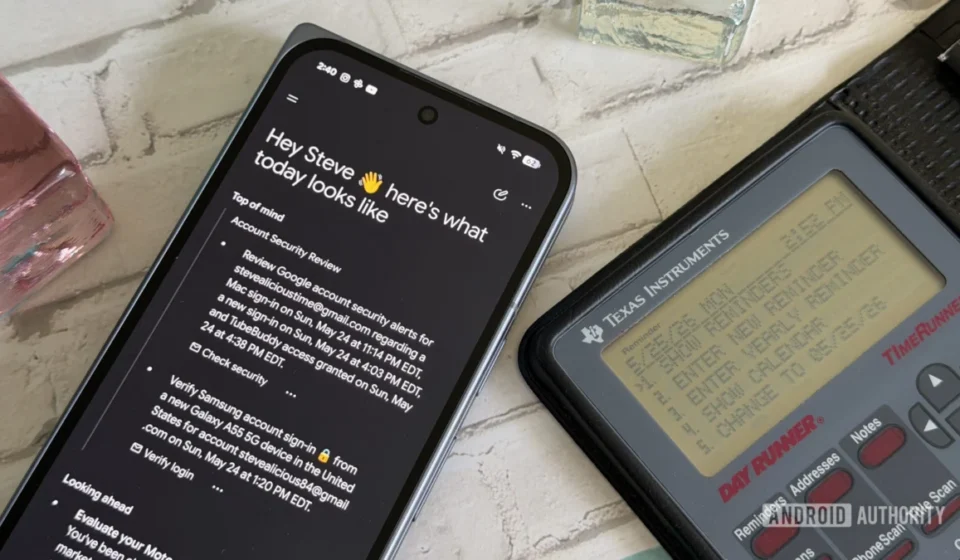
Google Refines Gemini Daily Brief Customization, Signaling Deeper Personalization in AI Assistant Strategy.

Google is actively advancing its personalization capabilities within the Gemini AI ecosystem, with recent developments pointing to a more intuitive and comprehensive customization experience for the Gemini Daily Brief. This iterative refinement, observed in the latest internal builds of the Google app, underscores the company’s commitment to empowering users with greater control over their AI-generated content, moving beyond rudimentary settings to offer nuanced adjustments in topics, tone, and information priority. The shift from a free-form text input to a structured button-based interface for customization highlights Google’s focus on user-friendliness and guided personalization, crucial elements for widespread AI adoption.
The Evolution of Personalization: From Text Box to Guided Interface
The journey towards enhanced Gemini Daily Brief customization has seen several developmental stages. Initially, internal testing revealed Google exploring a method where users would interact with a text box, likely accompanied by suggested prompts, to articulate their preferences for daily briefings. This approach, while offering flexibility, could potentially introduce ambiguity or require users to formulate precise commands. In a significant design evolution, the latest version of the Google app (v17.45.14.sa.arm64) showcases a refined interface. The text box has been supplanted by a distinct "Customize your brief" button. This change is more than cosmetic; it signifies a strategic pivot towards a guided user experience, streamlining the personalization process and making it more accessible to a broader audience.
Upon tapping the "Customize your brief" button, users are presented with a curated selection of options. These include the ability to "prioritize a topic," "follow topics," and "adjust the tone" of the briefing. Furthermore, an option to "type something else" is retained, offering a fallback for more specific or unconventional requests that might not fit the predefined categories. This hybrid approach — combining structured choices with an open-ended input — aims to strike a balance between simplicity and comprehensive control. Once a primary option is selected, the interface allows for further granular customization before the user submits their request to Gemini. This structured feedback loop ensures that subsequent Daily Briefs are tailored precisely to the user’s updated preferences, promising a more relevant and engaging information delivery experience.
Understanding the Gemini Daily Brief and its Significance
The Gemini Daily Brief is envisioned as a personalized summary of information, delivered proactively by Google’s advanced AI assistant, Gemini. Its core purpose is to provide users with a concise, relevant overview of news, updates, and insights tailored to their individual interests and daily routines. In an age of information overload, such a feature aims to cut through the noise, delivering essential updates without requiring active searching. This capability aligns with Google’s broader ambient computing vision, where technology seamlessly integrates into daily life, anticipating needs and delivering helpful information precisely when and where it’s most valuable.
The significance of enhancing the customization of this brief cannot be overstated. A truly helpful AI assistant is one that understands and adapts to its user. Without robust personalization, a daily brief risks becoming generic, irrelevant, and ultimately, overlooked. By allowing users to dictate priorities, follow specific subjects, and even influence the narrative tone, Google is addressing a critical user need: agency over their digital information stream. This level of control fosters trust and encourages deeper engagement with the AI assistant, transforming it from a mere tool into a more indispensable personal aide.
Key Customization Options and Their Implications
The newly observed customization options offer a glimpse into the depth of personalization Google is striving for:
- Prioritize a Topic: This feature allows users to designate certain subjects as high-priority. For example, a user deeply invested in the stock market could prioritize "financial news" to ensure it’s always prominently featured. A sports enthusiast might prioritize updates on a specific team, ensuring score updates, injury reports, and trade rumors are front and center. This moves beyond simply "following" a topic to assigning a weighted importance, influencing the prominence and depth of coverage within the brief.
- Follow Topics: This is a more traditional personalization mechanism, enabling users to subscribe to categories of interest such as "technology," "world news," "local events," or "scientific breakthroughs." Gemini would then draw information from these chosen domains, ensuring a broader but still curated content stream. The combination of "prioritize" and "follow" offers a powerful hierarchical system for information filtering.
- Adjust the Tone: This is a particularly innovative option, reflecting the growing sophistication of large language models (LLMs) like Gemini. Users might be able to select tones like "formal," "casual," "optimistic," "concise," or "analytical." For instance, a professional might prefer a "formal" and "concise" brief for work-related updates, while a more casual user might opt for a "conversational" and "optimistic" tone for general news. This ability to tailor the linguistic style significantly enhances the user experience, making the brief feel more aligned with individual communication preferences.
- Type Something Else: This open-ended option serves as an escape hatch, allowing users to input highly specific or niche requests that might not be covered by the predefined categories. This ensures that the system remains flexible and powerful, capable of accommodating unique user needs without overwhelming them with an exhaustive list of options. For example, a user might request "updates on quantum computing breakthroughs from specific research institutions" or "summaries of new regulatory changes in the renewable energy sector."
The Broader Context: Google’s AI Strategy and Market Trends
These developments in Gemini Daily Brief customization are not isolated but are integral to Google’s overarching AI strategy. The company has been aggressively positioning Gemini as its flagship AI model, designed to be multimodal and highly capable across various applications. The push for personalization within the Daily Brief aligns perfectly with Google’s ambition to make AI not just intelligent, but also intimately helpful and anticipatory.
The market for AI assistants is intensely competitive, with players like Apple’s Siri, Amazon’s Alexa, and Microsoft’s Copilot all vying for user attention and loyalty. A key differentiator in this landscape is the ability to offer truly personalized experiences. Generic AI responses are increasingly seen as insufficient; users expect their digital assistants to understand their context, preferences, and even their emotional state. Google’s investment in granular customization for Gemini is a strategic move to gain a competitive edge by offering a superior, more tailored user experience.
Recent industry reports and user surveys consistently highlight a strong demand for personalized digital interactions. A 2023 study by Salesforce, for instance, indicated that 73% of customers expect companies to understand their unique needs and expectations. While this primarily pertains to customer service, the underlying sentiment for personalized experiences extends to AI assistants. Users are more likely to integrate an AI tool into their daily lives if it consistently delivers relevant and valuable information, rather than generic data. This feature directly addresses that demand, positioning Gemini as a highly responsive and adaptable personal assistant.
Furthermore, the emphasis on user control over AI output is a critical aspect of responsible AI development. As AI systems become more powerful and integrated, giving users clear, intuitive mechanisms to shape their interactions helps build trust and mitigate concerns about algorithmic bias or opaque decision-making. By explicitly offering options to "prioritize" and "adjust tone," Google is giving users transparent levers of control.
Technical Observations and Future Outlook
The current state of this feature, as observed through an APK teardown, indicates it is still under active development and not yet live for public release. APK teardowns, while offering valuable insights into potential future functionalities, carry the caveat that not all discovered features ultimately make it to a public build. However, the clear design progression from a text box to a more structured button interface suggests a mature development process.
One notable observation from the current build is the absence of a microphone icon alongside the "Customize your brief" button. Given Google’s strong emphasis on voice interaction across its ecosystem (Google Assistant, Google Search, etc.), it is highly probable that voice input for customization will be integrated before the feature’s public rollout. Allowing users to simply speak their preferences – for instance, "Prioritize news about renewable energy" or "Give me a more casual tone for my morning brief" – would significantly enhance convenience and natural interaction, further cementing Gemini’s role as a conversational AI.
Looking ahead, this foundation for robust Daily Brief customization could pave the way for even more sophisticated personalization. Future iterations might incorporate:
- Contextual Awareness: Gemini could learn from user behavior (e.g., articles read, calendar appointments, location data) to proactively suggest adjustments to the Daily Brief, offering a truly anticipatory experience.
- Emotional Intelligence: The ability to "adjust tone" could evolve into understanding and responding to a user’s inferred emotional state, perhaps delivering more uplifting news on a challenging day or a more serious tone for critical updates.
- Multimodal Customization: Beyond text and tone, users might eventually customize the inclusion of visual elements, audio summaries, or interactive components within their briefs.
- Integration with Other Google Services: Deeper integration with Google Calendar, Gmail, and Google Maps could allow the Daily Brief to dynamically incorporate meeting reminders, important emails, or traffic updates in a highly personalized and prioritized manner.
Conclusion: A Step Towards a Truly Personalized AI Companion
The ongoing refinement of Gemini Daily Brief customization is a clear indicator of Google’s strategic direction: to develop an AI assistant that is not just intelligent, but deeply personal and proactively helpful. By transitioning to a more guided yet comprehensive customization interface, Google is making personalization more accessible and effective. This iterative development, observed through internal builds, underscores the company’s commitment to user experience and its recognition that true AI utility stems from its ability to adapt and serve individual needs.
As Google continues to advance Gemini, features like these will be crucial in differentiating its offerings in a competitive market and in realizing the vision of ambient computing. The ability for users to precisely tailor their daily information digest empowers them, reduces information overload, and fosters a more intuitive relationship with their digital companion. While the feature is not yet publicly available, its progressive development signals a promising future for personalized AI interactions, bringing us closer to a world where our digital assistants truly understand and anticipate our needs, delivering information that is not just relevant, but perfectly attuned to our preferences. This continuous evolution is paramount for Google’s AI ambitions, transforming Gemini into an indispensable tool for daily life.