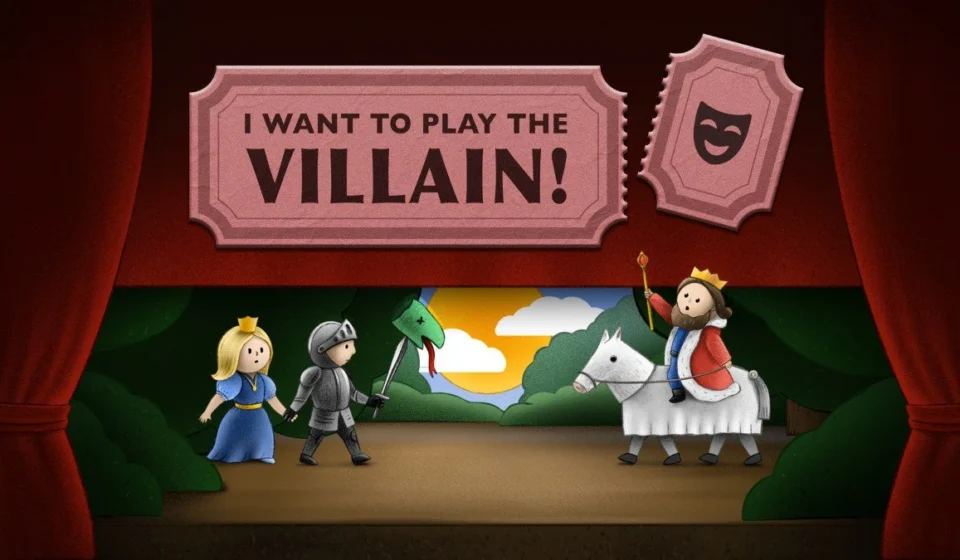
I Want to Play the Villain! lets you rewrite the perfect stage performance through logic puzzles, coming in Q1 2027 across multiple platforms

Triomatica Games, the acclaimed Ukrainian development studio recognized for its award-winning titles Boxville and Boxville 2, has officially announced its latest project: I Want to Play the Villain!. This innovative theatre-themed logic puzzle game is slated for a Q1 2027 release and will be broadly available across Android, iOS, PC, PlayStation, Xbox, and Nintendo Switch platforms. In anticipation of its launch, a playable demo is scheduled to debut on Steam on August 17, 2026, offering players an early glimpse into its unique gameplay mechanics.
Triomatica Games: A Legacy of Narrative-Driven Puzzle Innovation
Triomatica Games has cultivated a reputation for crafting distinctive and emotionally resonant puzzle experiences. The studio’s previous endeavors, Boxville and its sequel Boxville 2, garnered critical acclaim for their unique hand-drawn aesthetics, compelling silent narratives, and cleverly designed logic puzzles. Boxville, initially launched to positive reception, immersed players in a world of talking cans, utilizing a point-and-click adventure framework intertwined with intricate environmental puzzles. Its success was further solidified by various industry awards, underscoring Triomatica’s prowess in developing engaging and thoughtful gaming experiences. Boxville 2 continued this legacy, expanding on the established universe with new emotional depths and more complex challenges, reinforcing the studio’s commitment to pushing the boundaries of the puzzle genre. This track record positions I Want to Play the Villain! as a highly anticipated title, building on a foundation of proven creative and technical expertise. The studio’s resilience and continued output, particularly from a region facing geopolitical challenges, also highlight a remarkable dedication to game development and innovation.
Unveiling "I Want to Play the Villain!": A Deep Dive into Theatrical Logic
At its core, I Want to Play the Villain! transcends conventional puzzle gameplay by integrating a rich narrative framework centered around theatrical production. Players are cast in the role of a theatre director, tasked not merely with solving abstract puzzles but with orchestrating the perfect stage performance. This involves a nuanced understanding of each actor’s individual psychology: their dreams, fears, personal preferences, and the specific roles they aspire to play. The game’s central mechanic revolves around the strategic rearrangement of cast members, the thoughtful selection and swapping of costumes, and the subtle reshaping of the play’s narrative to ensure every participant feels naturally integrated and satisfied within the production.
This innovative approach elevates the traditional logic puzzle format into a dynamic character-driven simulation. For instance, assigning an actor their preferred antagonist role, pairing them with a compatible co-star, or judiciously avoiding situations that trigger their dislikes can dramatically alter the unfolding drama. The game posits that even a singular, seemingly minor adjustment can cascade into an entirely different performance outcome, transforming each solved puzzle into a rewarding moment of creative fulfillment. This intricate interplay of character disposition and strategic decision-making promises a deeply immersive and mentally stimulating experience, challenging players to think holistically about the impact of their choices on both individual characters and the collective theatrical ensemble. The design ethos appears to champion player agency, allowing for multiple pathways to success, each yielding a unique narrative and emotional resonance.
Strategic Multi-Platform Launch and Early Access Opportunities
The decision by Triomatica Games to launch I Want to Play the Villain! simultaneously across such a broad spectrum of platforms – Android, iOS, PC, PlayStation, Xbox, and Nintendo Switch – in Q1 2027 represents a significant strategic move. This multi-platform strategy aims to maximize accessibility and reach a diverse global audience, from casual mobile gamers to dedicated console and PC enthusiasts. While technically demanding, a simultaneous launch ensures that the game can immediately tap into various market segments, fostering a broader community and facilitating cross-platform engagement. This approach also acknowledges the evolving landscape of gaming, where players increasingly expect the flexibility to enjoy titles on their preferred devices.
Crucially, the studio is providing an early access opportunity through a Steam demo, scheduled for release on August 17, 2026. Demos play a vital role in the modern game development cycle, particularly for independent studios. They serve as invaluable tools for gathering player feedback, identifying potential bugs, and fine-tuning gameplay mechanics before the official launch. Beyond technical refinement, a demo can generate significant pre-release hype, build a dedicated community, and allow potential players to experience the game’s unique concept firsthand, driving wish list additions and ensuring a robust launch. For an indie title like I Want to Play the Villain!, which relies heavily on its innovative premise to stand out, a well-received demo can be instrumental in establishing its presence in a competitive market. The strategic timing, nearly six months before the full release, provides ample opportunity for the development team to incorporate feedback and polish the final product.
The Evolving Landscape of Puzzle Games and Indie Development
The announcement of I Want to Play the Villain! arrives at a time when the puzzle game genre is experiencing a renaissance, driven by a growing demand for unique narrative experiences and innovative mechanics beyond traditional match-3 or tile-swapping formats. Modern players are increasingly seeking games that offer intellectual challenge intertwined with compelling storytelling and character development. Titles that successfully blend logical deduction with emotional depth, much like Triomatica’s previous works, tend to resonate strongly with audiences.
The independent game development sector continues to be a powerhouse of creativity and innovation, often pioneering new genres and gameplay styles that larger studios might hesitate to pursue. Studios like Triomatica Games exemplify this trend, demonstrating that compelling narratives and sophisticated puzzle design can thrive outside mainstream development pipelines. The success of indie titles often hinges on a strong core concept, unique artistic direction, and a deep understanding of player engagement, all of which I Want to Play the Villain! appears to embody. The global reach of digital distribution platforms further empowers indie developers to connect directly with players worldwide, democratizing access to diverse gaming experiences. The market for mobile puzzle games alone continues to be robust, with millions of players seeking engaging, pick-up-and-play experiences, while PC and console platforms cater to those desiring deeper, more complex gameplay. Triomatica’s multi-platform strategy effectively targets all these segments.
Developer’s Vision and Anticipated Industry Reception
While Triomatica Games has not yet released explicit official statements regarding their philosophical approach to I Want to Play the Villain!, the design principles evident in the game’s description and its predecessors suggest a clear vision. It is reasonable to infer that the studio aims to deliver a title that not only challenges players intellectually but also provides a rich emotional and narrative experience. Their focus on actor personalities, dreams, and fears indicates a commitment to creating relatable characters whose well-being directly impacts gameplay outcomes, fostering a deeper connection between player and game world. A spokesperson for Triomatica Games, perhaps reflecting on the studio’s ethos, might emphasize the desire to explore unconventional storytelling through interactive systems, providing players with a unique form of creative expression within a structured puzzle environment.
Industry analysts are likely to view I Want to Play the Villain! with considerable interest. Its blend of narrative management, character-driven decision-making, and logic puzzles positions it uniquely within the market. The established reputation of Triomatica Games, coupled with the intriguing premise, could make it a standout indie title for 2027. Its multi-platform release strategy is also a point of note, indicating a confident approach to market penetration. Experts might highlight the game’s potential to appeal to fans of narrative adventure games, theatrical simulations, and classic logic puzzles, bridging different player demographics. The early demo launch is a strategic move that could generate significant community engagement and refine the final product, further enhancing its prospects for critical and commercial success.
Implications for Players and the Broader Gaming Landscape
For players, I Want to Play the Villain! promises a fresh and engaging take on the puzzle genre. It offers a unique opportunity to delve into the complexities of human interaction and artistic creation within a gaming context. The game’s emphasis on player choice and its direct impact on the narrative outcome suggests high replayability, as different decisions could lead to distinct performances and character arcs. This narrative depth, combined with challenging logic puzzles, positions the game as more than just a casual pastime; it aims to be an immersive experience that stimulates both intellect and empathy.
For the broader gaming industry, I Want to Play the Villain! could serve as another testament to the innovative spirit of independent developers, particularly those operating under challenging circumstances, like studios from Ukraine. It reinforces the idea that compelling game design can emerge from diverse global regions, contributing to the richness and variety of the interactive entertainment landscape. Its success could further inspire other developers to explore unconventional genre mashups and character-driven mechanics, pushing the boundaries of what puzzle games can achieve. The simultaneous multi-platform release could also set a precedent for indie studios, demonstrating the viability of broad market strategies for highly anticipated titles. As the industry continues to evolve, games that offer unique perspectives and deeply engaging mechanics, such as this upcoming title from Triomatica, will be crucial in captivating and expanding player bases worldwide.
As the Q1 2027 launch approaches, anticipation for I Want to Play the Villain! is expected to grow, particularly following the release of its Steam demo in August 2026. Players are encouraged to wishlist the game on Steam and follow Triomatica Games for further updates regarding pre-registrations and the exact launch date across all platforms.