ARMSX3 Emerges as Groundbreaking PlayStation 3 Emulator for Android, Signaling a New Era for Mobile Console Gaming

The landscape of mobile gaming emulation is undergoing a significant transformation with the introduction of ARMSX3, a novel PlayStation 3 (PS3) emulator for Android. Developed by the same acclaimed team behind the robust ARMSX2 PS2 emulator, ARMSX3 marks a pivotal moment, pushing the boundaries of what was previously deemed achievable on mobile platforms. Currently available as a proof-of-concept port of the venerable desktop RPCS3 emulator on GitHub, ARMSX3 distinguishes itself by incorporating the latest Arm-specific optimizations from the RPCS3 project. This integration promises enhanced performance and broader game compatibility, setting it apart from prior Android PS3 emulation attempts like RPCSX-UI Android and aPS3e. Initial testing conducted by the development team indicates that titles such as Skate 3 can enter gameplay and achieve frame rates between 20 to 30 frames per second on high-end devices equipped with a Snapdragon 8 Gen 2 processor, an impressive feat for such a complex console architecture on a mobile device.
The Herculean Task of PlayStation 3 Emulation
To fully appreciate the significance of ARMSX3, it is crucial to understand the inherent complexities of emulating the PlayStation 3. The PS3, launched by Sony in November 2006, was powered by the revolutionary yet notoriously challenging Cell Broadband Engine architecture. This unique processor, co-developed by Sony, Toshiba, and IBM, combined a central PowerPC-based Power Processing Element (PPE) with eight synergistic processing elements (SPEs). Only seven of these SPEs were available for games, with one reserved for the operating system, making it a highly parallel computing environment unlike anything seen in consumer electronics before or since. While innovative for its time, this bespoke architecture made software development intricate and, consequently, emulation exceedingly difficult. Unlike standard x86 or ARM processors, the Cell’s distinct design required specialized code to fully leverage its parallel processing capabilities, a design philosophy that differs starkly from the simpler, more standardized architectures found in modern PCs and mobile devices.
Emulating the Cell’s complex instruction set and managing its parallel processing on a conventional CPU or even a high-end mobile System-on-Chip (SoC) presents formidable challenges. The emulator must translate Cell instructions into instructions understood by the host device’s processor, a process known as recompilation. This real-time translation is computationally intensive, often leading to significant performance overhead. Furthermore, the PS3’s custom graphics processor, the Reality Synthesizer (RSX), co-developed with Nvidia, also requires meticulous emulation, adding another layer of complexity. The RSX was based on Nvidia’s GeForce 7800 GTX architecture, but with specific customizations for the PS3, meaning its behavior and quirks also needed to be precisely replicated. For years, full-speed, accurate PS3 emulation remained largely confined to powerful desktop PCs, with RPCS3 emerging as the leading project, having made monumental strides in deciphering and replicating the PS3’s intricate hardware and software environment. The very notion of bringing this level of emulation to a mobile device, with its constrained power, thermal envelopes, and ARM-based architecture, was considered a distant dream by many in the emulation community. The power consumption of a PS3 console often exceeded 150-200 watts, a stark contrast to the typical 5-10 watts available to a high-end smartphone SoC.
The ARMSX Legacy: Building Trust in Mobile Emulation
The team behind ARMSX3 is not new to the demanding world of console emulation on Android. Their previous endeavors, ARMSX1 (which primarily focused on PlayStation Portable, or PSP, emulation) and more notably ARMSX2, have established a solid reputation for delivering functional and increasingly optimized emulators for mobile platforms. ARMSX2, in particular, garnered significant attention for its ability to capably emulate the PlayStation 2, another console whose unique hardware, featuring the Emotion Engine CPU and Graphics Synthesizer GPU, posed considerable challenges for early emulators. The Emotion Engine, a custom-designed MIPS IV processor with integrated vector units, required sophisticated instruction translation and timing accuracy. The success of ARMSX2 in bringing a wide array of PS2 titles to playable states on Android devices demonstrated the team’s technical prowess, dedication to optimization, and deep understanding of mobile hardware limitations. This achievement was critical because PS2 emulation itself required overcoming significant hurdles related to its complex architecture and proprietary components.
This track record is crucial because it instills confidence in the community regarding ARMSX3. Emulation projects, especially for complex systems, require sustained effort, deep technical knowledge, and an iterative approach to development. The ARMSX team’s proven ability to navigate these challenges with the PS2 emulator provides a strong foundation for their ambitious venture into PS3 emulation. Their experience in optimizing code for ARM processors, managing resources efficiently, and addressing common mobile emulation hurdles like touch controls and thermal throttling, is invaluable. The continuity in their project naming convention (ARMSX1, ARMSX2, ARMSX3) also suggests a cohesive development philosophy and a commitment to advancing the state of mobile console emulation sequentially, tackling increasingly complex systems as mobile hardware capabilities improve.
ARMSX3’s Technological Edge: Leveraging RPCS3 and ARM Optimizations
The core innovation of ARMSX3 lies in its direct lineage from RPCS3, the gold standard for desktop PS3 emulation, combined with crucial Arm-specific enhancements. Being a "proof-of-concept port" means that ARMSX3 is not a ground-up recreation but rather an adaptation of RPCS3’s robust codebase to the Android environment. This approach allows ARMSX3 to benefit immediately from years of development, bug fixes, and compatibility improvements already present in RPCS3, which has been in active development since 2011 and has a vast library of playable titles on PC.
Crucially, the ARMSX3 developers have integrated the "latest Arm-specific improvements" developed by the RPCS3 team. This is a game-changer. Historically, desktop emulators like RPCS3 were primarily optimized for x86-64 architecture, common in PCs. Porting such a complex emulator to ARM, the architecture prevalent in mobile devices, without specific optimizations often leads to abysmal performance due to the architectural impedance mismatch. The Arm-specific improvements likely involve highly optimized recompilers that efficiently translate Cell instructions into ARM instructions, taking advantage of ARM’s unique instruction set and architectural features. These optimizations could include:
- ARM Neon Instruction Utilization: Leveraging ARM’s advanced SIMD (Single Instruction, Multiple Data) instruction set, Neon, for accelerated vector processing. This is particularly crucial for graphics, physics calculations, and the intensive mathematical operations inherent in the Cell’s SPEs. Efficient use of Neon can significantly reduce the CPU cycles required for complex operations.
- Memory Management Unit (MMU) Optimizations: Efficiently handling memory access patterns to reduce latency and bandwidth usage. Given the PS3’s demanding memory requirements and unique memory architecture (256MB XDR DRAM for system, 256MB GDDR3 VRAM for graphics), optimizing how mobile devices’ LPDDR5/5X RAM interacts with the emulated system is vital. This includes intelligent caching strategies and reducing unnecessary memory transfers.
- Thread Scheduling for ARM Big.LITTLE Architectures: Modern mobile SoCs feature heterogenous computing, typically with high-performance "big" cores and energy-efficient "LITTLE" cores. Optimizing how emulation threads are distributed across these different core types is essential to balance performance and power consumption. Intensive tasks are offloaded to big cores, while lighter background processes might run on LITTLE cores, maximizing efficiency and minimizing thermal output.
- Graphics API Translation Layers: Efficiently mapping PS3’s proprietary graphics calls (derived from OpenGL/DirectX but with Sony’s specific extensions) to mobile-friendly APIs like Vulkan or OpenGL ES. This often involves creating highly optimized translation layers that can dynamically compile shader code and manage GPU state changes with minimal overhead, potentially with specific optimizations for mobile GPU architectures like Qualcomm’s Adreno, ARM’s Mali, or Samsung’s Xclipse.
- Direct-to-Hardware Optimizations: In some cases, specific ARM instruction sets or hardware features on newer SoCs might allow for more direct translation of certain PS3 functions, bypassing heavier software emulation layers.
These specialized optimizations are what differentiate ARMSX3 from earlier, less successful Android PS3 emulators. They are designed to mitigate the architectural impedance mismatch between the Cell Broadband Engine, x86 desktop PCs, and ARM mobile devices, paving the way for significantly improved performance and a wider range of playable titles. The open-source nature of the project on GitHub further encourages community contributions and rapid iteration, which is vital for such an ambitious undertaking, allowing a broader pool of developers to contribute code, report bugs, and suggest improvements.
Initial Performance Benchmarks and Real-World User Experience
While still in its nascent "proof-of-concept" stage, ARMSX3 has already demonstrated promising, albeit mixed, results. The development team’s benchmark with Skate 3 running at 20-30 frames per second on a Snapdragon 8 Gen 2 device offers a glimpse into the emulator’s potential. For context, achieving even semi-playable frame rates for a graphically demanding PS3 title on a mobile SoC is a monumental technical achievement, especially considering the complexity of the Cell architecture. Skate 3, an open-world skateboarding game released in 2010, is known for its expansive environments, complex physics-based gameplay, and detailed character models, making it a reasonably challenging title to emulate efficiently.
Further user testing provides a more nuanced picture of ARMSX3’s current state. On a vivo X300 Ultra, a device likely featuring a high-end MediaTek Dimensity 9300 or Snapdragon 8 Gen 3 processor, the experience varied:
- Skate 3: Exhibited slow performance during intro screens, ostensibly due to shader compilation. Shader compilation is a common bottleneck in early emulation, where the emulator must translate the game’s original shader code into a format compatible with the host GPU, often leading to stutters until all shaders for a scene are compiled and cached. The game subsequently froze just before entering gameplay, indicating stability issues that are typical for experimental software still undergoing active development.
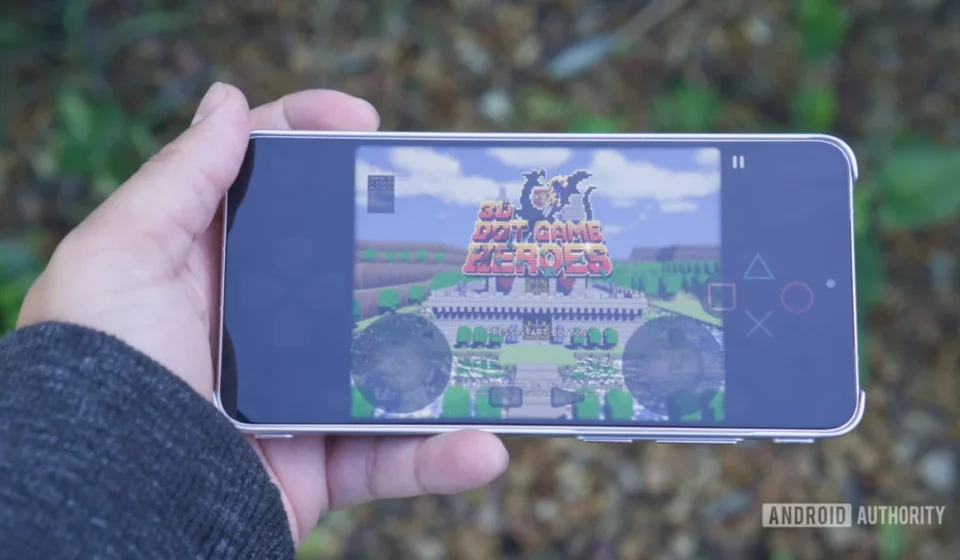
- 3D Dot Game Heroes: Showed frame rates in the mid-teens, which, while not ideal for a fast-paced action game, is remarkable for a PS3 title on a mobile device. However, it was noted to be less playable than the same game on RPCSX-UI Android, suggesting that while ARMSX3 has a strong foundation, specific game optimizations for its unique implementation are still ongoing. Differences in graphics backend or CPU recompiler efficiency can lead to varied performance across emulators for the same game.
- Catherine: Performed at approximately 22 frames per second. This was deemed playable given the puzzle-based nature of the game, where precise timing and high frame rates are less critical than in action titles. The slower, deliberate pace of Catherine‘s gameplay makes it more forgiving of moderate frame rates, highlighting that certain genres might be more amenable to early emulation efforts.
These results underscore a crucial point: PS3 emulation on Android remains a bleeding-edge endeavor. Users should manage expectations, understanding that "playable" does not yet equate to "perfect" or "full speed" for most titles. The high computational demands also lead to significant device temperatures, an expected side effect of pushing mobile SoCs to their limits for complex tasks. This thermal load is a major hurdle for sustained performance, as devices will inevitably throttle their CPU and GPU frequencies to prevent overheating, leading to frame rate drops and reduced performance over longer play sessions. Modern smartphones, while powerful, are designed with passive cooling systems (heat pipes, vapor chambers) that have limits, unlike the active fan-based cooling of consoles or desktop PCs.
The developers have rightly cautioned that budget Android phones are unlikely to yield good results, if any, and might never be capable of handling PS3 emulation. This emphasizes the highly demanding nature of the project, which currently requires flagship-tier mobile processors, such as the Snapdragon 8 Gen 2, 8 Gen 3, or comparable high-end chipsets from MediaTek or Apple (should it ever be ported to iOS, which is unlikely given Apple’s restrictive ecosystem). The minimum recommended hardware will likely continue to be the absolute top-tier of mobile SoCs for the foreseeable future.
Installation, Features, and Current Limitations
The installation process for ARMSX3 mirrors that of its predecessors, ARMSX2 and ARMSX1, aiming for user familiarity and simplicity. Users download the application from GitHub, then are prompted to select their desired installation folder (default or custom), locate the PS3 firmware (which Sony makes freely available on its PlayStation website for console updates), and designate a ROM directory for game files. The user interface (UI) is consistent with the ARMSX family, presenting a clear game library on the main screen, which is a welcome touch for those familiar with their prior emulators, ensuring a smooth transition for existing users of the ARMSX ecosystem.
Despite its early stage, ARMSX3 offers a surprisingly robust set of features, indicative of the team’s commitment to a comprehensive emulation experience:
- Controller Support: It supports both virtual on-screen controllers for touch-only gameplay and physical controllers (Bluetooth gamepads, USB-C connected controllers), which is essential for a true console gaming experience and often preferred by enthusiasts.
- Resolution Scaling: This allows users to adjust the rendering resolution, potentially boosting performance on lower settings (e.g.,