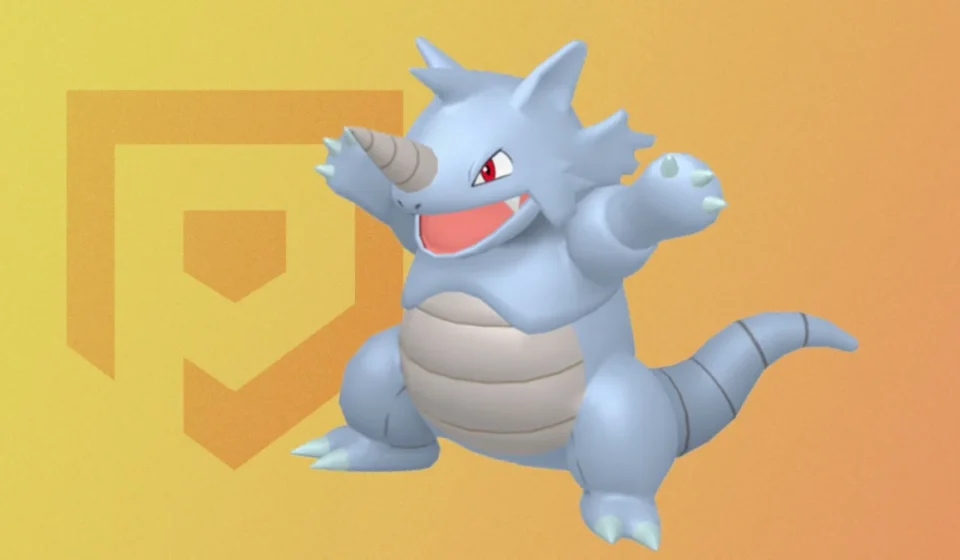

The formidable Rhydon, a creature of immense power and a cornerstone of many Pokémon teams, stands as a testament to the raw, untamed forces of the Pokémon world. As the evolved form of Rhyhorn and the pre-evolution of the even mightier Rhyperior (introduced in Generation IV), Rhydon embodies a unique blend of primal strength and geological resilience. Its distinctive appearance, characterized by two prominent horns on its head, with the larger one positioned at the forefront, immediately signals its aggressive capabilities. A subtle but noteworthy dimorphism exists between male and female Rhydon, with males boasting a slightly more pronounced horn, hinting at the intricate biological adaptations within the species. For trainers venturing into battles, a comprehensive understanding of Rhydon’s attributes, particularly its dual Ground/Rock typing, is paramount. This typing renders it vulnerable to Grass, Water, Ice, Fighting, and Ground-type attacks, while conversely providing resistances to Fire, Flying, Poison, and Rock-type moves, and a complete immunity to Electric-type assaults. Mastering these type matchups is crucial for both utilizing Rhydon effectively and countering opponents.
Rhydon’s Evolutionary Path and Lineage
Rhydon’s journey begins with its base form, Rhyhorn. This foundational Pokémon evolves into Rhydon at level 42, a straightforward progression that requires no special items or trading conditions. This accessibility makes Rhyhorn a viable candidate for early-game powerhouses. The evolutionary line culminates with Rhyperior, a third-stage evolution that demands specific conditions for acquisition. To evolve Rhydon into Rhyperior, trainers must equip Rhydon with a "Protector" item and then engage in a trade with another player. This trade evolution mechanic underscores the collaborative and interconnected nature of the Pokémon training ecosystem. The introduction of Rhyperior in Generation IV marked a significant power boost for this evolutionary line, further solidifying Rhydon’s role as a stepping stone to ultimate strength.
Key Demographics and Attributes of Rhydon
Delving into the statistical profile of Rhydon reveals a Pokémon designed for offensive prowess. Its National Pokédex number is #112, marking its place in the extensive catalog of known Pokémon species. The dual typing of Ground and Rock dictates its combat effectiveness and strategic deployment. Rhydon possesses two primary abilities: Lightning Rod, which draws in all Electric-type moves and boosts its Special Attack, and Rock Head, which prevents recoil damage from moves that inflict it. Its hidden ability, Reckless, further enhances its offensive capabilities by increasing the power of recoil-damaging moves.
The gender distribution of Rhydon is evenly split, with a 50% chance of encountering a male and a 50% chance of encountering a female. This balance is typical across many Pokémon species, ensuring a broad genetic pool for reproduction within the game’s mechanics. The catch rate for Rhydon is relatively moderate at 14.8%, suggesting that while not exceptionally rare, it requires a degree of persistence and strategic use of Poké Balls to capture.
Rhydon belongs to two distinct Egg Groups: Monster and Field. This classification is vital for breeding mechanics, determining which other Pokémon species Rhydon can produce offspring with. The offspring will inherit certain traits and moves based on these Egg Group compatibilities. Furthermore, Rhydon’s EV (Effort Value) yield is particularly noteworthy, granting two points to Attack upon defeat. This makes defeating wild Rhydon a strategic way for trainers to boost their Pokémon’s offensive stats, highlighting its impact on the competitive training landscape.
Geographic Distribution: A Global Presence Across Generations
Rhydon’s availability has spanned nearly every generation of Pokémon games, showcasing its enduring popularity and consistent presence in the Pokémon world. Its locations vary significantly, reflecting the evolving game design and the introduction of new regions and mechanics.
Generation I: In the foundational games, Pokémon Red, Blue, and Yellow, Rhydon could primarily be found in the challenging Cerulean Cave. In Pokémon Yellow, an additional method of acquisition was introduced: trading a Golduck at the Cinnabar Island Laboratory.
Generation II: During the Johto region adventures in Pokémon Gold and Silver, Rhydon was obtainable through trading a Dragonair in Blackthorn City. Pokémon Crystal offered a more direct encounter in Victory Road.

Generation III: The Hoenn region games, Pokémon Ruby, Sapphire, and Emerald, primarily featured Rhydon through evolution. Trainers had to evolve their Rhyhorn to obtain Rhydon. Pokémon FireRed and LeafGreen, remakes of the Kanto games, also relied on evolution. In the unique setting of Pokémon Colosseum, Rhydon was available via trading, while Pokémon XD: Gale of Darkness allowed trainers to find it on Citadark Isle.
Generation IV: The Sinnoh region saw Rhydon appear in more natural habitats. Pokémon Diamond and Pearl featured Rhydon on Routes 227 and 228, as well as Stark Mountain. Pokémon Platinum expanded its presence to include Victory Road alongside these locations. Pokémon HeartGold and SoulSilver, remakes of the Johto games, placed Rhydon within the Safari Zone.
Generation V: In the Unova region, Pokémon Black offered Rhydon through trading. Pokémon White and its sequels, Black 2 and White 2, returned to the evolution mechanic, requiring trainers to evolve Rhyhorn.
Generation VI: The Kalos region introduced the Friend Safari in Pokémon X and Y, providing a consistent source for Rhydon. Pokémon Omega Ruby and Alpha Sapphire, remakes of the Hoenn games, reverted to the evolution method.
Generation VII: The Alola region games, Pokémon Sun and Moon, along with their enhanced versions Ultra Sun and Ultra Moon, continued the trend of obtaining Rhydon through evolving Rhyhorn. However, Pokémon: Let’s Go, Pikachu! and Let’s Go, Eevee!, a reimagining of Kanto, reintroduced Rhydon to Cerulean Cave and Victory Road.
Generation VIII: The Galar region offered a diverse range of wild encounters for Rhydon. In Pokémon Sword and Shield, it could be found on Route 10, Bridge Field, Dusty Bowl, Giant’s Seat, Lake of Outrage, Motostoke Riverbank, Rolling Fields, and Stony Wilderness. The Isle of Armor expansion added Fields of Honor and Potbottom Desert. Pokémon Brilliant Diamond and Shining Pearl, remakes of the Sinnoh games, featured Rhydon in its original locations and expanded its presence in the Grand Underground across various caves. Pokémon Legends: Arceus, set in ancient Sinnoh, presented unique encounter opportunities in Cobalt Coastlands (Space-time distortions), Coronet Highlands (Celestica Trail, Sacred Plaza), and Crimson Mirelands (Bolderoll Slope).
Generation IX: In the Paldea region, Pokémon Scarlet and Violet initially made Rhydon available through trading. The The Hidden Treasure of Area Zero DLC introduced it to the Savanna Biome. Notably, Pokémon Legends: Z-A, set in the Kalos region, currently lists Rhydon as unobtainable, indicating its absence in that specific title’s planned release.
Rhydon’s Combat Prowess: Base Stats and Movepool
Rhydon’s base stats are a clear indication of its role as a powerful physical attacker. While specific numerical values for each stat were not provided in the source material, its design and typing suggest high Attack and Defense, with moderate HP and lower Special Attack and Special Defense. This stat distribution makes it a formidable force in direct physical confrontations.
The movepool available to Rhydon is extensive, allowing for diverse combat strategies. Upon leveling up, Rhydon learns a variety of impactful moves, starting with basic attacks like Tackle and Tail Whip, progressing to powerful Ground and Rock-type assaults such as Bulldoze, Drill Run, Earthquake, and Stone Edge. Its evolution to Rhyperior also unlocks Hammer Arm, a potent Fighting-type move.

Rhydon can further expand its offensive and defensive capabilities through Technical Machines (TMs). Its TM learnset includes a wide array of elemental attacks like Fire Blast, Ice Beam, and Thunderbolt, as well as status-altering moves and powerful physical attacks like Giga Impact and Hyper Beam. This versatility allows trainers to tailor Rhydon to specific battle conditions and team compositions.
Furthermore, Rhydon can inherit unique moves through breeding, known as Egg Moves. These include strategic options like Counter, Curse, Dragon Rush, Metal Burst, and Rock Polish. These moves can provide crucial advantages, such as setting up defensive maneuvers or delivering unexpected offensive bursts, making the breeding process a vital aspect of optimizing Rhydon’s potential.
Strategic Implications and Tactical Considerations
Rhydon’s dual Ground/Rock typing presents a compelling strategic profile. Its immunity to Electric-type attacks is a significant advantage, nullifying a common offensive type and allowing it to switch in safely against Electric-type threats. Its resistances to Fire, Flying, Poison, and Rock also provide defensive utility against a range of opponents.
However, its weaknesses to Grass, Water, Ice, Fighting, and Ground necessitate careful team building. Trainers must ensure they have Pokémon capable of resisting or effectively countering these types to protect Rhydon from being overwhelmed. For instance, a Flying-type Pokémon can easily dispatch Grass and Fighting-type threats, while a strong Water-type Pokémon can handle Ground and Rock-types.
The abilities Lightning Rod and Rock Head offer distinct tactical advantages. Lightning Rod can be used to strategically draw in Electric-type attacks, protecting teammates and boosting Rhydon’s Special Attack, making it a dual-purpose pivot. Rock Head, on the other hand, allows Rhydon to utilize powerful recoil moves like Flare Blitz or Double-Edge without suffering detrimental self-damage, turning a risky move into a potent offensive option. The Reckless ability further amplifies this, making recoil moves even more devastating.
Rhydon’s high Attack stat, combined with its access to powerful STAB (Same-Type Attack Bonus) moves like Earthquake and Stone Edge, makes it a significant offensive threat. Its ability to learn moves like Swords Dance further amplifies its sweeping potential, allowing it to become an unstoppable force if given the opportunity to set up.
In conclusion, Rhydon is a Pokémon that embodies raw power and geological might. Its evolutionary lineage, extensive movepool, and unique typing make it a valuable asset for trainers across generations. Understanding its strengths, weaknesses, and available abilities is key to unlocking its full potential and navigating the complex strategic landscape of Pokémon battles. Whether as a stepping stone to Rhyperior or a formidable Pokémon in its own right, Rhydon remains a beloved and powerful presence in the world of Pokémon.