
The global semiconductor industry is currently grappling with a profound valuation paradox that has left analysts and investors divided over the future of the artificial intelligence (AI) trade. Following a historic earnings report from Nvidia Corporation (NVDA) last week, in which the chipmaker posted record-breaking results and issued forward guidance projecting an additional 70% growth, the market’s reaction has been uncharacteristically muted. While Nvidia’s performance served as definitive proof that the AI infrastructure build-out remains in an aggressive acceleration phase, the broader AI complex has struggled to maintain upward momentum. As of early September, the tech-heavy Nasdaq 100 index has retreated by approximately 1.5% since the Nvidia announcement, signaling a period of consolidation or, as some bears suggest, a looming correction.
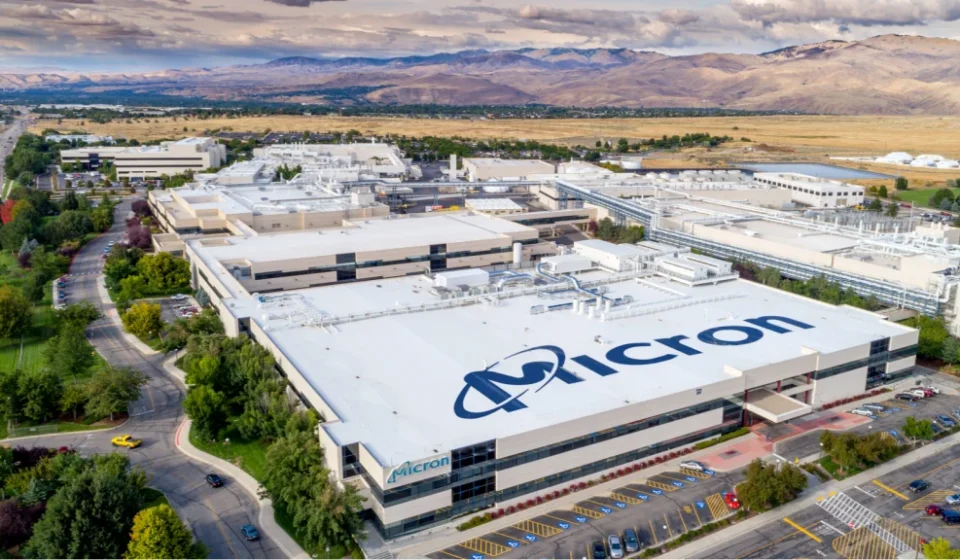
Central to this tension is the memory sector, a critical yet historically volatile component of the AI supply chain. During the recent earnings call, Nvidia Chief Financial Officer Colette Kress explicitly highlighted "extreme pricing conditions" in the memory market. Kress noted that the magnitude of price increases for high-bandwidth memory (HBM)—the specialized, ultra-fast memory chips required to feed data to AI processors—has exceeded the company’s internal projections. Furthermore, Nvidia expects these costs to climb even higher throughout the next fiscal year. This development would typically be viewed as an overwhelmingly bullish catalyst for memory manufacturers like Micron Technology (MU). However, the market’s response was the opposite; Micron shares fell 6% in the immediate aftermath of Nvidia’s report and have remained under pressure, down roughly 2.6% over the subsequent week.
The Valuation Disconnect and Historical Cyclicality
The primary point of contention regarding Micron’s stock is its current valuation. Despite the company’s share price appreciating nearly 200% over the past year, it currently trades at a forward price-to-earnings (P/E) multiple of just six. To put this in perspective, the average constituent of the S&P 500 index typically trades between 20 and 25 times forward earnings, and high-growth AI infrastructure companies often command multiples significantly higher than that. A P/E ratio of six suggests that Wall Street is pricing in a catastrophic collapse in earnings, effectively discounting the massive profits forecasted for the next 18 to 24 months.
This skepticism is rooted in the semiconductor industry’s long history of cyclicality. For decades, the memory market has operated on a "boom-and-bust" cycle. During periods of scarcity, prices skyrocket, leading to explosive profit margins for manufacturers. These high profits invariably encourage companies to invest heavily in new fabrication plants (fabs) and increased production capacity. Eventually, the market becomes oversupplied, prices crash, and profits evaporate. Investors, having been burned by these cycles in the past, are often hesitant to pay a premium for memory earnings, assuming that a downturn is always just over the horizon.
Structural Changes: The Rise of Strategic Customer Agreements
The current bear case for Micron rests on the assumption that the present AI-driven boom is no different from the PC or smartphone cycles of the past. Critics argue that while prices are high now, the "ceiling" on Micron’s upside is capped by long-term contracts. However, industry data and executive statements suggest that the fundamental structure of the memory business is undergoing a permanent transformation.
Micron has increasingly moved toward "Strategic Customer Agreements" (SCAs), which are designed to mitigate the volatility of the spot market. According to Sumit Sadana, Micron’s Executive Vice President and Chief Business Officer, these are "take-or-pay" agreements. Under these contracts, customers are legally obligated to pay for a committed volume of memory chips at a price that fluctuates only within a predefined band—featuring both a price ceiling and, crucially, a price floor.
The implications of these agreements are significant:
- Contracted Revenue: Micron currently reports approximately $100 billion in contracted revenue booked at conservative floor prices.
- Volume Security: These deals cover roughly 20% of Micron’s DRAM (Dynamic Random Access Memory) volume and about one-third of its NAND flash volume.
- Cash Collateral: Customers have already provided roughly $22 billion in cash prepayments and collateral to secure their supply.
- Profitability Buffers: Management indicates that even if prices hit the contractual "floors," the resulting gross margins would still exceed the peak margins achieved in any previous market cycle.
By the end of the current expansion phase, Micron expects half or more of its total revenue to be locked under these long-term frameworks. While this does not entirely eliminate cyclicality—as half the business remains exposed to the open market—it creates a significantly higher earnings basement than has ever existed in the company’s history.
The Second Wave: From Cloud AI to Physical AI
While Wall Street remains focused on the potential for a "bust" in data center spending, industry leaders are pointing toward a second, potentially larger wave of demand: Physical AI. This refers to the integration of artificial intelligence into machines that operate in the physical world, most notably humanoid robots and autonomous systems.
Sanjay Mehrotra, CEO of Micron, recently emphasized that the transition to robotics will require a massive step-change in memory requirements. For instance, a single humanoid robot is expected to carry ten times the amount of memory found in an average Level 2+ autonomous vehicle. Mehrotra posits that this will kick off a "sustained, substantial multi-decade memory demand cycle" beginning in the latter half of the 2020s.
This shift moves AI from the "cloud"—where it exists as software on remote servers—to the "edge," where it resides in billions of mobile devices and machines. The technical requirements for Physical AI are centered on three pillars: compute (processing power), memory (data throughput), and power (energy efficiency). Unlike specialized data center cooling technologies, which may have limited applications outside of server farms, the demand for high-performance memory is universal across both virtual and physical AI applications.
Economic Incentives and the Robotics Build-Out
The transition toward Physical AI is being driven by powerful economic incentives. Luke Lango, editor of Early Stage Investor, has noted that the cost of operating a humanoid robot is rapidly approaching a critical tipping point. Current projections from financial institutions like JPMorgan suggest that the operating cost for a humanoid robot in a warehouse or factory setting could soon drop to approximately $10 per hour. In contrast, the cost of a human worker performing equivalent tasks in the United States is often closer to $30 per hour when including benefits and overhead.
Lango’s research focuses on the "Physical AI stack," identifying the suppliers that provide the foundational components for this revolution. He highlights companies like Tesla, which is developing the Optimus robot, as primary movers. However, the more strategic investment opportunity may lie with the suppliers of the "brains" and "nervous systems" of these machines. Because no single robotics company can vertically integrate the entire production of advanced semiconductors and high-bandwidth memory, they remain dependent on a small handful of global suppliers, including Micron.
Market Implications and Future Outlook
The current stagnation in leading AI stocks may not be a sign of a failing trade, but rather a mispricing of risk. The market is treating the current AI infrastructure build-out as a transitory event, similar to the post-pandemic surge in consumer electronics. However, the data suggests a different reality. Nvidia’s struggle to find enough memory supply, combined with Micron’s inability to forecast when supply will finally catch up with demand, indicates a structural deficit that could last for years.
The broader implications for the technology sector are two-fold. First, the "commodity" label historically attached to memory manufacturers is becoming increasingly inaccurate as HBM technology becomes more complex and integrated into the design of AI chips. Second, the valuation gap between "pure-play" AI software companies and the hardware companies that enable them is likely to close as the market realizes the durability of hardware earnings.
In conclusion, the disconnect between Nvidia’s "extreme" pricing warnings and Micron’s "crash" valuation represents a significant divergence in market sentiment. While Wall Street is bracing for a traditional cyclical downturn, the emergence of take-or-pay contracts and the impending "Physical AI" boom suggest that the floor for the industry has moved substantially higher. Investors who view the current malaise as a precursor to a crash may be missing the larger set of waves building on the horizon—waves driven not just by chatbots and data centers, but by a fundamental retooling of the global economy through robotics and autonomous machines. As the industry moves toward the mid-2020s, the scarcity of compute, memory, and power will likely remain the defining theme of the technological landscape.