
The history of technological innovation is frequently defined by the charismatic visionaries who stand on stage, but the structural integrity of those innovations often rests upon a foundation of obscure, highly specialized suppliers. This phenomenon was most notably illustrated in January 2007, when Apple CEO Steve Jobs introduced the iPhone to a global audience. While the public focused on the revolutionary integration of an iPod, a mobile phone, and an internet communicator, a critical last-minute engineering crisis was unfolding behind the scenes. Jobs, having carried a prototype in his pocket, realized that the original hard plastic screen was prone to scratching. With only six months remaining before the commercial launch, he demanded a transition to glass—a material then considered too fragile for consumer electronics.
The resolution of this crisis did not come from Apple’s internal labs but from Corning, a 150-year-old glass and ceramics manufacturer. Corning had previously developed a chemically strengthened glass in the 1960s that lacked a clear market application. Under intense pressure from Apple, Corning repurposed this technology into what would become "Gorilla Glass." This partnership underscores a fundamental reality of the tech industry: even the most disruptive companies are tethered to a complex network of external suppliers that provide the "must-have" components necessary to turn a conceptual design into a functional product.
The Bottleneck Strategy in Modern Investing
In the current economic landscape, this supplier-dependent dynamic has shifted toward the artificial intelligence (AI) megatrend. While retail investors frequently gravitate toward high-profile firms like Nvidia (NVDA), professional analysts often look for "bottlenecks"—the critical components or services that major tech giants cannot function without, but which receive significantly less media attention.
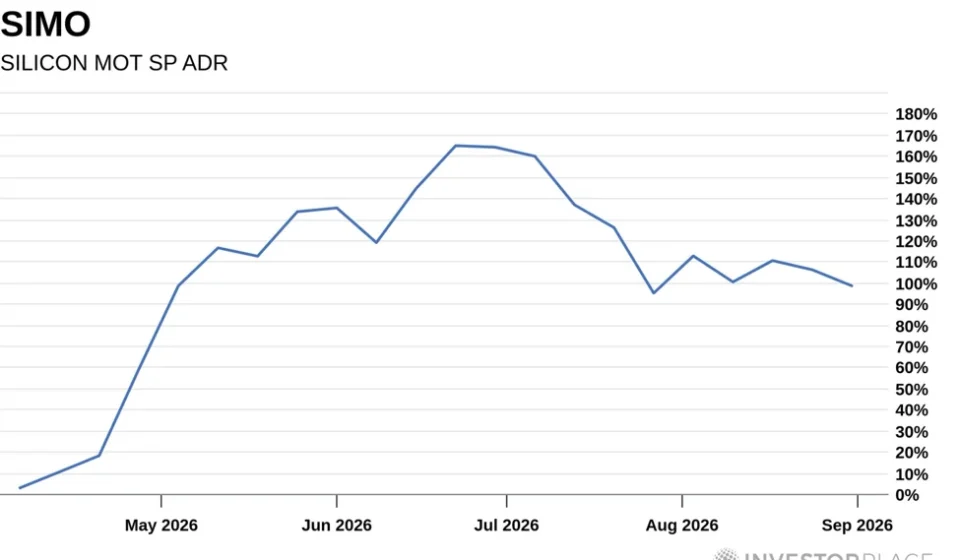
Luke Lango, editor of Early Stage Investor, has popularized this approach by identifying firms that manage the flow of data within the massive infrastructure projects currently underway. A prime example is Silicon Motion Technology (SIMO). While Nvidia’s GPUs provide the computational "brains" for AI, those processors require staggering amounts of data to be retrieved and stored at near-instantaneous speeds. Silicon Motion specializes in NAND flash controllers, which act as the logistical coordinators for solid-state drives (SSDs) used in enterprise data centers.
As AI models grow in complexity—with parameters now numbering in the trillions—the demand for high-speed, reliable data storage has surged. Silicon Motion’s technology ensures that data is retrieved without latency, preventing a performance lag that would otherwise negate the speed of high-end processors. Since Lango highlighted the firm as a critical supplier in the AI data center buildout earlier this year, the company’s stock has seen a nearly 90% appreciation, illustrating the financial potential of identifying essential links in the supply chain.
Mapping the Musk Ecosystem
The strategy of "mapping the shopping list" is now being applied to Elon Musk’s sprawling industrial empire. Musk’s various ventures—Tesla, SpaceX, and xAI—represent some of the most capital-intensive and technologically ambitious projects in modern history. However, the vertical integration often associated with Musk’s companies has limits. To achieve his goals in autonomous transport, interplanetary travel, and generative AI, Musk relies on a sophisticated tier of suppliers providing everything from specialized semiconductors to precision aerospace components.
Tesla and the Robotics Frontier
Tesla is currently transitioning from a pure-play electric vehicle (EV) manufacturer to an AI and robotics firm. The development of the "Optimus" humanoid robot and the "Full Self-Driving" (FSD) software suite requires a massive influx of specialized hardware. While Tesla designs its own D1 chips for the Dojo supercomputer, it remains dependent on external fabrication plants and providers of high-bandwidth memory (HBM) and sensors. The actuators and sensors required for Optimus to mimic human movement represent a significant opportunity for precision engineering firms that can meet Tesla’s rigorous scale and durability requirements.
SpaceX and the Satellite Economy
SpaceX’s Starlink division is currently the world’s largest satellite operator. To maintain its launch cadence and expand the Starlink constellation, SpaceX requires advanced materials capable of withstanding extreme thermal cycles and radiation. This includes specialized carbon fiber composites, radiation-hardened electronics, and laser communication terminals. As SpaceX moves toward the commercialization of Starship, the demand for high-performance alloys and cryogenic valve systems is expected to scale exponentially, creating a "shopping list" of aerospace suppliers that are largely unknown to the general public.
xAI and the Supercomputer Race
Musk’s newest venture, xAI, recently made headlines with the construction of "Colossus," a massive AI supercomputer in Memphis, Tennessee. The facility utilizes 100,000 Nvidia H100 GPUs. However, the infrastructure required to support such a machine is immense. This includes liquid cooling systems to manage the heat generated by high-density server racks and advanced networking equipment to ensure seamless communication between thousands of interconnected processors. The companies providing these thermal management and networking solutions are essential to xAI’s goal of competing with OpenAI and Google.
Industry Chronology: The Evolution of Tech Supply Chains
To understand the scale of the opportunity, one must look at the timeline of supply chain evolution over the last two decades:
- 2007–2012: The Mobile Era. Suppliers like Corning (glass), Broadcom (connectivity), and Qualcomm (processors) became the backbone of the smartphone revolution.
- 2013–2020: The Cloud Migration. Companies providing server rack infrastructure, fiber optic cables, and power management systems saw sustained growth as enterprises moved data from on-premise servers to the cloud.
- 2021–Present: The AI and Automation Surge. The focus has shifted to "hyper-scalers." This era is defined by a desperate need for specialized chips, high-speed storage controllers, and the energy infrastructure required to power AI.
The common thread throughout this chronology is that the "platform" companies (Apple, Amazon, Tesla) capture the consumer mindshare, while the "component" companies capture a significant portion of the capital expenditures (CAPEX). In 2024 alone, the combined CAPEX of the "Magnificent Seven" tech companies is projected to exceed $200 billion, much of which is directed toward the types of suppliers found on Musk’s shopping list.
Data and Market Implications
The economic impact of these supplier relationships is measurable. According to recent market data, the global semiconductor market is expected to reach $1 trillion by 2030, driven largely by the AI infrastructure Musk and his peers are building. Furthermore, the global robotics market is projected to grow at a compound annual growth rate (CAGR) of 15% through the end of the decade.
For investors, the implication is that the "primary" stock (e.g., Tesla or Nvidia) often carries a high valuation premium. In contrast, the "secondary" suppliers—the companies on the shopping list—often trade at more reasonable price-to-earnings ratios despite having similar growth trajectories. This creates a "valuation gap" that can be exploited by those who understand the technical dependencies of the industry.
Analysis of the Supplier Network
The "bottleneck" theory of investing is not without risks. Suppliers are often subject to "concentration risk," where a significant portion of their revenue is tied to a single client like Tesla or SpaceX. If a visionary leader decides to "insource" a component or switch to a competitor, the supplier’s stock can face immediate volatility.
However, for highly specialized fields—such as the chemically strengthened glass produced by Corning or the high-speed controllers from Silicon Motion—the barrier to entry is high. These companies possess "moats" in the form of patents, proprietary manufacturing processes, and decades of institutional knowledge. For a company like xAI or Tesla, it is often more cost-effective to pay a premium to a trusted supplier than to spend years and billions of dollars attempting to replicate that expertise in-house.
Conclusion and Upcoming Briefing
As Elon Musk continues to expand his technological footprint, identifying the companies that facilitate his progress has become a focal point for market analysts. The parallel to the 2007 iPhone launch serves as a reminder that the most critical components of a revolution are often invisible to the end user.
To address this growing interest, market analysts Luke Lango, Louis Navellier, and Eric Fry will host a special online presentation on Wednesday, September 9, at 8 p.m. ET. The event, titled "The AI Megatrend and the Musk Shopping List," aims to provide a detailed map of the companies currently supporting Musk’s ventures. During the session, Lango is expected to reveal specific tickers of suppliers that his research suggests are currently undervalued relative to their importance in the AI and aerospace ecosystems.
In an era where front-facing tech stocks are increasingly crowded trades, the search for the "next Corning" or the "next Silicon Motion" represents a shift toward a more fundamental, infrastructure-based approach to technology investing. By focusing on the "shopping list," investors may find opportunities in the very companies that the world’s most prominent innovators cannot afford to ignore.