Masters in Trading Strategies Pivot Toward Data-Driven Expected Move Analysis Amid Market Volatility

The landscape of modern financial markets is increasingly defined by a departure from narrative-driven speculation toward a focus on quantitative structural analysis. Jonathan Rose, a veteran options trader with three decades of experience, has formalized a methodology that prioritizes the "structure" of the market over the "story" presented by mainstream headlines. This approach, centered on a metric known as the "Expected Move," aims to identify mispricings and capital shifts by analyzing the divergences between related assets. As market volatility becomes more pronounced due to rapid developments in artificial intelligence, shifting bond yields, and geopolitical instability, the reliance on objective data has become a cornerstone for institutional-grade trading strategies now being adapted for a broader audience.
The Shift from Narrative-Based Trading to Structural Analysis
For many market participants, particularly retail traders, the primary driver of decision-making is often the "narrative"—the collection of news headlines and economic reports that explain why a stock is moving. However, Rose argues that professional trading requires a shift from "why" to "what." This involves focusing on concrete data points such as hedging pressure, volatility expectations, and liquidity flows. By anchoring strategies to these objective metrics, traders move from the realm of prediction into the realm of probability.
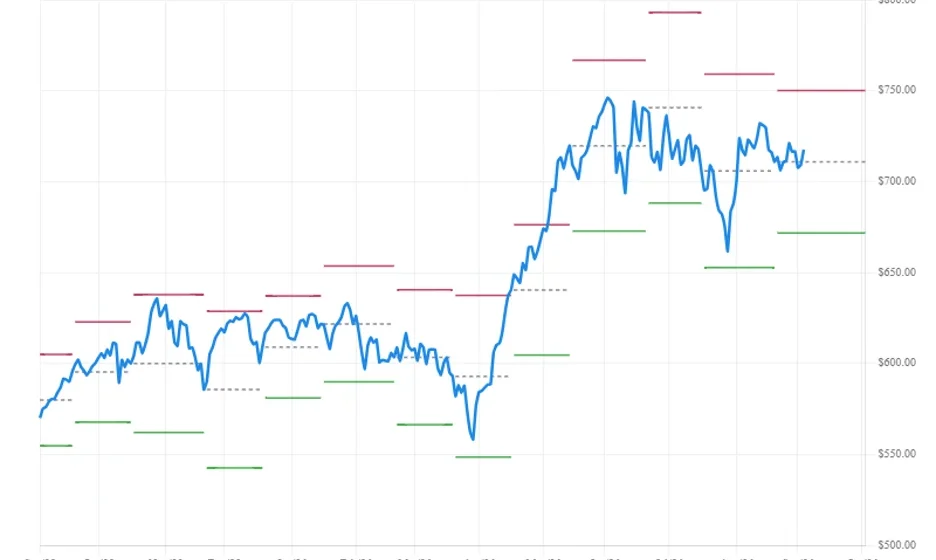
The core of this structural approach is the "Expected Move," a calculation derived from options pricing that defines the range within which the market expects a stock or index to trade over a specific timeframe. This metric is essentially a forward-looking estimate of movement based on implied volatility. In a professional context, these levels serve as behavioral maps. They indicate where market makers are likely to adjust their hedges and where institutional liquidity is most concentrated. Statistically, prices remain within the Expected Move boundaries approximately 70% to 75% of the time, particularly for highly liquid assets like the Invesco QQQ Trust (QQQ) or Apple Inc. (AAPL).
Upcoming Strategic Collaboration and Event Timeline
To further explore the integration of these quantitative tools, Jonathan Rose is scheduled to host a live session on Tuesday, September 8th, at 11:00 AM EST, featuring Louis Navellier, a prominent figure in growth investing and quantitative analysis. The collaboration aims to dissect current market dynamics across various sectors, including technology, commodities, and fixed income.
The timeline of this development follows the recent release of the "Expected Move Calculator," a proprietary software tool designed to automate the calculation of these critical boundaries. This release comes at a time when macroeconomic data, such as recent labor market reports and fluctuations in AI-sector valuations, has caused significant "noise" in the markets. The upcoming session is expected to provide a deep dive into how these tools can be used to stay ahead of "headline news bombs" by identifying where "smart money" is positioning before major volatility events occur.
Technical Foundations: The Mechanics of the Expected Move
The Expected Move is not merely a technical indicator but a reflection of the collective sentiment and risk assessment of the options market. It is calculated using the price of at-the-money straddles—simultaneously buying a call and a put option at the same strike price. The cost of this position represents the market’s "bet" on how much the underlying asset will move, regardless of direction.
When volatility is high, the Expected Move expands, creating wider bands on a chart. Conversely, in low-volatility environments, these bands contract. Professional traders use these levels to define "normal" versus "abnormal" price action.
- Inside the Range: When a stock stays within its Expected Move, it suggests that the market’s pricing of risk was accurate, and current trends are likely to persist.
- Breaching the Range: A move outside these boundaries signals an outlier event. This often triggers a cascade of institutional hedging, as market makers who sold options must buy or sell the underlying stock to remain "delta neutral," potentially accelerating the move.
Case Study: Volatility Arbitrage and the Invesco QQQ Trust
The effectiveness of this structural approach was recently highlighted in a case study involving the Invesco QQQ Trust (QQQ), an ETF that tracks the Nasdaq-100 Index. In March, institutional flow data indicated a significant accumulation of options, suggesting an impending move that the broader market had not yet fully priced in.

At the time, the market was facing a confluence of pressures, including rising geopolitical tensions in the Middle East and shifting liquidity conditions within the technology sector. Rather than attempting to predict whether the QQQ would move up or down, traders utilized a "strangle" strategy—buying out-of-the-money calls and puts with the same expiration date. This strategy profits from a significant move in either direction, essentially "betting on volatility" rather than direction.
According to data shared by the Masters in Trading community, this specific setup allowed participants to capitalize on a rapid expansion in volatility. In one documented instance, a trader identified as "Greg" entered a position on a Monday morning and realized a gain of over 536% by the close of the trading day as the QQQ broke decisively through its Expected Move boundaries. This highlights a fundamental principle of the Rose methodology: when the "story" (geopolitics/tech earnings) aligns with the "structure" (expected move breaches) and "flow" (institutional options buying), high-probability opportunities emerge.
Institutional Hedging and Market Liquidity
A critical component of understanding market structure is the role of institutional market makers. These entities provide liquidity by taking the opposite side of retail and institutional trades. To manage their own risk, they must constantly hedge their positions.
When a stock approaches the upper or lower limit of its Expected Move, market makers often face "gamma exposure." If a stock rises toward a major call-heavy strike price, market makers must buy more of the underlying stock to hedge, creating a feedback loop that can drive prices higher. Understanding these "zones" allows traders to anticipate where support and resistance are likely to manifest, not based on historical price levels alone, but on current options positioning.
Broader Market Implications and Educational Initiatives
The shift toward these quantitative tools reflects a broader trend in the financial industry where the line between retail and institutional capabilities is blurring. Tools like the "Advanced Notice Unusual Options Scanner" and the "Expected Move Calculator" are designed to provide individual traders with the same data sets used by hedge funds and floor traders.
The "Masters in Trading Options Challenge" serves as the educational framework for this transition. The program emphasizes several core tenets:
- Fixed Risk: Ensuring every trade has a predefined maximum loss to prevent catastrophic drawdowns.
- Thesis-Driven Exits: Moving away from emotional selling and toward exits based on data-driven targets.
- Laddered Entries: Scaling into positions to optimize cost basis during periods of volatility.
- Defined-Duration Trades: Matching the timeframe of the trade to the specific volatility window identified by the Expected Move.
Recent performance data cited by the organization includes significant gains in diverse tickers such as MP Materials (MP), Hewlett Packard Enterprise (HPE), Capricor Therapeutics (CAPR), and Schlumberger (SLB). These results are presented not as outliers, but as the result of a repeatable process where "the story lines up with structure, and structure lines up with flow."
Conclusion: The Evolving Role of the Data-Driven Trader
As global markets face an era of rapid technological change and macroeconomic shifts, the ability to filter out "noise" is becoming a vital skill. The methodology promoted by Jonathan Rose and supported by experts like Louis Navellier suggests that the future of successful trading lies in the objective analysis of market expectations. By focusing on the Expected Move and institutional positioning, traders can move away from the stress of prediction and toward the clarity of statistical probability. The upcoming LIVE session on September 8th stands as a pivotal moment for traders looking to integrate these professional-grade structural insights into their own market operations, reinforcing the idea that in a volatile market, the most creative and data-anchored traders are the ones positioned to succeed.