Retroid Unveils Dual-Screen Pocket Duo, Signaling Major Shift in Retro Handheld Market

In a swift and strategic move following the recent launch of its Pocket Nova, Android gaming handheld manufacturer Retroid has teased its next groundbreaking device, the Retroid Pocket Duo. This forthcoming system is poised to introduce a significant departure from the company’s established single-screen form factor, embracing a dual-screen design that directly evokes the iconic Nintendo DS and 3DS consoles. The announcement, delivered via a cryptic social media teaser, has immediately ignited widespread speculation and excitement within the burgeoning retro gaming community, hinting at Retroid’s ambition to redefine portable emulation capabilities.
The Genesis of the Duo: A Strategic Tease
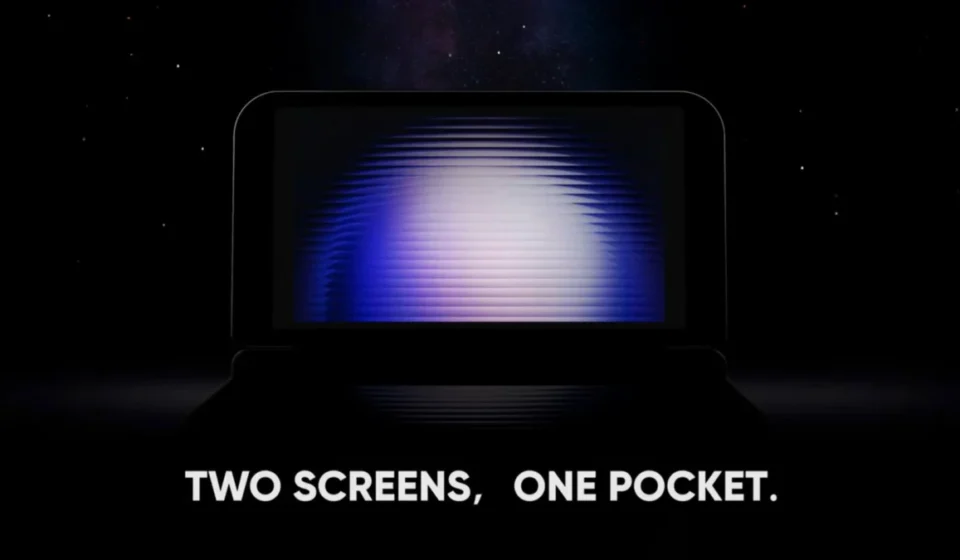
The initial revelation came in the form of a concise 20-second video clip shared across Retroid’s official social media channels, accompanied by the evocative tagline, "Two Screens.. One Pocket." While deliberately minimalist in its presentation, the teaser successfully conveyed the core innovation: a dual-screen handheld device, devoid of cumbersome clips or external cables, promising a seamlessly integrated experience. The video predominantly showcased a shadowy silhouette of the device, yet its distinct clamshell design and the prominent dual displays were unmistakable, drawing immediate parallels to Nintendo’s highly successful dual-screen lineage. Retroid officially christened the device the "Retroid Pocket Duo," cementing its name even as most technical specifications remain shrouded in mystery. This method of gradual revelation is characteristic of Retroid, a company known for building anticipation through drip-fed information leading up to a full product unveiling. The rapid succession of this teaser after the Pocket Nova’s debut underscores Retroid’s aggressive development cycle and its commitment to continuous innovation in a highly competitive market.
Retroid’s Trajectory: A History of Innovation in Handheld Emulation
Retroid has firmly established itself as a significant player in the retro gaming handheld arena, particularly within the segment utilizing the Android operating system. The company gained prominence with devices like the original Retroid Pocket, followed by increasingly powerful iterations such as the Retroid Pocket 2, 3, 3+, and the recently released Pocket 4 and Pocket Nova. Each successive model has typically offered incremental improvements in processing power, screen quality, and ergonomic design, catering to a diverse range of retro gaming enthusiasts. Their devices are lauded for striking a balance between affordability, performance, and a robust Android ecosystem that allows for flexible emulation of various console generations, from classic 8-bit and 16-bit systems to more demanding PlayStation Portable (PSP) and Nintendo 64 titles.
The company’s strategy often involves leveraging widely available and cost-effective Android-compatible chipsets, optimizing the software experience, and offering a compelling value proposition. This approach has garnered a loyal following, as users appreciate the ability to access a vast library of games through emulators, alongside the versatility of a full Android environment for streaming, productivity, or native Android gaming. The recent Pocket Nova, for instance, continued this trend by focusing on an improved display and enhanced internal components, solidifying Retroid’s reputation for iterative refinement. The announcement of the Pocket Duo, however, signals a more ambitious leap, moving beyond mere performance upgrades to explore entirely new form factors and address specific, complex emulation challenges.
The Dual-Screen Legacy: Nintendo’s Enduring Influence
The decision to adopt a dual-screen architecture is a clear homage to, and a direct response to the demands of, emulating Nintendo’s groundbreaking handheld consoles: the Nintendo DS (released in 2004) and its successor, the Nintendo 3DS (released in 2011). These systems revolutionized portable gaming with their innovative dual-screen setup, often featuring a touch-sensitive bottom screen complementing a primary display. This design allowed for unique gameplay mechanics, intuitive menu navigation, and immersive experiences that were impossible on single-screen devices. The DS and 3DS boast an enormous and beloved library of games, many of which are specifically designed to utilize both screens simultaneously, making accurate emulation on a single-screen device inherently compromised.
For years, retro gaming enthusiasts have grappled with the challenges of playing DS and 3DS titles on single-screen Android handhelds or smartphones. Solutions typically involve splitting the single screen into two smaller, often cramped, display areas, or toggling between screens, significantly detracting from the original gameplay experience. The Retroid Pocket Duo, by offering two dedicated physical screens, promises to eliminate these compromises, delivering an authentic and unencumbered emulation experience that has long been sought after by the community. This move positions Retroid not just as a purveyor of general retro handhelds, but as a specialist targeting a specific, highly desired niche within the emulation landscape.
Navigating the Technical Labyrinth: The Demands of DS and 3DS Emulation
While the dual-screen form factor addresses the visual presentation, the core challenge of DS and 3DS emulation lies in the underlying hardware requirements. Emulating these systems accurately, especially the Nintendo 3DS, is notoriously resource-intensive. The 3DS, in particular, features a custom CPU based on ARM architecture and a powerful PICA200 GPU, which collectively drive its 3D graphics and unique capabilities. Emulators like Citra for 3DS and DraStic for DS require significant processing power, both from the CPU for game logic and the GPU for rendering complex 3D environments and scaling resolutions.
For smooth 3DS emulation, particularly at higher resolutions, a powerful modern chipset is essential. Devices often struggle with demanding titles, experiencing frame rate drops, audio glitches, and graphical artifacts. The Retroid Pocket Duo will need to house a System-on-a-Chip (SoC) that can comfortably handle these demands. Given Retroid’s previous choices, options like MediaTek’s Dimensity series (e.g., Dimensity 1100, 1200, or newer) or Qualcomm’s Snapdragon 800 series are plausible candidates. These chipsets offer robust multi-core CPU performance and capable integrated GPUs that are crucial for rendering 3D graphics and managing the dual-screen output without significant performance bottlenecks. The choice of SoC will directly impact the device’s pricing and its ability to flawlessly emulate the most demanding titles from the 3DS library. Beyond raw power, the software optimization of Android, the chosen emulator (likely Citra for 3DS and DraStic for DS, potentially pre-configured), and Retroid’s custom front-end will play a crucial role in delivering a polished user experience.
Market Implications and Competitive Landscape
The announcement of the Retroid Pocket Duo has significant implications for the broader retro handheld market. Currently, the market is saturated with single-screen devices, ranging from budget-friendly Linux-based handhelds to high-performance Windows-based portable PCs. While many of these devices can run DS and 3DS emulators, none offer a dedicated dual-screen hardware solution. The Pocket Duo thus carves out a unique niche for Retroid, potentially attracting a segment of the market that prioritizes authentic dual-screen gameplay above all else.
Competitors such as Anbernic, Miyoo, Ayn, and Ayaneo primarily focus on maximizing performance on traditional single-screen form factors. Retroid’s move could either inspire other manufacturers to explore similar innovative designs or force them to double down on their existing strategies, emphasizing raw power or different form factors. The success of the Pocket Duo will largely depend on its ability to deliver on its promise of superior DS/3DS emulation performance, coupled with competitive pricing and ergonomic design. If Retroid can achieve this, the Pocket Duo could become the definitive device for fans of Nintendo’s dual-screen era, potentially shifting market trends towards more specialized, form-factor-driven emulation devices.
Anticipated Features and Community Expectations
While concrete specifications are yet to be revealed, the community is actively speculating on what the Retroid Pocket Duo will offer. Based on Retroid’s history and the demands of a dual-screen device, several features are highly anticipated:
- Display Specifications: The teaser image suggests larger screens than the original DS/3DS. Speculation leans towards displays ranging from 3.5 to 4.5 inches each, likely IPS panels with resolutions suitable for upscaling DS (256×192) and 3DS (400×240 top, 320×240 bottom) games.
- Controls: A full suite of controls is expected, including a precise D-pad, face buttons (A, B, X, Y), shoulder buttons (L1, R1, L2, R2), and at least one, if not two, analog sticks for modern Android gaming and enhanced 3D game control. Given the 3DS resemblance, a second analog stick (C-stick style or full stick) would be crucial for many titles.
- Operating System: It will undoubtedly run a customized version of Android, providing access to the Google Play Store and a vast array of emulators. Retroid typically includes its own frontend for a streamlined gaming experience.
- Battery Life: Dual screens and demanding emulation will necessitate a substantial battery capacity, likely in the 4,000-6,000 mAh range, to ensure respectable playtimes.
- Connectivity: Standard features like Wi-Fi (2.4GHz/5GHz), Bluetooth, USB-C for charging and data, and potentially a mini-HDMI output for TV connectivity are expected.
- Pricing: Retroid devices typically fall into the $100-$250 range. A dual-screen device with a powerful SoC could push the higher end of this spectrum, potentially nearing $300, depending on the chosen components.
The retro gaming community’s reaction has been overwhelmingly positive, with discussions centering on the potential SoC, pricing, and the sheer excitement of a dedicated dual-screen emulation device. Many are hopeful that Retroid will deliver a device that not only accurately emulates DS and 3DS titles but also offers a comfortable and premium gaming experience.
Looking Ahead: A New Chapter for Portable Gaming
The Retroid Pocket Duo represents a bold strategic pivot for Retroid, venturing into a form factor largely untouched by other mainstream Android handheld manufacturers. By directly addressing the long-standing desire for authentic dual-screen emulation, Retroid is not merely releasing another iterative update; it is attempting to define a new category within the retro handheld market. The success of the Pocket Duo will serve as a testament to Retroid’s design prowess, engineering capabilities, and understanding of the enthusiast community’s demands. As the company prepares for its full reveal, the anticipation continues to build, with many eagerly awaiting the moment they can finally experience their cherished DS and 3DS libraries in their intended glory, all within the confines of "One Pocket." This innovation could mark a new chapter for portable retro gaming, pushing the boundaries of what is possible and expected from dedicated emulation hardware.