






Apple Watch Ultra 4 Drops GLONASS Support, Paving the Way for Enhanced Location Accuracy

Apple has officially removed support for the Russian GLONASS satellite navigation system from its latest flagship wearable, the Apple Watch Ultra 4. This strategic decision, detailed in the device’s technical specifications released concurrently with its unveiling, marks a significant shift in the Ultra line’s satellite positioning capabilities. While its predecessor, the Apple Watch Ultra 3, boasted compatibility with GPS, GLONASS, Galileo, QZSS, and BeiDou, the Ultra 4 streamlines this to GPS, Galileo, QZSS, and BeiDou. This move, while seemingly minor, carries substantial implications for the accuracy, processing efficiency, and potentially the battery life of Apple’s most rugged and advanced smartwatch.
The omission of GLONASS from the Ultra 4’s hardware configuration is not arbitrary. It aligns with a broader industry trend toward leveraging more sophisticated and multi-frequency satellite signals for precise geolocation. The Global Navigation Satellite System (GNSS) landscape has evolved considerably, with newer constellations and advancements in receiver technology enabling more robust and accurate positioning. GLONASS, while a foundational element of global navigation for many years, operates on a system that presents certain limitations in comparison to newer, multi-frequency supported systems.
The Technical Rationale Behind the GLONASS Exclusion
To understand Apple’s decision, it’s crucial to delve into the technical nuances of satellite navigation. The primary satellite navigation systems utilized by consumer devices include GPS (United States), GLONASS (Russia), Galileo (European Union), BeiDou (China), and QZSS (Japan). These systems transmit signals on various frequencies, with L1 being the most commonly used band for consumer-grade receivers. However, modern GNSS chipsets are increasingly capable of receiving signals on multiple frequencies, such as L1 and L5, which significantly enhances accuracy by mitigating ionospheric errors and improving signal integrity.
The key differentiator lies in how these systems transmit their signals. GPS, Galileo, BeiDou, and QZSS are all based on Code Division Multiple Access (CDMA) signaling and are designed to support multiple frequencies. This dual-frequency capability allows for a more precise triangulation of a device’s location. In contrast, GLONASS, while also a vital part of the global navigation infrastructure, has historically relied on a different signal architecture. Consumer devices, particularly those that primarily receive an L1 signal from GLONASS, find it less advantageous when operating alongside dual-frequency enabled systems like Galileo and BeiDou.
Furthermore, the GLONASS system necessitates specific corrections for hardware timing delays on a per-satellite basis. This complexity in signal processing can introduce potential positioning errors, especially in environments with challenging satellite visibility, such as urban canyons or dense foliage. By removing GLONASS support, Apple can simplify the receiver’s processing demands, reduce the potential for these errors, and potentially streamline the overall GNSS chip’s operation.
A Strategic Shift for Enhanced Performance
Apple has not provided an explicit statement detailing the reasons for the GLONASS deprecation on the Apple Watch Ultra 4. However, the technical advantages of the remaining supported systems offer a clear indication of the company’s strategic direction. The removal of GLONASS is likely to yield several tangible benefits for the end-user:
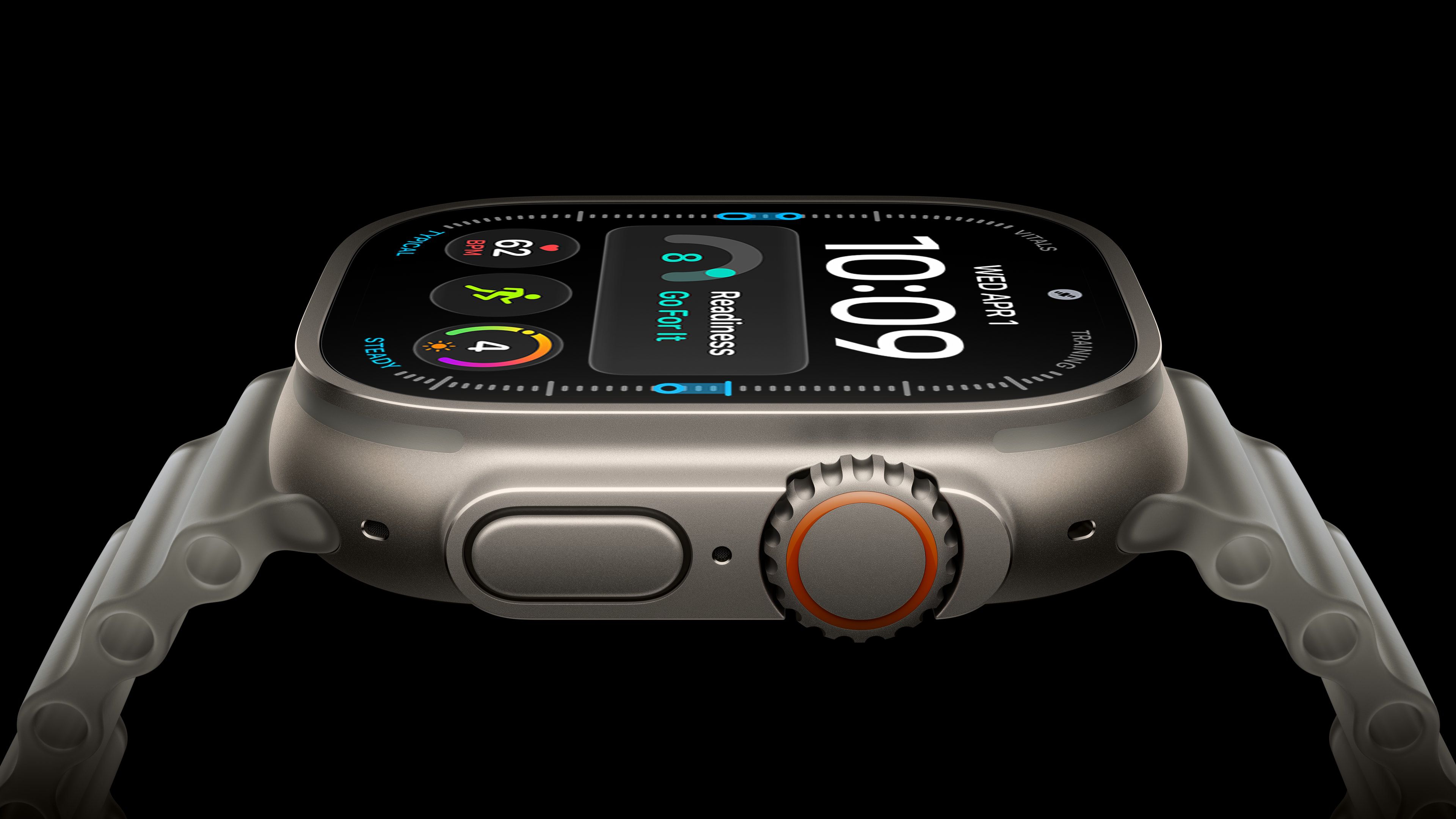
- Improved Location Accuracy: With the reliance on multi-frequency signals from GPS, Galileo, BeiDou, and QZSS, the Apple Watch Ultra 4 is poised to offer more precise and reliable location tracking, particularly during activities like running, cycling, hiking, and open-water swimming where accurate route mapping is paramount.
- Reduced Processing Load: Simplifying the GNSS receiver’s task by excluding GLONASS can lead to more efficient data processing. This can translate to quicker time-to-first-fix (TTFF) – the time it takes for the device to acquire satellite signals – and more responsive location updates.
- Potential Battery Life Enhancements: While not explicitly stated, a reduction in the processing demands of the GNSS chipset can contribute to improved power efficiency. For a device like the Apple Watch Ultra, which is designed for extended use in demanding environments, even marginal gains in battery life can be significant.
Continuity with the Apple Watch Series Line
Interestingly, the decision to omit GLONASS is specific to the Apple Watch Ultra 4. The recently announced Apple Watch Series 12 continues to support GLONASS, alongside GPS, Galileo, QZSS, and BeiDou. This distinction suggests that Apple’s reasoning is tied to the specific use case and hardware capabilities of the Ultra line. The Series models, typically used for a broader range of daily activities and often not subjected to the same extreme conditions as the Ultra, may benefit from the broader compatibility of GLONASS, especially if their GNSS chipsets are not fully optimized for multi-frequency reception in the same way as the Ultra 4. The L1-only limitation, which poses a challenge for dual-frequency systems, might be less of a performance bottleneck on a single-frequency focused device like the Series 12.
The Context of the September 2026 Product Unveiling
This announcement comes in the wake of Apple’s highly anticipated "Surprise and Shine" event, held on Wednesday, September 9, 2026. The event, which kicked off at 10:00 a.m. Pacific Time, was a significant showcase of new Apple hardware. As widely reported by industry analysts and tech publications, including MacRumors’ live blog coverage, the event introduced a suite of groundbreaking products. Headlining the event was the much-rumored foldable iPhone Duo, alongside the next iteration of Apple’s flagship smartphone, the iPhone 18 Pro and Pro Max.
In addition to the new iPhone models, the event also saw the official reveal of the Apple Watch Series 12 and the Apple Watch Ultra 4. This year’s Apple Watch lineup, as per reports from sources like Bloomberg’s Mark Gurman, was not expected to feature drastic design overhauls compared to their Series 11 and Ultra 3 predecessors. Instead, the focus was on internal refinements and technological advancements. The GLONASS deprecation in the Ultra 4 fits perfectly into this narrative of incremental but impactful improvements aimed at enhancing user experience and device performance. The event also included the introduction of the new AirPods 5 earphones, rounding out a comprehensive product refresh.
Broader Implications for Wearable Technology
The Apple Watch Ultra 4’s move away from GLONASS is more than just a technical specification change; it reflects a larger trend in the wearable technology market. As devices become more sophisticated and users demand higher levels of accuracy for fitness tracking, navigation, and augmented reality applications, the underlying satellite navigation technology becomes increasingly critical. Companies are investing heavily in GNSS chipsets that can leverage the full potential of multi-constellation and multi-frequency systems.
This shift also highlights the evolving geopolitical landscape and its influence on technology standards. While GLONASS remains a critical global navigation system, the increasing reliance on proprietary and open-source international collaborations for satellite technology, such as Galileo and BeiDou, signals a diversification of global positioning infrastructure. Apple’s decision to prioritize systems that offer superior accuracy and processing efficiency within its premium product line underscores the company’s commitment to delivering cutting-edge performance to its most discerning customers.
The implications for developers and app creators are also noteworthy. With more accurate and reliable location data, applications that rely on precise positioning, such as advanced mapping services, augmented reality experiences, and sophisticated fitness analytics, can be further enhanced. The move by Apple to streamline its supported GNSS constellations on its high-end devices suggests a future where location data accuracy will be a key differentiator in the competitive wearable market.
A Focus on Precision and Efficiency
In conclusion, the Apple Watch Ultra 4’s exclusion of GLONASS support represents a deliberate engineering choice aimed at optimizing the device’s core functionality. By focusing on GPS, Galileo, QZSS, and BeiDou, Apple is leveraging the most advanced and accurate satellite navigation technologies available. This decision, made in the context of a significant product launch event that also introduced the foldable iPhone Duo and the iPhone 18 Pro series, signals Apple’s continued commitment to pushing the boundaries of wearable technology. The pursuit of enhanced accuracy, reduced processing overhead, and potentially improved battery life demonstrates a clear strategy to solidify the Apple Watch Ultra 4’s position as a leader in rugged, high-performance smartwatches, catering to athletes, adventurers, and professionals who demand the utmost precision from their devices. The continued support for GLONASS in the Apple Watch Series 12 further illustrates a nuanced approach, tailoring hardware capabilities to the specific needs and expected usage patterns of different product tiers.


