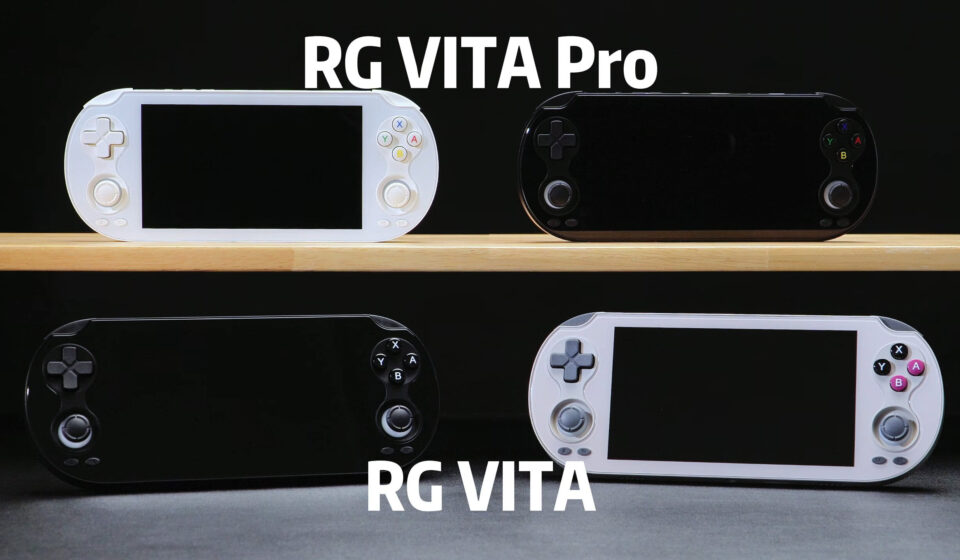
ANBERNIC reveals full spec sheet for PlayStation Vita clones: RG Vita and RG Vita Pro

Veteran handheld manufacturer ANBERNIC has officially released the complete specifications for its highly anticipated RG Vita and RG Vita Pro handheld gaming devices, confirming earlier rumors and providing a detailed look at the internal hardware driving these PlayStation Vita-inspired systems. The announcement, made through a dedicated YouTube video, solidifies the company’s strategic move to blend nostalgic design with modern emulation capabilities, targeting a broad segment of the burgeoning retro gaming market. This detailed disclosure follows an initial announcement earlier this year and a period of speculative leaks, culminating in a comprehensive overview that sheds light on ANBERNIC’s dual-tier approach to performance and user experience.
Unpacking the Official Specifications: A Dual-Tier Approach
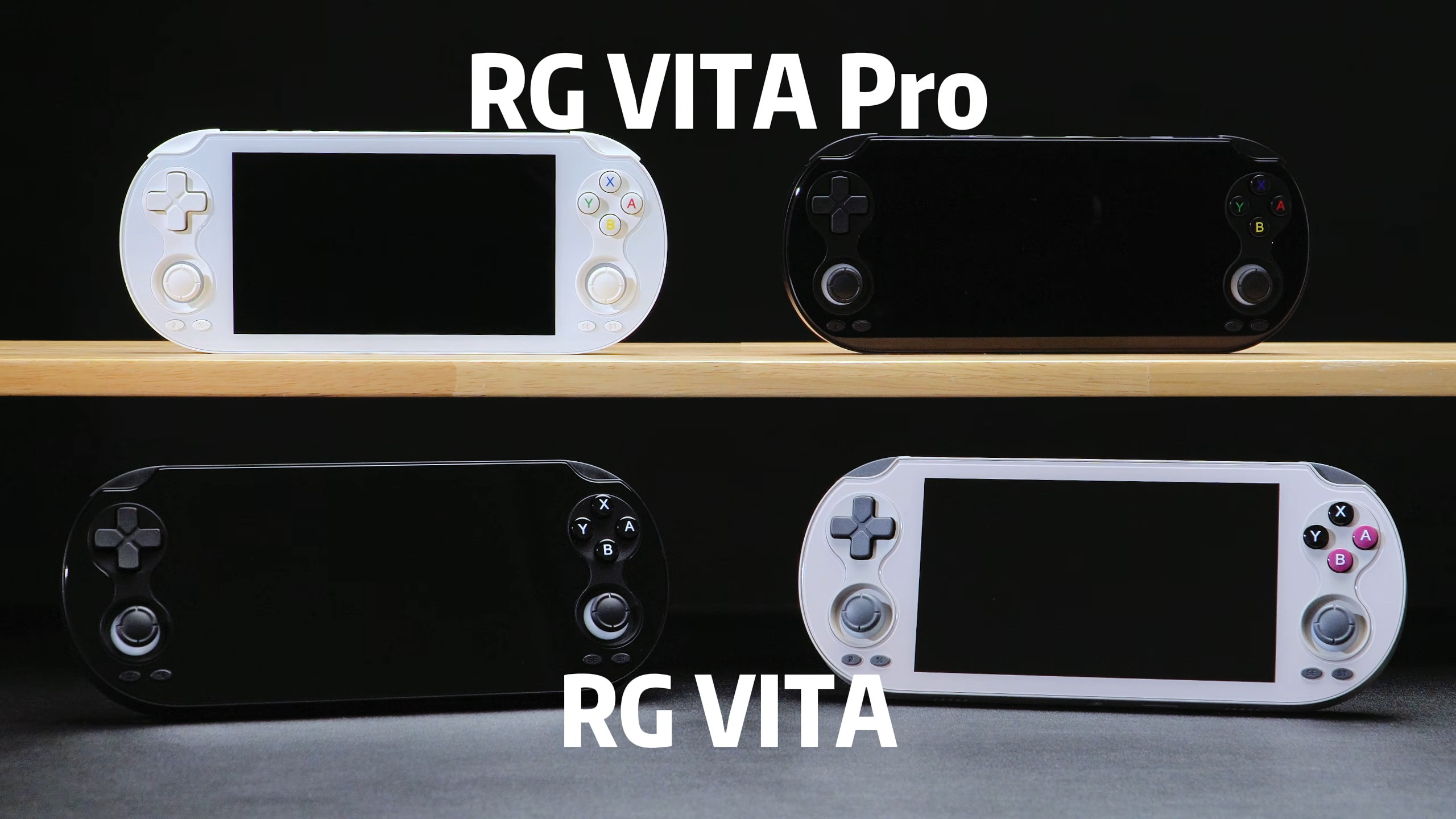
The official spec sheet reveals distinct differences between the standard RG Vita and its Pro counterpart, showcasing ANBERNIC’s intent to cater to varying performance and budget requirements within the handheld segment. Both devices share a foundational design ethos, drawing heavily from the iconic PlayStation Vita, a beloved portable console known for its ergonomic form factor and crisp display.
The ANBERNIC RG Vita is positioned as the more accessible option, featuring a 5.46-inch IPS LCD display with a 720p resolution. Under the hood, it is powered by the familiar Unisoc Tiger T618 chipset, a processor that has become a staple in many mid-range retro handhelds for its balanced performance. This is paired with 3GB of RAM and 64GB of internal storage, which is expandable via a memory card slot supporting up to 2TB. Connectivity options include Bluetooth 5 and Wi-Fi 5, and the device runs on Android 12. Powering the system is a 5,000mAh battery, supported by 10W wired charging.
Stepping up to the ANBERNIC RG Vita Pro, users will find an enhanced experience, starting with a slightly larger 5.5-inch IPS LCD screen boasting a sharper 1080p resolution. The Pro model differentiates itself significantly with a Rockchip RK3576 processor, accompanied by 4GB of RAM and the same 64GB of expandable storage. Connectivity is upgraded to Bluetooth 5.2 and Wi-Fi 6, offering faster and more stable wireless performance. A key distinction lies in the operating system choices, with the Pro offering users the flexibility of either Android 14 or a Linux-based environment, catering to different user preferences for customization and emulation efficiency. The 5,000mAh battery in the Pro model benefits from faster 18W wired charging. Both devices universally include a 3.5mm audio jack, underscoring their commitment to traditional audio solutions.
Intriguingly, both models are also listed with "AI features," encompassing functionalities like language translation and image generation. While the precise integration and utility of these AI capabilities in a gaming handheld context remain to be fully detailed, it suggests ANBERNIC is exploring avenues beyond pure gaming performance to add value and functionality, potentially appealing to a broader tech-savvy audience.
ANBERNIC’s Legacy and the Inspiration of the PlayStation Vita
ANBERNIC has long established itself as a prominent player in the retro handheld market. Since its inception, the company has released a continuous stream of devices under its "RG" (Retro Game) series, gaining a reputation for producing well-built, reliable handhelds that offer robust emulation capabilities for a wide array of classic consoles. Their portfolio ranges from highly portable, vertical-format devices to more powerful horizontal designs, often leveraging open-source software and community support. This consistent output has cultivated a loyal user base keenly interested in their latest offerings.
The decision to adopt a design "broadly copy[ing] the PlayStation Vita" is a significant strategic choice. The Sony PlayStation Vita, launched globally in 2012, was lauded for its premium build quality, vibrant OLED display (on the original model), dual analog sticks, and a comfortable ergonomic design. Despite its eventual struggles against the rise of mobile gaming, the Vita garnered a dedicated following and is still celebrated for its hardware design. By emulating this aesthetic, ANBERNIC taps into a strong vein of nostalgia and seeks to replicate the ergonomic comfort and visual appeal that made the original Vita so popular, translating it into a platform primarily focused on emulation rather than a proprietary game library. This move is likely to resonate with gamers who appreciate the Vita’s form factor but desire access to a broader universe of retro titles through emulation.
A Deeper Dive into Chipset Dynamics and Emulation Prospects
The disparity in chipsets between the RG Vita and RG Vita Pro presents an interesting performance dynamic. The Unisoc Tiger T618 in the standard RG Vita is an octa-core SoC, typically configured with two ARM Cortex-A75 "big" cores clocked at up to 2.0 GHz and six ARM Cortex-A55 "little" cores. Its graphics processing unit (GPU) is a Mali-G52 MP2. This chipset has proven itself capable of handling a wide range of retro systems, including the PlayStation 1, Nintendo 64, Dreamcast, and most PSP titles, often with upscale rendering. It struggles, however, with more demanding systems like GameCube, PlayStation 2, and some Nintendo Switch titles, where performance can be inconsistent or non-existent.
The Rockchip RK3576 in the RG Vita Pro offers a different architectural approach. While the official specifications indicate "older CPU cores" compared to the T618, the crucial detail lies in the configuration: the RK3576 features four Cortex-A72 "big" cores alongside four Cortex-A53 "little" cores. While Cortex-A72 cores are indeed older than Cortex-A75, the presence of four big cores, as opposed to the T618’s two, is a critical factor for multi-threaded workloads. The RK3576’s GPU, a Mali-G52 with "extra shader core[s]," suggests potentially stronger graphics performance.
This chipset choice creates a nuanced performance profile. For emulation that heavily relies on single-core CPU performance, the T618’s newer Cortex-A75 cores might offer a slight edge due to their improved instruction per clock (IPC) capabilities. However, for emulators optimized to leverage multiple CPU cores, particularly for demanding systems like PlayStation 2 (PS2) or specific GameCube titles, the RK3576’s four big Cortex-A72 cores could provide a substantial advantage. Emulators like AetherSX2 (for PS2) and Dolphin (for GameCube/Wii) often benefit significantly from more CPU threads, even if the individual cores are a generation older. The additional GPU power in the Pro model further bolsters its potential for higher resolution rendering and more complex graphical effects in supported emulators.
It is important to reiterate ANBERNIC’s explicit omission of PlayStation Vita emulation from the list of supported consoles. This is not surprising given the demanding nature of Vita3K, the primary open-source PS Vita emulator, which is still in its early stages of development and typically requires high-end PC hardware to run games at playable frame rates. The modest specifications of both RG Vita models, while robust for older systems, are simply not powerful enough to handle the complexities of modern portable console emulation.
Operating System Choices and User Experience
The choice of operating systems further differentiates the two models. The standard RG Vita runs on Android 12, a stable and widely supported platform that offers access to a vast ecosystem of emulation apps, front-ends (like Daijishō, LaunchBox, or EmulationStation), and utilities through the Google Play Store or sideloading. Android’s flexibility makes it a popular choice for retro handhelds, allowing users to customize their experience extensively.
The RG Vita Pro offers a dual-boot option between Android 14 and Linux. Android 14 provides the latest advancements in the Android ecosystem, potentially offering better performance optimizations, security features, and a longer support window. The inclusion of a Linux option is particularly appealing to hardcore retro gaming enthusiasts and power users. Linux-based distributions specifically tailored for retro handhelds, such as ArkOS, Batocera, or JELOS, are renowned for their efficiency, customizability, and ability to squeeze maximum performance out of the hardware. These distributions often come pre-configured with a wide array of emulators and front-ends, offering a streamlined, "pick up and play" experience that many prefer over the more general-purpose nature of Android. This dual-OS strategy demonstrates ANBERNIC’s understanding of its diverse customer base and their varied preferences for system control and ease of use.
Connectivity, Storage, and Battery Life Considerations
The differences in wireless connectivity between the two models are also noteworthy. The RG Vita’s Wi-Fi 5 (802.11ac) and Bluetooth 5 are perfectly adequate for most gaming scenarios, including downloading ROMs and connecting wireless controllers. However, the RG Vita Pro’s upgrade to Wi-Fi 6 (802.11ax) and Bluetooth 5.2 offers tangible benefits. Wi-Fi 6 provides faster speeds, lower latency, and better performance in crowded network environments, which can be advantageous for game streaming (e.g., Steam Link, Xbox Cloud Gaming) or large file transfers. Bluetooth 5.2 brings improved efficiency and reliability for connecting multiple peripherals, which is crucial for a handheld device that might pair with controllers, headphones, or other accessories.
Both devices offer generous storage expandability up to 2TB via a memory card slot. This is a critical feature for retro gamers, as vast libraries of ROMs and ISOs for various systems can quickly consume storage space. A 2TB card provides virtually limitless space for even the most extensive collections.
The shared 5,000mAh battery capacity across both models suggests a focus on providing substantial playtime. While actual battery life will vary based on the game, screen brightness, and Wi-Fi usage, a 5,000mAh cell in conjunction with these chipsets typically translates to 4-7 hours of continuous gameplay for most emulated titles. The Pro’s faster 18W charging, compared to the standard Vita’s 10W, means quicker turnaround times between gaming sessions, a convenient feature for users who frequently drain their device’s battery.
Market Positioning, Competition, and Future Outlook
The ANBERNIC RG Vita and RG Vita Pro are poised to enter a highly competitive market segment dominated by a few key players, including ANBERNIC itself, Retroid, Miyoo, and other emerging brands. Given the confirmed specifications, particularly the chipsets used, these devices are clearly aimed at the mid-range to upper-mid-range budget segment of the retro handheld market. The Unisoc T618 is a known quantity in devices priced typically between $100 and $200, while the RK3576, with its more powerful multi-core CPU and GPU, could push the Pro model slightly higher, potentially into the $200-$250 range.
This pricing strategy, while speculative without official announcements, positions the RG Vita series as compelling alternatives to established favorites like the Retroid Pocket 3+/4/4 Pro or even ANBERNIC’s own RG505 and RG405M. The primary differentiator for the Vita series will undoubtedly be its PlayStation Vita-inspired design, which offers a unique aesthetic and ergonomic appeal not widely replicated by competitors in this performance tier.
The "AI features" are a novel inclusion that could differentiate the Vita series from its rivals. If implemented effectively, features like on-device language translation could be incredibly useful for importing and playing Japanese games without official English localizations, while image generation could offer unique customization options for front-end art or device wallpapers. The practical utility of these features will be a key point of evaluation upon the devices’ release.
As of this report, ANBERNIC has not yet provided official details regarding the launch date or pricing for either the RG Vita or the RG Vita Pro. These crucial pieces of information will determine the devices’ true competitive standing and accessibility to consumers. However, the comprehensive spec reveal confirms ANBERNIC’s continued commitment to innovating within the retro handheld space, blending nostalgic design with contemporary hardware and software choices to deliver a versatile and appealing gaming experience. The anticipation among the retro gaming community remains high, eagerly awaiting the opportunity to get their hands on these Vita-inspired powerhouses.