

The historical trajectory of transformative technology suggests that the most visible early innovations are rarely the most significant in terms of long-term economic impact. On January 1, 1880, The Washington Post published an assessment of a new invention that would eventually redefine human civilization: “The discovery and perfection of [the electric light] is so important, so revolutionizing and so far-reaching in its effects that we need the perspective of time fully to realize the scientific situation.” At the time, the public was captivated by Thomas Edison’s 1879 demonstration of a vacuum-sealed glass bulb that could produce light without a flame, wick, or the hazardous fumes associated with kerosene and gas lamps. While the light bulb was a marvel of the Gilded Age, it represented only the visible tip of a much larger industrial iceberg. The true revolution lay not in the glass bulb itself, but in the invisible electrical infrastructure—the generators, transformers, and thousands of miles of copper wiring—that would eventually power every facet of modern life.
In the current technological landscape, financial analysts and industry historians suggest that artificial intelligence (AI) is following a remarkably similar path. The public’s fascination with generative AI tools like ChatGPT, Google’s Gemini, and Anthropic’s Claude mirrors the 19th-century obsession with the light bulb. These applications are tangible, interactive, and easily understood. However, focusing solely on these front-end interfaces may lead investors to overlook the massive, foundational infrastructure build-out required to sustain the AI era. This "infrastructure phase" is where the most durable economic value is often created, as seen in the transition from the light bulb to the global electrical grid.
The Evolution of General-Purpose Technologies
To understand the scale of the current AI transition, it is necessary to examine the chronology of the electrical revolution. Following Edison’s 1879 breakthrough, the immediate demand was for localized lighting. However, the subsequent four decades saw a complete restructuring of the global economy. By 1882, the opening of the Pearl Street Station in New York City marked the birth of the central power plant. This led to the development of electric motors, which replaced steam engines in factories, fundamentally changing manufacturing throughput. By the 1920s, electricity had enabled the creation of labor-saving appliances, such as refrigerators and washing machines, and eventually birthed the telecommunications and broadcasting industries.
The transition from a "novelty" technology to a "utility" technology requires a massive infusion of capital into core infrastructure. In the context of AI, the industry is currently moving past the novelty phase. While the first wave of AI investment focused on the companies developing Large Language Models (LLMs), the second wave is pivoting toward the physical requirements of these models. This includes specialized semiconductors, high-bandwidth networking, massive cooling systems, and, perhaps most critically, high-capacity data storage.
The Infrastructure Bottleneck: Why Data Storage Matters
As hyperscalers—the massive cloud providers such as Microsoft, Amazon, and Google—race to construct the data centers required for AI, they are encountering a physical reality: AI models require an unprecedented amount of data storage. This data must be stored efficiently, reliably, and with a focus on power consumption. A common misconception in the investment community is that solid-state drives (SSDs) have rendered traditional hard disk drives (HDDs) obsolete. However, technical data from the storage industry tells a different story.

Industry analysis indicates that approximately 90% of the data stored in hyperscale and cloud data centers resides on hard drives rather than SSDs. The primary drivers for this preference are cost and energy efficiency. Hard drives are approximately six times more cost-effective than SSDs on a per-terabyte basis and utilize four times less operating power per terabyte than flash-based storage. In an era where data centers are consuming a growing percentage of the global power supply, these efficiencies are not merely incremental; they are essential for the scalability of AI.
Seagate Technology Holdings (STX) has emerged as a focal point for institutional investors looking to capitalize on this storage demand. As a leader in the development of Heat-Assisted Magnetic Recording (HAMR) technology, Seagate is pushing the limits of areal density, allowing for higher storage capacities within the same physical footprint. This technology is critical for AI "training lakes"—the massive repositories of data used to teach neural networks—and the subsequent "inference" phase, where AI models generate responses based on stored knowledge. Since early recommendations by market analysts like Louis Navellier, Seagate’s stock has seen significant appreciation, reflecting the market’s realization that the AI revolution cannot exist without the physical "bins" to hold the digital intelligence.
Chronology of the AI Buildout
The timeline of the AI revolution can be categorized into three distinct phases, each requiring different investment strategies:
- The Conceptual Phase (2012–2021): Triggered by breakthroughs in deep learning and the 2017 "Attention is All You Need" paper by Google researchers, this period was characterized by academic research and the early development of transformer models.
- The Consumer Explosion (2022–2024): The launch of ChatGPT in November 2022 brought AI into the public consciousness. This phase was defined by a rush to develop user-facing applications and a surge in demand for Nvidia’s H100 GPUs.
- The Infrastructure Reset (2025–Beyond): This is the phase currently beginning. It involves the "industrialization" of AI. This requires the construction of "Gigawatt-scale" data centers, the integration of AI into physical robotics, and the deployment of autonomous systems in logistics and healthcare.
During this third phase, the focus shifts from the software to the hardware and energy requirements. Recent reports from the International Energy Agency (IEA) suggest that data center electricity consumption could double by 2026, reaching levels comparable to the entire energy consumption of countries like Germany. This massive demand for power and cooling provides a secondary layer of investment opportunities in the utility and thermal management sectors.
Industry Responses and Market Implications
The "AI Reset" is not merely a theoretical concept but is reflected in the capital expenditure (CAPEX) reports of major technology firms. In recent quarterly earnings calls, the leadership of Meta, Microsoft, and Alphabet has consistently signaled an "aggressive" increase in CAPEX specifically for AI infrastructure. For example, Meta recently raised its 2024 CAPEX guidance to a range of $37 billion to $40 billion, citing the need to support its AI research and product development.
Market analysts suggest that this spending represents a "de-risking" of the infrastructure sector. Unlike the dot-com bubble of the late 1990s, where many companies lacked a path to profitability, the current AI buildout is being funded by the most profitable corporations in history. These "hyperscalers" are not just buying hardware; they are building a new digital utility that they intend to rent out to every other industry in the world.
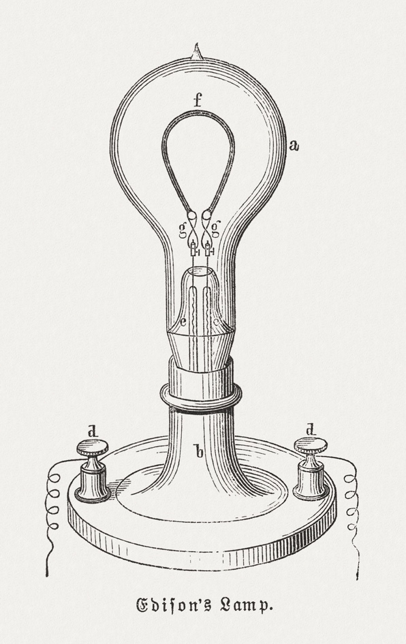
From a journalistic perspective, the implication is clear: the most significant "mistake" an investor can make is to assume that the current state of AI—chatbots and image generators—is the final destination. If the historical precedent of the electric light bulb holds true, the world is currently in the year 1880. The "light bulbs" have been turned on, and they are impressive. But the truly transformative wealth and societal change will come from the "wires" that are currently being laid underground.
The Future of AI Integration
Looking ahead, the integration of AI into the physical world will require a level of networking and storage capacity that dwarfs current capabilities. The development of AI agents—autonomous software entities that can execute complex tasks across multiple platforms—will require constant, low-latency access to vast databases. Furthermore, the rise of personalized medicine, where AI models analyze a patient’s entire genetic history to predict and prevent disease, will create a "data explosion" that must be managed by specialized infrastructure providers.
The "AI Reset" described by experts like Navellier suggests that the market is beginning to re-rate companies that were previously seen as "legacy" hardware providers. Companies involved in networking (Cisco, Arista Networks), power management (Eaton, Vertiv), and storage (Seagate, Western Digital) are being viewed through a new lens as the essential architects of the AI age.
In conclusion, while the initial excitement surrounding AI has been driven by its ability to mimic human conversation, its long-term value will be determined by its ability to transform the global economy’s physical and digital foundations. Just as the electric light bulb was the catalyst for a world powered by electricity, ChatGPT and its peers are the catalysts for a world powered by ubiquitous intelligence. The investors who recognize that the "bulb" is merely the entry point to a much larger infrastructure play are those most likely to navigate the next decade of technological transformation successfully. The perspective of time, as noted by The Washington Post in 1880, will eventually reveal that the most important parts of the AI revolution were the ones that remained hidden in the data centers and power grids of the world.