
Google Vids Introduces Transformative ‘Docs to Video’ Feature, Revolutionizing Content Creation in Workspace

Google Vids has officially launched a groundbreaking new capability, enabling users to convert PDF files, Google Docs, and Microsoft Word documents directly into polished video summaries. This significant update, announced today, September 2026, marks another stride in Google’s ongoing commitment to integrate advanced artificial intelligence into its Workspace suite, streamlining productivity and democratizing video content creation. The "Docs to Video" option is poised to redefine how professionals and educators interact with lengthy textual information, offering an efficient and engaging alternative to traditional reading.
The Genesis of a New Feature: Transforming Text into Dynamic Visuals
The introduction of the "Docs to Video" feature represents a pivotal moment in the evolution of Google Vids, an AI-powered video creation tool first unveiled as part of the broader Google Workspace ecosystem. This innovative functionality allows users to select a document—be it a PDF, a Google Doc, or a Word file—from their Google Drive or upload it directly from their local computer. Upon selection, Google Vids leverages sophisticated AI algorithms to meticulously analyze the document’s content, identify key themes, and automatically generate a comprehensive video script.
Following script generation, users are presented with the opportunity to review and edit the AI-created text, ensuring accuracy and alignment with their specific communication objectives. Furthermore, the tool offers a selection of narration voices, allowing for customization to match the desired tone and style. Once the script and narration preferences are finalized, Vids proceeds to craft a complete video, intelligently incorporating AI-generated images, relevant backgrounds, and seamless transitions to visually complement the narrative. This end-to-end automation significantly reduces the time and expertise traditionally required for video production, making high-quality summaries accessible to a broader user base.
Google Vids: A Chronology of Innovation
Google Vids has been on a rapid development trajectory since its inception, consistently rolling out features designed to enhance its utility and integration within the Google Workspace environment. The platform’s journey underscores Google’s strategic vision for AI-driven productivity tools.
- Initial Unveiling (Early 2026): Google Vids was introduced as an ambitious project aimed at simplifying video creation for business and educational purposes, leveraging generative AI to assist users from concept to final production. Its promise was to make video accessible even for those without prior editing experience.
- Veo 3.1 Integration (Months Prior to September 2026): A significant update saw Google Vids incorporating Veo 3.1, Google’s advanced video generation model. This integration dramatically improved the quality and sophistication of AI-generated video content, allowing for more realistic visuals and complex scene compositions, further empowering users to create compelling narratives.
- Google Slides Integration (More Recently): Prior to the "Docs to Video" launch, Google Vids was seamlessly integrated into Google Slides. This move enabled users to create and embed dynamic video content directly within their presentations, enhancing engagement and making complex information more digestible. This integration highlighted Google’s intent to weave Vids into the fabric of daily productivity workflows.
- "Docs to Video" Launch (September 2026): The current announcement represents the culmination of these earlier developments, pushing the boundaries of AI-assisted content creation by directly tackling the challenge of summarizing lengthy text documents into engaging video formats.
This consistent rollout of advanced features demonstrates Google’s aggressive push to position Vids as a central pillar in its AI-enhanced Workspace suite, catering to the evolving demands of modern communication.
The Broader AI Revolution in Productivity
The "Docs to Video" feature does not exist in a vacuum; it is a direct manifestation of the ongoing artificial intelligence revolution transforming the landscape of productivity software. Across industries, businesses are grappling with an explosion of information and the need to communicate complex data efficiently. Generative AI tools are emerging as critical solutions, capable of automating mundane tasks, synthesizing vast amounts of information, and accelerating content creation.

According to a recent industry report, over 70% of enterprises are expected to adopt generative AI tools in their core business operations by 2027, up from less than 10% in 2023. This surge is driven by the promise of enhanced efficiency, reduced operational costs, and the ability to unlock new forms of creativity and innovation. The demand for video content, in particular, continues to grow exponentially. Market research indicates that video content accounts for over 82% of all internet traffic, and businesses that effectively leverage video experience a 66% increase in qualified leads annually. Tools like Google Vids directly address this confluence of trends, offering a practical application of AI to meet both the informational and communicative needs of modern organizations.
Google’s primary competitor, Microsoft, has also heavily invested in AI integration with its Copilot for Microsoft 365, offering similar capabilities for summarizing documents, generating content, and assisting with various tasks across Word, Excel, PowerPoint, and Outlook. The "Docs to Video" feature positions Google Vids as a direct challenger in the burgeoning AI-powered content creation space, specifically targeting the need for quick, digestible video summaries from textual sources. This competitive environment is fostering rapid innovation, benefiting end-users with increasingly powerful and accessible tools.
Key Benefits and Diverse Use Cases
The potential applications of the "Docs to Video" feature span a wide array of sectors, promising significant benefits in efficiency, accessibility, and engagement.
For Corporate Environments:
- Meeting Summaries: Lengthy meeting minutes or project reports can be condensed into concise video recaps, allowing stakeholders to quickly grasp key decisions and action items without sifting through pages of text. This is particularly valuable for busy executives or team members who missed a session.
- Training and Onboarding: Companies can rapidly convert extensive training manuals, policy documents, or onboarding materials into engaging video modules. Visual and auditory learning methods often lead to better retention compared to text-only formats, accelerating employee integration and skill development.
- Internal Communications: For disseminating company-wide announcements, quarterly reports, or strategy updates, video summaries offer a more dynamic and accessible format than traditional memos or emails, potentially increasing employee engagement and understanding.
- Sales and Marketing: Product specifications, case studies, or white papers can be transformed into compelling video pitches or explanatory content, making complex offerings easier to understand for potential clients and enhancing marketing efforts.
For Educational Institutions:
- Lecture Summaries: Educators can convert extensive lecture notes, research papers, or textbook chapters into quick video summaries, aiding students in review and comprehension. This can be especially beneficial for students with diverse learning styles or those needing a quick refresher before exams.
- Student Projects: Students can leverage the tool to transform their research papers or reports into video presentations, adding a modern and engaging dimension to their assignments.
- Accessibility: For students with reading difficulties or visual impairments, video summaries with narration provide an invaluable alternative, promoting inclusivity in learning.
For Non-Profit Organizations and Government Agencies:
- Policy Briefs: Complex policy documents or research findings can be simplified into accessible video formats for public outreach or stakeholder engagement, making critical information more digestible for a wider audience.
- Grant Applications: Summarizing detailed project proposals or impact reports into video presentations can enhance grant applications, offering funders a concise and persuasive overview.
The ability to quickly transform static text into dynamic visual and auditory content addresses a fundamental challenge in the information age: cognitive overload. By offering a streamlined method for creating engaging video summaries, Google Vids empowers users to communicate more effectively and consume information more efficiently.
Implementation and Availability: A Phased Rollout
Google has initiated the rollout of the "Docs to Video" feature, making it available to users on a phased basis. Immediate access is granted to a subset of users, primarily those on specific Google Workspace plans. Specifically, the feature is available for individuals and organizations subscribed to Google Business, Enterprise, and Education plans. Additionally, users with a Google AI Plus, Pro, or Ultra subscription will also have access to this new functionality.
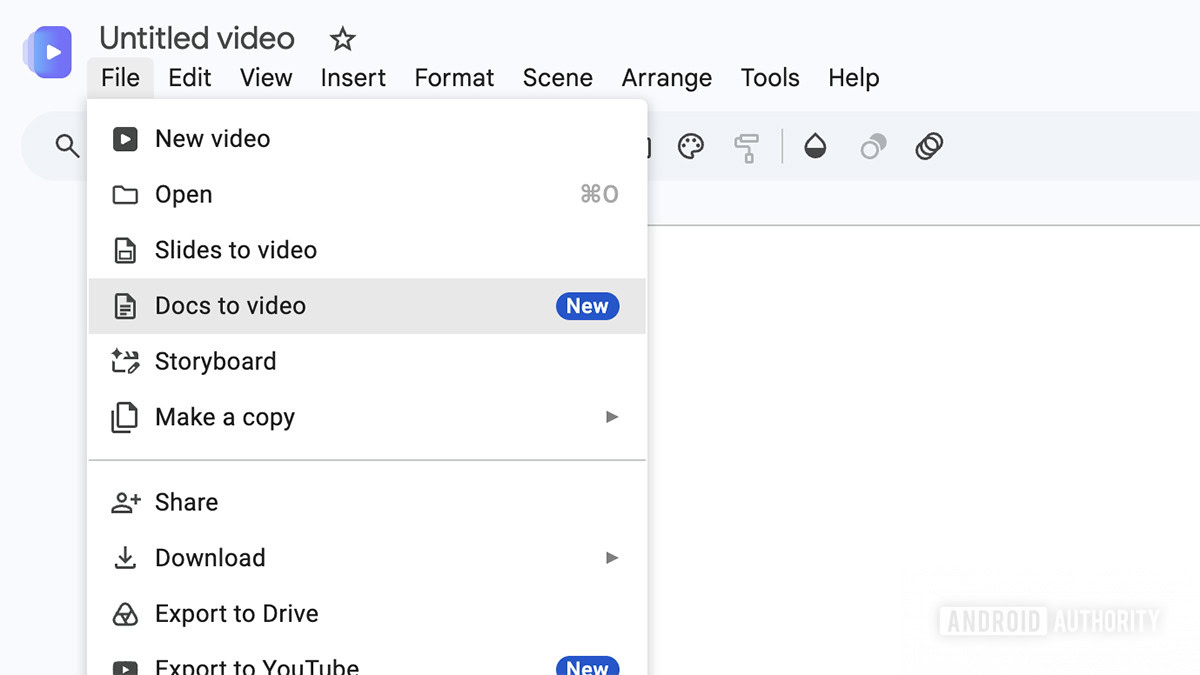
For organizations operating on a scheduled update release cycle for their Workspace accounts, Google anticipates that the full deployment of the feature may take up to 15 days to reach all eligible users. This staggered rollout is a common practice for large-scale software updates, allowing Google to monitor performance, address any unforeseen issues, and ensure a stable user experience across its global infrastructure. Users are encouraged to check their Google Vids interface periodically for the appearance of the "Docs to Video" option within the File menu.
Navigating Challenges and Future Considerations
While the "Docs to Video" feature represents a significant leap forward, its initial rollout has encountered minor technical hurdles. Some early users have reported intermittent issues where, despite successfully generating a script from a document, the system displayed an error when attempting to produce the final video. While Google typically addresses such glitches swiftly, these initial reports highlight the complexities inherent in deploying advanced AI systems and the need for robust quality assurance.
Beyond technical stability, the broader implications of AI-generated content warrant careful consideration:
- Accuracy and Nuance: While AI is powerful, it may occasionally misinterpret nuances or miss critical context within complex documents, potentially leading to inaccuracies in summaries. The ability for users to edit the script is crucial for mitigating this risk.
- Ethical Concerns: The rapid creation of video content raises questions about potential misuse, such as generating misleading information or deepfakes. Google, like other AI developers, faces the ongoing challenge of building in safeguards and promoting responsible AI use.
- Data Privacy and Security: As users upload sensitive documents, robust data privacy and security protocols are paramount. Google’s established Workspace security measures are expected to apply, but continuous vigilance will be necessary.
- Impact on Human Skills: While enhancing productivity, such tools also prompt discussions about the evolving role of human skills, particularly in summarization, critical analysis, and nuanced communication. The goal should be augmentation, not replacement, of human expertise.
- Content Originality and Copyright: The use of AI-generated images and backgrounds, alongside summaries of existing documents, raises complex questions about content originality and copyright, an area that will likely see further legal and ethical frameworks develop.
Conclusion: A New Era for Information Consumption
The "Docs to Video" feature in Google Vids marks a significant milestone in the ongoing integration of artificial intelligence into everyday productivity tools. By empowering users to effortlessly transform static text into dynamic video summaries, Google is not only enhancing efficiency but also reshaping how information is consumed and communicated across businesses and educational institutions. Despite the initial technical teething issues and broader ethical considerations inherent in AI deployment, this innovation holds immense promise for making complex information more accessible, engaging, and digestible for a diverse global audience. As Google continues to refine and expand the capabilities of Vids, it solidifies its position at the forefront of the AI-driven productivity revolution, heralding a new era where content creation is intuitive, efficient, and universally accessible. The future of information sharing, it seems, is increasingly visual and intelligently automated.